
Gardeners identify several reasons why cucumber leaves turn white. This problem occurs in both open-ground and greenhouse-grown crops. White spots often appear on the leaf surface due to improper care or inadequate greenhouse insulation. Disease can also be a possible cause.
Why do cucumber leaves turn white?
It's not always possible to immediately determine why a cucumber leaf has turned white after planting. This is because such problems can arise from both environmental factors and pathogenic microorganisms.
To determine what caused the shoots to turn white, it's important to pay attention to the accompanying symptoms. It's also recommended to disinfect the soil and plant.
There are two main groups of factors that cause seedlings to turn white and dry out:
- Agricultural errors. Under- or over-watering, improper soil preparation, and a lack of micronutrients can cause cucumber leaves to curl.
- Diseases and pests. Infections cause characteristic spots and other signs of infestation to appear on the leaf surface.
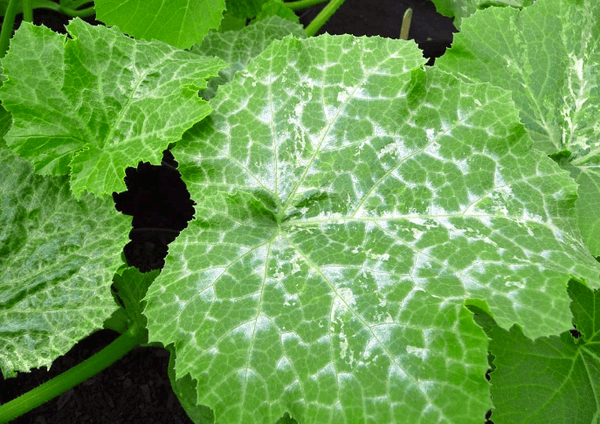
It's recommended to select methods for combating white spots based on the specific causative factor. In particular, if cold weather has caused the seedlings to dry out, there's no need to spray the bed with pesticides.
Incorrect agricultural practices
Cucumbers, like other heat-loving crops, have specific growing conditions. Therefore, problems with growing the plant often arise immediately after planting.
If cucumber leaves turn white, it could indicate a lack of light. This problem is more common in greenhouse-grown plants. However, it can also sometimes occur after transplanting seedlings into the ground. In such cases, the lower leaves begin to wilt. If the trunk and upper shoots are unaffected, no special measures are necessary.
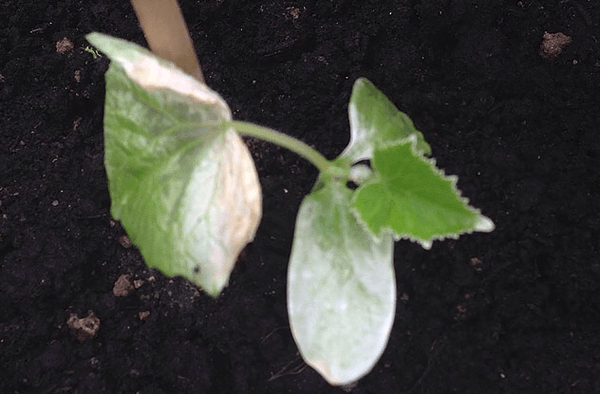
Similar phenomena occur when a plant experiences a deficiency of micronutrients:
- potassium or magnesium - only the lower leaves turn white;
- manganese or iron - in addition to the white coating, dark veins appear on the leaves;
- copper - the upper shoots begin to wither.
If these symptoms appear, it is necessary to add appropriate nutritional supplements to the soil.
The problems described are typical for young plants. After harvest, natural aging processes begin, characterized by a decrease in photosynthesis and, consequently, whitening of the leaves.
Landing time
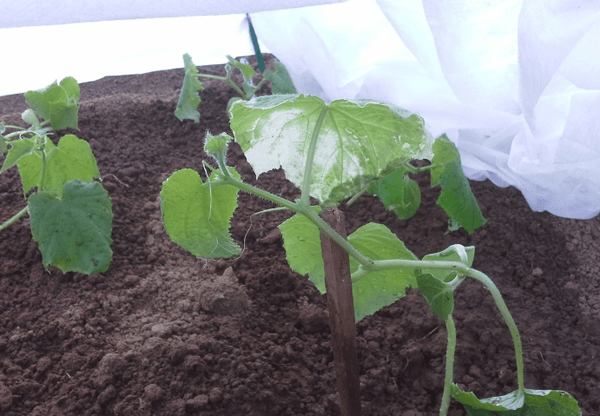
The planting time depends on the growing region. Cucumbers are heat-loving plants. Therefore, young seedlings die when exposed to low temperatures. Therefore, it is recommended to plant cucumbers based on the weather. In central Russia, cucumber seedlings are moved to greenhouses in the second half of April or early May.
Watering
Optimally, watering cotyledon crops follows a specific schedule. It's recommended to moisten the soil under cucumbers grown in greenhouses every two days. Warm, settled water should be used. This type of watering ensures better seedling establishment and accelerates fruit ripening.
Acidity
Cucumbers grow well in neutral soil. In highly acidic soil, the crop begins to dry out early. You can check the soil composition yourself. To do this, simply take a small amount of soil from your garden, pour distilled water over it, and add a tablespoon of baking soda. If the mixture begins to fizz, this indicates high acidity.
To normalize the pH level, it is recommended to mix 10 liters of water and 500 grams of ash. Apply this solution to the holes intended for planting cucumber seedlings.
Diseases and pests
If the planting and care rules are followed, but the cucumber leaves turn white at the edges, this indicates an infestation with pathogenic microorganisms or pest activity.
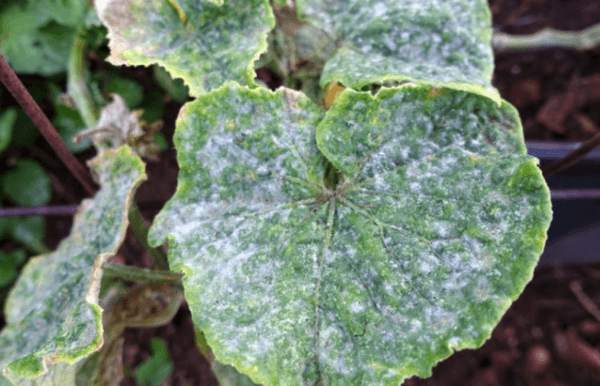
Powdery mildew
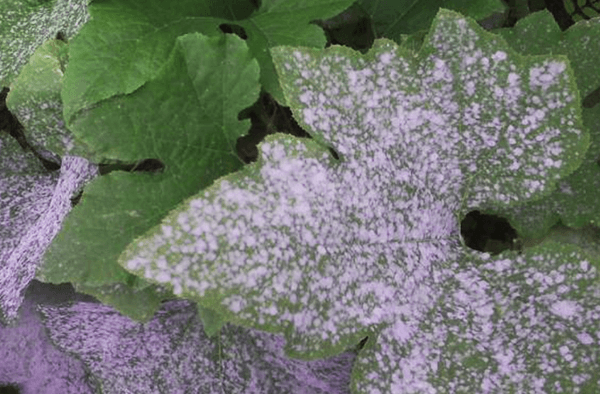
Powdery mildew is the most common cause of leaf tips and entire leaves turning white. This fungal infection develops under conditions of high humidity and temperature. Initially, the disease appears as a white coating resembling dewdrops. Over time, these spots can appear on both the trunk and the fruit. Without treatment, the crop will begin to fail, as powdery mildew inhibits photosynthesis, weakening the plant.
Spider mite
The pest inhibits photosynthesis, thereby weakening the plant's immunity and facilitating the onset of other infections. This parasite is often associated with gray mold, which attacks the lower parts of the plant. Spider mite activity causes the appearance of white spots with a yellowish tint on the underside of the leaf. The pest also suppresses the growth of young plants.
Spider mites thrive in high temperatures and low humidity. Preventing this pest from infesting plants is virtually impossible. There's only one way to control them: destroy the affected cucumbers and dig up the garden bed, removing all weeds.

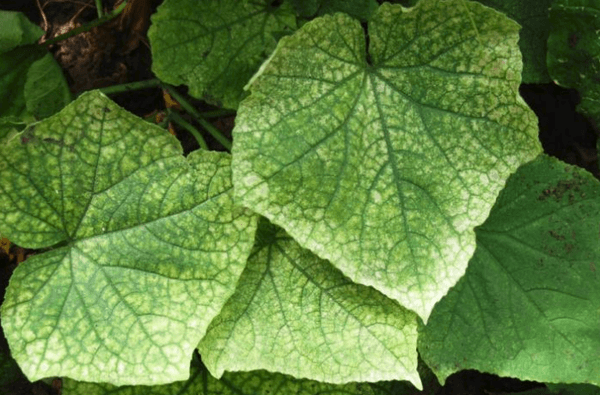
White mosaic
This disease, caused by a viral infection, is relatively common in cucumbers. The pathogen penetrates the plant through damaged leaves and progresses toward the root system. Infection with white mosaic reduces plant yield and degrades the taste of the fruit.
The disease is indicated by white spots with a yellowish tint appearing on the leaf surface. After infection, the rate of vine growth slows, and the fruits take on an abnormal shape.
Infection mainly occurs during significant temperature changes or in cases where the air constantly warms up above +25 degrees.
White rot
This fungal disease, typical primarily for plants grown in greenhouses, most often occurs with a sharp drop in ambient temperature. Irregular ventilation also contributes to the disease's development. To prevent fungal infection, it is recommended to thin out the plantings by spacing the seedlings sufficiently apart.
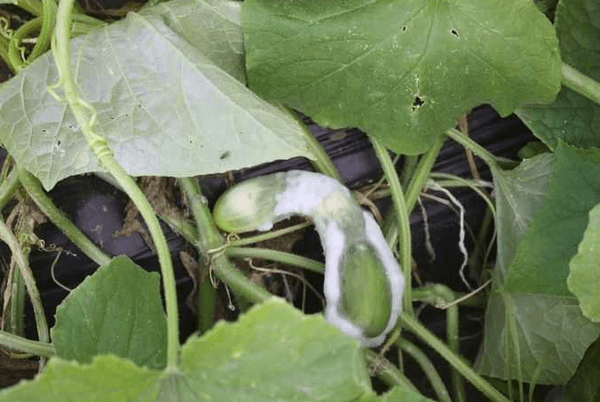
The following signs indicate white rot infection:
- wet surface spots;
- mycelium or white cotton-like growth (appears at the site of the spots);
- mucous secretions from the mycelium;
- death of the plant.
Fungal spores enter the greenhouse via soil or gardening tools. Infection occurs through wounds on shoots.
Greenhouse whitefly
Whiteflies are dangerous pests for cucumbers. Adults reach 1.5 millimeters in length and have white, rough-surfaced wings. Whiteflies develop quickly and form large colonies.
This pest is primarily found on the undersides of leaves. The insects feed on plant sap, causing the plant to wither and dry out due to a deficiency of micronutrients. Whiteflies secrete a sugary liquid that promotes fungal infections.
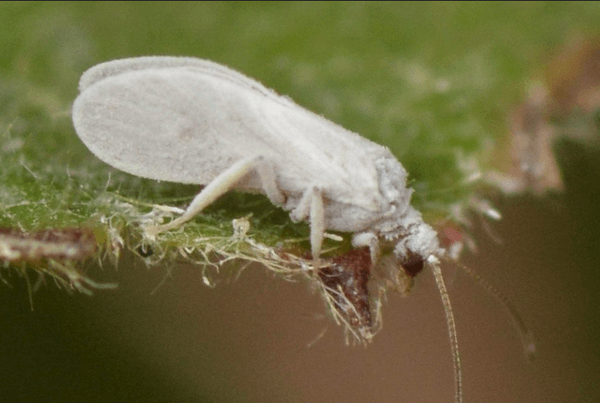
Due to pest activity, leaves darken, curl, and dry out. Whiteflies gradually descend down the trunk. During warmer months, the insects often migrate to plants growing outdoors.
Ascochytosis
This type of fungal infection causes leaf tips to turn white. Less commonly, the spots spread to cover the entire surface of the shoots. When affected by ascochyta leaf spot, the leaves eventually take on a dirty gray hue and dry out. The newly formed fruits also shrivel.
Anthracnose
Anthracnose develops if the plant isn't regularly fed and the greenhouse isn't properly ventilated. This fungal disease causes white spots to appear on the leaves, and the tips darken. Stems and shoots also dry out when infected. "Cankers" often form in the affected area.
How to deal with white leaves?
Control methods are selected based on the cause of the plant's discoloration. If the problem is caused by non-compliance with agricultural practices, it is necessary to increase watering, regularly ventilate the greenhouse or hotbed, and fertilize the soil. Garden tools should be treated with a weak solution of potassium permanganate.

If white spots are caused by powdery mildew, the disease should be treated with:
- mixtures of whey and water;
- sour milk, yogurt or kefir;
- mixtures of 1/3 bucket of manure and water (leave to stand for 3 days, then dilute with water in a ratio of 1:10);
- 20% solution of colloidal sulfur.
Spider mites can be controlled by treating them with insectoacaricides such as Bitoxibacillin, Karbofos, and others. This is recommended in the evenings. Planting cucumbers infested with spider mites next to dill has been shown to be effective.
It is impossible to suppress the development of white mosaic. Therefore, if signs of infection are detected, it is recommended to remove and destroy the affected crop.
To combat white rot, apply a warm solution of Topaz or Oxyhomom, or treat the affected areas with a solution of chalk, water, and potassium permanganate. Spraying the plant with a mixture of water and whey, in a 7:3 ratio, is also recommended.
Two methods are recommended for whitefly control: physical destruction or cultivation of the parasite, known as encarsia. Insecticides should be used in extreme cases.
If white spots form over most of the plant, it is recommended to remove the crop from the garden bed and burn it. Also, after harvesting, the soil should be dug over and weeds removed.
How to prevent the problem?
Preventing white spots on cucumbers is quite difficult. To prevent the problem, it's recommended to regularly inspect the plant for insects or signs of infection, treat the plant with a soapy solution, and apply fertilizer promptly. Gardening tools should also be disinfected.
Seeds should be purchased from reputable sellers. Before sowing, be sure to disinfect the soil with a weak solution of potassium permanganate. When growing cucumbers in a greenhouse, the room must be ventilated daily.
Related posts:
 Causes and treatment of eggplant pests and diseases, how to combat them at home
 Why cucumber leaves are drying out and what to do, how to treat them in a greenhouse and in the ground
 Why are cucumber leaves turning yellow on the windowsill? What to do and how to treat them?
 Description of tomato diseases and their treatment, how to process them
 Growing and caring for hazelnuts in open ground, rules for planting hazelnuts
 The best eggplant varieties for growing in a polycarbonate greenhouse: planting and care
 What to do if beet leaves are covered in spots, why this happens, and how to treat them
 Why cabbage leaves wilt in the garden and what to do