Olives grow in Italy, Spain, Greece, and Israel, but not everyone knows how they are harvested. The olive tree, or Olea europaea, is an evergreen subtropical tree that has been cultivated for its oil since ancient times. Olives are rich in vitamins E and A, essential amino acids, and trace elements. They are beneficial for vision, skin, the nervous system, the stomach, and the liver. A single tree can live for 500 years. Both private farms and large producers cultivate olive oil crops.
Harvest timing
Depending on the location growing olive crops Harvested between September and December, one tree can yield 50-150 kg of fruit.
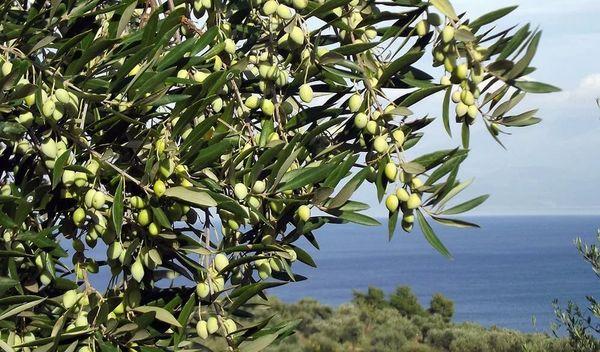
Green olives
Green fruits do not ripen completely. They are harvested in late September or early October. When the berries begin to darken, they are left to ripen fully.
Black olives
Black olives are also known as olives; they are red-black, dark chestnut, or purple. Late November and early December are the time for olive harvesting. When the fruit falls, it indicates their ripeness.
How olives are harvested
Harvesting must be carried out in dry, sunny weather.
Manually
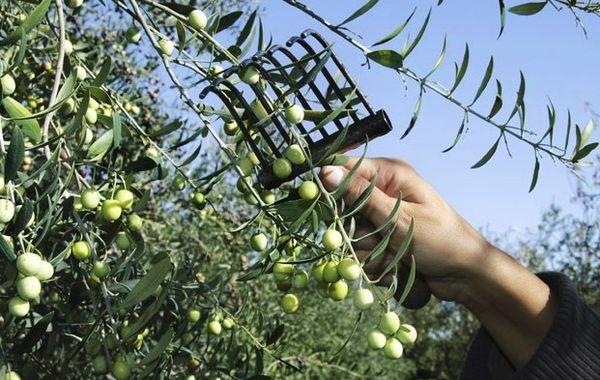
This method is reliable and causes less damage to the fruit. A large tarp is left under the trees for harvesting. The berries fall off when ripe, and the remaining ones are picked by hand using a special rotating device. They are then placed in plastic crates.
The process requires care, as leaves and broken branches often end up on the conveyor belt along with the berries. They are sorted by size and cleared of debris and leaves.
With the help of machines
Olives are increasingly being harvested using a special harvesting machine. It drives up to the tree, and an 11-meter-wide space is filled with an automatically extending film. Another machine grabs the tree trunk and shakes the ripe berries onto the film.

Storage conditions for the harvest
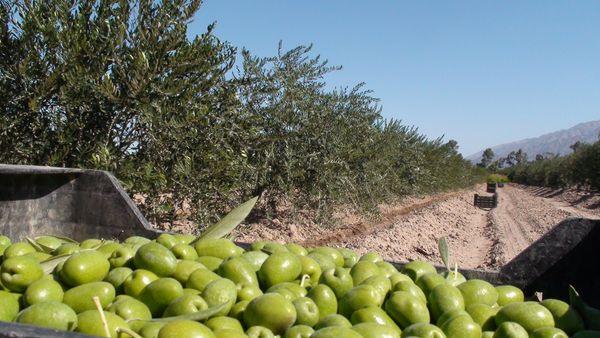
Olives should not be kept outdoors for more than three days. They are placed in paper-lined baskets and transported and sent for processing or stored in the refrigerator for a week.
Uses of olive fruits
Table olives are used for pickling, canning, and other preparations. Oilseed olives are used for oil extraction. There are also universal varieties. The fruits are dried, cured, and salted. The oil is used in salads, frying, and marinating meats. Refined oil is suitable for frying, unrefined oil is suitable for salads.
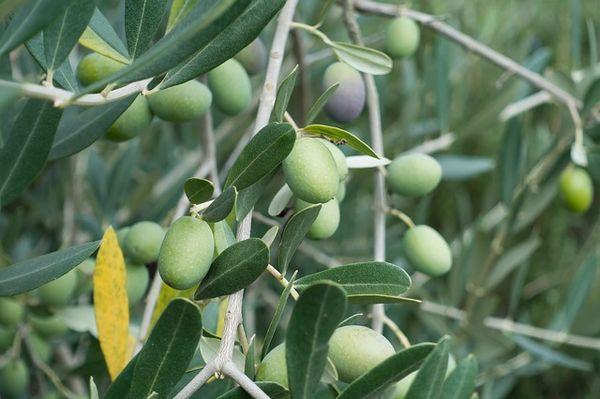
Olive oil extraction using an ancient technology
Italian farmers continue to extract olive oil using an ancient method. The washed cherries are then fed to a mill. There, heavy millstones grind them, pits included, until a homogeneous mass is obtained.
Then, the crushed berries are spread onto discs with holes and filters. The discs are placed on special disks, which are then mounted on a pin located on a mobile cart. When there are 20 discs, the cart is placed under a press. The pressed oil and water are fed into a separator, where pure oil is obtained.
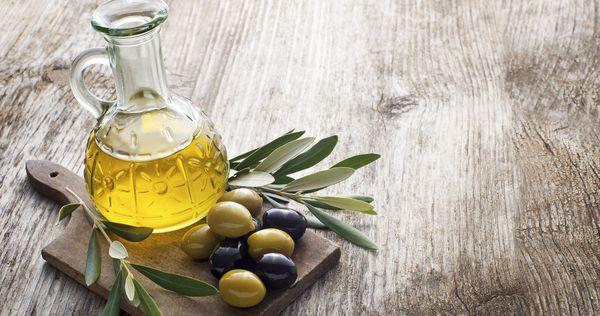
Pressing olives at the oil mill and settling the oil
First, the fruit is cleaned of leaves and branches. A vacuum cleaner is used to suck up any debris in a special vat. The berries are then washed with warm water and separated from the seeds in a special tube. The pulp is thoroughly ground in the vat and then sent to a centrifuge. There, the pulp is pressed, with the water flowing in one direction and the oil in the other.
The oil enters a separator, where it is cleaned of any remaining pulp. The finished product is left to rest for another two weeks in a stainless steel container at a temperature of 16°C. C. Pour the oil into stainless steel canisters or glass bottles.
Related posts:
 Top 40 DIY New Year's Baking Recipes for 2020
 TOP 40 New Year's 2020 Meat Recipes Using Pork, Beef, Chicken, and Lamb
 13 Best Olive Varieties and How to Choose the Right Delicacy
 TOP 40 Hot Dish Recipes for New Year 2020: What to Cook
 Description of 36 of the best sweet and large varieties of gooseberries
 Recipes for cold, hot, and original appetizers for the New Year 2020
 The TOP 20 best DIY New Year's cookie recipes
 The 42 Best New Year's Dessert Recipes for 2020
Take a look Also