
- Basic rules for watering bell peppers
- Water requirements
- What time of day should I water the bushes?
- Methods of irrigating peppers
- Sprinkling
- Manual
- We organize proper automatic watering
- Mechanical
- Daily water requirement
- For seedlings
- During planting in the ground
- When fertilizing plants
- During and after flowering
- During the period of fruit ripening
- How does watering depend on climatic conditions?
- Irrigation on rainy and cloudy days
- Watering in hot weather
- In windy weather
- Frequency of watering
- In open ground
- In the greenhouse and hotbeds
- The dangers of overwatering
The harvest depends on how often peppers are watered in the open ground. It's easy to tell if the seedlings haven't had enough water. The seedlings are weak, have few leaves, and take a long time to establish. Inconsistent watering of mature plants results in small, misshapen fruits.
Basic rules for watering bell peppers
Sweet peppers thrive on warmth and moisture. Dry soil causes buds and flowers to fall off. High humidity promotes fungal diseases. To grow a good harvest, it's important to understand how to water peppers properly.
Water requirements
In hot weather, the difference between the air and water temperatures for irrigation should not exceed 10 °C. During cold weather (down to 15°C), watering is stopped. If the water source is a well or a tap, a storage tank for settling and heating is needed.
What time of day should I water the bushes?
Experienced gardeners know the best time to water peppers. It's best to do this early in the morning, just before sunrise. The best time is 11:00 a.m. In the evening, water before sunset to prevent the leaves from becoming wet overnight.
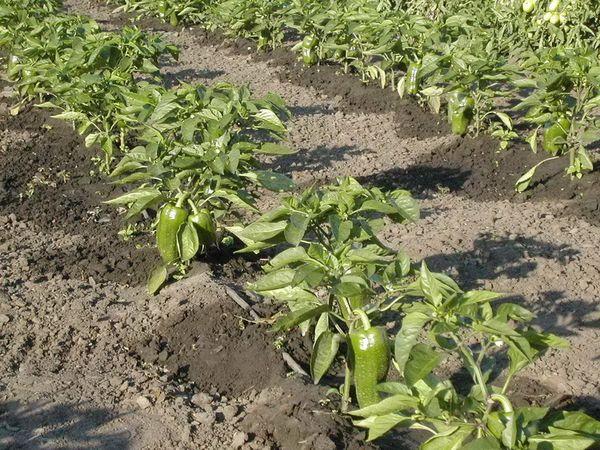
Methods of irrigating peppers
More and more gardeners are switching to drip irrigation systems. They make crop care easier, save water, and guarantee optimal soil moisture. Older irrigation methods are also being used.
Sprinkling
Pepper irrigation isn't the most economical option. Gardeners use sprinklers for this purpose. Peppers don't like cold water, so they are watered from a container or open pond (natural or artificial). A pump creates the pressure in the hose needed for diffuse watering.
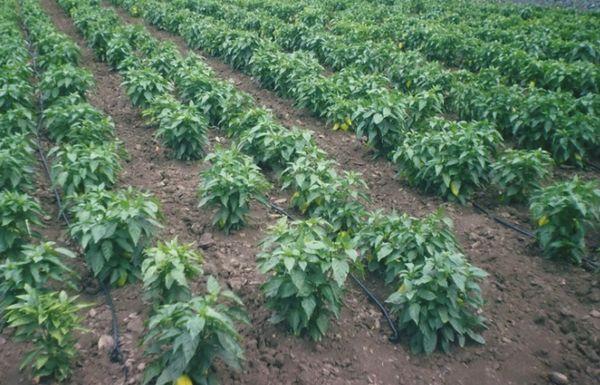
Types of sprinklers:
- oscillating sprinkler;
- spray gun;
- sprinkler hose;
- circular petal atomizer.
Gardeners make reliable sprinklers themselves. They require a minimal set of tools (a drill, a knife) and materials (a hose, a plastic bottle, and electrical tape).
Manual
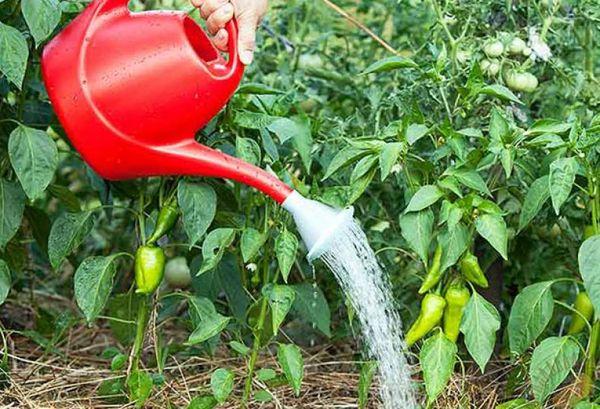
An inexpensive, time-tested method. You can water peppers from a bucket or watering can. Knowing the capacity of the container makes it easy to control water usage. A watering can is more convenient. It prevents soil erosion and prevents water from getting on the lower leaves.
Take a look Also
We organize proper automatic watering
There are two ways to set up automatic watering for peppers. The easiest is to purchase a ready-made system, pay for the installation, and enjoy. The second option is more budget-friendly. You can do it yourself using materials you have at home or parts purchased at a gardening store.
Components for organizing a simple irrigation system:
- plastic container with a capacity of 100-150 l;
- garden hose;
- drip tape (garden hose with holes);
- filter;
- tap;
- tees;
- plugs.
The tank is installed at a height of 1-1.2 meters, a faucet and filter are installed, and a hose is connected. Its length should correspond to the distance from the tank to the pepper row. Tees are used to distribute the tape between the pepper rows.
Drip tapes are cut to the length of the garden bed. A plug is installed on one end, and the other end is connected to the main hose. Each hose comes with instructions indicating how much water is delivered to the plant per unit of time. Calculating watering times is easy.
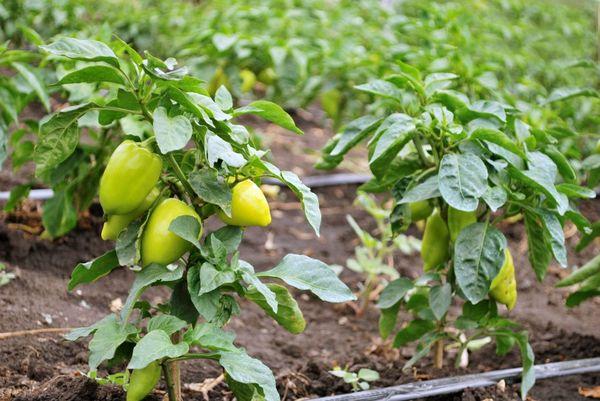
Mechanical
Dry (mechanical) irrigation involves surface loosening of the soil. It improves oxygen access to pepper roots and prevents moisture evaporation. This method is effective when water is scarce and is used after heavy rains.
Daily water requirement
Plants require specific amounts of moisture at different stages of growth. These needs change throughout the summer.
| Month | Type and frequency of watering | Volume |
| June | Planting hole | Apply generously until completely moistened. |
| Under the root, once every 5 days | 1.5-2 liters per bush, the soil should be moistened to a depth of 20 cm | |
| July | Under the root, 2 times in 7 days | 2-3 liters per bush, the soil should be moistened to a depth of 20 cm |
| August |
For seedlings
During the first few days after germination, moisten the soil daily. Pour 1 tablespoon of warm water under each seedling. As the seedlings grow, increase the amount of water. Until transplanting time, use 2-3 tablespoons, then reduce the frequency to 2-3 times a week.
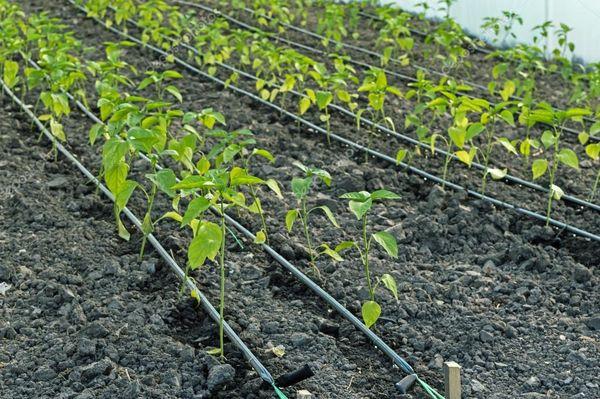
After transplanting, do not water the seedlings for five days. Then, pour enough water under each plant to completely moisten the root ball. To prevent waterlogging around the roots, make drainage holes in the container and add eggshells.
During planting in the ground
The soil is moistened generously, as the first watering after planting will be in about 10 days. The soil at root level should be moist. After 5 days, the top layer of soil is loosened to a depth of 3 cm. This promotes rapid seedling adaptation and allows more oxygen to reach the roots.
When fertilizing plants
Pepper bushes are watered with liquid organic fertilizer at least three times per season. Infusions of:
- chicken manure;
- mullein;
- herbs.
Add 1 liter of the infusion to a 10-liter bucket (watering can). Pour 1 liter of liquid fertilizer under each bush.
During and after flowering
Until buds form on the peppers, the bushes are watered 1-2 times a week. Consume 10 to 12 l/m². Water using any method, including sprinkling. During flowering, water only at the roots. Increase water consumption to 14 l/m². If your garden is rarely visited, use drip irrigation.
During the period of fruit ripening
Taking 7-10 day breaks in watering stimulates a new wave of flowering. After buds appear, watering fruiting peppers continues as usual.
How does watering depend on climatic conditions?
The frequency of watering peppers grown in the garden can vary. It is adjusted based on weather conditions. The watering schedule for greenhouse peppers is less dependent on weather. It is only affected by extremely high temperatures, periods of prolonged rain, and drops in temperature to 10-15°C.
Irrigation on rainy and cloudy days
In cloudy weather, moisture from the soil doesn't evaporate, so peppers are watered once a week. During prolonged rains, irrigation is not necessary. During heavy rains, peppers can be covered with plastic, using arches placed on the bed.
Watering in hot weather
Irrigate not only the soil around the bushes, but also the spaces between the rows. This helps reduce air temperature and increase humidity. If the soil dries out quickly in hot weather, water the peppers every 1-2 days.
In windy weather
Wind dries the top layer of soil. To retain moisture, use mulch. Spread straw over the pepper bed in a 5-8 cm layer. If organic mulch is not available, spread black non-woven material during planting. Dry watering—loosening the soil—helps retain moisture. This is done before and after each watering.
Frequency of watering
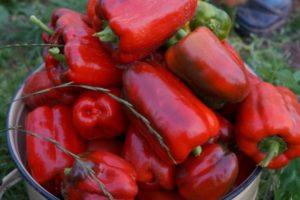
The harvest depends on how often the peppers are watered. Under good conditions, buds form on the bushes all summer long. A large number of ovaries and flowers indicates proper care.
In open ground
Water according to the weather. In temperatures above 30°C, water the bed morning and evening to prevent fruit drop. On moderately warm days, water every 2-3 days. Always check the soil moisture. If your hand gets dirty upon contact with the soil and it's damp at a depth of 25 cm, watering is not necessary.
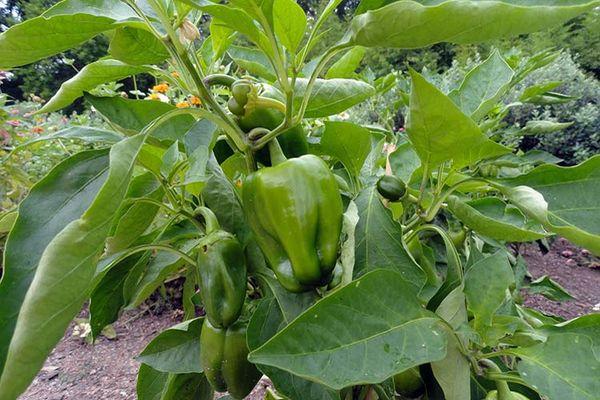
In this case, dry watering will not hurt the peppers. The soil around each plant and between rows is loosened slightly. This allows more oxygen to reach the roots. This allows the plant to absorb more nutrients. This increases yield, improves the taste of the fruit, and accelerates ripening.
In the greenhouse and hotbeds
In a greenhouse made of film or polycarbonate, the soil dries out more slowly than in a garden. After transplanting, peppers are watered once a week, with 2 liters per plant, increasing the frequency during the fruiting season. Peppers are irrigated 2-3 times a week. In extreme heat, every other day.
Peppers thrive in a greenhouse with drip irrigation. This ensures the soil always maintains optimal moisture. Even with infrequent garden visits, the soil never dries out. The flowers and buds don't fall off. The yield is higher.
The dangers of overwatering
When the soil becomes over-watered, oxygen starvation occurs. Roots' absorption of nutrients is impaired. Plants' immune systems are weakened. High soil and air humidity create favorable conditions for the proliferation of pathogenic fungi.
Therefore, if watered improperly, peppers are susceptible to fungal diseases. Fungicides and chemicals are used to combat them. Overwatering affects the quality of the fruit. They have a shorter shelf life and are susceptible to rot.
Related posts:
 The best eggplant varieties for growing in a polycarbonate greenhouse: planting and care
 How often should grapes be watered in the summer while the berries are ripening?
 How to water cucumbers in a greenhouse and open ground, timing and water consumption rates
 How often should you water pumpkins in open ground in August during hot weather?
 How often should you water zucchini in open ground? Irrigation rates and methods.
 How often should you water cabbage in open ground, how many times, and with what kind of water?
 What fertilizers and when to use for feeding tomatoes in a greenhouse
 Carrot care guidelines for outdoor cultivation to ensure a good harvest