
The Atlant bell pepper is one of the largest-fruited peppers you can grow in your own garden. It's quite demanding in terms of care, but the results are well worth the effort. Besides its size, it also boasts excellent flavor.
General characteristics of the variety
Variety The Atlant bell pepper is intended for growing in greenhouses and film tunnels, but in regions with long, warm summers, it can be grown outdoors. The variety produces stable yields under any conditions, but during cold, rainy seasons, some fruits will have to be harvested at a ripe stage.
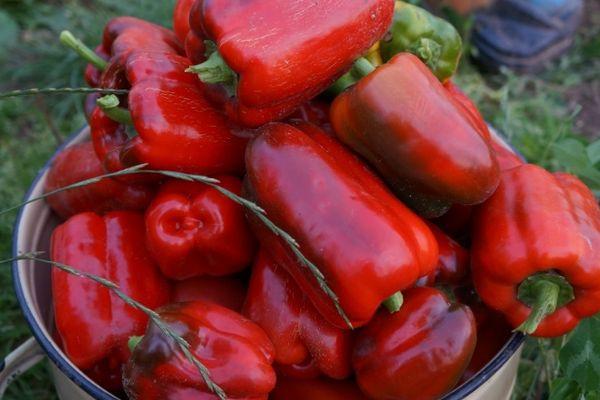
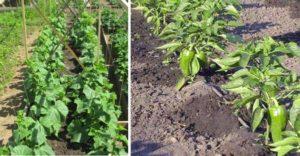
The bush is quite tall (up to 1 m), compact, with a strong stem and powerful branches capable of supporting the weight of heavy fruits. If a large number of peppers are left to ripen, it may fall over, so staking is recommended. The root system is well-developed and shallow. Care should be taken when loosening the soil.
The plant is resistant to most nightshade diseases, rarely affected by late blight and early blight, and is immune to tobacco mosaic virus. Introduced over 10 years ago, Atlant has been tested by vegetable growers in many regions of the country and has received excellent reviews.
The characteristics and description of the variety note that with a lack of heat and sun, the taste qualities may be worse than those of vegetables grown in favorable seasons.
The Atlant bell pepper variety is demanding of moisture in the soil and requires regular watering. To ensure a good harvest and large, fleshy fruits, Atlant plants will require fertilizing throughout the summer. The planting site should be prepared in advance, enriching the soil with nutrients necessary for the successful development of the plants.
Fruit characteristics
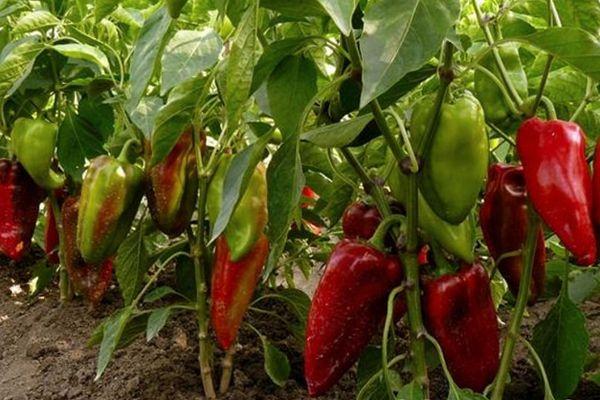
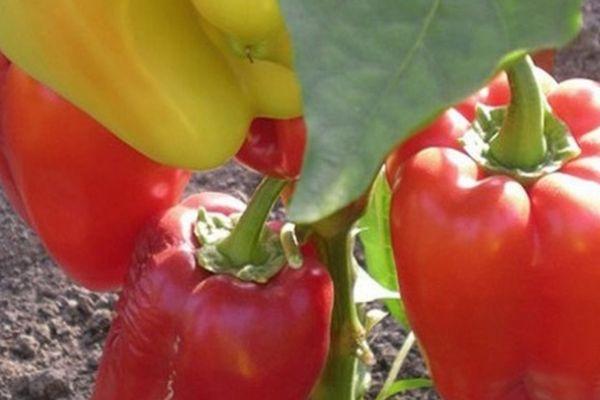
This mid-season variety produces the first ripe peppers, which can be harvested after 130-140 days, but technical maturity occurs approximately one week earlier. Green and not yet fully colored, the peppers already have fairly thick flesh and have time to develop the characteristic pepper flavor. They are perfectly edible in any form. Ripe fruits are bright red.
![When to plant pepper seedlings in [year], favorable days according to the lunar calendar](https://harvesthub.decorexpro.com/wp-content/uploads/2019/02/foto4-300x200.jpg)
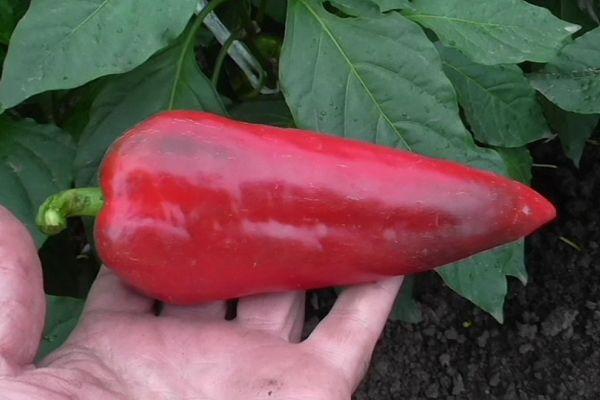
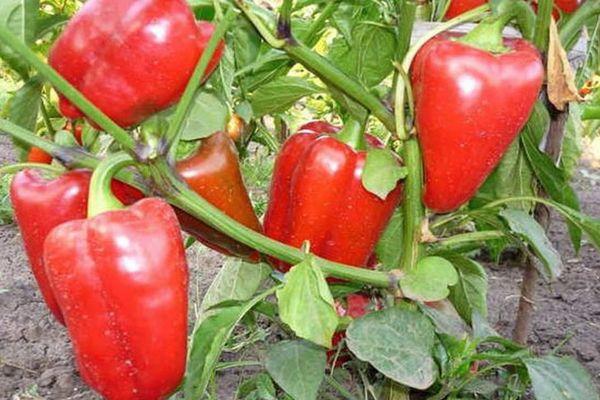
The shape is conical, with a blunt apex. The fruit has three sides and three partitions inside, with the stalk area deeply depressed. The ovaries droop immediately after flowering and subsequently grow downward. Each fruit reaches 20-22 cm in length and weighs up to 150-170 g. A bush can simultaneously bear up to 10 fruits at different stages of development. A single plant can produce 3-4 kg of marketable peppers per season.
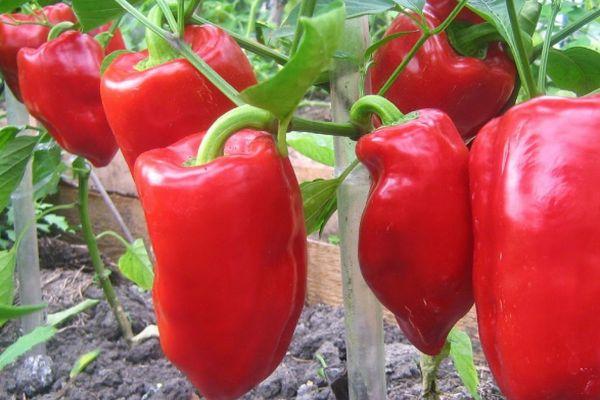
The skin is glossy, thick, and strong, retaining moisture well. Once ripe, the peppers can be harvested for transport and storage. They do not wilt or lose their marketable appearance, but gradually ripen, turning the variety's characteristic red hue.
This variety is particularly noteworthy for its flavor. Atlantis is a fleshy variety, and its walls can reach a thickness of 0.8-1.1 cm. The vegetable's flavor is sweet, without a hint of bitterness, not spicy, with a pleasant, piquant aroma typical of bell peppers. At technical maturity or when grown in unfavorable conditions, the flavor is characterized as slightly sweet and not too pronounced.
Atlant is a variety for fresh eating and canning. The vibrant slices of thick flesh add a vibrant touch to any salad or appetizer with fresh vegetables. The rings make a delicious garnish for gourmet sandwiches and are used to make delicious appetizers. The vegetables are too large for stuffing, but smaller peppers can be used for this purpose. The juicy flesh can be grilled, used to make vegetable caviar with peppers, and used in a variety of exotic Asian, Caucasian, and Mediterranean dishes.
The staple Russian pepper preparation—lecho in tomato sauce—benefited from the addition of Atlant. The fleshy pulp also makes a wonderful addition to a variety of other homemade preserves: peppers can be marinated, fried, or incorporated into vegetable platters and winter salads. Adding this ingredient adds a piquant flavor to tomato juice. Small, unripe peppers can be used as a frozen, semi-finished product with ground meat filling.
Agricultural technology of the variety
Pepper seeds should be sown for seedlings approximately three months before transplanting to a permanent location; the first harvest can be harvested in 45-50 days. For sowing, prepare the soil by mixing equal parts fertile soil, sand, and humus. You can add 1 tablespoon of dolomite flour or chalk per 5 kg of the mixture.
Place the soil in the container where the Atlant peppers will be planted and thoroughly soak it in a hot, dark solution of potassium permanganate. Besides disinfecting the soil, this enriches it with potassium. The seeds can be sown once the prepared substrate has cooled to room temperature.
The seeds should also be soaked in a weak solution of potassium permanganate or Fitosporin (prepared according to the instructions) for 30-40 minutes. After this, they should be allowed to dry slightly so they can be spread evenly over the soil. Sprinkle the sown peppers with a thin layer of dry sand or soil (0.5 cm), and cover the container with plastic wrap to retain moisture while the seeds germinate. Avoid watering during this time. Poke 2-3 small holes in the plastic wrap to allow air circulation.
Peppers require fairly warm soil temperatures (around 25°C) to germinate. The container should be placed near a radiator or heated by other means. Bell pepper seeds take 7-10 days to germinate; remove the plastic wrap when the first sprouts appear.
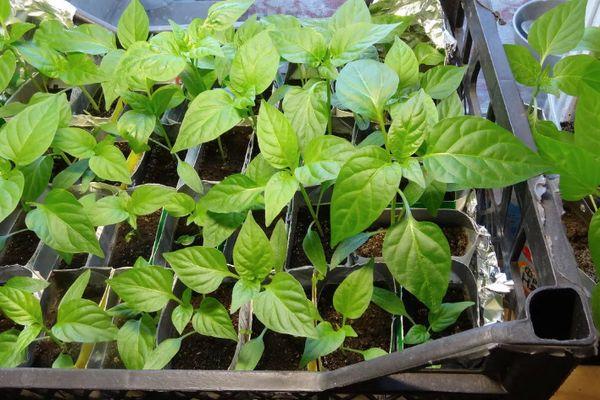
After 2-3 leaves appear, young plants are transplanted into individual pots (peat, plastic, or paper). For the tall Atlant variety, this is more convenient than transplanting into a common container: the pots can be moved further apart as the leaves close. This will prevent the seedlings from becoming too tall, and the peppers will grow strong.
If there is not enough sunlight, it is recommended to additionally illuminate the seedlings with phytolamps.
Fertilizing is not necessary during this period, but careful attention must be paid to keeping the soil consistently moist. Young peppers suffer from water stress more than tomatoes or eggplants, and the seedlings will be weakened.
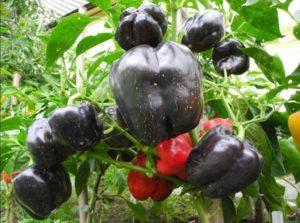
Before planting, amend the soil for peppers with humus (1 bucket per 1 m²) and lime (slaked lime, dolomite flour, chalk, etc.), applying 1-1.5 kg per 1 m². Plants should be spaced in a 40 x 40 cm pattern. It's convenient to use the Mittlider method and plant two rows of peppers in a narrow bed 30 cm wide. If necessary, it's easy to install arches and stretch a covering material over this bed.
To produce fleshy fruits, peppers need to be fed with potassium and phosphorus fertilizers for nightshade crops (Signor Tomato, Kristallone Tomato, Kemira Lux, etc.). The timing of the first feeding is determined by the appearance of flowers on the plant branches. The next feeding is carried out 20 days later, applying fertilizer according to the instructions. To replace commercial fertilizers, you can water the plants with a wood ash solution (0.5 kg per 10 liters of water, 1 liter per bush).
Related posts:
 Description of the remontant raspberry variety Atlant, planting technology and care
 The best eggplant varieties for growing in a polycarbonate greenhouse: planting and care
 Is it possible to grow an apricot tree from a seed in your garden? How to plant and care for it?
 How to properly grow a peach tree from a seed at home, planting and care
 Top 40 DIY New Year's Baking Recipes for 2020
 Planting and caring for cherries, feeding and growing rules
 How to control carrot flies with medications and folk remedies
 Carrot care guidelines for outdoor cultivation to ensure a good harvest
I only grow bell peppers in a greenhouse; they don't turn out as sweet or large in the open ground. I always use "BioGrow» to accelerate growth and strengthen seedlings.