
- Symptoms and manifestations of the disease
- Causes of leaf pimples and curling
- Agricultural technology errors
- Diseases and pest attacks
- Spider mite
- Scale insect
- Aphid
- Oedema
- Why are the pimples on peppers dangerous?
- Methods of control
- What to do if leaves are swollen: what to treat them with and how?
- Actions in case of pest infestation: what means to use?
- Preventive measures
- Choosing the right soil
- Preventive treatment against diseases
- Essential principles of care
- Hardening
- Picking
- Top dressing
The appearance of shoots and leaves is the first indicator of the seedlings' condition. Any deviations from the norm should be considered signs of disease. Signs of disease include the appearance of pimples on pepper seedlings and curled and deformed leaves. These changes can be caused by parasites, infections, or improper care of the seedlings. The culprit must be identified and treated.
Symptoms and manifestations of the disease
Regularly inspecting seedlings will help quickly identify the first signs of disease. Leaves should be inspected on both sides for discoloration, spots, and deformation. If bumps appear on the leaves, they should be carefully examined with a magnifying glass.
By carefully examining the bumps on the underside of the leaf, you can see if there's any movement. This indicates that the changes are caused by an insect infestation. Otherwise, the problem is caused by disease or physical factors.
Webs and white blisters indicate spider mites. Green or cream-colored active spots are aphids, while brownish and inactive spots are scale insects. Light spots on leaves extending onto the stems indicate thrips. Green or whitish capsules filled with water indicate swelling due to edema.
Causes of leaf pimples and curling
Bumps on the sides of sweet pepper leaves can appear due to a variety of factors.

The most common are:
- improper care;
- diseases;
- infestation by pests such as spider mites, scale insects, and aphids.
Leaf curls are caused by factors such as:
- damage to the green parts and roots of the plant by pests;
- agricultural technology errors;
- lack of potassium in the soil;
- reaction to transplantation;
- uneven growth of different parts of the leaf.
Agricultural technology errors
Common mistakes in plant care that can lead to leaf curling and the appearance of bumps:
- planting in poor soil;
- use of low-quality seeds;
- overwatering, which leads to stagnation of water at the roots;
- short daylight hours and lack of additional lighting.

Diseases and pest attacks
Peppers can be damaged by a fungal disease called blackleg. It is caused by improper farming practices, poor soil quality, and delayed treatment.
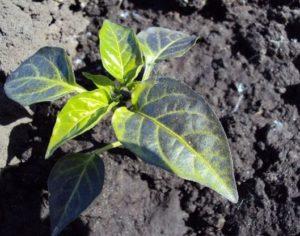
Leaf deformation combined with a white coating indicates powdery mildew or sclerotinia wilt. In the former case, treatment with a fungicide is necessary; in the latter, treatment with charcoal or crushed chalk.
Pepper leaves can be affected by thrips, which hide on the undersides of leaves and are difficult to detect in the early stages of the disease. Symptoms appear as enlarged discolored spots. Slugs and mole crickets can also damage plants, causing the leaves to curl.
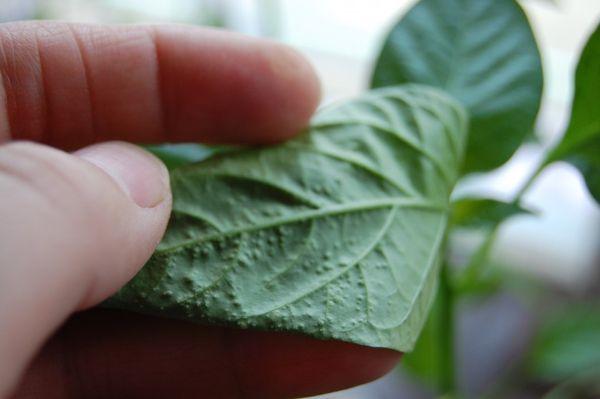 Insects not only eat plants, but also carry dangerous viruses, fungi and bacteria.
Spider mite
The insects inhabit the undersides of leaves, gradually spreading throughout the plant. The infestation cycle lasts 10 to 20 days, with the mites rapidly reproducing and migrating from one plant to another. Infested leaves become covered in bumps, and a fine webbing envelops the pepper plant. The following helps control the mites:
- pruning and destruction of damaged plants or their parts;
- spraying with insecticides.
If the infestation is too severe and other treatments are ineffective, short-term use of broad-spectrum acaricides is permitted.
Scale insect
A plant infested with scale insects becomes covered with pimples and yellowish-brown bumps. The insects suck the sap from the leaves, causing them to thin, turn yellow, and completely stop photosynthesis.

Scale insect larvae hatch from eggs several hours after they are laid, making it difficult to remove them before the peppers become damaged. If pests are detected, the peppers should be treated with an insecticide as soon as possible.
Aphid
Aphid colonies are easily found on the undersides of leaves and stems. They feed on plant sap, depriving it of important nutrients. They most often attack young, immature peppers, preventing them from rooting, growing, flowering, and fruiting.
To combat aphids, use a soap solution, chemical insecticides, and folk remedies based on pine needles, onions, or tobacco dust.
Oedema
Leaf swelling, or edema, in peppers involves a disruption in cell formation, causing them to stop absorbing water and accumulate it in the form of bubbles. These water capsules develop as firm, fluid-filled, white or green bumps.
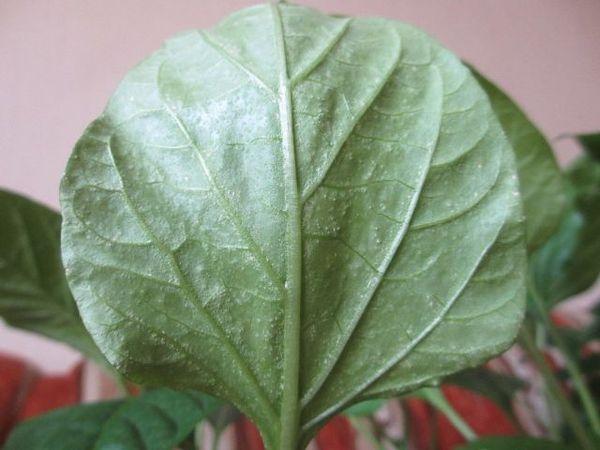
The reasons for such a violation may be:
- waterlogging of the soil;
- low soil temperature at the roots;
- high air humidity;
- low light;
- abrupt change in growing conditions;
- high planting density.
Why are the pimples on peppers dangerous?
New growths on seedlings indicate serious problems; even seemingly harmless pimples on leaves can lead to plant death. Potential consequences of pimples on peppers:
- Dropsy of peppers, oedema or edema, leads to the death of the root system.
- Spider mites cause crop loss.
- Scale insects and aphids deprive the leaves of nutrients, causing them to turn yellow and die.
- Fungal infections lead to the death of seedlings.
Take a look Also
Methods of control
The method for combating the problem depends on the cause of the changes and the overall condition of the peppers. Timely treatment, changes in growing conditions, and proper preventative measures will help resolve the problem and save the future harvest.
What to do if leaves are swollen: what to treat them with and how?
Leaf swelling isn't a disease in the true sense of the word, so there's no cure. However, there are steps you can take to revive the seedlings:
- reduce watering;
- maintain the temperature at +20 °C;
- organize drainage ditches;
- stop using fertilizers;
- thin out the beds;
- reduce soil acidity by treating it with an ash solution.
Actions in case of pest infestation: what means to use?
If a plant has been damaged by pests, there are several control options:
- Treating plants with chemicals is the most effective method. However, this method requires safety precautions, as insecticides can be toxic to humans.
- Isolation of infected plants.
- Physical destruction of insects after manual collection.
- Getting rid of pests by using their natural enemies.
- Use of microbiological preparations.
- Spraying with folk remedies based on plants.

The choice of method depends on the type of pest and its biological characteristics; one method should not always be used. First, determine the insect species, and then choose an effective control method specifically for it.
Preventive measures
Getting rid of pimples and physical changes is difficult; it's much easier to take preventative measures beforehand:
- disinfect seed material;
- loosen and mulch the soil;
- remove weeds;
- carry out preventative spraying against pests;
- observe the watering regime and use drainage;
- regulate the lighting.
Choosing the right soil
For growing seedlings, it's preferable to use ready-made mixes labeled "for peppers." A general-purpose, nutrient-rich seedling mix will also work. When choosing soil for peppers from your garden, consider the following:
- Do not use soil where nightshade crops were grown last year.
- Take soil from under onions, carrots, mustard or rye.
- Add peat and wood ash to the soil in a ratio of 2/1/1.

Preventive treatment against diseases
To avoid peppers becoming infected with fungal or infectious diseases, it is necessary to carry out preventative seed treatment before planting:
- Seeds are disinfected by steaming, calcining or freezing.
- The planting material is kept for 30 minutes in a solution of 1 g of potassium permanganate per 2.5 liters of water.
- You can treat the seeds by using a suspension of 60 g of ash powder in 1 liter of water.
- Ready-made chemical preparations are also used.
![When to plant pepper seedlings in [year], favorable days according to the lunar calendar](https://harvesthub.decorexpro.com/wp-content/uploads/2019/02/foto4-300x200.jpg)
Essential principles of care
When growing pepper seedlings, it's important to follow the basic guidelines for plant protection. Pepper care includes:
- Selecting high-quality soil and preparing it for planting.
- Application of organic and mineral fertilizers.
- Sowing seeds for seedlings early and maintaining the required heat, light and moisture levels.
- Regular loosening of the soil and removal of weeds.
- Frequent spraying.
- Regular watering with warm, settled water.
- Organization of full daylight hours.
- Tying plants to a support.
Hardening
Hardened pepper seedlings establish themselves much faster and are more resilient to changing growing conditions. Hardening is performed in the following sequence:
- The temperature is gradually reduced to 10-12 °C.
- The seedlings are taken outside for 2 hours, placing them in the shade.
- The hardening time is increased daily by 1 hour until it reaches 8 hours.
Picking
When choosing a method for growing peppers using picking, it is worth following the rules:
- The procedure is carried out on plants with 2 true leaves, usually 30 days after sowing.
- The container or peat pot is pre-disinfected.
- Use specialized soil for pepper seedlings.
- The depth of the holes is 5 cm.
- The bush is moved by holding it by the upper part.
- After planting, the soil is lightly compacted and watered with warm water.

Top dressing
Pepper seedlings are fertilized twice—two and four weeks after transplanting. The first time, the peppers are fertilized with organic matter, and the second time, with mineral fertilizer. Applying both types of fertilizer simultaneously is not recommended. It's important to remember that adding fresh manure is unacceptable; the organic matter must be fully rotted first. Fertilizing must be accompanied by ample watering.
Related posts:
 Using boric acid for spraying and treating peppers
 Description of the best pepper varieties for greenhouses and open ground in 2025
 Why peppers don't grow in greenhouses and open ground after planting, and what to do about it
 Why do pepper leaves turn purple and what can be done to treat it?
 Characteristics and description of the Gogoshary (Ratunda) pepper varieties, cultivation and care
 What to do and what is the best treatment if the leaves on a pear tree turn black?
 Is it possible to feed peppers with ammonia and the rules for processing?
 What to do if your pepper's leaves are curling, proper care and treatment