
- History of the culture's development
- Description and characteristics of the variety
- External parameters of the bush
- Productivity and taste of fruits
- Advantages and disadvantages
- Types of pepper
- Rotunda
- Ruby
- Kolobok
- Olenka
- Candy
- Fragrant Golden Jubilee
- Golden Tamara
- Where to grow
- Location and lighting
- Soil for planting
- Sowing rules
- Optimal timing
- Preparing soil and seeds
- Sowing scheme
- How to care for adult Gogoshars
- Picking pepper seedlings
- Watering and fertilizing
- Loosening the soil
- Pest and disease control
- Planned harvest
- Gardeners' reviews of the Kolobok pepper
Growing vegetables in your garden or homestead begins with selecting the right varieties. Gogoshary peppers belong to a group of mid-season varieties. They are similar in their basic characteristics but may differ in appearance. The main advantages of this pepper variety are its high yield and varied flavor.
History of the culture's development
The Gogoshary pepper has a second name, Ratunda. The variety was developed in Moldova by agricultural technicians at a research institute. Later, breeders decided to group a whole group of varieties under one name, all of which share similarities and are grown according to the same agricultural practices.
A distinctive feature of the Gogoshary pepper group is that they need to be grown separately. This is because the plants are susceptible to light pollination, which can alter the flavor of the fruit.
Description and characteristics of the variety
This variety is considered mid-season, reaching technical maturity 110-115 days after germination. It has special temperature requirements. It dies at low temperatures and is frost-intolerant. Peppers are grown both in open fields and in greenhouses.
External parameters of the bush
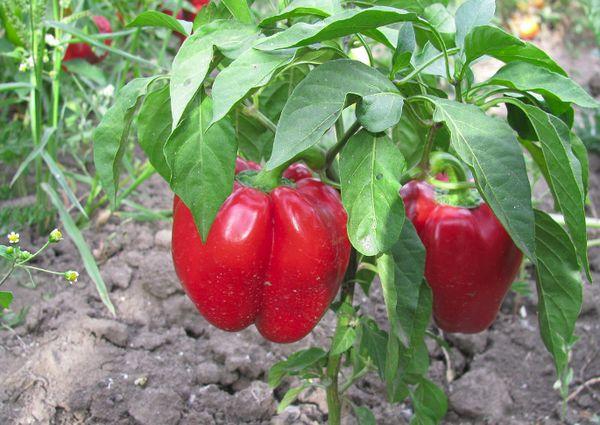
The bush can reach 50 centimeters in height. Leave 35-40 centimeters between bushes; this distance is necessary for the bushes to grow. The leaves remain dark green throughout the growing season.
Productivity and taste of fruits
Main characteristics:
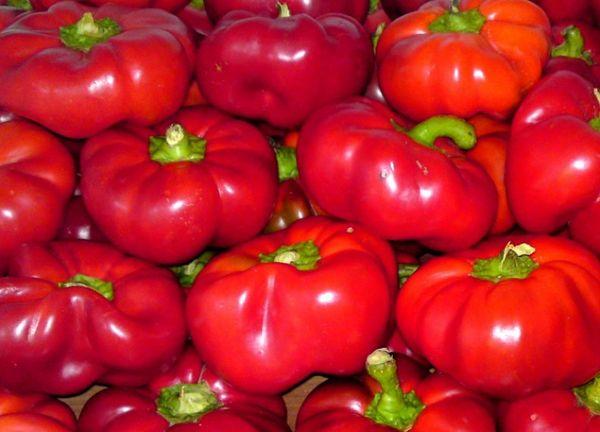
- The peppers are round in shape, weighing between 50 and 130 grams. The flattened sides of the peppers are prominently ribbed. The thickness of the walls varies by variety and can range from 5 to 10 millimeters. Gogoshary peppers come in a variety of colors, from green and yellow to red and brown.
- The fruits have a sweet, non-bitter flavor. They are eaten fresh and also processed for preserves. Peppers of these varieties pair well with tomatoes and carrots. They remain intact after flash freezing, retaining their beneficial properties.
- The fruits withstand long transportation without loss. Yields, with proper care, can reach up to 50 kilograms per square meter.
Advantages and disadvantages
Experts note the main advantages of growing peppers of this type:
- high taste characteristics of fruits;
- ability to produce a stable harvest;
- ability to be stored for a long time and tolerate transportation;
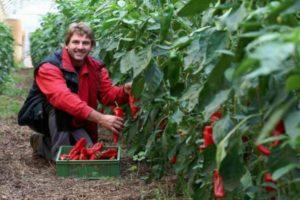
- The compact size of the bush allows the crop to be planted in small areas of land.
 The disadvantages of the variety include the ability to cross-pollinate and changes in taste characteristics depending on the neighboring crop. A significant drawback of this group of varieties is their intolerance to drought. Many peppers are prone to stem breakage.
Types of pepper
Each group of varieties has similarities and differences. The additional characteristics a variety possesses determines gardeners' choice.
Rotunda
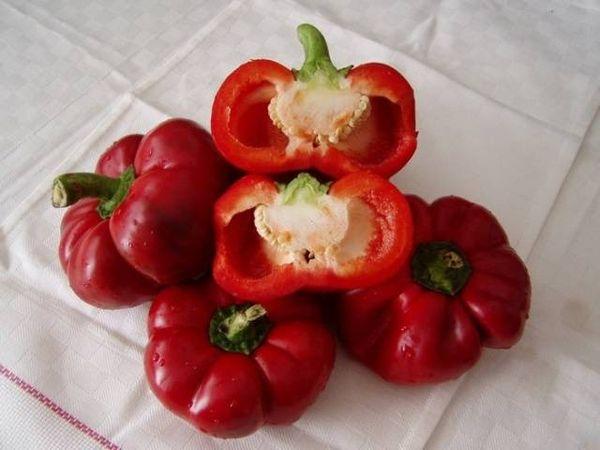
The most famous representative of the Gogoshary group is called Gogoshary or Ratunda. External characteristics of the fruit:
- the color of the pepper is always bright red;
- its shape resembles a small pumpkin;
- the pepper has a pungent taste, but no bitterness;
- The fruit weighs from 100 to 130 grams, the walls of the fruit are not thick, but dense.
Ruby
A special feature of this type is its ability to tolerate lower temperatures than other Gogoshary varieties.
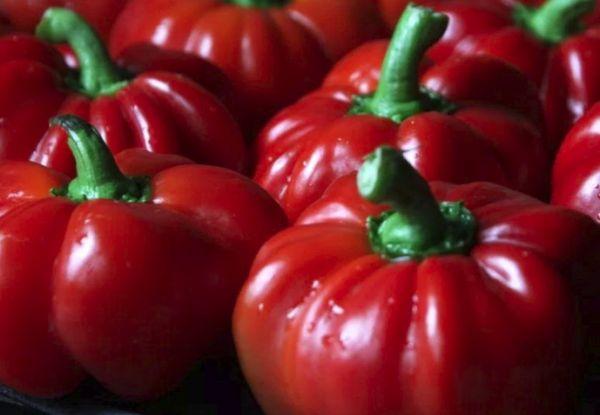
The fruits are round, with pronounced ribs. They are dark red, almost brown, and can weigh between 110 and 150 grams. The fruit walls are thick, reaching 10 millimeters.
Kolobok
A dark red pepper. The fruit is round, flattened on both sides. Peppers of this variety can be harvested when light green; their flavor is indistinguishable from that of red peppers.
Olenka
As they ripen, the peppers of this variety change color from dark green to brown. The vegetable is round, with distinct wrinkles. The average fruit weight reaches 100 grams.
Candy
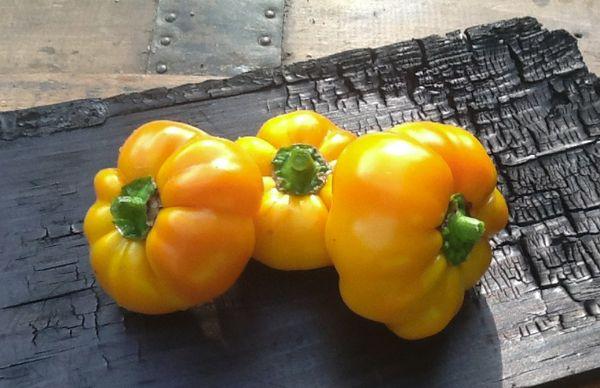
This variety can be yellow, green, or red. The vegetable has the familiar round shape characteristic of the Gogoshary group. As it ripens, it takes on a conical shape. The walls do not thicken more than 7 millimeters.
Fragrant Golden Jubilee
The fruits of this variety are yellow and weigh up to 200 grams. The wall thickness varies from 8 to 10 millimeters. This vegetable is often used in assorted preserves and is also suitable for freezing.
Golden Tamara
The fruit is golden-yellow, but can be harvested green when ripe. The fruit walls reach 10 millimeters in thickness, and the average fruit weight is 180 grams.
Where to grow
The planting site determines the future harvest. Crop rotation is essential for pepper cultivation. Due to the unique characteristics of the Gogoshary variety, gardeners recommend choosing a planting site away from other varieties of this crop.
Location and lighting
Peppers thrive in sunny locations. They don't tolerate drafts, so avoid planting them in elevated, open areas.
Take a look Also
Information! Seedlings require 12 hours of daylight to develop.
Soil for planting
The soil for planting is prepared several weeks before planting. It is mixed with nitrogen-containing fertilizer and watered. In some regions where temperatures are below 10 degrees Celsius, the soil is covered with plastic film to create a greenhouse effect. This method helps warm the soil and give it the necessary structure.
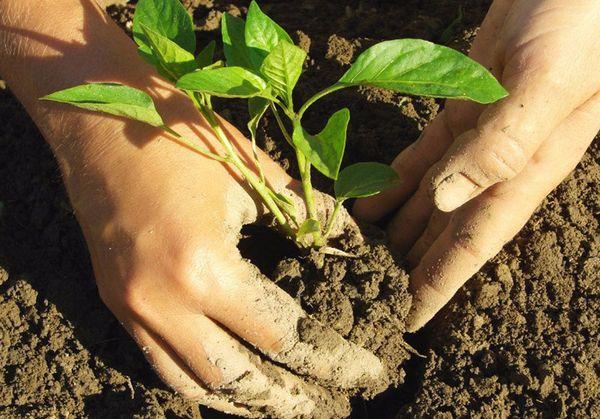
Tip! To enrich the soil before planting, add wood ash to the prepared hole.
Sowing rules
Peppers require careful handling and control of shoots. Some varieties have stems prone to breakage.
Optimal timing
Seedlings are sown in early or mid-March. The Gogoshary group is a mid-season variety, so they require about 90 days indoors to grow.
Pepper seedlings are planted outdoors or in a greenhouse, provided the soil temperature reaches 16 degrees Celsius. Planting times vary by region, but the prime period is considered to be from mid-May to the first week of June.
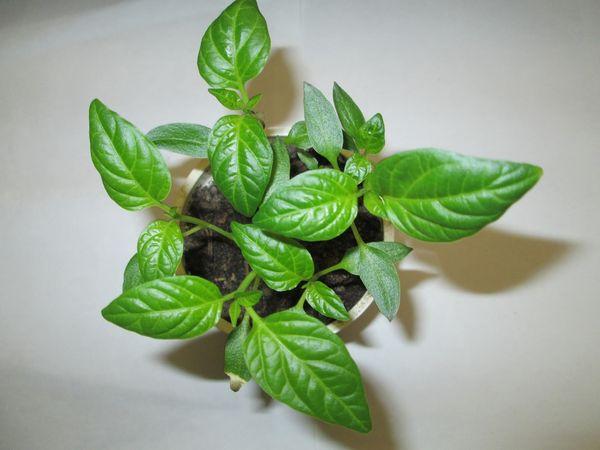
The readiness of seedlings for planting is determined by their appearance:
- the stem is dense, up to 10 centimeters high;
- presence of 3-4 true leaves;
- developed root system.
Preparing soil and seeds
When sowing seedlings, calibrated seeds are used. They are also soaked before sowing to increase germination rates.
The soil for seedlings and seeds should consist of black soil with some turf added. To disinfect the soil before planting, treat it with chemicals (Fitosporin, Baktofit).
To ensure the soil for peppers is loose and light, add natural soil loosening agents. Perlite or vermiculite are suitable for this purpose.
Sowing scheme
Seeds are sown in individual containers or shared containers. Peppers' root systems are fragile, so individual cups are ideal. When sowing in shared containers, gardeners recommend using a staggered pattern.
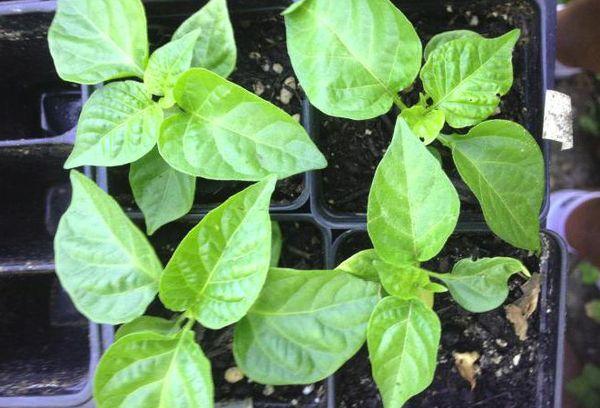
Plantings in open ground are carried out in rows, leaving 35-40 centimeters between adjacent bushes.
How to care for adult Gogoshars
To get a good harvest, you must follow the care rules:
- ensuring daylight hours of at least 12 hours;
- regular watering with warm water;
- fertilizing with mineral complexes.
Picking pepper seedlings
When growing peppers in a common container, there comes a time when the plants need to be pricked out. Strong plants are transplanted into individual containers and left on a sunny windowsill for 5-7 days to acclimate. Then, the seedlings begin to harden off before being transplanted to their main location.
Watering and fertilizing
This group of varieties is not drought-resistant, so regular watering is essential. Early morning or late evening are ideal times. Water the peppers at the roots with gentle streams of water.
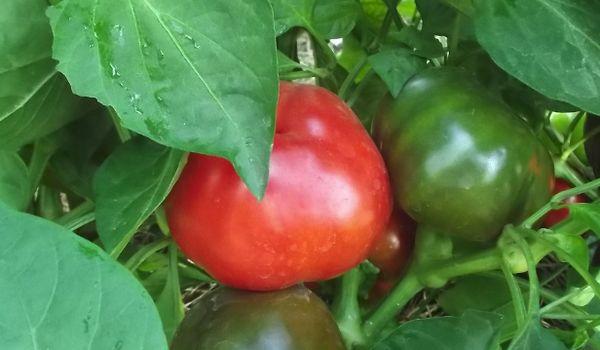
Fertilizers are necessary during the period of fruit formation and ripening. Peppers require additional potassium, phosphorus, and magnesium. The optimal fertilizer option is a combined fertilizer containing all these elements.
Loosening the soil
To ensure the crop grows, it requires loose soil. This is achieved by regular tilling after planting. This is done after heavy watering or rainfall.
Pest and disease control
This group of varieties exhibits resistance to many diseases that affect vegetable crops. However, diseases can also arise as a response to imperfections in care.
Fungal diseases, as well as aphid and spider mite infestations, are considered particularly dangerous. Before flowering, peppers are treated with fungicides. A solution of potassium permanganate is effective for foliar application.
Planned harvest
Peppers reach technical maturity in the first half of September. Gardeners harvest the main crop by the end of the month. If unripe fruits are present on the bushes, they are also collected and stored separately from the ripe ones.
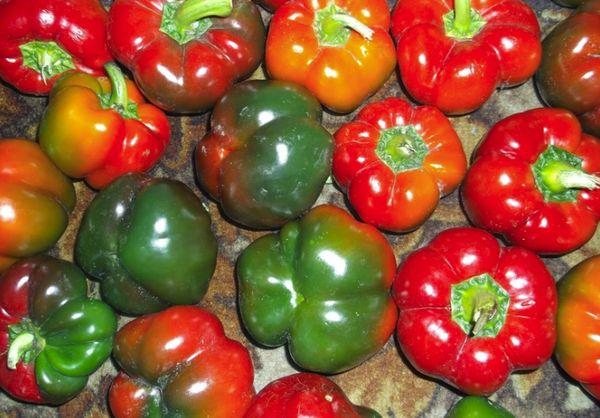
Gogoshary peppers can be stored for 1-2 weeks without losing their beneficial properties or appearance.
Gardeners' reviews of the Kolobok pepper
In the list of varieties of the Gogoshary group, the Kolobok pepper variety occupies a special place.
According to gardeners, it has several advantages. The fruit's characteristics indicate thin walls and impressive weight. One pepper weighs approximately 200 grams. Gardeners say the variety's unique feature is its ability to produce a high yield, unmatched by similar varieties.
| Variety | From 1 square meter |
| Kolobok | Up to 10 kilograms |
| Ruby | Up to 5 kilograms |
| Coral | Up to 4.5 kilograms |
Kolobok enjoys well-deserved popularity; it is recommended for cultivation in the central zone, under greenhouse conditions.
Gogoshary peppers are well-known among gardeners. They have been popular for decades due to their appearance and flavor, and are suitable for various types of preserves.
Related posts:
 Description of the best pepper varieties for greenhouses and open ground in 2025
 Using boric acid for spraying and treating peppers
 80 Best Eggplant Varieties for Different Regions with Descriptions and Characteristics
 Why peppers don't grow in greenhouses and open ground after planting, and what to do about it
 The use of calcium nitrate for fertilizing peppers and the rules of procedure
 Descriptions of the 20 best cherry varieties for the Moscow region, their planting and care
 Description of the 23 best pear varieties for the middle zone, planting and care rules
 Description and characteristics of the best seeds of pea varieties and types