
- Goals and objectives of transplantation
- How do you know if a tree needs to be replanted?
- We determine the timing depending on the growing region
- In the Central Belt and the Moscow Region
- In Siberia and the Urals
- In the Volga region
- And yet, when is it better: autumn or spring?
- Transplantation technology
- Choosing a landing site
- What kind of soil is needed?
- We keep our distance
- What crops should be planted next to each other?
- How deep should I plant?
- Preparing the tree for planting
- Instructions for carrying out work
- How and with what to fertilize after planting?
- Specifics of further care
- Possible errors and solutions
It's rare to see a garden plot without a plum tree growing in it. This tree is prized by gardeners for its high yield, its resistance to adverse conditions, and its ease of care. Sometimes, replanting the tree is necessary, but it's important not to damage the root system. The plum tree transplanting procedure is simple; the main thing is to follow the rules and recommendations.
Goals and objectives of transplantation
Sometimes it becomes necessary to move a mature plant to a new location. The purpose may be:
- placing the plum tree in a more favorable place where pollination is possible, lighting conditions and soil parameters are optimal;
- appropriation of a tree growing on abandoned land, no longer needed by its previous owners;
- removal of root shoots of a suitable variety;
- removal of a tree from a site where construction is planned;
- moving your favorite varieties from your old plot when moving to a new place of residence.
The main task is to relocate the plum tree in such a way as not to harm it with careless actions. The transplant must be carried out according to all the rules. Plum trees are easy-to-care-for, are relatively stress-resistant, and are best relocated at the age when their adaptability is at its peak. Caring for a transplanted tree is challenging, but essential for maintaining the plant's health.
How do you know if a tree needs to be replanted?
The most common reason for replanting a plum tree is that it has failed to produce fruit for several years due to improper planting or an unsuitable location. This can be due to a lack of nearby pollinators, insufficient light, cluttered areas due to buildings, or the rapid growth of neighboring garden crops.
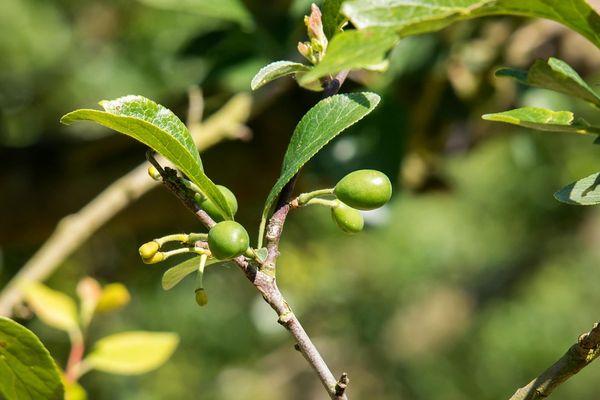
Sometimes, after demarcating their property, owners discover that their plum tree is growing right on the border with their neighbor's property, making it impossible to erect a fence. Moreover, neighbors may complain, as the neighbor's tree will shade their own plantings.
The owner may need a new shed or an extension to the house. Some will ruthlessly uproot the plum tree that's found on the site of the future building, while others will act wisely and generously and transplant it. Replanting isn't particularly difficult, and the tree will be saved.
We determine the timing depending on the growing region
It is necessary to transplant to a new location before the arrival of frost in the fall, after the cold weather has passed in the spring.
The exact timing of plum transplantation is determined by the climatic conditions in the region where the garden plot is located.
In the Central Belt and the Moscow Region
The optimal time for replanting in the Central Russian region and the Moscow region is April in the spring, and mid-September and late October in the fall. During these periods, the ground does not freeze, and there is still a month before the fall frosts.
In Siberia and the Urals
In these regions, frosts are expected earlier, so fall plum transplanting is carried out in August or early September. Spring transplanting is carried out in May, after stable warm weather sets in.
If you have chosen a winter-hardy plum variety, you can transplant it earlier in the spring, immediately after the snow melts.
In the Volga region
Winter conditions in this area are not harsh, so plums are replanted in the spring, at the end of March-April, and in the fall - in September.
And yet, when is it better: autumn or spring?
Experienced gardeners recommend replanting plums in the fall. This procedure offers the following advantages:
- the tree calmly adapts to its new location until spring, which results in faster growth processes and full development;
- Before the beginning of the growing season next season, the plum tree receives double feeding – autumn and spring;
- In the fall, it is easier for a gardener to choose a day for transplanting, but in the spring, it is necessary to take into account the time before the sap begins to flow, the establishment of a positive soil temperature, and the absence of night frosts.
But autumn transplantation also has its downsides:
- A gardener cannot monitor the health of a plant that has gone into winter dormancy; to assess the condition of a plum tree, one must wait for its spring awakening;
- In temperate climates, winter can be unpredictable, frosty or with multiple thaws, snowless or with an abundance of snow, which negatively affects the condition of the transplanted plant, and it is impossible to predict winter temperature fluctuations.
Transplantation technology
When replanting a fruit tree, it's important to follow the correct procedure. It's important to choose a suitable location on the plot, prepare the tree, and prepare the planting hole.
Choosing a landing site
The planting site must meet strict criteria, otherwise problems with plum growth and yield will arise. The site chosen for transplanting should be well-lit, avoiding shade or even partial shade. It should be protected from winds. While strong and strong winds can damage the tree, complete isolation from circulating air masses is unacceptable, as plum trees require constant airflow.
What kind of soil is needed?
Plum trees prefer loose, fertile loam or sandy loam with a neutral pH. The tree does not thrive in acidic soil. Groundwater should be below 1.5 meters, so it's best to choose a higher spot in the garden for replanting.
We keep our distance
The distance between trees is determined by their variety. For plum trees with large, spreading crowns, the distance needed to ensure full development should be at least 3.5-4 meters. Dwarf varieties with narrow crowns are planted at a distance of 2.5 meters.
What crops should be planted next to each other?
For plums to produce abundant fruit, cross-pollination is necessary. Therefore, plum trees of other varieties or cherry plums should be nearby.
It is not advisable to plant cherry, sweet cherry, pear and especially hazel trees nearby.
The latter crop grows rapidly, negatively impacting fruit crops, taking away their nutrition and space.
How deep should I plant?
An extremely important point: when replanting, the plum tree should be planted at the same depth as it was in its previous location. Specifically, make sure the root collar is level with the soil surface.
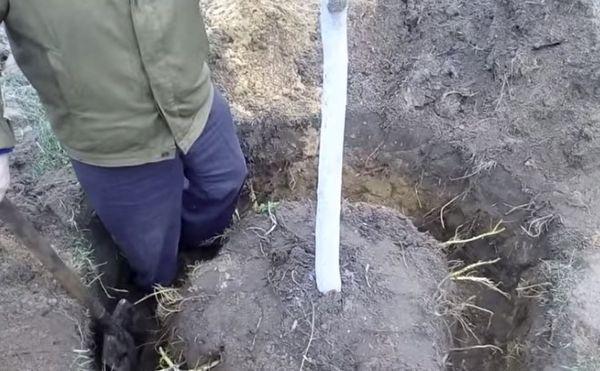
Preparing the tree for planting
Plum trees under five years old are suitable for transplanting. One- and two-year-old trees are best, as they have the greatest adaptability. Mature trees are not only more difficult to remove from the ground, but they also have a harder time withstanding the stress associated with transplantation.
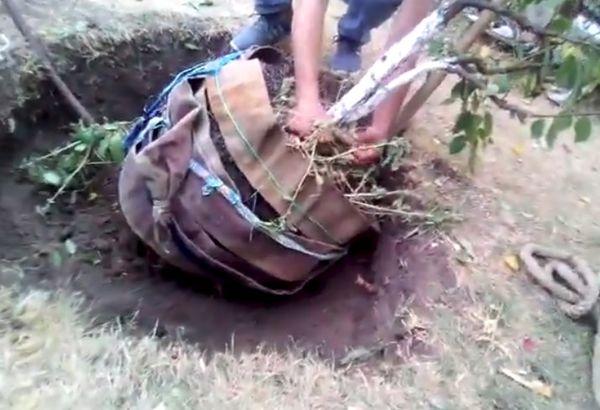
The plum tree is removed from the soil just before replanting. To facilitate the separation of the root ball, several buckets of water are poured around the trunk. The thoroughly moistened soil becomes more pliable. A trench is dug around the tree, corresponding in diameter to the crown and approximately 70 cm deep. Then the root ball is carefully removed, being careful not to damage the roots beyond the trench.
The root ball is carefully inspected. There should be no signs of rot. Any dried roots are cut off.
When moving the plant to a new location, it's best to place it on a plywood plate that's large enough to accommodate the roots—this will prevent the soil from falling apart along the way. If the plum tree has a long journey to its new location, the roots and soil should be covered with fabric or plastic.
Instructions for carrying out work
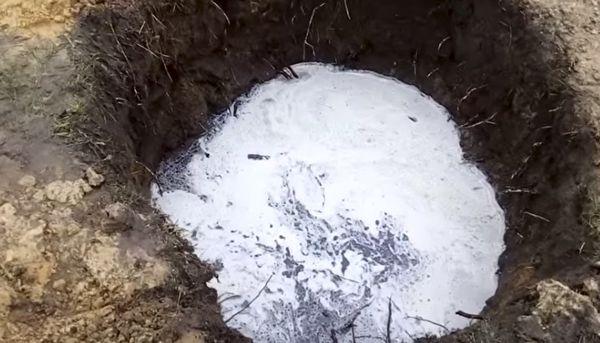
Prepare the site at least two weeks before replanting. If replanting in the spring, the hole should be prepared in the fall.
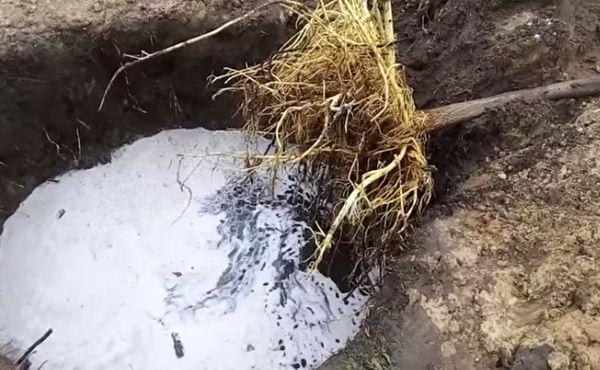
The planting hole is prepared as follows:
- the soil is dug to a depth of 20 cm;
- if the soil is acidic, add ash;
- dig a hole about 70 cm in diameter and 80 cm deep;
- 10 cm from the central point of the hole, a stake is dug in to support the trunk;
- the bottom is covered with drainage 5 cm thick, gravel and brick chips are used;
- a layer of humus mixed with a small amount of ash is poured onto the drainage;
- A small mound of fertile soil is made on top (the excavated soil is mixed with humus and peat), since the roots should not lie directly on the fertilizer layer.
Once the planting hole is prepared, you can begin the main process of transplanting. To transplant a plum tree, in both spring and fall, follow these steps:
- while the soil on the roots has not dried out, lower the plum into the planting hole next to the stake;
- fill the hole with prepared fertile soil;
- compact it so that there are no voids left between the roots;
- water generously;
- tie the trunk to a stake.
There's only one difference between replanting plum trees in the fall and spring: in the fall, it's essential to cover the soil around the trunk with mulch. This is important to retain soil warmth and protect the delicate roots from freezing. Peat mixed with ash or sawdust are good mulches.
How and with what to fertilize after planting?
The tied-up plum tree is watered again. The water should be settled and slightly warm. It's a good idea to add a root growth stimulant to the water.
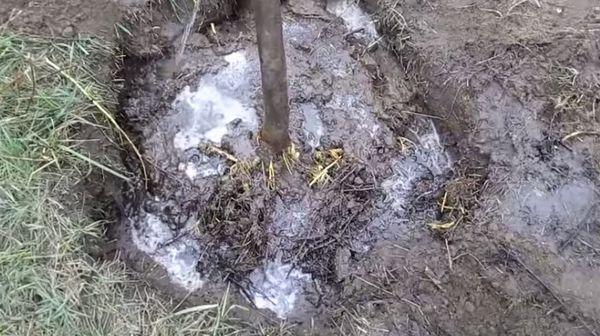
Fertilizing the plum tree after replanting is not necessary, as the organic matter added to the planting hole is sufficient. The tree can easily survive for two seasons on this supplement. During the third season after replanting, nutrients need to be added: potassium and phosphorus in the fall, and nitrogen in the spring.
Specifics of further care
No matter what time of year the transplant takes place, it is important to provide the plant with optimal care for full development and abundant fruiting.
Gardeners should be aware that during the first few seasons after transplantation, shoots will grow irregularly, distorting the crown's shape. Therefore, formative pruning of the plum tree is necessary.
Soil acidity should also be monitored. If it increases, neutralize it with dolomite or lime.
Transplanted plum trees should not experience moisture deficits. Water regularly, depending on weather conditions, and reduce the frequency toward the end of summer.
Possible errors and solutions
Transplanting a plum tree is a simple process. But even then, inexperienced gardeners make plenty of mistakes.
The most common mistakes:
- Digging up a plum tree prematurely. You need to dig up the tree just before planting it in a new location, otherwise it's likely to wither.
- Over-fertilizing. Fertilizers must be applied strictly according to the package instructions. Plants become diseased if the soil is oversaturated with minerals.
- Adding fresh cow manure or bird droppings to the planting hole. This organic matter decomposes slowly in the soil, releasing large amounts of heat and ammonia. This burns the roots, which negatively impacts the tree's health.
- Incorrect watering. Plum prefers frequent but light watering.
- Mulching too densely. Don't apply too much mulch; don't press it against the trunk, otherwise the bark will rot.
- Incorrect spacing between trees. When planting in a row, take into account low-growing and spreading varieties.
- Planting plum trees at an angle.
If plum trees are transplanted correctly, a bountiful harvest can be achieved within a year. With proper care, transplanted trees quickly recover, adapt to new conditions, and accumulate the strength to bear fruit.
Related posts:
 Description and characteristics of the Yakhontovaya plum variety, pollinators
 Description of the Renklod plum varieties and cultivation technology
 Description and varieties of plum variety Ternovka, planting and care technology
 Description and characteristics of the 30 best yellow plum varieties, planting and care
 Growing and caring for plums in open ground, how to plant them correctly
 Description and distinctive features of the best varieties of Ussuri plum
 Description of the beneficial and harmful properties of plums for human health, contraindications
 Description of the Volga Beauty plum variety, planting and care