
- Selection of plum Red Ball
- Pros and cons of fruit crops
- Description of the tree
- Size and annual growth
- Fruiting
- Flowering and pollinators
- Ripening time and harvest
- Tasting evaluation and scope of application of fruits
- Transportability
- Susceptibility to diseases and parasites
- Drought resistance, frost resistance
- How to plant a tree on a plot
- Purchase of planting material
- Required soil composition
- Selecting and preparing a site
- Dimensions and depth of the planting hole
- Timing and rules for planting a tree
- What crops can and cannot be planted next to each other?
- Organization of care
- Watering
- Recommended fertilizers
- Crown pruning
- Loosening and mulching the tree trunk circle
- Seasonal treatments
- Preparing the Red Ball plum for winter
- Methods of reproduction
- Gardeners' reviews of the variety
Krasny Shar is a mid-early, frost-resistant plum variety named for its unique fruit appearance. Although it was developed relatively recently, it has already gained a significant following among gardeners. This is due to its genetic resistance to clasterosporium, its comfortable height for care and harvesting, its early maturity, and the fruit's flavor.
Selection of plum Red Ball
Red Ball is a Chinese plum cultivar, a cross between the Burbank and Ussuriyskaya Krasnaya varieties. It has been in variety testing since 1987 and was added to the State Register in 1989. Recommended growing region: Central Russia.
Pros and cons of fruit crops
Among the main advantages of the variety:
- small height of the tree;
- unpretentiousness;
- frost resistance;
- early reproductive readiness (2–3 years);
- good taste and large fruit size;
- resistance to fungal diseases.
This variety has no significant drawbacks, but the following are comments: satisfactory winter hardiness, self-sterility, and the tendency of the tree's root collar to rot.
Description of the tree
The trees are medium-sized, with a rounded, drooping, spreading crown. The leaves are large, matte, and dark green.
Size and annual growth
The height of an adult tree is 2.5 m, new shoots and bouquet branches grow annually.
To ensure that the harvest remains abundant, the shoots are systematically pruned.
Fruiting
Early fruiting is a distinctive feature of this variety; the plum produces its first fruits 2–3 years after planting. Fruiting is good and annual, provided the ovaries are kept to a minimum. The Red Ball plum yield is 18 kg per tree.
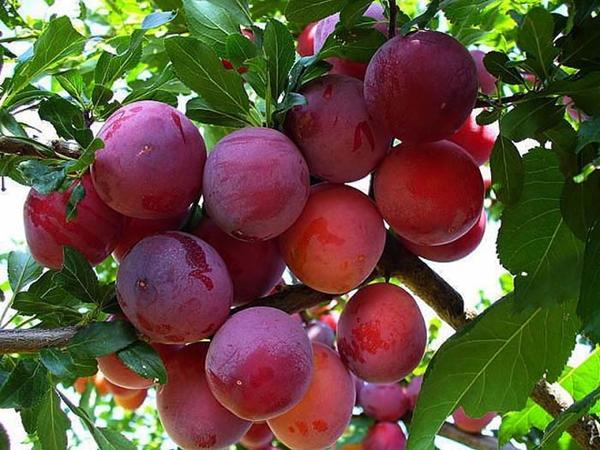
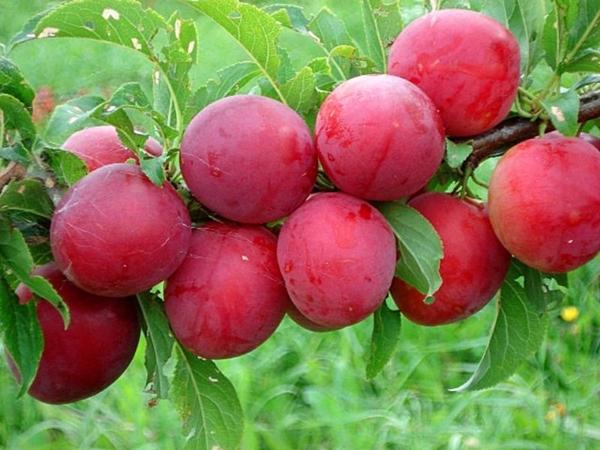
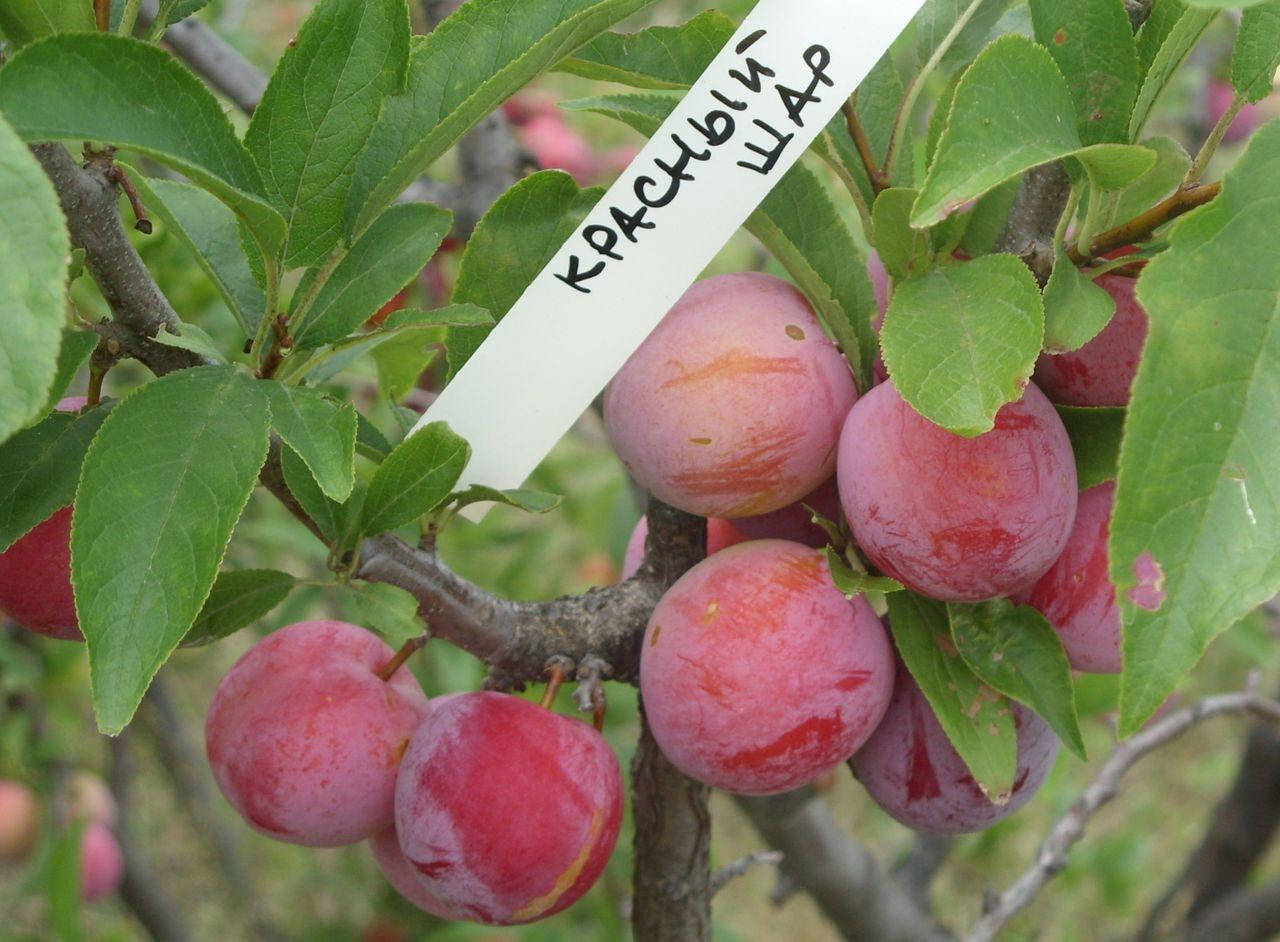
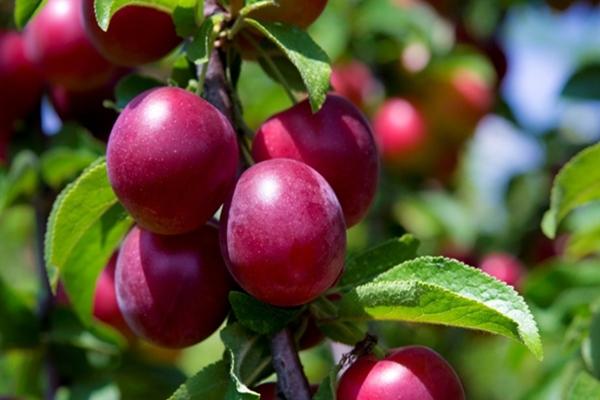
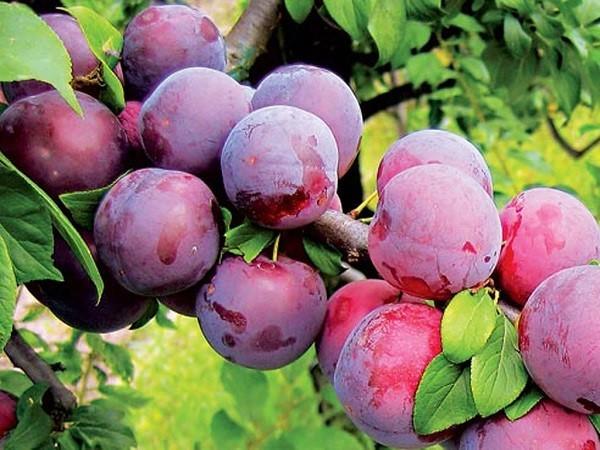
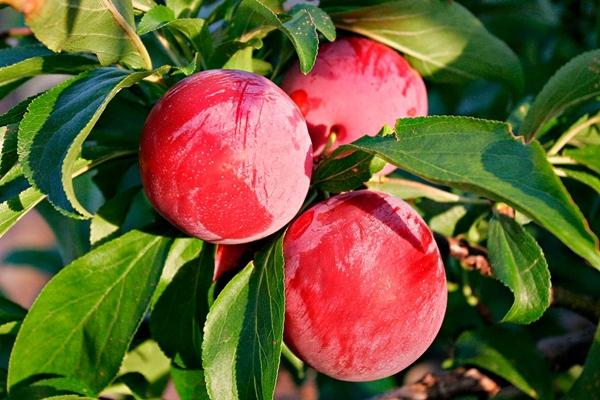
The fruits are large (up to 40 g) and perfectly spherical, with a barely noticeable lateral seam. The fruit is red with a light waxy coating, and the flesh is creamy yellow. The skin is thick.
Flowering and pollinators
This variety blooms early (12–14 days earlier than the common plum), before the leaves appear. The Red Ball plum is self-sterile. Pollinators include Chinese and Skoroplodnaya plums. cherry plum Gold of the Scythians and the Kuban comet.
Ripening time and harvest
The harvest season is mid- to late August, with exact timing depending on the growing region. For fresh consumption, the fruits are harvested ripe; for processing, they are harvested 3-4 days before technical maturity. The fruits are harvested with the stems attached.
Tasting evaluation and scope of application of fruits
The flesh of the Red Ball fruit is light yellow, juicy, and tender, with a pleasant flavor. The variety's tasting score is 4 points. Red Ball is a table variety; its fruits are best eaten fresh.
Transportability
Transportability is excellent, long-distance transportation is possible without loss of marketable appearance of the fruit.
Susceptibility to diseases and parasites
This plum variety is genetically resistant to fungal diseases such as holey spot and monilial blight, but is susceptible to crown rot. The main pest of this variety is the plum aphid.
Drought resistance, frost resistance
Drought resistance is satisfactory. Winter hardiness is above average, but frost resistance is down to 40°C.
How to plant a tree on a plot
A poor-quality seedling won't grow into a good tree. Therefore, it's important to choose high-quality, two-year-old seedlings.
Purchase of planting material
How to choose the "right" seedlings:
- The suitable age for a plum seedling is 2 years.
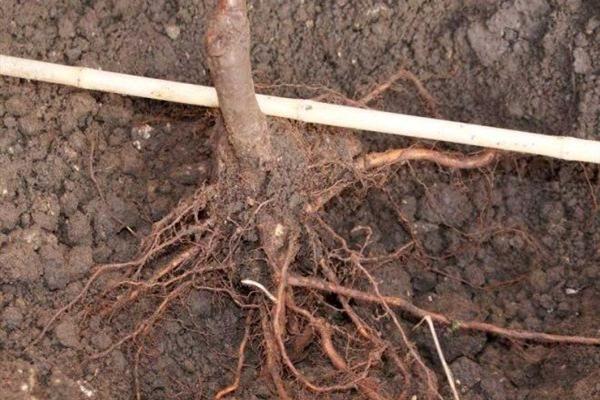
- When choosing a seedling, it's important to determine what type of rootstock the graft is made onto: a clonal rootstock (a rooted scion) or a seed rootstock (a plum or cherry plum seedling). Trees on seed rootstocks are planted at the root collar level, while those on clonal rootstocks are planted deeper.
- Leaves on a seedling are allowed only at the top of the crown.
- Seedlings with growths or cut roots are rejected.
- Root length: from 30 cm.
- The cuts on the roots should be white; a brown color indicates that the roots are dead.
- The aboveground part of the seedling should be clean and smooth.
Required soil composition
The Red Ball plum grows best in well-drained, fertile areas. It thrives in loamy and sandy loam soils.
Selecting and preparing a site
Plums are sun-loving and do not tolerate stagnant water. Therefore, a site on the south side of the garden, at an elevated position, is chosen. If the groundwater table is close to the surface, drainage will be required. The suitable site is dug over and cleared of plant debris. Acidic soil is limed.
Dimensions and depth of the planting hole
To plant a plum tree, dig a hole 1 m in diameter and 0.4 to 0.6 m deep. The hole is prepared and fertilized three weeks before planting. A 1.5 m long stake is driven into the bottom of the hole on the south side. This will provide support for the young tree and protect it from sunburn.
Timing and rules for planting a tree
Trees are planted in spring and autumn. Autumn planting is preferable.
Before planting, the roots are dipped in a clay or soil mixture, to which "Heteroauxin" (0.5 g per 20 l) can be added to promote better rooting. When planting, the root collar is raised 5–6 cm above the edges of the hole.
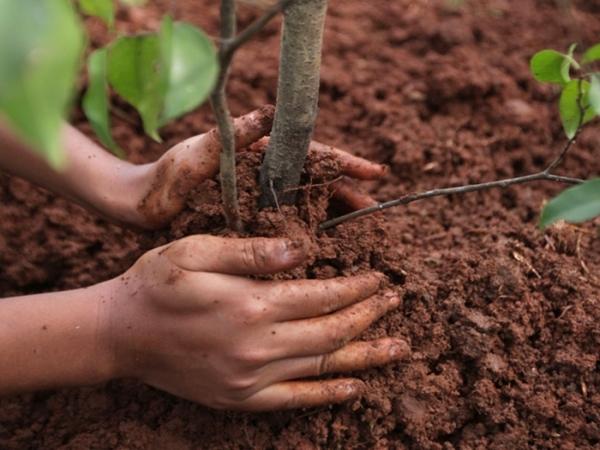
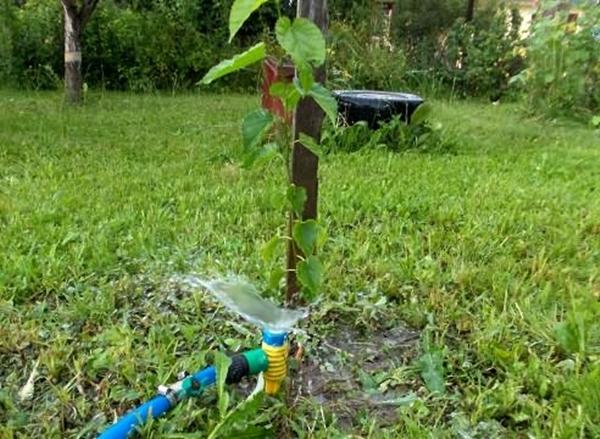
The roots are spread out and covered with soil from the topsoil. Gently compact it, then add more loose soil. Make a ridge the size of the planting hole, with a hole in the center for watering. Water immediately after planting; each seedling requires 3-4 buckets of water.
What crops can and cannot be planted next to each other?
Plum feels very good next to apple and currant trees.
Does not tolerate proximity to birch, pear, walnut, hazelnut, and nightshade.
Organization of care
Plum cultivation techniques include proper soil cultivation, watering, fertilization, and protection from diseases and pests.
Watering
During the first 2-3 years, plum trees are watered 4-5 times per season at a rate of 1-2 buckets per irrigation. In subsequent years, water less frequently, in spring, summer, and fall. The watering rate is 2-3 buckets per 1 m.2 tree trunk circle.
Recommended fertilizers
Organic fertilizers are added to the tree trunk circles every 2 years, and in the intervening years, a complete mineral fertilizer is used.
Crown pruning
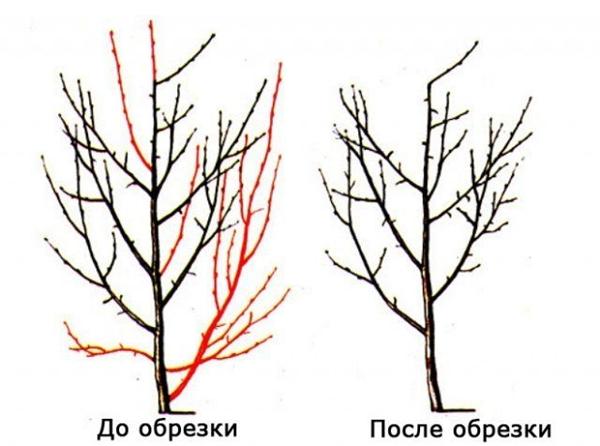
There are several types of plum pruning: post-planting, sanitary thinning, and rejuvenating.
The purpose of post-planting pruning is to shape the crown. Skeletal branches are shortened, and the remaining shoots are severely pruned (to 70 cm).
When thinning, diseased, dry, and crown-thickening branches are cut out.
Rejuvenation pruning is performed every 4-5 years to stimulate fruiting. Skeletal branches are shortened to 2-3-year-old wood.
All types of pruning are carried out only in spring.
Take a look Also
Loosening and mulching the tree trunk circle
The soil around the tree trunks is loosened 3-4 times. Loose soil retains moisture better, and light and heat can more easily reach the tree's roots.
The tree trunk circle is mulched, this protects the soil from excessive evaporation, overheating and freezing in winter.
Seasonal treatments
In early spring, spray with preparation No. 30 against pests.
The white bud is sprayed with malathion and Bordeaux mixture.
After flowering, trees are sprayed against codling moth with preparations such as Fufanon, Kinmiks, and Intavir.
At the end of leaf fall, trees are sprayed with 2-3% Bordeaux mixture to prevent bark death.
Preparing the Red Ball plum for winter
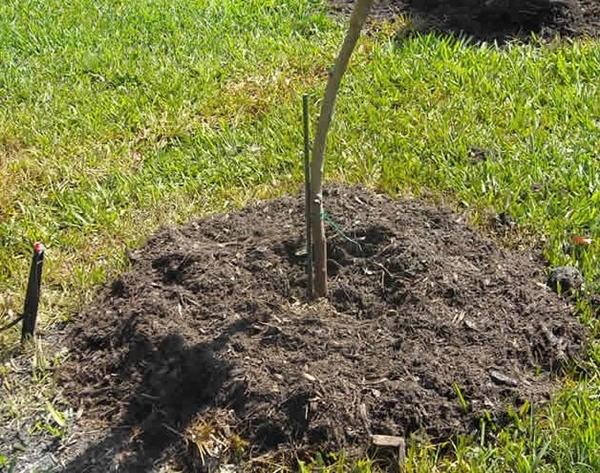
The soil in the tree trunk circle is dug up, organic fertilizers are added, plant debris is removed, trunks and forks of skeletal branches are whitewashed, and pre-winter watering is carried out.
Young, non-fruit-bearing trees are covered with light, breathable material instead of whitewashing.
Methods of reproduction
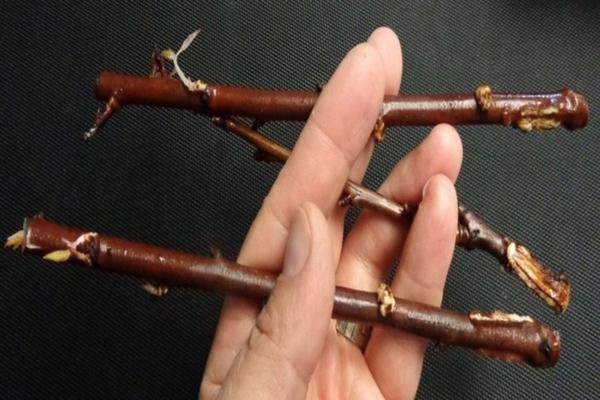
The Red Ball plum is propagated vegetatively (by grafting, layering, and cuttings) and by seed. Cuttings are the optimal method of propagation.
The seed method is used only for growing rootstocks or for selection work in fruit nurseries.
Gardeners' reviews of the variety
Elena K., Zelenograd: "We planted the 'Red Ball' plum tree eight years ago. The seedling, which we got from a nursery, has taken root very well. We have no problems with care at all; we only treat the plum in the spring and insulate the trunk in winter. The fruits are juicy and sweet and sour."
Alexander Evgenievich, Bryansk region: “I grafted the Red Ball plum on the advice of friends Tsar's cherry plum"They grow together perfectly for pollination, and the harvest is untouchable. We eat the plums fresh and make compotes."
Olga, Klin: "I wasn't impressed with the variety. The flavor is pleasant but not outstanding, and the fruit is plentiful. Incidentally, this variety blooms beautifully; the tree is covered in blossoms. However, it doesn't tolerate late frosts well; it's essential to insulate the trunk."
Related posts:
 Description and characteristics of the Yakhontovaya plum variety, pollinators
 Description of the Renklod plum varieties and cultivation technology
 Description and varieties of plum variety Ternovka, planting and care technology
 Description and characteristics of the 30 best yellow plum varieties, planting and care
 Description and distinctive features of the best varieties of Ussuri plum
 Description and characteristics of the 12 best varieties of Chinese plum, planting and care
 Description of the beneficial and harmful properties of plums for human health, contraindications
 Description of the 30 best plum varieties for the Moscow region, planting and care