
- History of selection
- Characteristics and description
- Bush
- Flowering and yield
- Harvesting and storage
- Scope of application of berries
- Immunity to diseases and pests
- Frost and drought resistance
- Pros and cons
- Landing specifics
- Selecting and preparing a site
- Forming a bed and planting hole
- Timing and technology
- We organize proper care for the bush
- Watering
- Top dressing
- Trimming
- Loosening the soil
- Shelter for the winter
- Diseases and pests: treatment and preventive measures
- Gardeners' reviews of the variety
The currant known as Golubka, or Golubka seedling, is a variety that has been tried and tested for decades. It is frost-resistant and resistant to spring frosts. By planting this undemanding plant in your garden, you can be sure of a harvest. The bush begins bearing fruit in its third year, yielding half a bucket of sweet-tart berries annually. The fruits can be eaten fresh or made into jam.
History of selection
In the middle of the last century, breeders at the Siberian Research Institute of Horticulture developed a new large-fruited currant variety. Its official name is Golubka Seedling. It is an early-ripening, self-fertile, and cold-hardy variety. Golubka bushes can be planted in the Central, Ural, and East Siberian regions. At the end of the last century, this variety was indeed considered large-fruited.
Golubka berries weigh 1.5-1.8 grams. Nowadays, many currant varieties with larger fruits have been bred, with berries weighing 4.5-6.5 grams. Golubka is easy to care for and adapts to any weather conditions.
Characteristics and description
The Golubka currant is an early-ripening variety. The berries can be harvested as early as late June or early July.
Bush
The Golubka currant bush is gently spreading, medium in height and density. The branches extend up to 1.5-2 meters in length. The shoots are erect, thin, and slightly curved. Young branches are greenish in color, while woody branches are yellow-brown. The root system is fibrous.
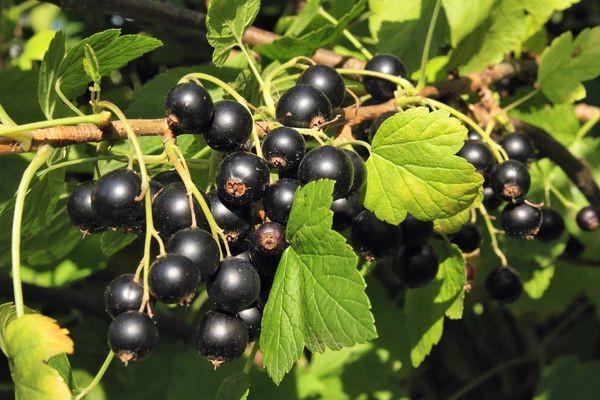
The leaves are long-petioled, dark green, 5-lobed, wrinkled, and have wavy edges. They are thin and smooth to the touch. At the very beginning of flowering, reddish buds appear. Then, soft pink flowers appear. They are gathered in a drooping raceme. Each raceme, 6-7 centimeters long, produces 7-8 berries after flowering.
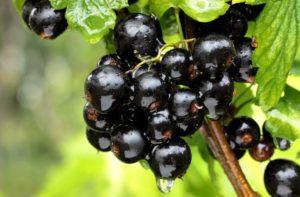
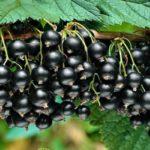
The fruits are round, black, and have thin, shiny skin covered with a bluish bloom. Each berry weighs, on average, 1.5-1.8 grams.
Flowering and yield
The Golubka currant blooms in mid-May. It lasts for about a week. After flowering, 7-8 small greenish berries appear on each cluster. By the end of June, the berries acquire the characteristic black color of currants. The berries ripen simultaneously. A young bush begins to bear fruit in the third year after planting. The berries can be harvested starting in July.
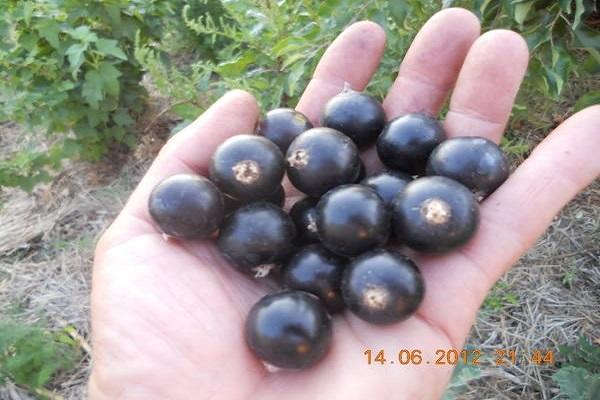
The peak yield occurs in the fifth year. A single bush can bear fruit regularly for 15 years. Each bush yields between 2.5 and 5-7 kilograms of berries.
Harvesting and storage
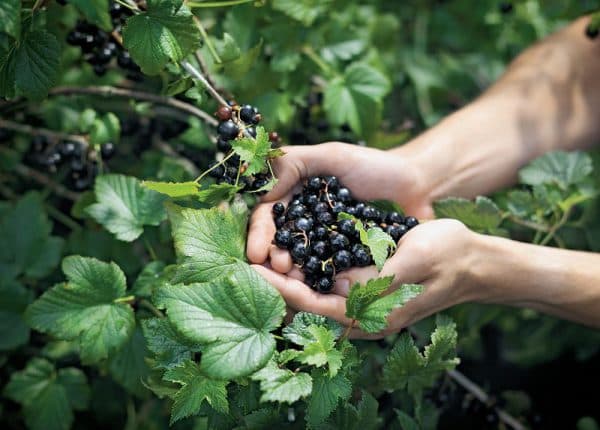
Ripe Golubka currant berries can hang on the branches for a long time without falling. The fruits have a sweet and sour flavor. They can be eaten fresh or made into jams and preserves. The harvest is hand-picked in late June or the first week of July. The berries are picked in the afternoon, when they are well-dried. The fruits are collected in bowls, cans, or plastic boxes. Fresh berries can be stored in the refrigerator for about 7-10 days.

Scope of application of berries
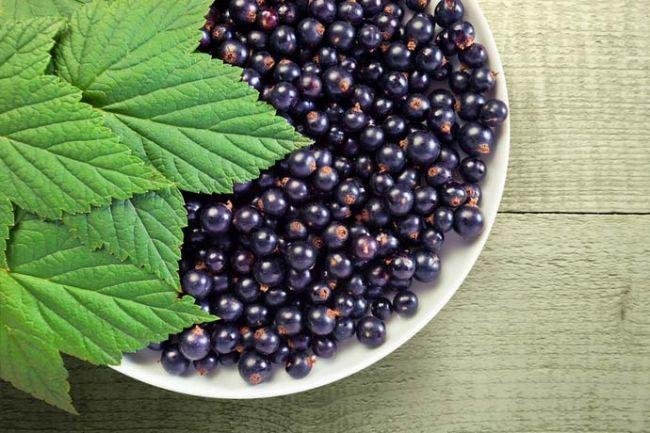
The Golubka currant is not a dessert variety. The berries have a sweet and sour taste. They are better suited for processing. They are used to make aromatic preserves, compotes, and jams. The berries are used in desserts, baked goods, and creams. Currants can be frozen or dried in the sun or oven. This variety is not suitable for growing commercially: the berries have a slightly sour taste and thin skin, which causes them to bruise and quickly lose their marketable appearance.
Immunity to diseases and pests
This variety has a good immunity. With proper care and timely addition of all necessary nutrients, the Golubka currant is almost disease-free. Growing in poor soil, the bush is susceptible to powdery mildew in rainy weather, and is less susceptible to anthracnose, septoria leaf spot, and columnar rust. In hot weather, the bush is susceptible to bud mites.
Frost and drought resistance
The Golubka currant can easily survive winter and frosts down to -30 degrees Celsius. In the central part of the country, the bushes do not require any protection before wintering. Currants growing in Siberia are best covered for the winter. The bush does not tolerate drought well. During dry periods, it is best to water the plant at least once a week, otherwise the berries will grow small or fall off.
Pros and cons
Advantages of Golubka currant:
- self-fertility;
- early ripening of berries;
- cold resistance;
- stable fruiting.
Disadvantages of the variety:
- wet berry picking;
- poor transportability;
- sour taste;
- medium berry size;
- susceptibility to fungal diseases and attacks by kidney mites.
Landing specifics
The Golubka currant grows well and produces a consistently high yield in fertile soil. Before planting the seedling in its permanent location, the site must be prepared.
Selecting and preparing a site
The shrub can be planted in an open, sunny spot or near a house, near a fence. In the shade, the plant will grow poorly, and the berries will be sour and small. The plant prefers fertile, neutral soil.
It is not advisable to plant the bush in a lowland where water will accumulate after rain.
In marshy soil, the plant will regularly rot and become diseased. Two to three weeks before planting, dig a hole and add humus and minerals to the soil. If the soil is clayey, amend it with sand and peat; if acidic, add dolomite flour or wood ash. Currants do not tolerate chlorides well.
Forming a bed and planting hole
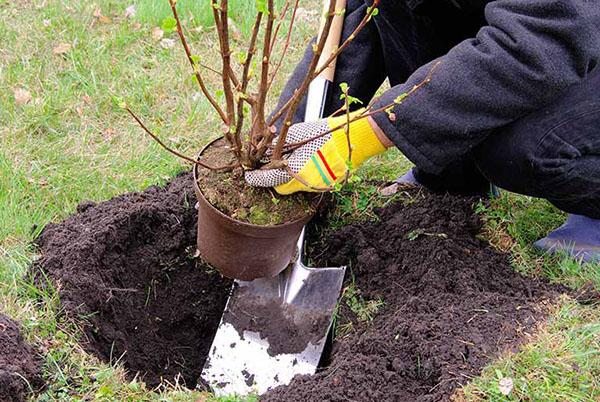
Before planting, level the surface, raising it slightly if necessary. Dig the soil. Dig a hole 50 centimeters deep and wide for planting. Add half a bucket of well-rotted compost, 100 grams each of superphosphate and potassium sulfate, and 300 grams of wood ash to the dug soil.
Take a look Also
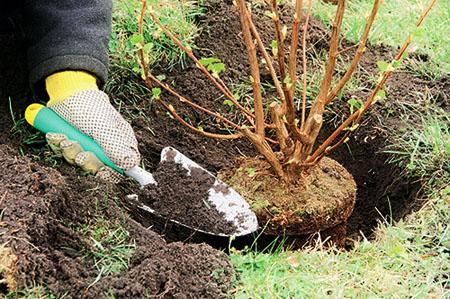
The seedling is planted 1-1.5 meters away from other garden crops. It's advisable to plant several currant varieties nearby. Cross-pollination will increase the yield.
Timing and technology
For planting, purchase ready-made seedlings aged 1-2 years. Young plants should have a well-developed, fibrous root system of a yellowish-brown color, light green shoots 35-45 centimeters long, and moist buds.
There are other ways to propagate currants: using rooted cuttings, layering, and dividing the bush.
Currant seedlings can be planted in spring or fall. Autumn months (September and October) are preferable. In spring, the plants will begin to grow, and after another 1-2 years, you can harvest your first small crop of berries.
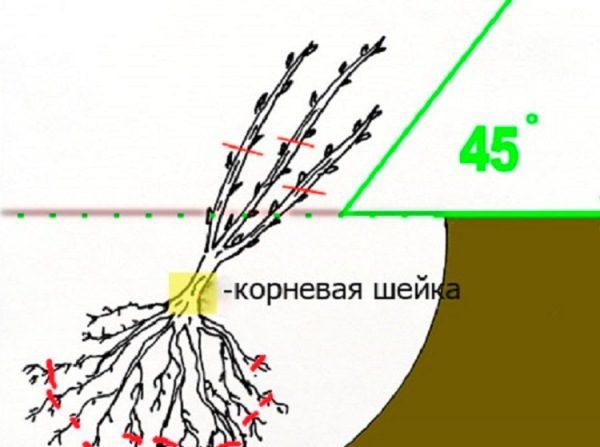
Planting technology:
- a portion of the fertilized soil is poured into the dug hole in a mound;
- a seedling is placed on the poured soil at an angle of 45 degrees;
- the plant, together with the root collar, is sprinkled with the remaining soil;
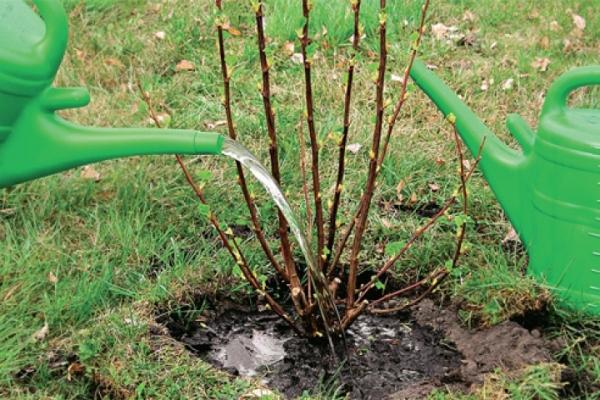
- the soil is compacted and a bucket of water is poured under the roots;
- mulch the tree trunk circle with peat or sawdust;
- Immediately after planting, all above-ground shoots should be cut off, leaving branches emerging from the ground 10-15 centimeters long with 2-3 buds.
We organize proper care for the bush
The Golubka currant can grow without care, although the yield will be low and the berries small. It's best to fertilize the bush twice a season and water it with rainwater once a week during drought.
Watering
The bush prefers moderate moisture. Water the plant only during dry periods. During dry periods, pour 2-3 buckets of water under the roots 1-2 times a week. Currants require watering during flowering and fruit formation. If the ripening berries don't get enough water, they grow small and sour or fall off.
Excess moisture can cause root rot and fungal diseases. Bushes can be protected from rain by covering them with plastic. Before wintering (in October), a water recharge should be performed, which involves pouring 5-6 buckets of water under the bush.
Top dressing
In the second year after planting, the plant can be fed with nitrogen fertilizers in the spring. Use no more than 50 grams of saltpeter per 12 liters of water. Fruiting bushes can be fed with superphosphate and potassium sulfate in early spring, before flowering. The plant responds well to foliar feeding.
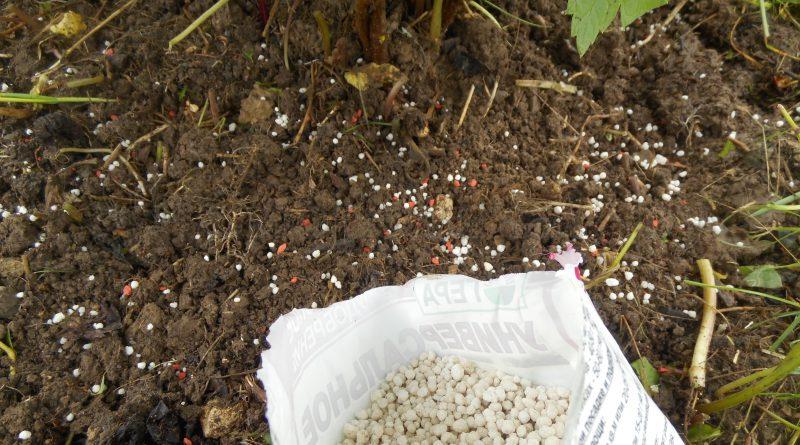
Before flowering, the foliage can be sprayed with a solution of boric acid and urea. Use 5 grams of boric acid and 30 grams of urea per 12 liters of water. During the ripening period, a mullein solution (1-2 kilograms of compost per bucket of water) can be poured under the bush. Half a liter of wood ash can be added to the organic matter. After harvesting, in late fall, before wintering, the bush can be mulched with well-rotted compost.
Trimming
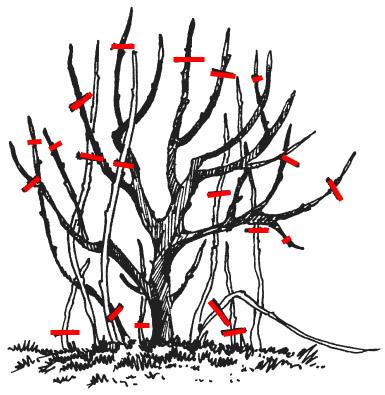
The Golubka currant is pruned for the first time immediately after planting. The following fall, formative pruning is performed. Several large shoots emerging from the ground are left, and the rest are cut off. The tops of the branches are shortened by 5 centimeters. In the third year, crown formation continues, removing excess root suckers, leaving 15-20 large shoots.
Take a look Also
In subsequent years, the tops of the shoots are left untouched, only the inward-growing and lower branches are pruned. In the seventh year, the bush is rejuvenated, some of the older branches are completely cut off, leaving the young shoots. Dry and diseased branches are removed every spring or fall.
Loosening the soil
The soil must be kept loose all summer long. Loosen the soil after each rain or watering. When loosening the soil around the tree trunk, remember that currant roots are close to the surface. Loosen the soil carefully.
Shelter for the winter
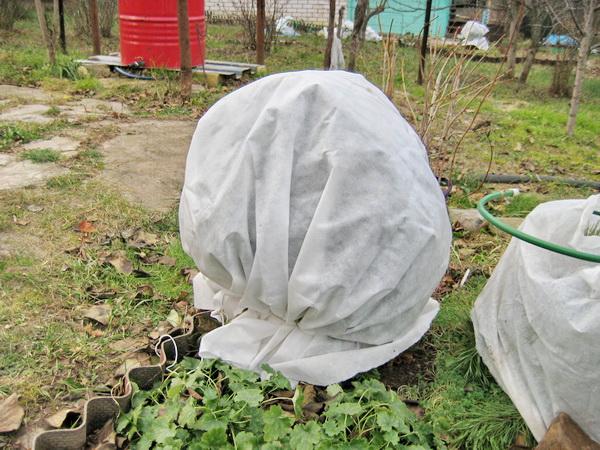
The Golubka currant tolerates winter cold well. Before winter, it's advisable to insulate the area around the tree trunk with humus and peat or a thick layer of sawdust. In northern latitudes, before frost sets in, wrap the bush with twine to loosely bunch the branches together. Then wrap the bush in agrofibre or burlap. A tall bush can be bent to the ground and covered with spruce branches. In winter, add plenty of snow to the plant; snow provides good frost protection.
Diseases and pests: treatment and preventive measures
The bush will be less susceptible to disease if you promptly remove weeds and fallen leaves from the area around the trunk, prune regularly, and feed the plant with organic and mineral fertilizers. In early spring, you can take preventative measures to prevent potential diseases and protect against insect pests.
The tree trunk area should be loosened and watered with a copper sulfate solution. Shoots should be whitewashed with lime or Bordeaux mixture. Before flowering, to protect against powdery mildew, anthracnose, and leaf spot, the foliage should be sprayed with a Topaz fungicide solution. Treatment with a colloidal sulfur solution, Fitoverm, or Karbofos protects against bud mites and scale insects.
Gardeners' reviews of the variety
Alexey Antonovich, 65 years old.
"I've been growing 'Golubka' currants for 20 years. I love the berries; they're sweet, soft-skinned, and have small seeds. I live in the Urals, and this variety meets all my criteria. The bush tolerates frost well, the flowers don't fall off in recurrent frosts, and I have a harvest ripening by midsummer. I recommend it to everyone."
Related posts:
 Characteristics and descriptions of the 40 best red currant varieties
 Description and characteristics of the 25 best blackcurrant varieties for Siberia
 The best and new varieties of black currant for growing in the Urals, planting and care
 The health benefits and contraindications of black currants
 Red currant health benefits, properties, and contraindications
 The health benefits and contraindications of white currants
 20 Best Blackcurrant Winter Preserves Recipes
 Description of the 50 best blackcurrant varieties for different regions