
- Causes and factors of the disease development
- The pathogen and its life cycle
- Anthracnose-resistant varieties
- Signs of bush damage
- What means are used to combat the disease?
- Fungicides
- Chemicals
- Folk methods of struggle
- Microbiological preparations
- Processing times and technology
- Prevention and garden protection
In the spring and summer, currants are susceptible to viral and fungal infections. Once infected, the fungus spreads throughout the plant, suppressing its immune system and resistance. Without proper preventative and curative measures, the bushes die. One of the most devastating diseases is anthracnose, a disease of currants. To prevent infection, monitor the bushes in late May and early June, and implement timely maintenance, fertilizing, and treatment.
Causes and factors of the disease development
Anthracnose can occur when:
- high humidity;
- high air temperature.
Penetration of the germ hyphae occurs through peridermal tissues, cracks, and peduncles. The parasite begins to manifest itself in May-June; in rainy summers, it can appear as late as September.
In addition to a damp environment, anthracnose occurs due to:
- pests, insects;
- strong wind;
- hot weather (up to 32OWITH);
- thickening of plantings, lack of proper care.
Fungal diseases primarily appear in a liquid-drop environment and are unlikely to appear in dry summer weather. Mass dispersal of fungal spores begins in late spring and lasts for 30-40 days. During this period, it's important to prevent the disease's progression through proper treatment and spraying. The level of infestation is influenced by:
- age of the bush;
- varietal characteristics;
- presence of infections on the site.
Spores are spread through rain or irrigation water. A water-damaged plant weakens in dry, hot weather.
The pathogen and its life cycle
Anthracnose is caused by the ascomycete fungus Pseudopeziza ribis Kleb. The pathogen causes premature leaf drop, resulting in a sharp reduction in the concentration of beneficial compounds, micro- and macroelements in the plant. In areas with moderately humid climates, infection can result in the loss of 70-75% of the crop.
Fungal spores destroy currants' resistance to frost and sudden temperature changes, causing 50-60% of the fruit to be lost.
The anthracnose development cycle consists of two phases:
- Summer conidial fungus is characterized by the formation of a bed of numerous conidia. These are transmitted between generations and can re-infect currants and the soil. The fungus spreads during the growing season. Microspores form in the leaf in a pit-shaped cavity and spread to surrounding tissue. The conidia are sickle-shaped and located in the center of the leaf. Signs of conidial sporulation include white, glossy pads on leaves and diseased shoots.
- Overwintering ascomycetes are characterized by the formation of microspores in infected leaves in the fall and winter. By spring, infected fruiting bodies develop, maturing into apothecia, asci, and ascospores. Fruiting bodies resemble narrow, saucer-shaped bodies with short stalks. They are especially noticeable in foggy weather; in dry weather, they resemble black lumps.
Take a look Also
During the initial infection of bushes in the spring, the source of infection is mature ascospores and conidia remaining in the previous year's fallen leaves. During widespread infection of currant bushes during their active growth and development, the disease is caused by conidia.
Anthracnose-resistant varieties
To reduce the risk of bacterial damage, it is recommended to plant varieties resistant to anthracnose in non-acidic soil near the bush.
- Red-fruited. The most resistant varieties are red and white currants, such as Gollandskaya Krasnaya, Latournais, Gondouin Krasnaya, Rynok Londona, Faya Ploshadnaya, Versailles Krasnaya, and Shchedraya. Breeders have developed varieties with high resistance to anthracnose. The study used seedlings from varieties with parent varieties such as Faya Ploshadnaya and Chulkovskaya. Seedlings of the Shchedraya and Myasokrasnaya varieties showed a small percentage of resistance to anthracnose microspores.
- Black-fruited. Hybridological analysis revealed that the blackcurrant varieties with Golubka, Lakston, and Osennyaya Altayskaya as parent varieties demonstrated the highest resistance to fungal spores. These varieties showed good results—approximately 50-60%. Seedlings with Pamyati Michurin, Altayskaya Dessertnaya, and Yunnata parent varieties showed a small percentage of resistance.
Cultivating domesticated currant species alongside wild ones has yielded good results, with the plants developing immunity to anthracnose. Rocky and Siberian currants, as well as spruce grouse varieties such as Gollandskaya Krasnaya, Latournais, Gondouina Krasnaya, Stakhanovka Altayskaya, Golubka, Primorsky Champion, Krasnoyarsk Velikan, and Karakol, have all performed well.
Not all varieties are suitable for cultivation. The best seedlings are considered to be varieties with the maternal form. Doves for black currants, Fayi fertile, Chulkovskaya for red.
Signs of bush damage
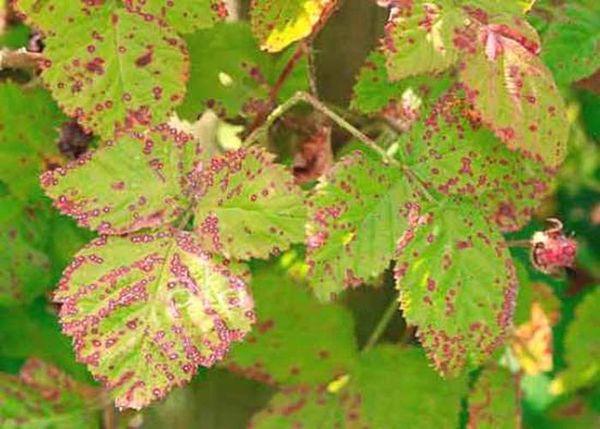
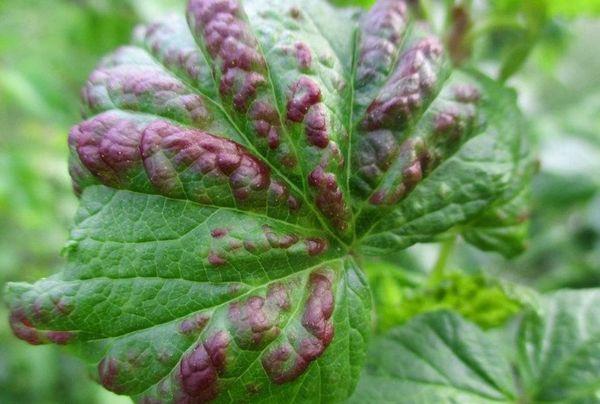
Symptoms of anthracnose can be seen during the growing season. Lower leaves, located near the base of the bush, are initially affected, as they are closer to the fungus's wintering site. Secondary infections, caused by conidia, accelerate the spread of the disease.
During a severe parasitic attack in mid-July, 70% of the foliage falls. The plant becomes completely infected, infecting the above-ground parts (shoots, petioles, ovaries, and fruit stalks).
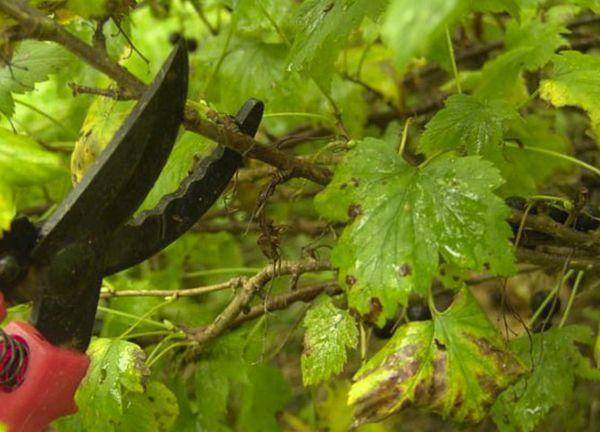
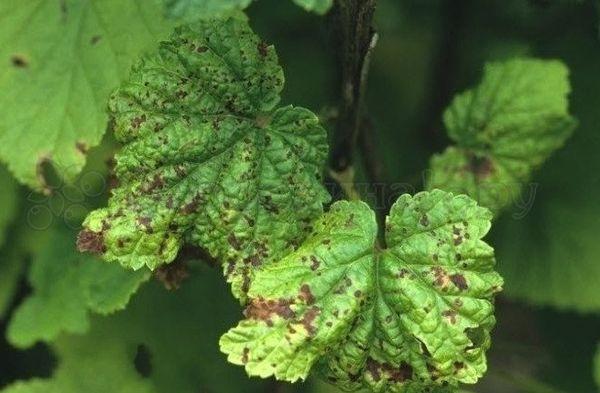
The disease can be recognized by the following symptoms:
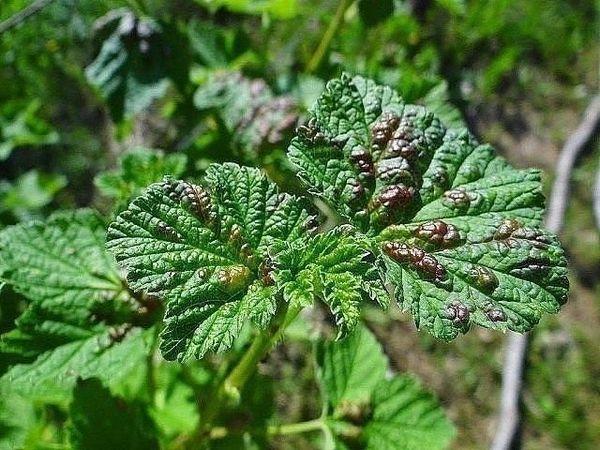
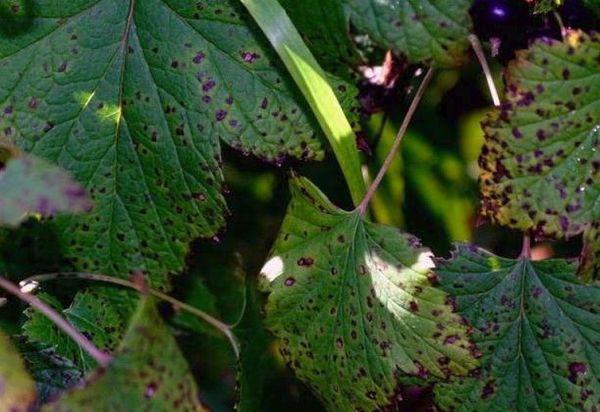
- Numerous microscopic brown spots appear on the leaves. Initially, they are 1 mm in size, then expand to 2-2.5 mm;
- the upper part of the leaf is covered with spores in the form of shiny black mounds;
- the space between the infected areas gradually darkens and dries out;
- as the disease progresses, the spotting spreads across the entire leaf, expands, and merges;
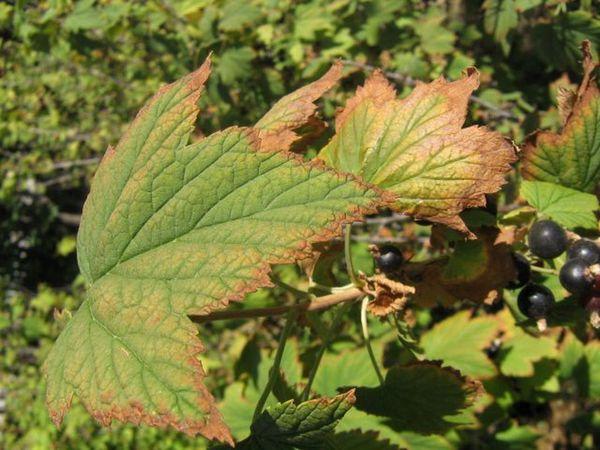
- diseased leaves dry out, fall off, and turn dark;
- shoots, petioles, and peduncles are covered with small, deep brown ulcers;
- diseased berries turn black, dry out, and fall off.
Red currants quickly lose their leaves, while black currants initially dry up but remain curled until autumn. Diseased plants lose nutrients, and their resistance to frost and temperature fluctuations is significantly reduced. Branches begin to die off, yields decline, and berry quality deteriorates.
Take a look Also
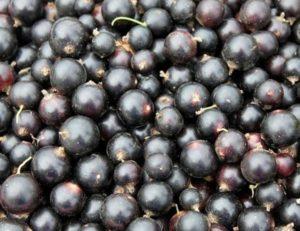
Black-fruited varieties are most often affected in the 20th of June, at a temperature of 27-30OC. The incubation period lasts 1-1.5 weeks. Red-fruited currant varieties are infected early - in late May - early June in warm weather (20-27)OC. The incubation period lasts a week.
What means are used to combat the disease?
Sometimes the crop ripens without infection. In this case, it's important to consider the consequences of fungal disease on the currant: the plant becomes depleted, losing energy reserves, nutritional properties, and the quality of the berries. This can be avoided through proper treatment.
Treatments are carried out in early spring before bud break. The therapeutic effect should be consolidated after harvest and with the onset of autumn.
It is recommended to combat anthracnose using the following agricultural practices:
- The first step is to remove fallen leaves, as they are the only source of infection. The leaves are collected, burned, and the soil is treated;
- in early spring and autumn, dig up the soil around the bush, loosen it, and destroy weeds;
- An important stage of care is maintaining the correct planting density and thinning out dense areas by pruning;
- A plant planted in a lowland requires drainage.
Currants are treated with fungicides, chemicals and microbiological preparations.
Fungicides
Fungicides should be purchased from a specialized gardening store and used according to the manufacturer's instructions, strictly adhering to the recommended dosage. When spraying, wear protective clothing: goggles, a respirator, an apron, and rubber gloves.
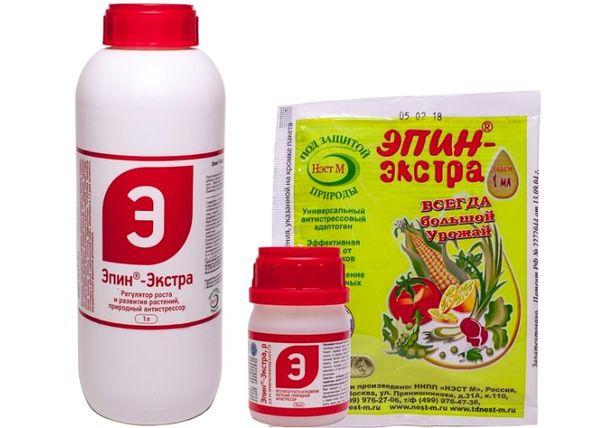
Currants are treated with complexes to boost the plant's immune system and its resistance to pests and diseases. Plants are sprayed with Topsin M+, Zircon, Epin, and Immunocytophyte.
Chemicals
To cultivate soil and shrubs, gardeners use the following means:
- with the drug DNOC or Nitrofen - spray the soil, leaves, bushes;
- copper sulfate - suitable for spring treatment, spraying before bud break;
- Bordeaux mixture, Captan, Zineb, Thiovit Jet, Kumulus, and colloidal sulfur are excellent preventative measures. The initial spraying is done after flowering, and a repeat treatment is performed 14 days after harvesting.
- If signs of anthracnose appear during the ripening of currants, the infection can be slowed down using Gamair, Fitosporin-M;
- Ridomil Gold, Previkur, Fundazol, Topsin are used after harvesting;
- Before flowering, use a combination of Topsin-M, Epin, and Zircon.
The fungus enters through the underside of the leaf, so every sanitation treatment should begin with spraying this area. Anthracnose treatment involves constantly rotating the products used to prevent the plant from becoming accustomed to the product.
Folk methods of struggle
Many gardeners use folk remedies for preventative treatment. You can protect currants from anthracnose microspores by scalding the area around the trunk with boiling water. This is done in early April, before the buds swell.
Take a look Also
Some insects carry fungal spores to plants along with pollen. To spray the soil and shoots, use a solution of unpeeled garlic (250 g) and water (1 bucket). After leaving the mixture for 24 hours, water the shoots, petioles, soil, and trunk area.
The use of traditional methods is advisable as a supportive measure, not as a standalone treatment. The use of chemicals, microbiological preparations, and fungicides will provide a better guarantee of eliminating anthracnose.
Microbiological preparations
Microbiological treatment is used when fungus attacks berries during ripening. Spraying is done with caution—while not harmful to humans, it poses a risk to other plants. Microbiological treatments are used in the early stages of infection. The interval between sprayings is 14 days; during rainy seasons, currants are treated weekly.
Processing times and technology
Prevention and treatment are carried out in early April. At this time, bushes are pruned and sprayed with Bordeaux mixture and fungicides. If currants become infected during ripening, the foliage is removed and the bushes are sprayed with Fitosporin. Several treatments, spaced 14 days apart, will be required.
Subsequent treatments are carried out in the fall, after the berries have been picked and the leaves removed. In October and November, young shoots are removed, and the soil under and around the currants is dug over.
Prevention and garden protection
Simple preventative measures can help prevent anthracnose. The main preventative measures include proper planting, watering, pruning, and fertilizing. Damaged and diseased leaves must be removed. Proper pruning will prevent foliage from becoming dense and reduce the risk of infection.
Watering should be moderate, it is important not to waterlog the currants. Soil cultivation and tillage also contribute to a successful harvest and the absence of diseases. Tilling should be done twice a year.
Pathogenic bacteria spread not only through the plant but also through seeds, gardening tools, and irrigation water. It's important to maintain crop rotation and disinfect seedlings before planting. Gardening tools must be maintained and cleaned after each use.
Related posts:
 Characteristics and descriptions of the 40 best red currant varieties
 20 Best Blackcurrant Winter Preserves Recipes
 Description and rules for growing black currant variety Veloy
 The health benefits and contraindications of black currants
 The health benefits and contraindications of white currants
 Description of the 10 best currant varieties for the Moscow region, planting and care
 Description and characteristics of the 25 best blackcurrant varieties for Siberia
 Red currant health benefits, properties, and contraindications