
- Advantages of green-fruited varieties
- Botanical description and habitat
- Bush size
- Specifics of flowering and fruiting
- Useful properties of berries
- The most popular varieties
- The Snow Queen
- Emerald necklace
- Verti
- Inca Gold
- Features of growing on a plot
- Preparing the site and planting hole
- What crops are recommended for planting?
- Timing and step-by-step process of planting work
- How to care for currants
- Regularity of watering
- Fertilizer
- Trimming
- Loosening and mulching the soil
- Diseases and pests: prevention and control
- Reproduction
- Gardeners' reviews
Black and red currants have been a staple garden crop for centuries. However, not everyone knows about green currants. Green currants retain a vibrant green hue even when ripe, but this doesn't affect the excellent taste of these healthy fruits.
Advantages of green-fruited varieties
Green-fruited varieties of berry crops have excellent characteristics and are easily cultivated in any climatic conditions.
- Hybrid bushes are resistant to harsh winters and easily tolerate spring temperature fluctuations.
- Green berries do not cause allergic reactions, even in people prone to them.
- Green-fruited bushes have excellent immunity to all fungal and viral diseases.
- The culture is rarely attacked by pests.
- Ripe berries have excellent taste and thin but dense skin, which allows for long-term storage of the fruit.
The advantages of green currant varieties include the large size of the berries, reaching 5g.
Important! Due to its high disease resistance, this fruit crop does not require chemical treatment.
The berries ripen inside and out without any impurities, and are environmentally friendly. The main drawback of this berry crop is the late ripening and harvesting. The fruits are fully ready for consumption only in the second half of August, and in northern regions, in early September.
Botanical description and habitat
The history of green currant cultivation dates back to the 1930s. It was then that Siberian scientists developed a new variety of the berry. Although green currants exhibited superior varietal characteristics, they never gained widespread popularity in Russia.
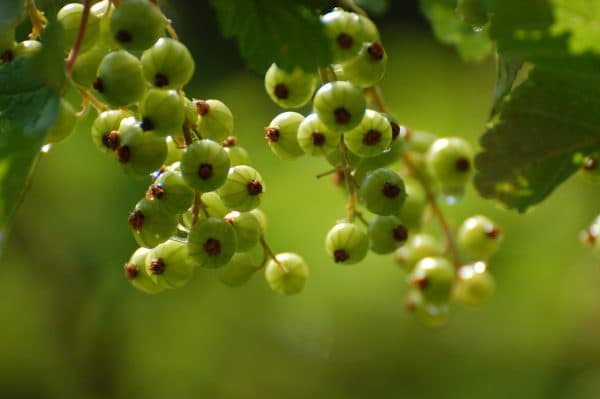
However, the new development attracted the interest of European breeders, who subsequently developed numerous hybrid green-fruited varieties based on the original. Now, bushes with large green berries are regaining their popularity and are increasingly found in gardens and homesteads in Russia and neighboring countries. The berry's undemanding nature allows hybrid currants to be grown in any climate.
Bush size
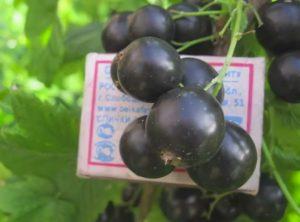
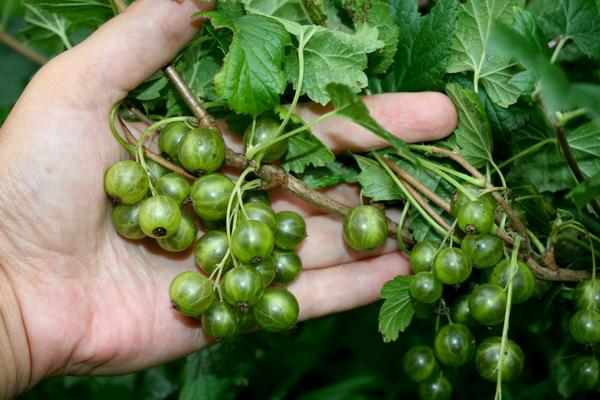
Depending on the variety and growing region, green currant bushes range in size from 1.5 to 1.8 meters. The leaves, twigs, and shoots are similar to those of blackcurrant varieties. However, the distinctive aroma typical of blackcurrants is completely absent, making the green fruits more appealing to eat.
Specifics of flowering and fruiting
During the growing season, clusters of 6 to 9 cm in diameter appear on the branches, opening into small flowers that later develop into ovaries. Each cluster produces 10 to 20 berries.
The fruit ripens in late July in temperate climates and mid-August in northern latitudes. A single bush yields up to 5 kg of ripe, green berries with a sweet and sour taste.
Useful properties of berries
Green currants are just as beneficial as their black chokeberry cousins. They contain the same high levels of vitamins, minerals, amino acids, fiber, and healthy sugars.
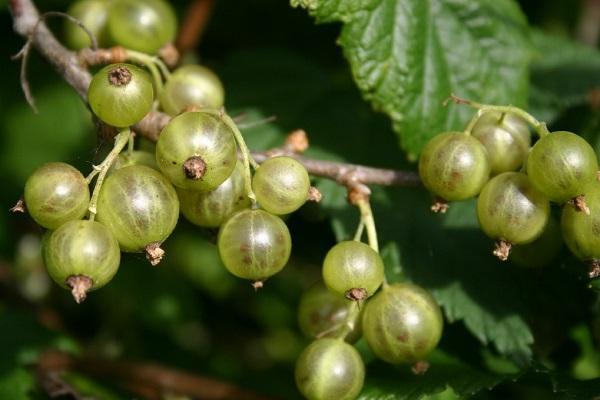
Currant fruits and leaves are often used in folk medicine. Infusions and decoctions of the leaves help with viral and cold illnesses, while the berries stabilize the cardiovascular and gastrointestinal systems.
Note! Late-ripening green currant varieties extend the season for the body to receive fresh, nutritious vitamin-rich fruits.
The most popular varieties
Currently, several varieties of green fruit crops have been developed, differing in yield, taste, ripening time and berry size.
The Snow Queen
The Snow Queen green currant variety is considered one of the latest to ripen. The berries ripen in early September.
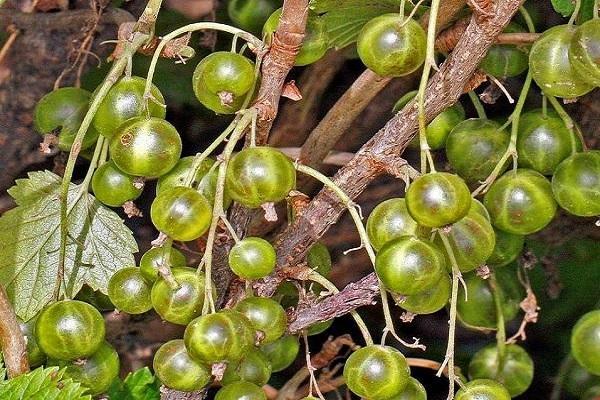
The compact bushes are easy to care for and easily tolerate severe frosts, spring temperature fluctuations, and short-term droughts. The variety is resistant to fungal and viral diseases and is rarely attacked by pests. A single plant produces up to 3 kg of ripe, light-green berries.
Emerald necklace
This self-fertile variety was developed by Russian breeders and is adapted for cultivation in northern regions. The plant is resistant to all diseases and pests.
The variety's compact bushes allow for growing this berry crop in limited space. Ripe berries are large, greenish-yellow in color, and have a rich, sweet and sour flavor.
Verti
The Vertti green currant variety was developed by Finnish breeders. This berry bush bears fruit in its first year of outdoor cultivation. It is considered an early-ripening variety. The light-green berries ripen as early as late June. A single plant yields up to 4-5 kg of ripe fruit.
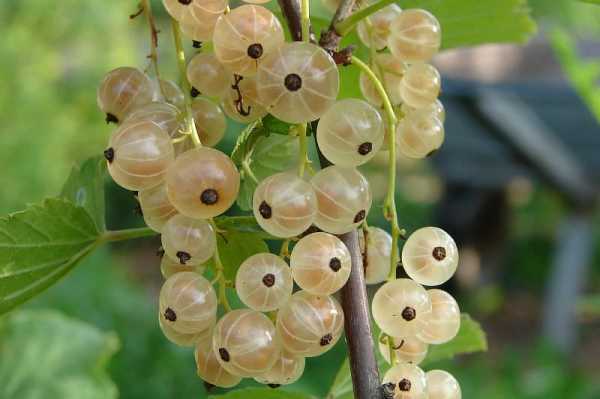
The Verti currant tolerates frosts down to -30 degrees and spring temperature fluctuations, and has a natural immunity to some types of fungi and viruses.
Inca Gold
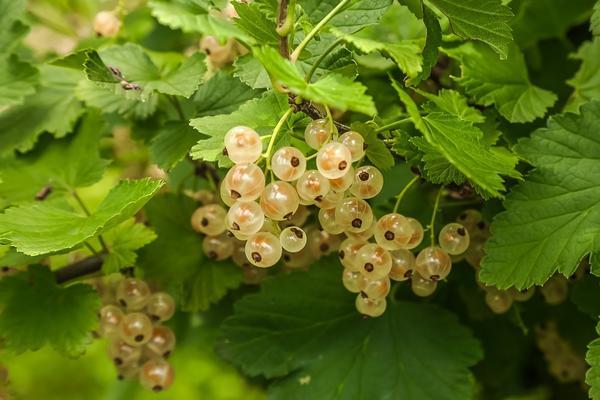
The green-fruited currant variety "Gold of the Incas" is most commonly found in gardens and vegetable patches, and for good reason. The large, sweet berries, greenish-yellowish in color, ripen in early July and resemble gooseberries in appearance.
The compact bushes thrive in any soil, are resistant to diseases and pests, and easily tolerate subzero temperatures. A single plant yields 4 to 6 kg of ripe berries.
Features of growing on a plot
Recommendations for growing and caring for green currants are no different from the rules for cultivating black chokeberries.
Preparing the site and planting hole
When choosing a plot, pay attention first to good lighting. Also, currants should not be planted in low-lying, marshy, or windy areas. This fruit crop prefers fertile soil with a neutral acidity.
- The land is dug up, cleared of weeds and thoroughly loosened.
- 3-4 weeks before planting seedlings, organic fertilizers, humus and minerals are added to the soil.
- Next, a planting hole is dug on the prepared area.
- The depth of the hole is from 40 to 50 cm, the width is 60 cm.
- The distance between holes is 80 to 100 cm, between rows 1.5-2 m.
- Place a layer of humus and fertile soil at the bottom of the planting hole and water.

 Important! Green currant varieties do not tolerate high soil moisture and stagnant water. The distance to groundwater should be at least 1.5-2 meters.
What crops are recommended for planting?
Currant bushes are picky about their neighbors. Tomatoes, potatoes, raspberries, and fruit trees will greatly hinder the growth and development of this berry crop. However, any cereal crops, garden strawberries, garlic, and gooseberries will thrive with green currant bushes.
Timing and step-by-step process of planting work
Currant bushes are planted in early spring or autumn, 1-1.5 months before the first frost.
- Berry seedlings are placed into prepared planting holes at a slight angle.
- The plant roots are evenly distributed and covered with fertile soil.
- The soil under the bush is well compacted.
- The tree trunk circle is mulched with dry grass, peat or sawdust.
- The next day the bushes are watered.
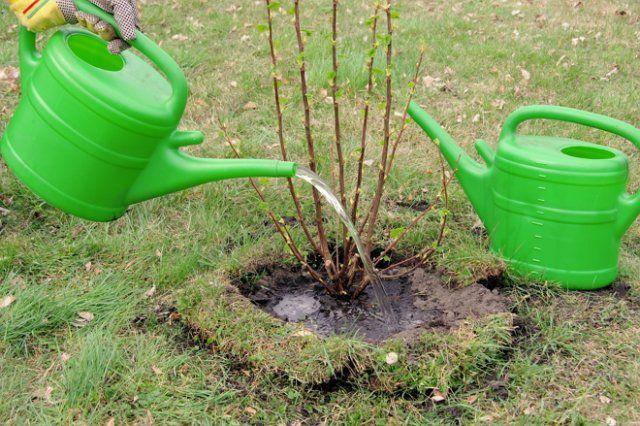 Important! If the soil in the planting hole begins to settle, add more mulch or replace it completely.
How to care for currants
Caring for green currant bushes involves timely watering, fertilizing and pruning.
Regularity of watering
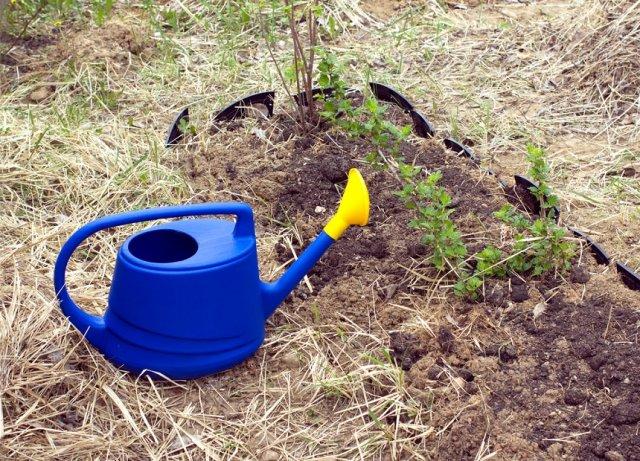
During irrigation, up to 15 liters of settled, warm water is poured under each fruit bush. Berry bushes are watered as the soil dries. However, during the early stages of vegetation, when flowering and fruit ripening occur, the frequency of watering is increased.
Fertilizer
Every spring, the bushes are fertilized with an ammonium nitrate solution. During berry growth and ripening, the plants are fed with a mineral complex. In the fall, organic fertilizers and mineral fertilizers containing potassium and phosphorus are added to the soil.
Trimming
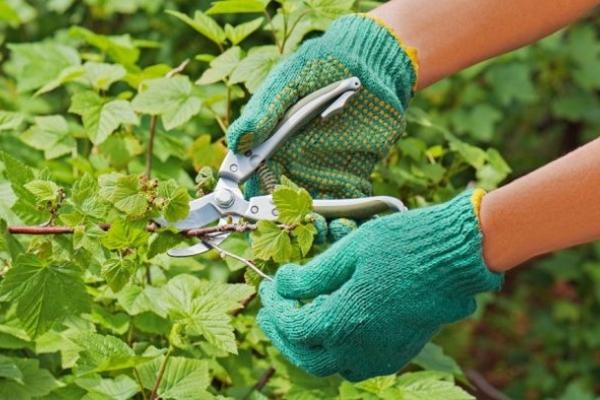
After planting the seedlings, begin shaping the bushes. Young shoots are pruned and trimmed annually, leaving 5 to 7 strong branches on the main stem. In early spring and before winter dormancy, perform sanitary pruning, removing all dried, broken, damaged, and frost-damaged branches and shoots.
Important! To prevent the spread of viral and fungal infections, treat cuts with garden pitch.
Loosening and mulching the soil
Loosening the soil and weeding are done simultaneously with watering. This allows moisture to reach the plant roots more quickly and help them gain oxygen. Mulching the tree trunk area helps maintain essential soil moisture, inhibits weed growth, and protects the bushes from diseases and pests.
Take a look Also
Diseases and pests: prevention and control
Green currant varieties have excellent immunity to fungal diseases and pests. However, as a preventative measure, the fruit bushes are treated with special preparations or infusions in the spring and fall.

Reproduction
Hybrid currants are propagated exclusively vegetatively. This can be done by dividing the bush, taking cuttings, or using layering.
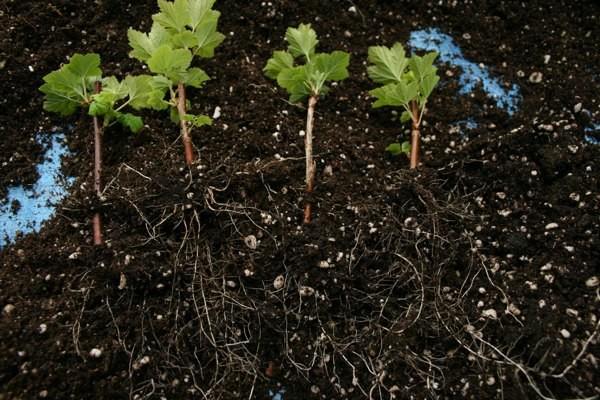
- Cuttings are taken in the fall. When pruning the bushes, a healthy, thick shoot is removed and divided into several cuttings. Two to three fruiting buds are left on each plant. The cuttings are planted in containers with fertile soil and then transplanted into the open ground in the spring.
- When propagating by layering, 2-4 shoots from a mature bush are bent toward the ground and covered with soil, leaving the upper portion of the branch exposed. During the growing season, the shoots are kept moist, and in the fall, they are dug up and separated from the mother bush along with the roots that have formed.
- Dividing the currant bush is used both for propagation and for rejuvenation. The mature bush is carefully dug up, and the roots are divided into 2-3 equal parts. Fruit buds or leaves should remain on each plant. Young plants are planted in separate holes.
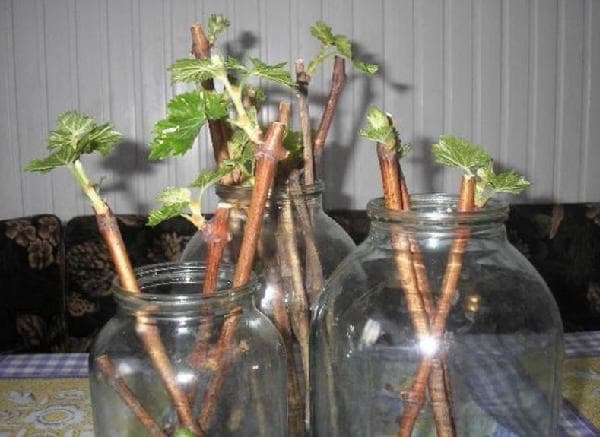 Note: When hybrid currant varieties are propagated by seed, the varietal characteristics of the fruit crop are lost.
Gardeners' reviews
Victoria Alexandrovna 50 years old, Saratov
I'd heard about green currant varieties for a long time, but it turned out they were impossible to find in nurseries or garden centers. My daughter ordered some online, and finally, two years ago, my dream came true. I became the owner of two green-fruited varieties. Now, "Gold of the Incas" and "Tears of Isis" are growing and bearing fruit beautifully in my garden. The berries are excellent in taste and quality, have a long shelf life, and freeze well.
Sergey Pavlovich, 62 years old. Ryazan Oblast
Our family's favorite fruit is the green currant variety "Emerald Necklace." A neighbor gave us some seedlings several years ago. The bushes are completely unpretentious, overwinter well, and quickly recover in the spring. The berries ripen in August, which makes for a long berry season. My wife makes delicious jam from the green currants, preserves them in compotes, and adds them to baked goods.
Related posts:
 Characteristics and descriptions of the 40 best red currant varieties
 20 Best Blackcurrant Winter Preserves Recipes
 Description and rules for growing black currant variety Veloy
 The health benefits and contraindications of white currants
 Description of the red currant variety Sakharnaya, features of planting and care
 Description and characteristics of the 25 best blackcurrant varieties for Siberia
 TOP 10 recipes for red, black, and white currant sauce and ketchup for the winter, and how to store your preparations
 Description of 15 varieties of golden currant, propagation, planting and care