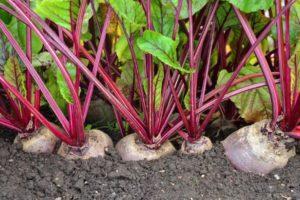
Detroit beetroot is a popular variety in Russia, recommended for growing in various climate zones. Hobbyist vegetable growers have long appreciated this root vegetable variety for its excellent taste and yield.
General characteristics of the plant
The Detroit beetroot variety was developed in Italy and includes several varieties:
- Dark red - has an intensely colored, dark red flesh without light rings;
- Rubidus - similar to the previous type, differs in the calibrated root crops and is specially created for mechanized harvesting;
- Nero - the flesh is dark burgundy, otherwise the vegetable resembles the previous varieties in shape.
For the amateur gardener, there's little difference in choosing varieties. They all have roughly the same root crop ripening time and average yield.
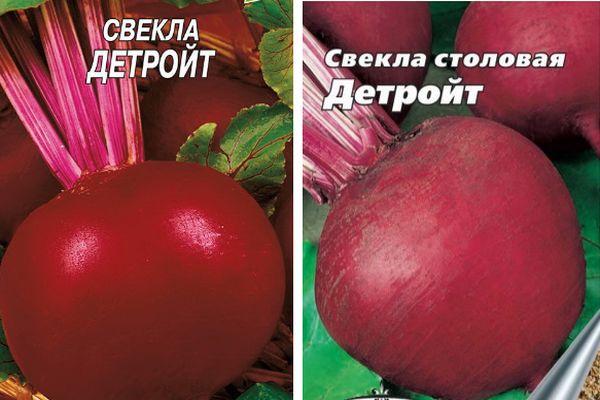
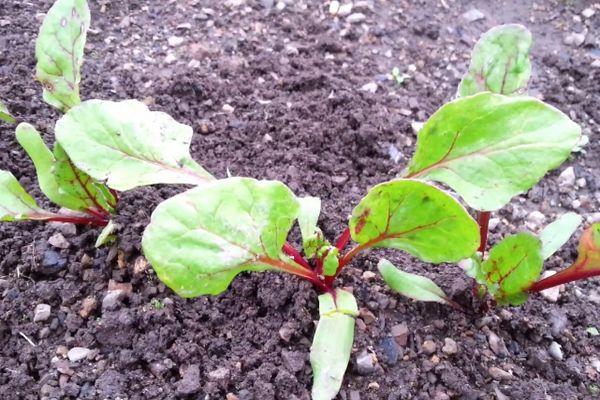
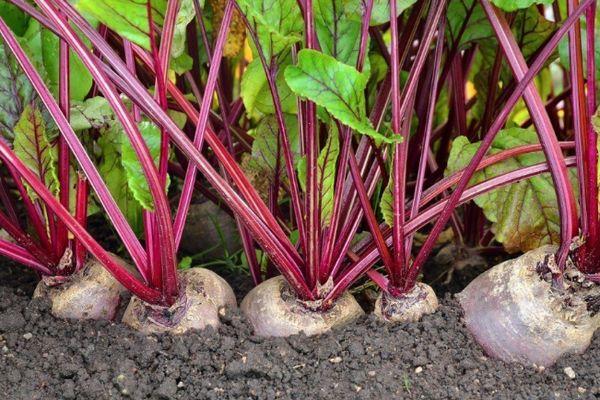
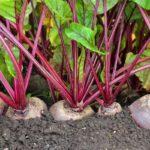
The plant has large, well-developed rosette leaves with deep red petioles and veins. The leaf blades are a rich green, and changes in color and smaller leaves often indicate a micronutrient deficiency.
The plant is not prone to flowering and tolerates spring frosts and cold snaps well, but may suffer if temperatures drop below -2°C. In unfavorable weather conditions, it is recommended to cover the seedbeds or seedlings with lutrasil and mulch with a thick layer of sawdust or straw. Over large areas, sprinkler irrigation or misting is used.
The Detroit variety is highly resistant to downy mildew and various types of root rot. Beets can be damaged by insect pests, requiring insecticides. In excessively wet years, young root vegetables are attacked by slugs, which not only spoil the crop's appearance but also reduce its shelf life after harvest. Excess nitrogen in the soil can cause the vegetable to crack, which also negatively impacts both its appearance and its ability to withstand winter storage.
Consumer qualities
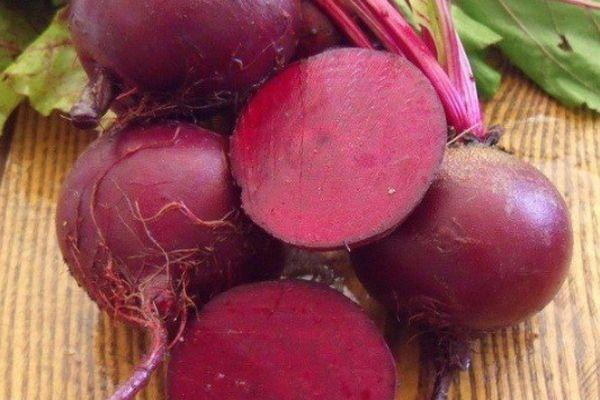
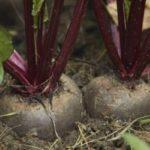
The roots of all Detroit varieties are round, almost spherical. The central root is thin and short. The vegetables are uniform in size, rarely form small shoots, and do not grow too large. The average weight of one root is 150-200 g.
The average yield reaches 5-7 kg per square meter. Detroit beets produce fruit reliably under all climate conditions when grown correctly.
The skin covering the root vegetables remains soft when ripe, so young beets are simply washed thoroughly before consumption. As they ripen, the rind hardens and becomes inedible. When ready to eat, it is cut off, along with some of the pulp. However, the hardened skin of mature beets serves to preserve the vegetable from wilting over the winter. Thanks to its density, Detroit beets can be stored in a cold cellar practically until the next harvest.

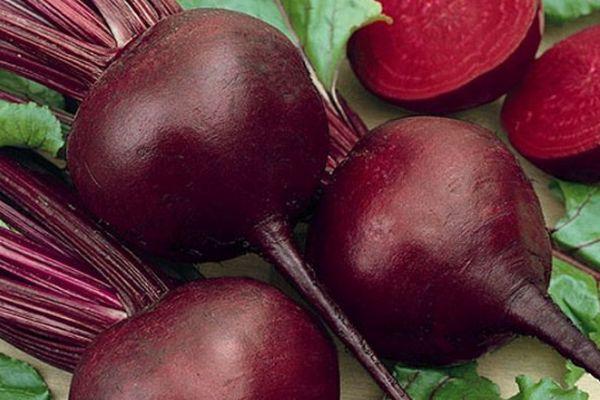
The flesh of all varieties is uniformly dark red or burgundy. Young beets are slightly lighter in color, and as they mature, they acquire darker hues. Light rings are absent, and their appearance on some beets may indicate a mixed seed or poor cultivation practices. They do not affect taste or shelf life.
Hobbyist vegetable growers describe the vegetable's flavor as high in sugars. The flavor is described as sweet, with a distinctive beetroot aroma. The fresh vegetable's texture is crisp and juicy; when cooked, the flesh is tender, without fibrous inclusions.
You can't make borscht or vinaigrette without beets. This vegetable has long been popular precisely because of its ability to be stored all winter without any special preparation. Beets can be eaten fresh, boiled, or baked for various culinary purposes. In addition to their pleasant taste, these root vegetables are rich in vitamins (especially B vitamins), contain the pigment anthocyanin, which has anti-cancer properties, and contain numerous trace elements.
Beets can be stored not only fresh. The root vegetables are fermented and pickled, which imparts a different texture and flavor. These vegetables are served as a standalone appetizer and included in culinary dishes.
Growing Detroit beets
This variety is considered mid-season. It takes about 120 days from sowing the seeds to harvesting the young beets (at technical maturity). After this, the beets ripen for about another month. During this period, the plant prepares for winter by storing starch and sugars in the roots.
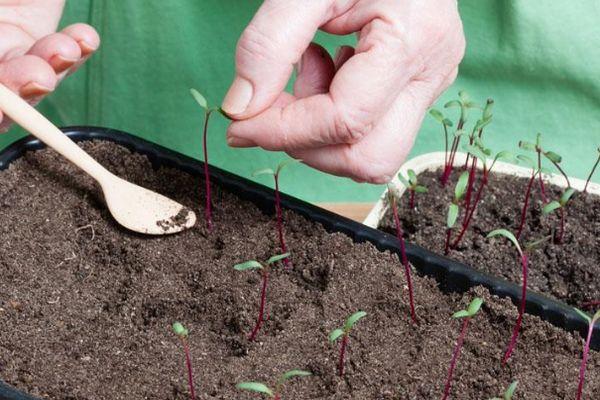 Sowing beets Beets can be grown after the last frosts have passed. In central Russia, the Urals, and Siberia, beets are grown using both seedlings and direct-seeding methods. The choice affects the timing of the early harvest of young vegetables. Beets grown from seedlings are usually not stored for the winter.
For seedlings, prepare a loose, permeable substrate with the obligatory addition of ground eggshells or chalk (1 tablespoon per 5 kg of soil). The soil must contain sufficient nitrogen salts, so a good humus supplement of 1/3 of the total volume of the mixture is also necessary.
Detroit beet seeds can be pre-soaked and germinated in a damp cloth at 25°C. Once sprouts appear, they are planted in 2-cm-deep holes and covered with the same soil. The soil should be kept moist until sprouts appear.
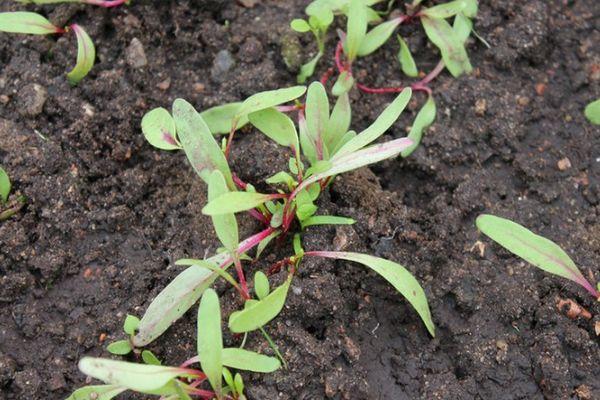
The plants are allowed to form a rosette of 2-4 leaves and then transplanted to their permanent location. It takes about 1-1.5 months from sowing to planting. When planting seedlings in open ground or a greenhouse, you need to focus on this period and the time of possible transplantation.
Early beets should be planted in the sunniest, warmest area with fertile, very loose soil. To prevent scab and clubroot, add 1-1.5 kg of dolomite flour per square meter. Chalk, gypsum, or slaked fertilizer can be used instead. Seedlings should be planted in a 10x30 cm pattern.
It's convenient to use narrow beds, placing seedlings in two rows along the edges of the bed. You can also add a strip of complex mineral fertilizer (Agricola Vegeta, Kemira Lux, etc.) along the center line. When watered, the nutrients will gradually penetrate the soil.
For direct sowing, the soil is prepared using the same principles, adding lime. Sowing is done in furrows 2-3 cm deep. Seeds can be germinated before sowing.
Beets require a lot of moisture, so some gardeners generously water the empty furrows with water or a solution of complex fertilizer before sowing. Seeds are spaced 4-5 cm apart, with a distance of 30 cm between furrows. Like seedlings, seeds can be planted in narrow beds in two rows.
To ensure a good harvest, sprouting seedlings need to be thinned. Each beet seed contains several seeds, so sprouts emerge in groups of 2-3. The strongest seedling should be retained. The pulled-out sprouts can be replanted. beetroot care In a fertilized bed, water thoroughly and timely. The soil should be soaked to a depth of 10-15 cm, using 10-15 liters of water per 1 m². Watering should be stopped approximately one month before the winter harvest.
Related posts:
 Description and characteristics of 35 best beet varieties, planting and care rules
 Description of sugar beet varieties, cultivation technology and growing conditions
 Growing and caring for beets in open ground: step-by-step agricultural technology
 How and when to properly plant beet seeds in open ground
 Description of beetroot diseases, their control and treatment with medications and folk remedies
 What to do if beet leaves are covered in spots, why this happens, and how to treat them
 Description of fodder beet and its differences from sugar beet, planting and growing features
 Reasons why beet leaves turn yellow, care mistakes, what to do, and how to treat them