
Fodder beets are widely used today to feed livestock on both private farms and large farms. Regularly including them in the animals' diets improves milk yield and compensates for nutrient deficiencies. However, many people find it difficult to determine their advantages over sugar beets and what cultivation considerations should be taken into account.
Features of the crop and the difference between fodder beet and sugar beet
Beet varieties differ in several ways, with the distinction between sugar beet and fodder beet varieties being based on their intended use. Due to its composition, sugar beet is used as a raw material for sugar production and is suitable for human consumption. Its protein content can reach 20%, which is several times higher than that of non-table beet varieties. Fodder beet varieties are characterized by their high protein content, making them ideal sources of animal feed, while yielding significantly higher yields than sugar beet varieties.
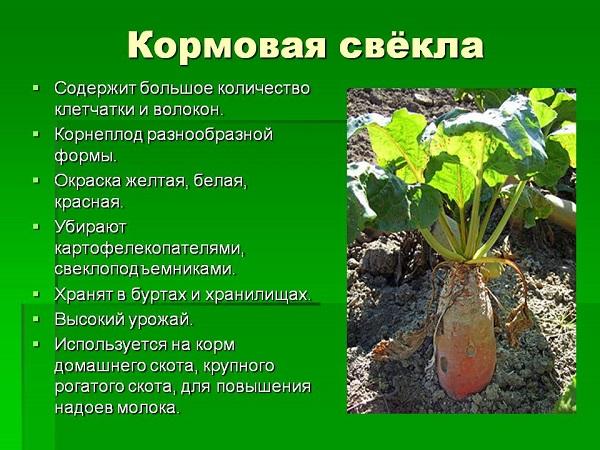
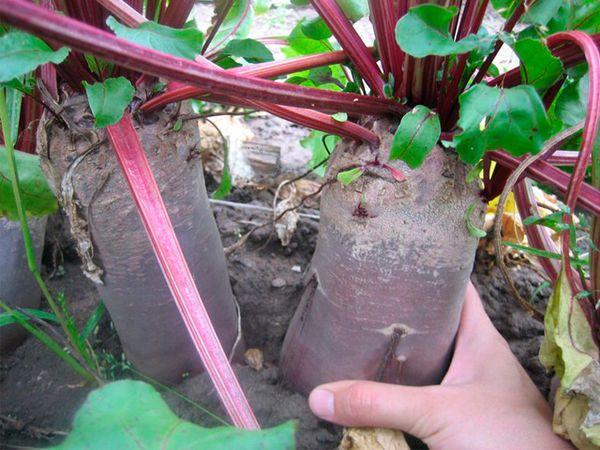
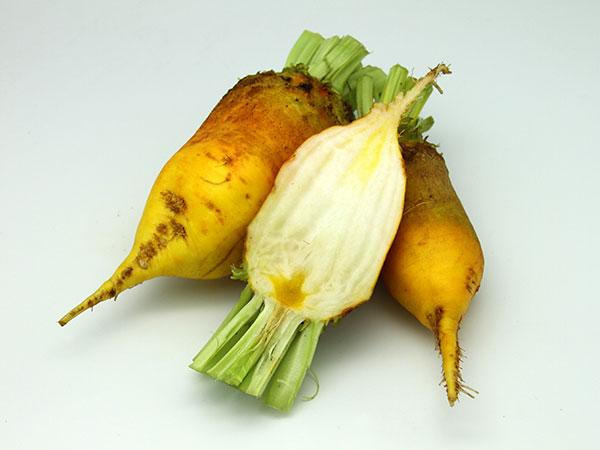
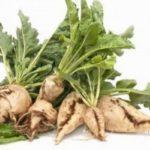
The main differences, besides the chemical composition, between feed and sugar beet These are related to their appearance, growing depth, length of the growing season, and yield. Forage varieties are rounded and come in only red and orange hues, while sugar varieties can be elongated and come in shades of white, gray, beige, and burgundy.
Beetroot for animal feed has fewer green leaves, no more than 40, and they begin to emerge from the ground as they mature. Sugar beet varieties can produce up to 60 leaf blades in a single rosette, with the underground portions hidden deep underground. Beetroot roots can extend up to 3 meters deep, as the plant extracts moisture from the lower layers, helping it withstand drought.
Forage crops do not have a developed root system, so it is located at the level of the end of the root crop.
The growing season for sugar beet varieties ranges from 140 to 170 days, while forage varieties require less time, with harvest expected after 110 to 150 days. There is a slight difference in frost resistance. Table beet seedlings can germinate at -8°C. C, beet varieties for animals only at -5 C.
Take a look Also
Varieties of the crop
Today, fodder beet varieties are available in a wide range. Around 46 varieties of this root crop are grown commercially. Yields vary by variety and growing region. The underground parts of the plant and green leaves are used as animal feed. According to research institutes, in the Northwestern Middle Volga region, 1 kg of beets contains 0.12 feed units, while 100 kg of beet tops contain 9.
Among the popular varieties is the Eckendorfskaya Yellow fodder beet. Its advantages include its ability to tolerate cold temperatures, undemanding soil fertility, stable yield, and high nutritional value. Beetroot is a time-tested variety that is resistant to diseases and pests. Forage crops in demand in the central regions include Vermon, Jamon, Nadezhda, and Lada.
The key to success is the correct choice of hybrid variety seeds and adherence to growing rules.
Growing process
Growing characteristics, including how long beets grow, depend on the variety and growing conditions. Fodder beets are easy to grow, so they don't require significant time or effort; simply follow generally accepted care practices.
Soil preparation
Proper soil preparation will help grow fodder beet varieties in your garden plot. It is recommended to plant them in areas previously occupied by rye, barley, alfalfa, cereals, and legumes. Sowing begins when the soil warms to +8°C. C.
All preliminary preparation work is carried out in the fall, including creating a deep topsoil and applying a complex of mineral fertilizers. In the spring, compost is added, while weeds are removed and the soil is cultivated.
Weed control
Fodder beet crop management focuses on weed control. One effective way to combat this problem is by using specialized chemicals. Vitox and Eptam are used for dicotyledonous and grassy weeds. Frontier and Dual Gold are used before sowing and the first shoots emerge.
In small areas, weed removal is done manually. In larger areas, harrowing is used before the seedlings emerge. The soil crust should be broken up before the seedlings reach a height of no more than 2 mm. For this purpose, mesh or lightweight harrows are used, directed across the seeding.
During the growing season, the spaces between rows are loosened several times. For commercial cultivation, specialized equipment, such as 12-row cultivators, is used for this purpose. The first soil cultivation begins when the row lines are marked, and the second when the first two true leaves form, while also adding nitrogen-containing fertilizer. Two to four additional loosening procedures may be required per season, the number depending on soil quality and weather conditions.
Sowing
Individual fodder beet specimens can grow up to 12 kg, so the planting material must be planted so that the planting depth is 3-5 cm. A gap of 50 cm is left between rows, and 1 m2 There should be 6 to 8 seeds.
Once the seedlings have developed two true leaves, thin out the plantings, leaving 25 cm between shoots. To ensure more uniform germination, water the beet planting area; in smaller areas, use non-woven material to cover the beds.
Crop care, agricultural technology
The key to a future harvest is the right time for planting, determined by the degree of warming and soil temperature. Maintaining green, succulent tops and healthy root crops free of signs of infection is essential. To ensure good growth, weed removal and pest control are used.
Fertilizers
Many farmers are wondering what to feed beets with and How to feed fodder beetsWithout additional nutrition, root crop yields will be significantly reduced. Fertilizers are applied immediately before plowing, with a top dressing of 30-40 kg of rotted manure per 10 m².2 Or 40-50 kg of peat-manure compost. The use of fresh slurry or chicken manure is prohibited, as their addition will lead to increased nitrate accumulation.
They add in the fall phosphorus and potassium fertilizers at a rate of 15-20 kg per 10 m2In spring, nitrogen-containing fertilizers are added in the same amount.
Protection of culture
The crop's resistance is increased by feeding it with special complex fertilizers and proper care. Among the most dangerous beet diseases These include rootworm, downy mildew, and viral yellows. Root crops often suffer from leaf miners, weevils, aphids, and flea beetles. At the first sign of pests and diseases, targeted pesticides are used.
Protective measures for beets include the following:
- compliance with crop rotation rules, taking into account the best predecessors, isolating plantings from previous beet locations;
- application of fertilizers;
- stubble cultivation in autumn, deep plowing;
- carrying out pre-sowing treatment in spring, ensuring the absence of clods;
- disinfection of seeds before planting with fungicides and insecticides.
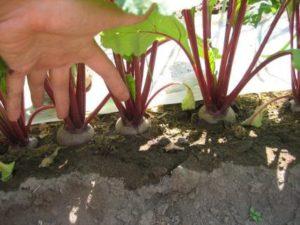
To increase the chances of uniform and healthy seedlings, it's important to plant on time. When two leaves appear, apply insecticides to prevent pest infestations.
Harvesting
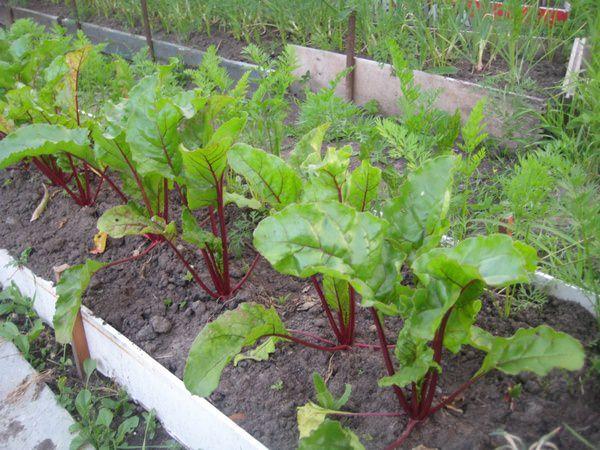
A good fodder beet harvest depends largely on timing the harvest correctly. The accumulation of nutrients and root growth continue until late autumn. The first sign that the vegetables are ready to be harvested is yellowing and drying of the tops.
The optimal time for harvesting fodder beets is considered to be the third week of September through the first ten days of October. The roots should be dug up before temperatures drop below +7°C. C.
Storage
The best storage location for beets is considered to be specially equipped storage facilities with a ventilation system. The optimal temperature range is considered to be +1…+2°C. C. There should be no excessive humidity in the room; periodic control procedures are required to remove spoiled root crops.
Feeding cows
Cattle feeding has its own rules and specific norms calculated per animal. No more than 10 kg of beets should be fed per feeding, and the maximum daily allowance for an adult animal should not exceed 20 kg.
When combining feeding with compound feed and plant food, the calculation is made according to the rule: every 5 kg of beets corresponds to 1 kg of compound feed. For this amount of vegetables, there should be 250 grams of meal or cake. Cows are no longer fed beets 7 days before the scheduled calving.
Related posts:
 Description of sugar beet varieties, cultivation technology and growing conditions
 Description and characteristics of 35 best beet varieties, planting and care rules
 How and when to properly plant beet seeds in open ground
 Description of beetroot diseases, their control and treatment with medications and folk remedies
 What to do if beet leaves are covered in spots, why this happens, and how to treat them
 Growing and caring for beets in open ground: step-by-step agricultural technology
 Reasons why beet leaves turn yellow, care mistakes, what to do, and how to treat them
 Why beet leaves turn red and what to do