
Beets are an easy-to-grow garden crop that doesn't require complex growing conditions. However, many novice gardeners don't know why beet leaves turn red or what to do about it. Improper care can cause the plant to lag behind in development, or the roots to develop abnormally, so it's important to learn the causes of these anomalies in advance.
About growing beets
Beetroot seedlings are very responsive to growing conditions and react immediately to unfavorable factors. Most varieties today have green leaves, and reddening of the leaves indicates problems with the plant, which can have many causes.

Some varieties are naturally endowed with a reddish tint to their foliage. A purple-red tint in beets is normal in this case, typical of varieties such as Sugar or Burgundy. The advantage of these crops is their tasty root vegetables, but a significant drawback is their poor storage quality.
Causes of leaf color change
Red beet leaves can be a result of selective breeding. This characteristic is usually indicated by the manufacturer on the packaging, so it's important to read the description of the specific characteristics of the beet before planting.

There are many reasons why leaves may turn red. In most cases, the source of the problem lies in the soil or human actions. The most common causes of red beet leaves are:
- increased soil acidity;
- mineral deficiency in the soil;
- plant diseases;
- overfeeding of the plant;
- abundant watering.
A deficiency of potassium, magnesium, phosphorus, and sodium in the soil can cause reddened leaves. This problem arises not only from inadequate plant nutrition but also from overfertilization. In this case, the roots become overly swollen with sap, some of which ends up in the leaves. To eliminate this problem, it's important to correctly determine its cause.
Take a look Also

Why are beet leaves turning red? What should I do?
If beet leaves suddenly turn red, it's important to determine whether this is due to the variety's characteristics. The cause of the plant's abnormal behavior should be sought in the plant's care. A visual inspection is recommended first, as disease-related changes in the leaf structure often create a reddening effect from a distance.
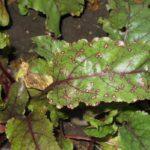
Beetroot leaves becoming blistered and red spots appearing on the surface should be cause for concern. In this case, treatment and appropriate action are required immediately.
Causes of yellowing leaves
The most common reason for a plant turning yellow is a lack of water. Beets are very demanding when it comes to watering, and a lack of moisture immediately affects their appearance. However, the plant can tolerate prolonged drought conditions and temperatures of 20-25°C. C is considered optimal for beets. If the leaves turn yellow, adjust the watering schedule.

Yellowing leaves are often caused by a nitrogen deficiency in the soil. The yellow tint is often seen closer to the edges of the leaf blade or appears as veins. In this case, beets are fertilized with cow manure or bird droppings, making a solution of 1 liter per 1 m2.».
How to help beets
In hot weather and with a lack of natural watering, maturing plants require additional soil moistening 3 times a week so that 1 m» On average, 4 liters of water were used. In the later period, the volume of irrigation is increased, and per 1 m» 8 to 10 liters of water are required, but once every 7 days is sufficient. Watering should be stopped 30 days before the planned harvest. To better retain moisture, it is recommended to mulch the soil using straw, grass, or any other material.

If there are obvious problems with the growth and appearance of a garden crop, they turn to the advantages of fertilizing, watering in the required volume, and adjusting the content of mineral elements in the soil.
Take a look Also

Beets require good soil for good growth, with loamy soil considered ideal. This type of soil will yield a good harvest with minimal compost and fertilizer input.
When planting seeds, follow the proper planting pattern and thin them out as needed. Otherwise, the seedlings will become too dense, which will negatively impact root crop yield. Timely loosening and proper watering will improve yield.
Sodium deficiency
Beet leaves acquire a reddish tint due to a deficiency of several minerals in the soil. This is often caused by a deficiency of manganese and sodium. To replenish the former, apply slurry. For every linear meter of planting area, apply 1 liter of a solution prepared from a 1:10 ratio of fertilizer to water.

Sodium deficiency also causes leaf blades to turn red. To address this, treat the soil with salt water. To correct nutrient deficiencies, water the soil twice a season with a solution made from 10 liters of water and 1 cup of salt. Treating the soil with wood ash will also improve the effectiveness.
Phosphorus and potassium
Reddening of beet leaves is often associated with a deficiency of phosphorus and potassium. A deficiency of the former is indicated by dull leaves, with a dark brown surface. Phosphorus is an essential element, and a deficiency immediately impacts plant health. To replenish it, simply apply a superphosphate fertilizer. The dosages, always specified in the manufacturer's instructions, should be followed correctly. On average, per 1 m2 30 to 45 g of the product should be used.

The problem is more difficult to deal with in situations where the soil is acidic and there is a potassium deficiency at the same time. When this problem occurs, beet leaves become dark red in color around the edges, which is why the disease is often called marginal leaf necrosis.
In this case, lime and potassium are added to the soil. The following proportions are used to prepare the solution:
- water - 10 l;
- lime - 200 g;
- potassium chloride - 80 g.
The main ingredients are thoroughly dissolved, and 1 liter of the solution is required for each linear meter. The soil should be watered again after 2 weeks.

Soil acidity
Beets show good yields in fertilized soils with neutral pH. Higher pH levels negatively impact root crops, which grow small, and a deficiency manifests itself as reddened foliage. In this case, acidic soil requires liming. To reduce acidity, use:
- chalk;
- wood ash;
- dolomite flour.

When using wood ash, add 2 or 3 cups of the solution to 10 liters of water and water the plants. Chalk and dolomite flour are added to the soil during fall tillage. This method will not only normalize the soil's acidity but also help the beets produce a higher yield by improving the nutrition of the roots.
A video on how to grow beautiful beets
Experts recommend that young gardeners without experience rely on visual aids. Using such guidance will help avoid annoying mistakes when growing a garden crop, saving time and effort on plant care. Today, there are numerous educational materials available that, when studied, provide a wealth of useful tips and increase the chances of a bountiful, delicious beet harvest. Fertilizer application should be done according to the rules, saving money and preventing harm to the garden crop.
Related posts:
 Reasons why beet leaves turn yellow, care mistakes, what to do, and how to treat them
 Description of sugar beet varieties, cultivation technology and growing conditions
 What to do if beet leaves are covered in spots, why this happens, and how to treat them
 Description and characteristics of 35 best beet varieties, planting and care rules
 Growing and caring for beets in open ground: step-by-step agricultural technology
 Description of fodder beet and its differences from sugar beet, planting and growing features
 Description of beetroot diseases, their control and treatment with medications and folk remedies
 How and when to properly plant beet seeds in open ground