
- Description of the plant
- Varieties of thyme
- Thymus vulgaris Compactus
- Creeping thyme
- Lemon-scented thyme (Archers gold)
- Purple-violet thyme
- Mountain thyme
- Chalk thyme
- Rainbow thyme
- Pygmy Thyme
- Thyme bug
- Bush thyme
- Altai thyme
- Wild thyme
- Thyme is beautiful
- Thyme Sommertime
- Ural thyme
- Moss thyme
- Crimean thyme
- Thyme Talieva
- Thyme variety Early Minor
- Red Carpet Thyme
- Thyme variety Donne Valley
- Dorfler's Thyme
- Subarctic thyme
- Choosing a suitable location for growing
- How to plant thyme
- Methods of propagating thyme
- Seeds
- Cuttings
- By dividing the bush
- Features of plant care
- Pruning and shaping
- Diseases and pests
- Combination with other plants
- Pros and cons of using in landscape design
- Benefits and harms of the plant
- Contraindications
- Where is thyme used?
- Recipe for making thyme infusion
- Thyme tincture
- Conclusion
Black thyme, or Bogorodskaya grass, is commonly known as savory. It grows throughout much of Europe and is also found in Africa and East Asia. There are up to 400 varieties of thyme. It is prized by gardeners and landscape designers for its attractive ornamental qualities and ease of care. Furthermore, the plant boasts a wide range of medicinal properties.
Description of the plant
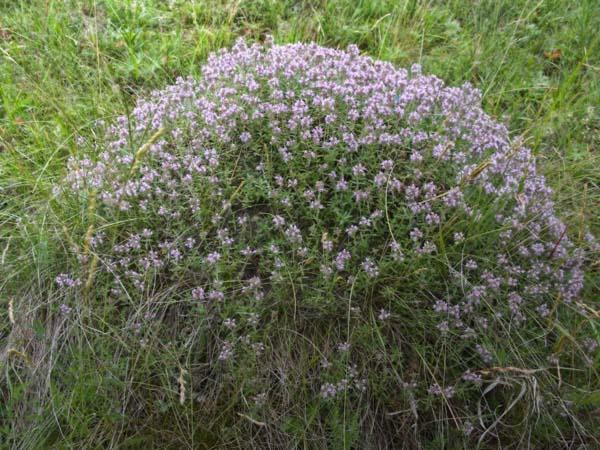
Thyme is a perennial, subshrubby plant from the Lamiaceae family. Its semi-woody stems reach 25-40 cm in height. The crowning green branches trail along the ground and resemble blueberry shoots. This makes thyme ideal for landscaping a garden.
The leaves are elongated, with short petioles. Their surface contains aromatic glands that produce phytoncides. These are what determine the herb's essential flavor and aroma.
Thyme blooms from May to the end of August.
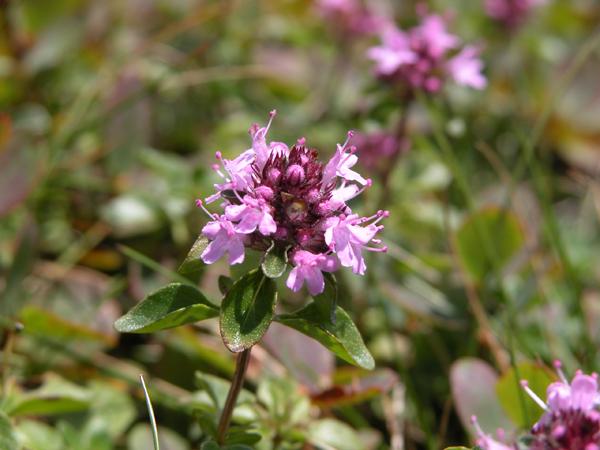
The flowers are gathered in a cluster, tightly clinging to the branch. They come in a variety of colors: lilac, white, and pink. After flowering, the fruit forms, oval-shaped, elongated nuts up to 7 cm long.
Wild thyme grows everywhere in nature: along roadsides, in meadows, fields, forest edges, and at the foot of mountains. It's easy to grow, so it thrives equally well in fertile and poor soil.
Varieties of thyme
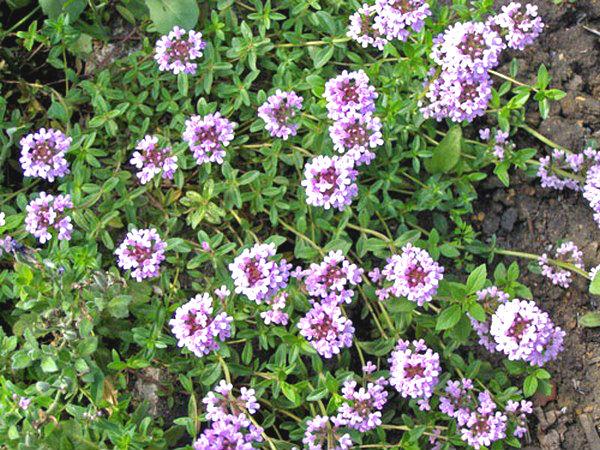
There are approximately 400 species of thyme in nature. Each is unique in its own way, varying in size, height, growth habit (creeping or ascending), color, and aroma. The most common species are:
- common thyme;
- creeping thyme;
- lemon thyme.
Thanks to the tireless work of breeders, promising varieties have been developed, with equally impressive technical and decorative qualities. The range of thyme is wide, giving gardeners plenty to choose from.
Thymus vulgaris Compactus
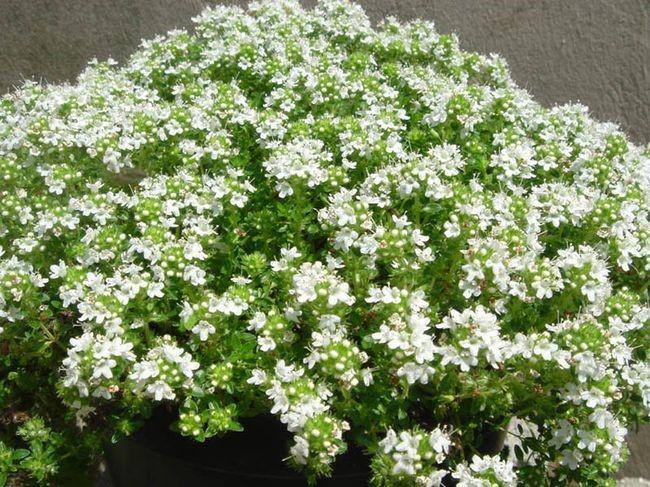
A subshrub plant, up to 15-20 cm tall. The leaves are small, with internal pubescence. The inflorescences come in a variety of colors: white, soft purple, and red. This type of thyme is less frost-hardy than creeping thyme. Dwarf varieties of common thyme, such as Elfin, are more commonly used in landscape design.
Creeping thyme
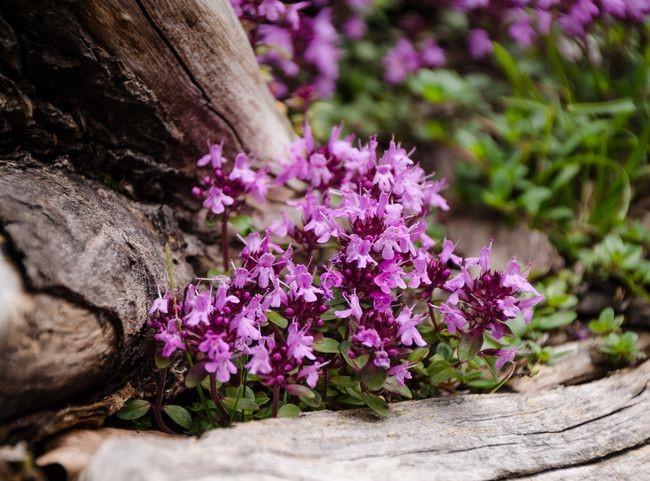
A perennial species of thyme with numerous slender stems that creep along the ground. They tend to become woody at the base with age, rising at the tips. The shoots reach a height of 20 cm.
Creeping thyme's leaves are oval, ovate, or lanceolate, green in color. They are small and arranged oppositely.
The flowers are small, gathered in voluminous clusters of various colors: scarlet, purple, pink, and bicolor. This type of thyme is undemanding in terms of growing conditions, being drought- and frost-resistant. The most common varieties of creeping thyme have a distinctive lemony aroma:
- Sommertime.
- Rainbow.
- Early Minor.
- Dorfler.
- Donna Vale.
Lemon-scented thyme (Archers gold)
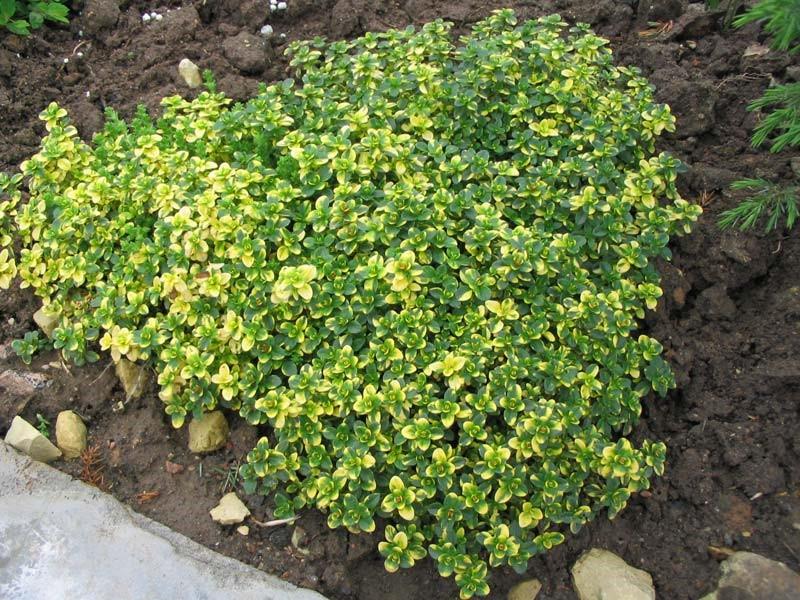
A low-growing variety of thyme, no more than 15 cm tall. The leaves are ovate-shaped and yellow-green, turning a rich green over time. The plant has a strong lemon scent. Lemon thyme forms a dense leaf cushion, grows quickly, and therefore requires regular pruning.
This type of thyme does not tolerate low temperatures well, so it needs to be covered for the winter.
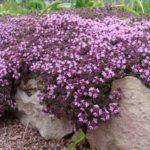
Purple-violet thyme
Perennial shrubs with short shoots, up to 10 cm tall. Purple-violet thyme produces flowers of a rich purple color, in various shades. It is a fairly aggressive grower, intensively occupying available space.
When planting thyme, it is recommended to select limited areas of land, creating barriers from borders, sheets of steel or plastic, and stones.
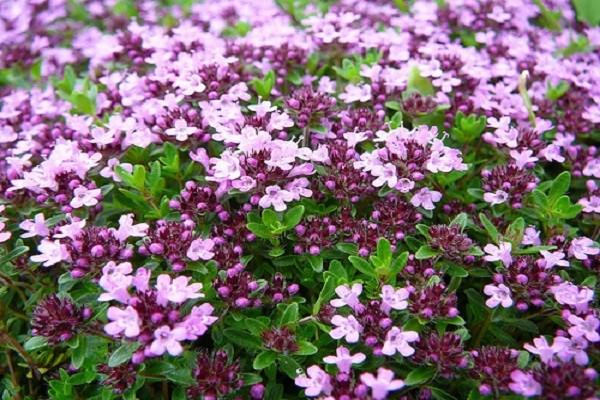
Mountain thyme
A low-growing perennial commonly known as flea thyme, it has a woody root system that produces short shoots, either ascending or prostrate. These shoots can be bare, hairy, faceted, or rounded. The leaf blades are covered with fine hairs.
Mountain thyme blooms with delicate pink and red flowers. It emits a pleasant, ethereal aroma that permeates the surrounding area. Thyme thrives in rocky soil but does not tolerate excessive moisture.
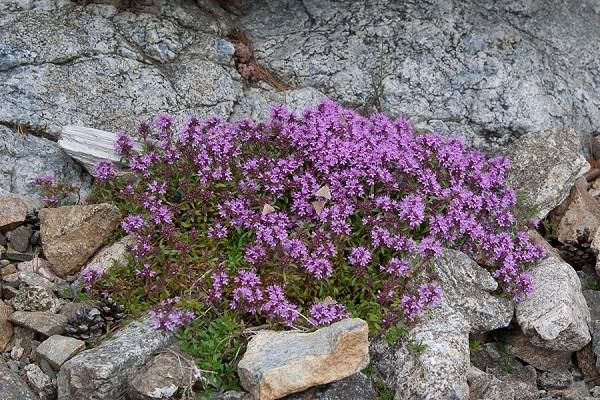
Chalk thyme
Thyme prefers hilly areas with predominantly calcareous soil. It is highly drought-resistant. It is prized by gardeners for its strong aroma, even when dry, and is used as a groundcover.
Chalk thyme is a honey plant, so it's best to plant it near tomato, pepper, and eggplant beds. This attracts pollinating insects.
Chalk thyme grows in dense, low bushes (10-13 cm long), with abundantly branching, ascending shoots. The flowers are so small as to be visually inconspicuous: a green corolla with lilac-pinkish petals.
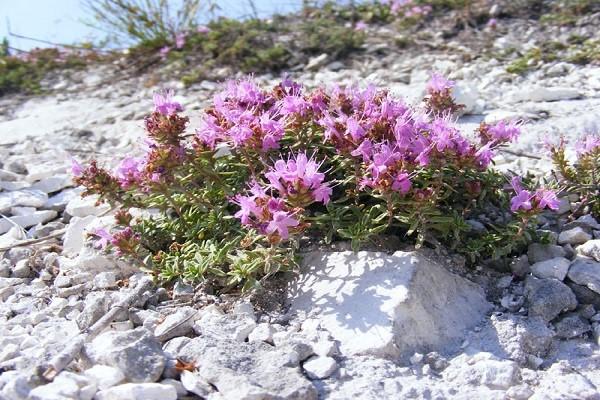
Rainbow thyme
A creeping thyme variety, also known as vegetable thyme, thrives in light, hence its nickname, sun thyme. It has sturdy stems that extend 20-25 cm above the ground. Due to their richness and aroma, they are often used in various dishes.
Rainbow thyme's leaves are green with a grayish tint. This plant is sensitive to changes in soil moisture, drying out quickly if it's depleted. Growing it in cooler regions requires providing shelter during the winter.
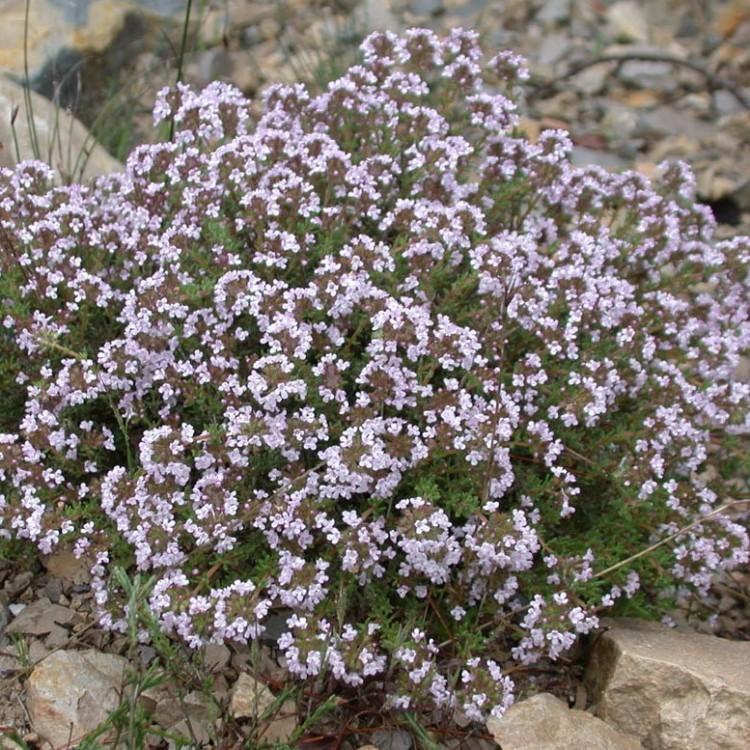
Pygmy Thyme
The shortest growing variety of garden thyme, with shoots no more than 3 cm tall. It retains its decorative appearance throughout the growing season. Flowering occurs from May to July, with small pink flowers.
It's low-maintenance, grows and thrives even in poor soil, and doesn't require frequent watering.
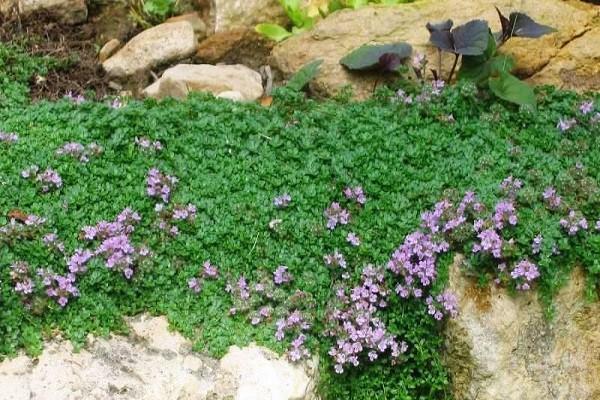
Thyme bug
A creeping subshrub up to 17 cm long. It quickly establishes roots under any conditions. In the wild, it is typically found on rocky slopes with a surface carbon layer. It is not particularly sensitive to drought.
Thyme blooms all summer, beginning in May. Its flowers are bright pink. The plant is used in folk medicine for its medicinal properties and is prized by landscape designers for its ornamental qualities.
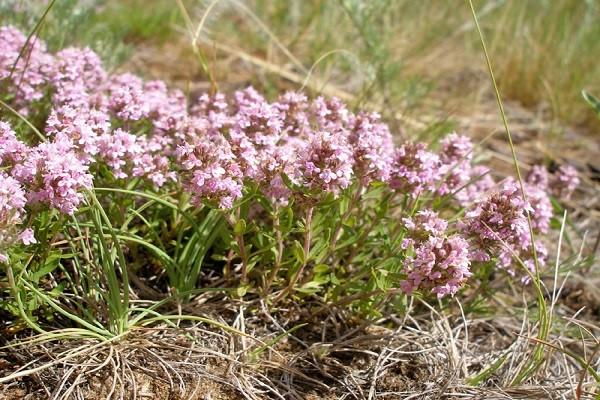
Bush thyme
Bush thyme forms compact bushes 22-25 cm tall. Unlike creeping thyme, this variety has loose clumps. It's ideal for adorning garden paths.
For each region, an appropriate variety of thyme is selected, depending on weather conditions.
Altai thyme
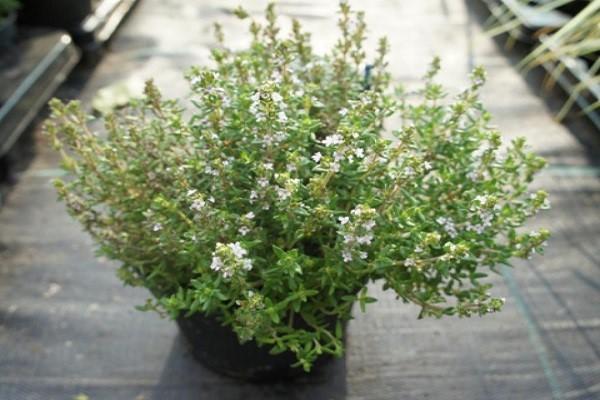
A heavily branched subshrub, growing to 20 cm tall. In the wild, Altai thyme grows primarily on rocks with large accumulations of rubble and lime. It also grows well on sandstone. Bright purple flowers bloom in late July and maintain their decorative appearance until late August.
Altai thyme is considered a honey plant, so its greatest concentrations are found in the valleys of the Altai Krai. It is easy to cultivate and is grown for landscaping and medicinal purposes.
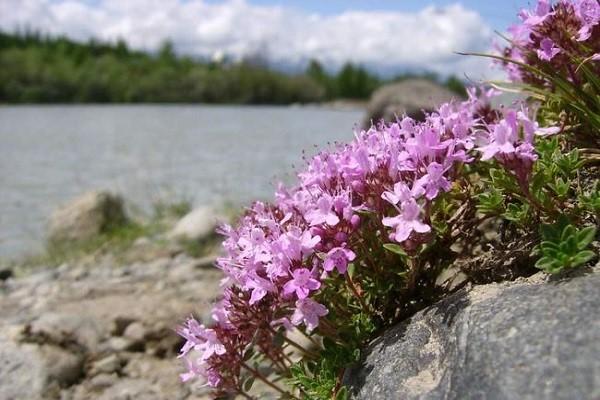
Wild thyme
A compact shrub undemanding of growing conditions and soil, often found in forests and forest edges. It prefers sandy and podzolic soils and thrives even in drought.
Wild thyme has erect shoots, growing 10-12 cm long. It blooms throughout the warm season—from May to September. The inflorescences are pink.
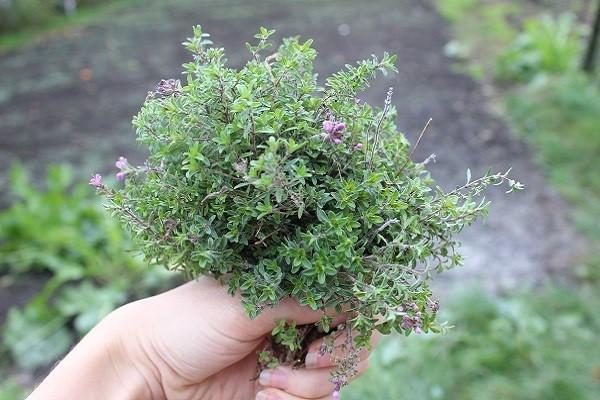
Thyme is beautiful
A fairly tall variety with creeping branches up to 30 cm long. The leaves are narrow and elongated, forming a dense green blanket. The flowers of the beautiful thyme are large, gathered in dense, spike-shaped clusters, and are a rich red color.
Beautiful thyme thrives in brightly lit areas. Thyme is undemanding regarding soil and moisture. Despite this, it remains beautiful throughout the summer season.
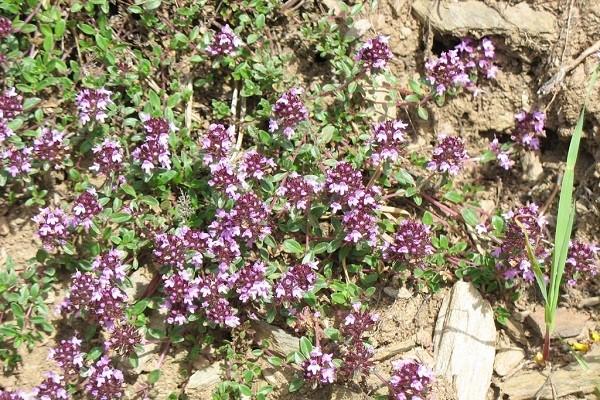
Thyme Sommertime
A variety distinguished by densely pubescent, non-recumbent shoots that form rounded, dense clumps. They grow no taller than 25 cm. Thyme Sommertime exudes a pleasant, ethereal aroma.
It's ideal for growing in permanent containers and pots, which are used to decorate the garden. Thyme is brought indoors for the winter.
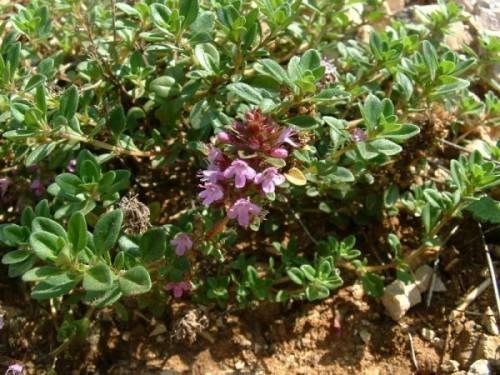
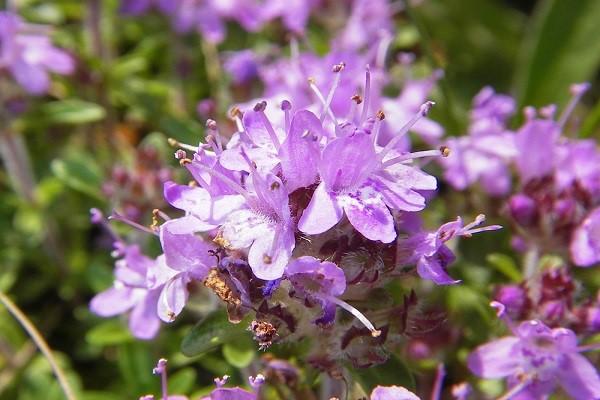
Ural thyme
A variety of thyme, primarily growing in the Southern Urals. It's not picky about soil, but thrives in gravelly, chalky, sandy, and black soil. However, it doesn't do well in clay soil.
Ural thyme is stress- and drought-resistant, but requires a lot of light. It produces large, bright pink flowers.
Moss thyme
A low-growing specimen with 1 cm stems. Dark green foliage up to 3-4 mm long forms a dense, moss-like mat. Flowers are absent.
In landscape design, moss-like thyme is widely used as a replacement for moss covering, but only for its aromatic properties.
Crimean thyme
In the wild, this species primarily inhabits the Crimean Peninsula, in rocky and sandy areas. The stems extend 15-17 cm above the ground. The flowers are small, lilac-pink, and bloom in midsummer.
Crimean thyme is prized by amateur gardeners for its ease of care, resistance to all weather conditions, and rich aroma. Thyme easily survives snowy winters without cover; otherwise, it freezes.
Thyme Talieva
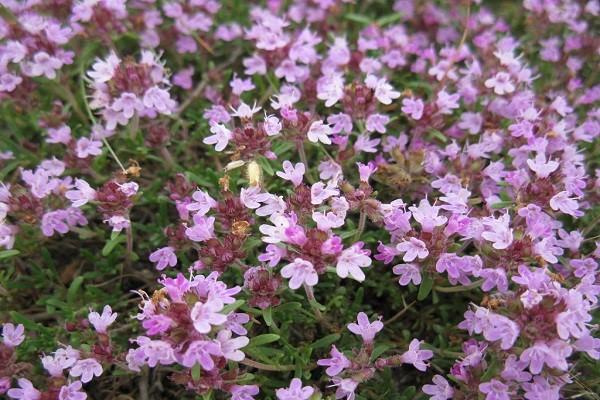
A subshrub plant growing up to 12-13 cm. Its color ranges from pink to purple. Thyme blooms in early June, and fruiting begins in August.
Wild representatives are found primarily in the Urals and northeastern Europe. Thyme thrives on limestone, gravel, and scree.
Thyme variety Early Minor
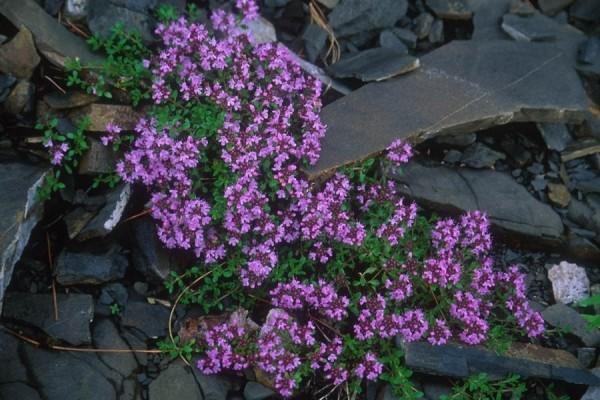
A slow-growing variety of creeping thyme, reaching 5-10 cm. The leaves are small, with pubescent blades, and are compactly distributed along the stems. It blooms earlier than other thyme varieties, in early June. The flowers are lilac or soft purple.
Used as a decorative ground cover.
Red Carpet Thyme
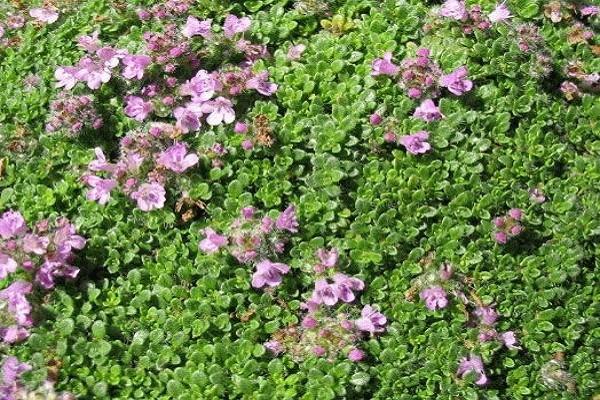
Another beautiful early thyme variety, up to 5 cm tall, blooms typically in June-July. Flowers form clusters in capitate buds. Grows equally well in sun and shade. It prefers fertile soil but doesn't suffer much from rocky conditions.
Thyme variety Donne Valley
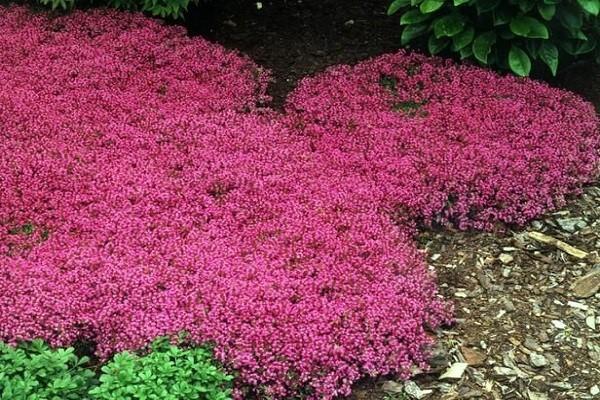
A tall specimen, about 30 cm in height, it belongs to the lemon-scented variety of thyme. The shoots are covered with small, dark green leaves. A distinctive feature of the plant is its persistent lemon aroma.
As it grows, it forms dense clumps. Flowers form loose, spherical heads of a soft pink color. Loose soil with a deep water table is preferred for planting.
Dorfler's Thyme
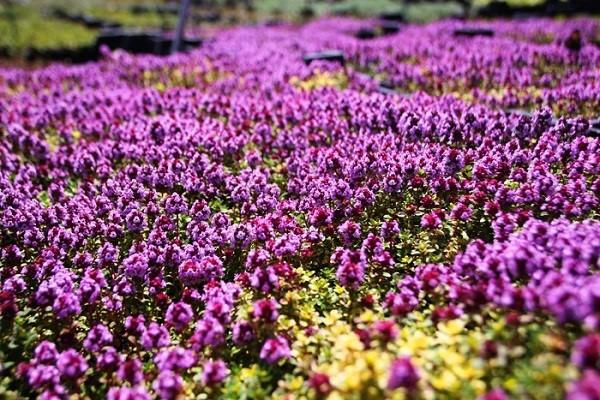
A rare, endangered species, a regular in the Balkan Mountains. It shares many characteristics with creeping thyme. It is distinguished by its excessively pubescent, whitish foliage, slightly drooping at the top of the shoots.
It blooms with fragrant pinkish-gray flowers at the beginning of the summer season, lasting for two weeks. It's quite a beautiful species, but very capricious.
Subarctic thyme
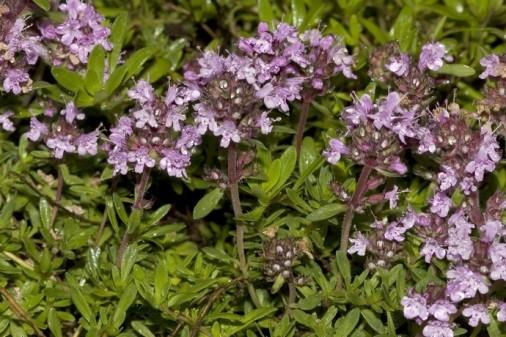
A low, creeping herb with vertically ascending shoots. It is abundant in forested areas of Eastern Europe. It is easily recognized by its habit of forming a pointed ground cover.
The flowers are lilac in color, compressed into voluminous inflorescences. The leaf blades and branches are covered with numerous short hairs. The turf grows vigorously and easily tolerates drought and frost.
Choosing a suitable location for growing
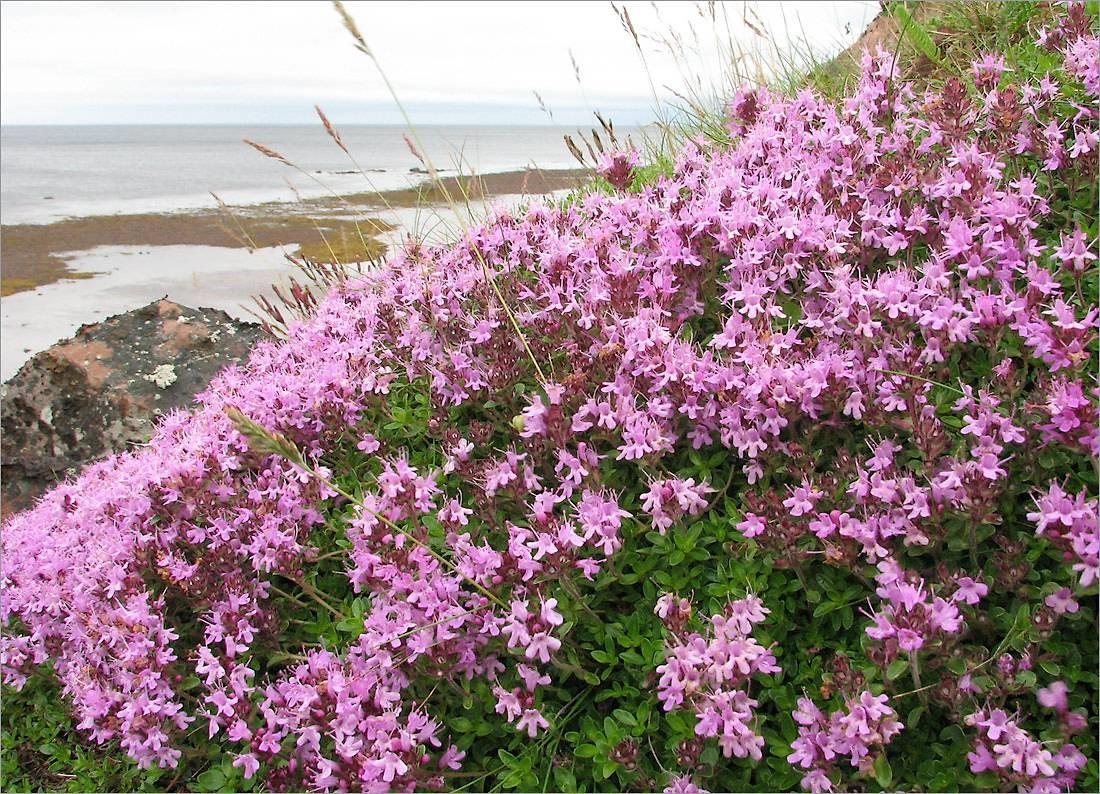
When planting thyme in a garden plot, varieties are selected based on the climatic conditions in a given region.
In addition, additional factors are taken into account: the presence of nearby groundwater, options for combining with other vegetation in terms of height and color, and personal preferences.
For decorating alpine gardens, it is recommended to choose the flea (mountain) variety of thyme.
Garden thyme is inherently easy to grow, but to ensure beautiful and lush blooms, certain cultivation practices are necessary. First, choose a location: it should be sunny, shaded from midday heat, and protected from drafts. Growing in full shade will cause the shrub to grow excessively and lose its decorative appeal.
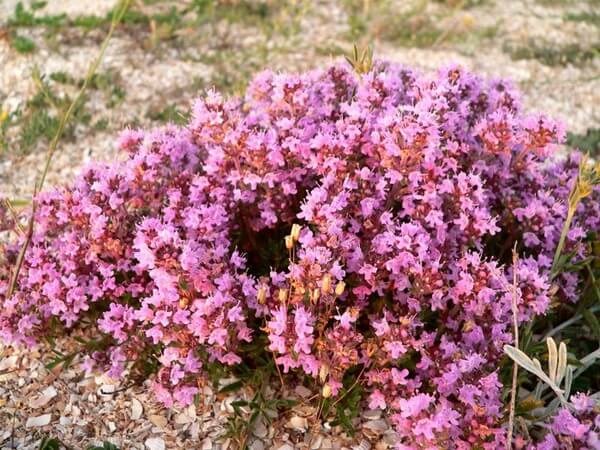
A good location is the southern end of the garden, close to a fence or other buildings. It's recommended to choose slightly elevated areas to prevent flooding during spring and fall floods. Drainage is also recommended for added security.
The soil is prepared in advance: it's dug over in the fall, and sand, lime, and well-rotted compost are added to the clay soil. Thyme prefers a neutral or slightly alkaline growing environment, so the acidic substrate is diluted with ash. With proper care, thyme will delight you with a young, green carpet as early as the year it's planted.
How to plant thyme
Thyme is planted in the spring, when the threat of sudden night frosts has passed and daytime temperatures stabilize at no less than 13°C. Dig the soil and sow the seeds.
Tip! After sowing thyme, spread a layer of river sand on the surface. This will provide the young shoots with the nutrients they need for growth, prevent weed growth, and prevent water stagnation.
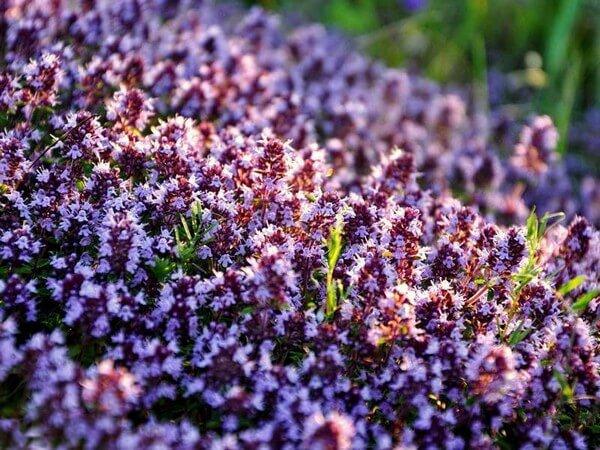
Once the first shoots emerge and become slightly longer, thin them out. The optimal spacing between plantings is 25-30 cm.
Seedlings are also planted in open ground, prepared in advance and planted indoors at the end of February.
Thyme seeds are sown in individual containers and covered with glass to create a greenhouse effect. Maintenance is minimal: timely watering and periodic ventilation, removing any condensation that accumulates inside.
After a month, the grown and strengthened seedlings are moved to a balcony or greenhouse to harden off. After another two weeks, they are transplanted to their permanent location in the garden. Avoid planting the bushes too deeply. After planting, mulch the surrounding soil with crushed stone, pebbles, or crushed rock.

Thyme also thrives when planted in the fall—in September. The bushes have time to gain strength and establish roots before the first frost.
Methods of propagating thyme
Thyme reproduces in several ways:
- cuttings;
- dividing the bush;
- seeds.
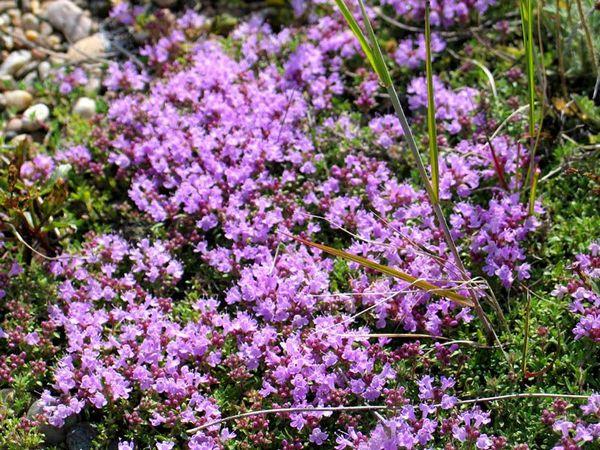
Thyme can successfully reproduce by self-seeding, and if you don’t limit the space, it will soon be everywhere.
Seeds
This is the most labor-intensive method, which gardeners use to obtain large quantities of planting material. In early spring, thyme seeds are sown directly into garden beds (in southern regions) or in a greenhouse. It's important to monitor the seedlings to ensure they are not hampered by weeds. Once the seedlings grow, the excess weeds are pulled out.
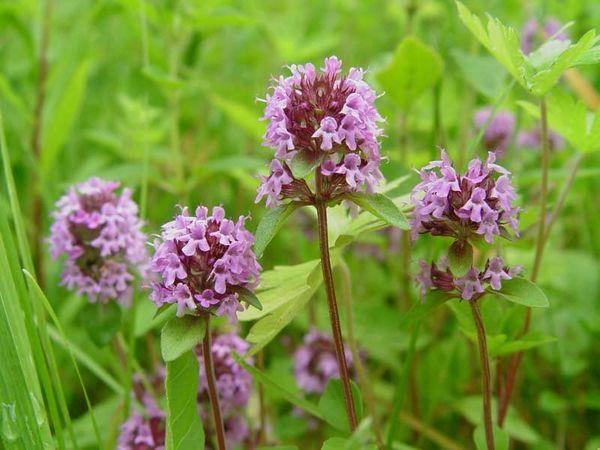
Some gardeners prefer to start seedlings indoors in trays and then transplant them into open ground once the soil has warmed up. They buy ready-made soil mix or prepare their own: mix peat and river sand in equal parts. The seeds are planted to a depth of 0.5-1 cm.
Place the seedlings close to a heat source and cover them with plastic wrap or glass. Remember to periodically open the cover to remove any condensation that forms on the glass or film. As the first shoots emerge, lower the room temperature, remove the greenhouse cover, and reduce humidity. Spray the thyme seedlings with settled water as the soil dries out.
If seedlings are prepared early and planted in the garden, thyme will begin to bloom in the same season.
Cuttings
Thyme easily takes root in a new location using shoots. Choose a trailing branch that hasn't yet become woody. Cut it 15-20 cm from the top for taller plants and at least 5 cm from the top for shorter plants. Transplant the cutting separately into a greenhouse or outdoors, but create a greenhouse structure (cover it with a jar and stretch plastic over it).
A sign of full rooting will be the appearance of green leaves on the seedling. Regular watering is required for three weeks, resulting in a young plant. Thyme often roots on its own. All the gardener needs to do is separate the shoot from the mother plant and replant it in its proper location.
The advantage of this method of propagation is the preservation of the original varietal characteristics and ease of implementation.
By dividing the bush
This method is used when reconstructing an alpine garden or border. The original thyme bush is carefully dug up and the root ball is untangled. It is then chopped with a shovel or other garden tool into the required number of pieces. The cut areas are treated with charcoal dust.
The plots are replanted individually. The downside of this method is that the mother planting is damaged in the process.
Features of plant care
Thyme is an easy-to-grow plant and easy to care for. However, it's recommended to follow basic cultivation practices:
- Water only during dry weather, moistening only the top layer of soil. Before flowering, mist the bushes more frequently to help them gain strength. Overwatering is not recommended, as this leads to root rot. If there is frequent rainfall, cover the plantings with plastic.
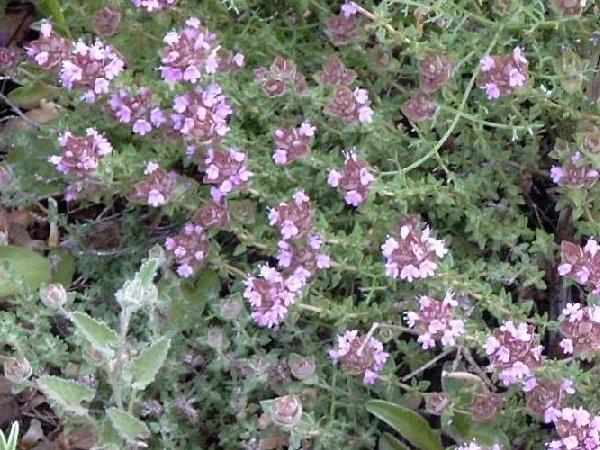
- Maintain a specific light regime: in complete shade, thyme becomes dull, loose, and drooping. Only abundant light will revive the plant.
- Thyme doesn't require much fertilizing—most wild varieties grow well even on rocks. A small amount of mature compost can be added once or twice a season. Garden varieties of thyme may require the addition of ash or lime to the soil. Mineral fertilizers are not necessary.
- Weed and loosen the flower bed systematically, as weeds clog the growth of thyme.
To make care easier, mulch the thyme beds with stone chips.
Pruning and shaping
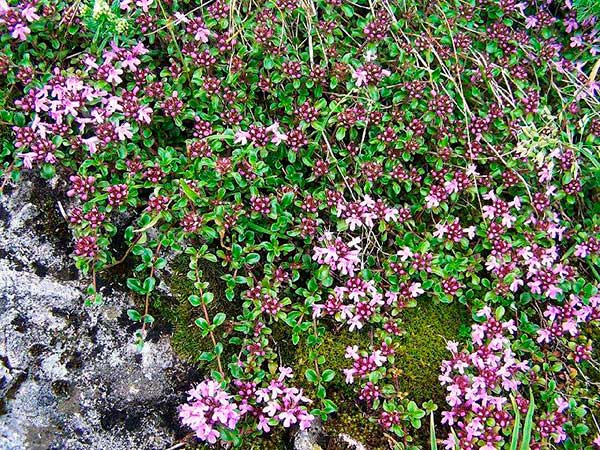
Timely pruning will help create a beautiful green cover of thyme and prolong its flowering. Remove shoots with scant foliage. To create a specific shape for clumps of thyme, especially in rock gardens, gardeners use a topiary frame.
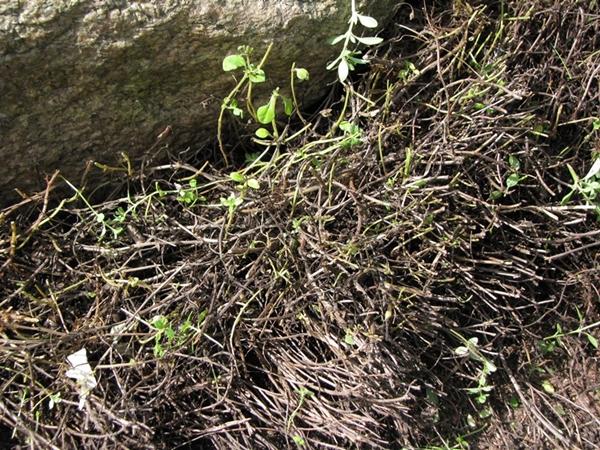
After thyme finishes flowering, it's advisable to perform a health pruning: mow the plantings almost to the ground, leaving a 2-3 cm tall grass on the surface. However, this procedure is only practiced in regions with mild winters. Severe frosts can lead to the plant freezing.
Diseases and pests
Thyme rarely gets sick, but if proper agricultural practices and unsuitable growing conditions are not met, it can be susceptible to fungal diseases and insects. Among the latter, the following pose a particular threat:
- Meadow moths damage foliage and stems. If moths are found, treat the bushes with insecticides.
- The sand beetle is a large black beetle that infests all above-ground parts of plants. It can be controlled by setting traps laced with a poisonous substance.
- Weevils are small black beetles that feed on young leaves and shoots. They also partially attack flower buds during flowering. Control is similar to that for the previous pest, with the addition of insecticide sprays.
- Aphids are millimeter-sized insects that attack stems and leaves. Special insecticides are used to control them.
The most common diseases are rust, root rot, and fungus. The plant becomes covered in brown spots, wilts, and stunts growth. At the first sign of damage, the clumps are dug up entirely and destroyed, and the soil is treated with copper sulfate.
Combination with other plants
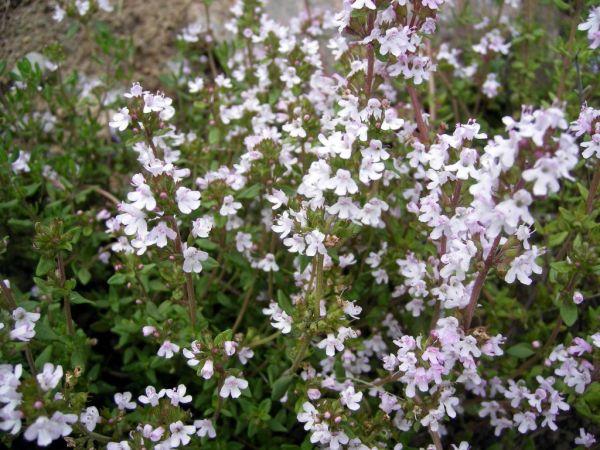
All varieties and species of thyme blend harmoniously with other plants. It's an ideal groundcover, with a shallow root system. This allows it to be grown alongside plants with deep-rooted roots.
Thyme looks stunning as a backdrop to plants with large leaves and flowers. Gardeners often use thyme as a solitary plant, planting it in hanging baskets and standing containers. With the right combination of color and fragrance, they create quite elegant and impressive arrangements.
Thyme can be planted near:
- flowers that have no scent;
- vegetables, as thyme attracts insects for pollination.
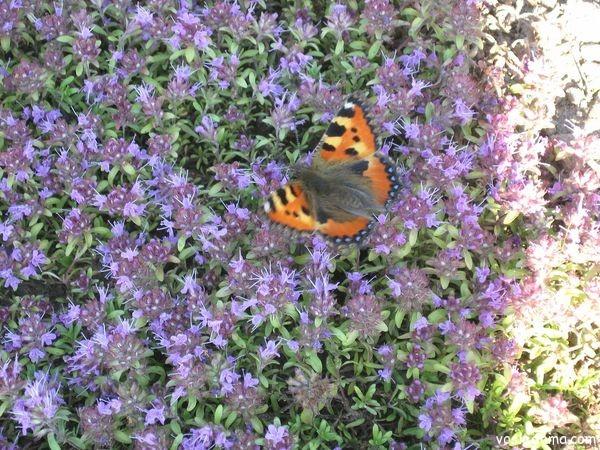 Thyme is widely used in landscape design for decorating alpine slides, mixborders, and rocky scree.
No less impressive thyme looks good in a pot on the windowsillIts unpretentiousness makes it suitable for cultivation at home. To do this, select appropriate containers, and the planting material is obtained by dividing garden bushes.
Fill the pots with soil—ready-mixed soil for cacti or succulents is fine. Add chalk to loosen the soil. After planting, mulch the root zone with crushed rock. Place the herbs in a sunny, draft-free spot.
Thyme's advantage is that it easily tolerates the dry air of winter in apartments. It's usually watered infrequently, only when the surface soil dries out. In cloudy weather, the plant is illuminated with regular lamps, extending daylight hours to 17-18 hours.
Pros and cons of using in landscape design
The presence of thyme in the garden will bring many positive aspects for owners and guests:
- When combined with other plants, thyme creates striking compositions.
- Allows you to turn any fantasies and creative ideas into reality.
- A pleasant spicy aroma will fill the surrounding space, which will serve as a preventative measure against many diseases and will lift your spirits.
- Serves as a honey plant, attracting butterflies and bees to the garden.
- It is a medicinal raw material that can be stocked up for a long period.
- Once cut, thyme retains its freshness for a long time. It is used in compact bouquets. Thyme looks especially striking when combined with mint, wormwood, or lovage.
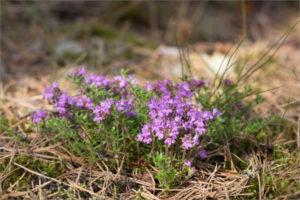
The downside of thyme is its tendency to grow uncontrollably. However, this problem is easily solved by erecting a fence.
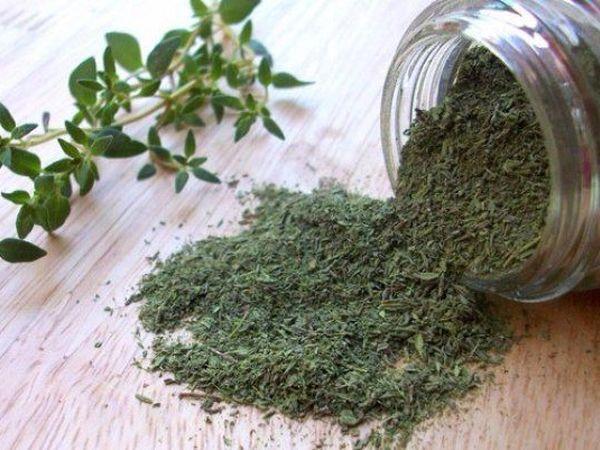
Benefits and harms of the plant
Thyme has a wide range of beneficial properties., thanks to its rich biochemical composition. It contains:
- organic acids: quinic, caffeic, oleic, ursolic, chlorogenic;
- fats;
- vitamins: A, C, PP;
- minerals;
- flavonoids;
- gum.
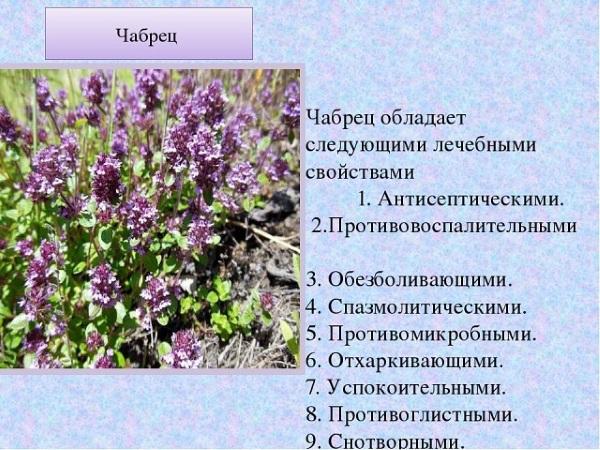
Thyme has anti-inflammatory and analgesic properties. Infusions and decoctions are taken as a disinfectant for a number of health conditions, including sore throats, toothaches, stomatitis, gingivitis, and other oral conditions.
Thyme effectively lowers blood pressure and normalizes circulation. Thyme oil promotes the healing of wounds, abrasions, cuts, and other skin lesions. Topical and internal use of herbal remedies helps with furunculosis and diabetes.
Thyme-based tea strengthens the immune system, which is especially important during the winter when the body needs the most support. Thyme is recommended as part of a comprehensive treatment for colds, flu, and acute respiratory viral infections.

Contraindications
Despite the many benefits of thyme for the human body, it can also be harmful. Not everyone will benefit from taking thyme-based medications.
Obvious contraindications include:
- pregnancy and breastfeeding;
- kidney and liver pathologies;
- gastric ulcer and duodenal ulcer;
- allergic reaction to individual components of the herb;
- hypertension.
Because thyme has warming properties, it is not used as an antipyretic. This will only worsen the situation.
Important! Long-term use of thyme-based medications can lead to side effects, including nausea, vomiting, and dizziness. In such cases, discontinue herbal therapy and consult a doctor.

Where is thyme used?
Due to its rich composition and numerous beneficial properties, the herb is sought after in folk medicine. Various forms of thyme are used for medicinal purposes: alcohol tinctures, water infusions and decoctions, and oil.
All above-ground parts of the plant, including leaves and shoots, are suitable for making medicinal preparations at home. Herbal decoctions and infusions help treat nervous system disorders. Thyme is considered a natural aphrodisiac and is included in medications for impotence.
Its aroma is healing and serves as aromatherapy: it relaxes, soothes, relieves depression, normalizes sleep, and improves mood. The oil is dripped into a special lamp, and the evaporation of the water saturates the air with healing vapors. Thanks to its phytoncides, thyme can disinfect the surrounding space from pathogenic bacteria.

During cold season, it is recommended to hang bags filled with dried thyme around your home.
Thyme is equally popular in the culinary world. Mediterranean cuisine, for example, features numerous recipes featuring this herb. It's also popular in tea and other dishes. Thyme extract transforms the flavor of dishes, adding a richer aroma. Fresh thyme can be used as a substitute for black pepper.
Thyme's bactericidal, antiseptic, and regenerative properties have not gone unnoticed in cosmetology. It is used to make masks, lotions, and toners, all of which have a beneficial effect on problematic and sensitive facial skin. Regular treatments with these ingredients nourish the epidermis with nutrients and vitamins.
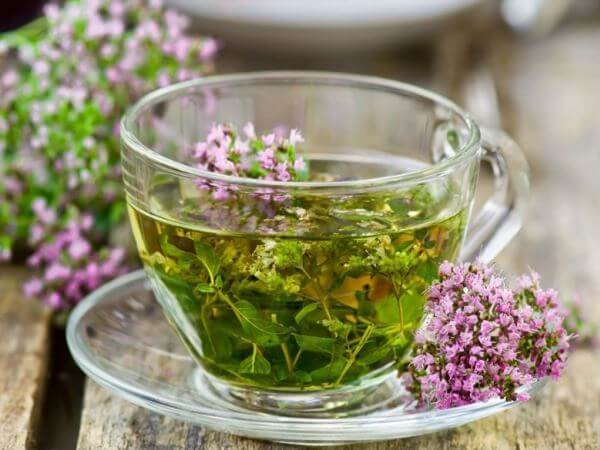
Recipe for making thyme infusion
An aqueous infusion of thyme is usually used for gargling, inhalation, and as a hair rinse.
The recipe for making thyme infusion calls for the addition of mint or blueberry leaves. The ingredients are used in equal proportions. The process consists of the following steps:
- Dry or fresh raw materials are crushed.
- One tablespoon of the mixture is poured with hot water at a temperature of 80-90 °C.
- Wrap the container in a warm towel and let it steep for an hour in a warm place.
- The finished infusion is filtered and divided into 3-4 equal portions.
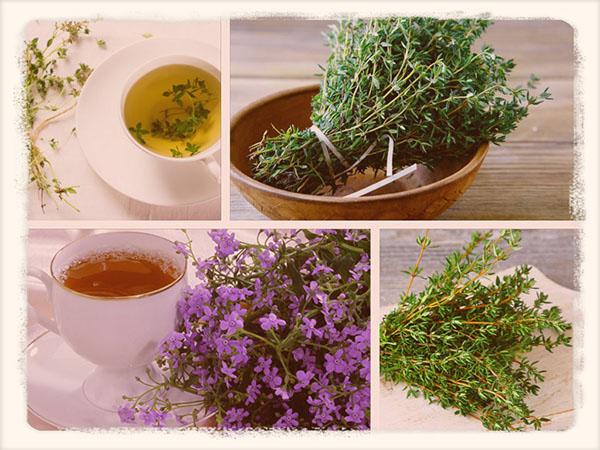
Take the remedy throughout the day, regardless of meals. For flavor, you can add honey or dilute it with a little water.
Making a thyme infusion isn't much more difficult. Finely chopped fresh or dried thyme is mixed with a liter of cold water. Place the mixture in a double boiler and remove from the heat once it boils. Wrap it in a cloth and let it cool completely. Drink the infusion in equal portions throughout the day.
The decoction helps in the complex treatment of diabetes, furunculosis, and various types of allergies.
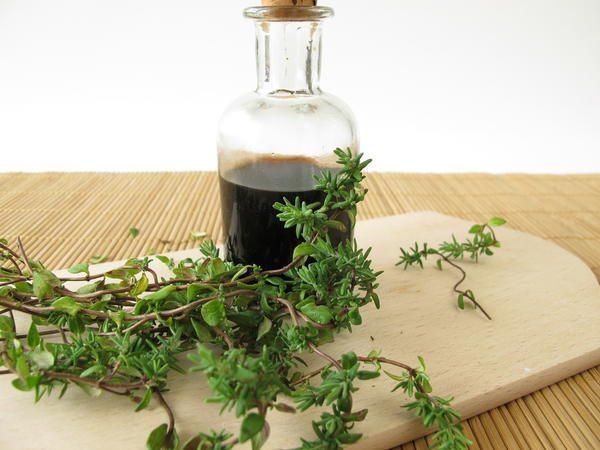
Thyme tincture
Thyme tincture is intended for internal use and also for external use on problematic facial skin and for rubbing. It helps with rheumatism and joint pain.
Ingredients required:
- thyme shoots - 200 grams;
- vodka - 500 ml.
Preparation procedure:
- The grass is ground.
- Place in a glass container.
- Add alcohol and close the lid tightly.
- Place in a cool, dark place for 2-3 weeks. Shake once a week.
- After the specified time, strain the tincture and store it in the refrigerator.
Take 1 teaspoon once daily. To treat acne, apply the mixture to your face with a cotton pad soaked in the mixture. After washing your hair, it's recommended to rinse it with a solution of the tincture and water—1 teaspoon per 1 liter.
The alcohol-based tincture has a shelf life of about a year. It is contraindicated for internal use by children.
Conclusion
Thyme is not only a beautiful plant but also a beneficial one. This is doubly beneficial if you grow it in your own garden. With minimal care, this striking groundcover will delight you with its appearance and fill the air with its healing aroma for years to come.
Related posts:
 Growing lemon thyme in pots and soil, planting and care, plant varieties
 Growing thyme from seeds and propagating by cuttings, planting and care in open ground
 Medicinal properties and contraindications of thyme for the human body, application
 How to grow thyme from seeds and cuttings at home in a pot, and care for the plant on a windowsill
 How to store fresh thyme and how to dry it at home
 Growing thyme in the Urals: planting times, care, and pest control
 Growing and overwintering thyme in open ground and greenhouses in the Moscow region
 Planting, growing, and caring for creeping thyme in open ground at home