
Creeping thyme is a little-known name for a perennial herb. Most people know this plant as thyme or Bogorodskaya grass. Thanks to its tannins, essential oils, and mineral salts, this plant is highly valued in cooking, folk medicine, and cosmetology. This article will introduce the reader to the growing characteristics of creeping thyme, its varieties, and care instructions.
Specific features of creeping thyme
Creeping thyme has long been known for its medicinal properties.: anti-inflammatory, expectorant, phlegm-thinning, analgesic, relaxing, stimulating, antihelminthic action.
A remedy prepared from the herb helps with:
- high temperature, gently removing heat and fever;
- gastrointestinal diseases, relieving bloating and intestinal spasms, restores intestinal microflora;
- nephritis - a good diuretic, gently removes sand and relieves inflammation;
- neuroses – reduces irritability, improves sleep;
- neuralgia – reduces pain, relaxes nerve endings;
- male impotence – increases libido and potency;
- whooping cough – relieves coughing fits;
- helminthic invasion – paralyzes helminths and removes them from the body;
- rheumatic arthritis, relieving pain and inflammation;
- skin diseases - an excellent antiseptic, gently disinfecting affected areas of the skin and promoting healing.
Please note: Thyme tincture is used as an anticonvulsant.
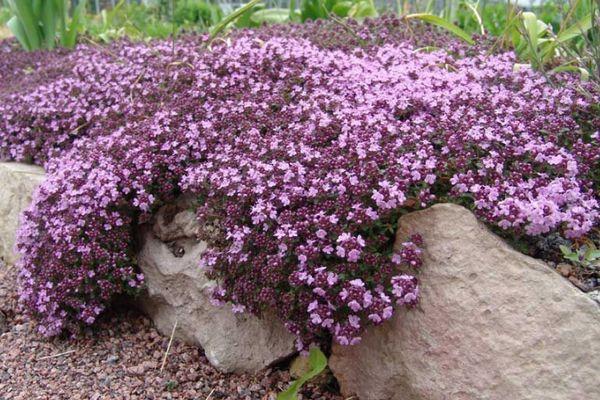
Only the above-ground portion of the plant has medicinal properties. The herb contains large amounts of:
- useful polyunsaturated acids - caffeic, ursolic, quinic, chlorogenic, thymunic;
- plant polyphenols;
- resins and essential oils;
- tannins and bitterness.
Beekeepers prefer to locate their apiaries near fields of flowering thyme or plant it specifically; honey containing the pollen of these plants has medicinal properties and is particularly prized.
In addition to its medicinal properties, the plant is used in cosmetology and the perfume industry: flower extract is added to perfumes, aromatic and essential oils.
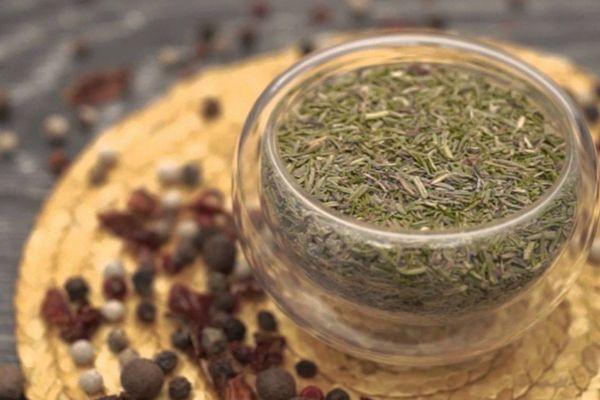
This aromatic herb has proven itself in cooking: it is added to meat, fish, vegetables, pasta, salads, and baked goods, enriching the flavor of familiar dishes and giving them a special twist.
Combination with other plants
Thyme is a favorite flower among gardeners. It pairs beautifully with a variety of textured plants, creating a striking tone and adding a pop of color. Covering areas of land with a colorful carpet, it beautifully sets off and brightens up planted bushes of peonies, roses, chrysanthemums, lilies, and other perennials.
In botanical gardens or recreation parks, a carpet of thyme is used to cover the clearings between trees and shrubs, framing the assembly with wild stones and scattered gravel.
Some gardening organizations recommend planting thyme in the garden to increase the yield of cucumbers, squash, melons, and other crops. With its pungent aroma, thyme attracts numerous pollinating insects.
Types and varieties
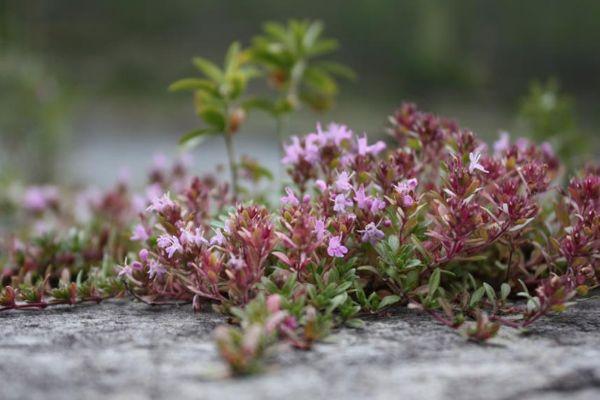
Thyme is a low-growing, creeping plant classified as a semi-deciduous shrub, barely reaching fifteen centimeters in height. It gets its name from its ability to carpet the soil surface. It has become a favorite among gardeners for its ability to bloom in early summer and continue to delight the eye with its lush blooms until late fall.
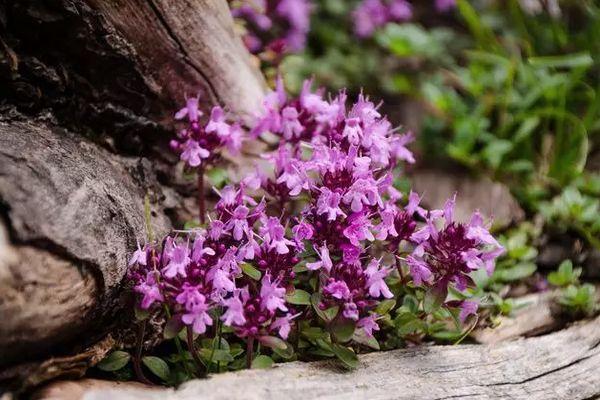
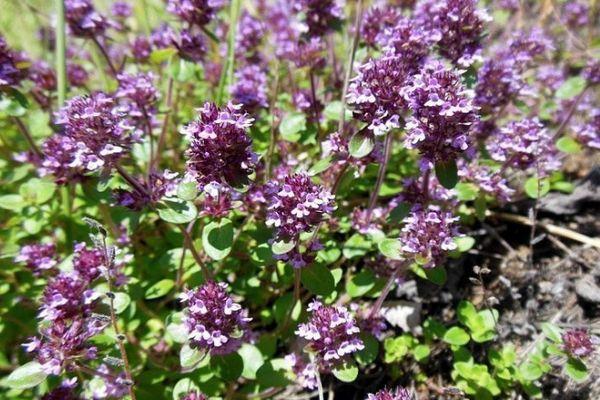
There are over one hundred and seventy species of this plant. They are characterized by small, oval leaves arranged oppositely and small, poppy-like flowers. Flowering begins in early June. The flowers come in a variety of shades, from purple to light yellow.
The most common varieties of the plant:
- Donna Valley – with pink flowers and the ability to cover the ground surface;
- Silver Queen - with grey leaves in a grey border and pale purple flowers;
- Colchis - spreads low along the ground like a lilac carpet.
There are also three varieties of thyme:
- common - grows up to ten centimeters, forming a bunch of small branches with tiny leaves; color range - from white to light purple;
- Lemon-scented - the name is explained by the subtle lemon aroma; there are two varieties: Bertram Anderson - with foliage covered with yellow spots; Aurea - with poisonous yellow flowers;
- Early – blooms earlier than others. Varieties: False-downy – with pointed, slightly pubescent leaves; Minor – with small, hairy leaves, characterized by slow development.
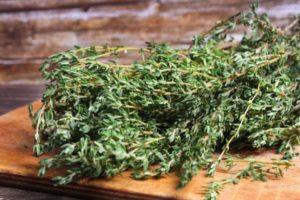
The listed varieties are popular among Russian gardeners and are adapted to local climatic conditions.
Reproduction of thyme
To propagate a plant, several methods are used:
- cuttings - a pre-prepared branch taken from an adult bush in the fall or spring is cleared of leaves and planted in moist soil, covered with a jar. The cutting quickly takes root and does not require special care;
- from seed – the least effective method, requiring a lot of time and not providing a 100% guarantee of germination;
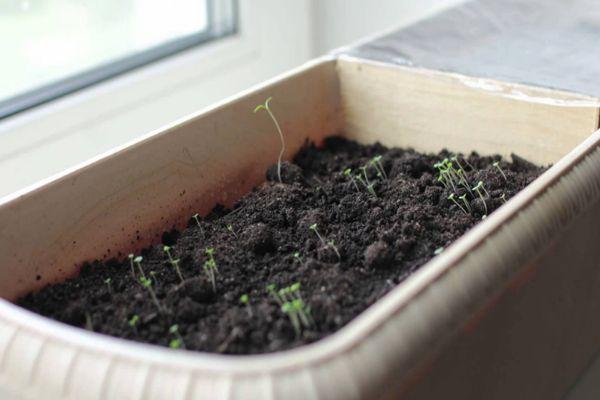
- Seedlings – a variation of the above method, where seeds are sown in late winter in pots placed indoors. Three weeks after germination, the seedlings are hardened off by being moved outdoors. After another two weeks, the grown seedlings are planted in open soil.
- dividing the bush - the soil is removed from the root of the dug up plant, it is divided into several parts and planted.
The last of the given methods is the most acceptable.
Planting thyme in open ground
Sow seeds in spring or late summer in moist, loosened soil fertilized with urea. Space rows forty centimeters apart, then cover with a layer of sand, crushed rock, or pebbles and plastic wrap. A favorable temperature of about twenty degrees Celsius (70 degrees Fahrenheit) is recommended. Seedlings should appear within fifteen days.
To ensure the plant thrives, flowerbeds should be placed in sunny areas. Insufficient light slows down the plant's growth.
Planting at home
To plant the crop at home, the soil is prepared in advance:
- loosen thoroughly to ensure free access of moisture;
- normalize acidity by liming;
- fertilize;
- add a mixture of last year's leaves, fine sand and humus.
Once the shoots emerge and reach three centimeters, the plant is replanted, spacing individual plants up to thirty centimeters apart. Once the shoots reach five centimeters, the tops are pinched.
Plant care
The plant is easy to grow and doesn't require much care. The only requirements are choosing the right location, ensuring proper watering, and keeping weeds out.
Watering
Watering should be moderate to avoid overwatering, but don't allow the soil to dry out. The soil should be moist, but not wet. Regularly loosen the soil to prevent crusting.

Top dressing
Before planting, urea is added to the soil. During the active growing season, fertilize with azophoska. If the crop is being planted in the same spot for a second season, mineral fertilizer is added. Fresh manure should not be used, as the plant does not like it.
Diseases and pests
Proper cultivation will prevent disease. In open ground, thyme is susceptible to the following pests:
- meadow moth;
- weevil;
- aphids;
- sandy slow-moving fish.
Chemicals, when treating the plant, will prevent damage.
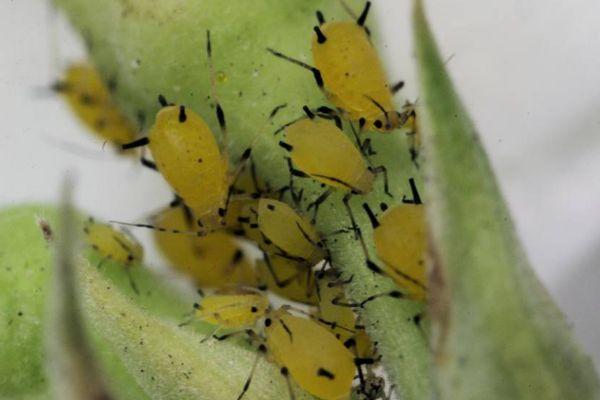
The most common danger is fungus. To prevent and eliminate its occurrence, it is necessary to create proper conditions for the plant: reduce watering intensity, thin out the plantings, and ensure direct sunlight.
Harvesting
According to folk belief, thyme has the greatest medicinal properties if harvested on Trinity Sunday. The greens are harvested during flowering, using a sharp knife. Breaking off the branches will cause the plant to become diseased. The harvested crop is dried like other herbs, out of direct sunlight. The dried herb is used as directed.
As can be seen from the presented material, thyme is a useful plant that is easy to grow at home and does not require special care.
Related posts:
 The main varieties and types of thyme with a description of how to grow thyme and its benefits
 Growing thyme from seeds and propagating by cuttings, planting and care in open ground
 Medicinal properties and contraindications of thyme for the human body, application
 How to grow thyme from seeds and cuttings at home in a pot, and care for the plant on a windowsill
 Growing lemon thyme in pots and soil, planting and care, plant varieties
 How to store fresh thyme and how to dry it at home
 Growing thyme in the Urals: planting times, care, and pest control
 Description and beneficial properties of Marshall's thyme, rules for harvesting and using thyme