
Thyme is a common herb throughout the world, used in various fields (cooking, folk medicine, perfumery, landscape design). Planting the plant combines business with pleasure – blooming thyme (this is another name for the herb) adds freshness to garden plants and can also be used in home remedies. Let's take a closer look at its features. growing thyme in the Moscow region, which also applies to all regions of Central Russia.
Growing thyme in the Moscow region
Regardless of where thyme grows, it's important to follow the basic rules for successfully growing it. The Moscow region has moderate conditions, so the guidelines for planting and caring for it yourself can be applied throughout Central Russia.
The main recommendations for successful plant cultivation include the following points:
- You need to select fertile soil - the plant is unpretentious, but rooting will not occur in an acidic environment;
- During the summer, it is necessary to fertilize the plant with mullein twice;
- Every month, for attractive flowering, pour a solution of eggshells or calcium under the bush;
- since thyme is an ornamental bush, it needs to be pruned - in early spring, new shoots are removed up to the woody parts, and in the fall, faded buds;
- It is necessary to drain the soil annually - this plant is afraid of excess moisture, so it is necessary to use expanded clay to ensure moisture drainage.
As for overwintering thyme, there won't be any problems. The Moscow region doesn't have harsh winters, and frosts are rare. Therefore, the bush won't need to be covered for the winter or covered with fallen leaves. In the spring, the plant will resume its growth and bloom to its full potential.
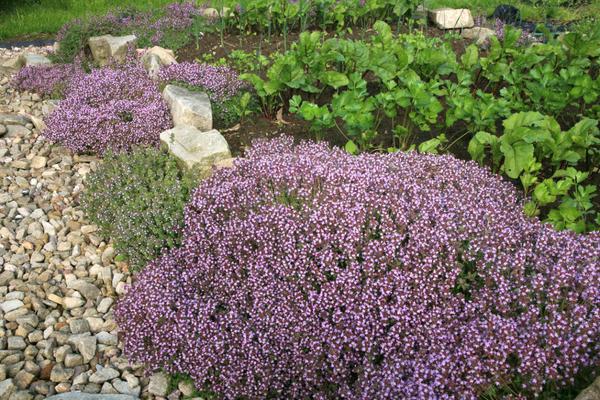
How does this plant reproduce?
Thyme can be propagated in the following ways:
- independently - unplanned rooting of stems occurs, causing the plant to quickly spread throughout the territory of the summer cottage, suppressing the growth of other plants;
- seeds - not used by gardeners due to the complexity and duration involved;
- cuttings are a common method of propagation when it is necessary to plant several additional bushes;
- dividing bushes - used when it is necessary to reduce the size of the bush; it is necessary to dig up the bush completely and divide it into several parts without damaging the root system.
Dividing a bush is often used to reduce its size. Several shoots that have not yet gained strength and become woody are removed from the main pile; they are disposed of using a convenient method. They can be planted separately in suitable soil for thyme and allowed to root – a new bush will emerge.
How to choose a landing site?
To grow an ornamental shrub, it needs to be planted in a sunny location. If thyme is placed in the ground in a shaded area, the shoots will elongate and the number of buds will decrease.
It's recommended to "hide" the bush from gusts of wind, which are common in the Moscow region. Therefore, the plant should be planted near a house, outbuilding, or fence. This way, the bush will receive sunlight for most of the day, which will help create a bright and colorful bouquet.
Choosing soil for thyme
Avoid planting the bush in heavy soil, as this will lead to water stagnation, even with annual soil drainage. This will cause the plant's root system to rot, and the leaves will turn yellow and gradually black. Avoid planting the plant in marshy areas or low-lying areas of your garden plot, as the soil in these areas takes the longest to dry out during the rainy season.
Properly planted thyme in suitable open soil requires no additional manipulation—it's enough to select a planting site with some sand or even rocks mixed in. It's best to plant it in sandy soil, as this promotes the formation of vibrant flower buds. In the wild, it can also thrive and bloom in rocky soil.
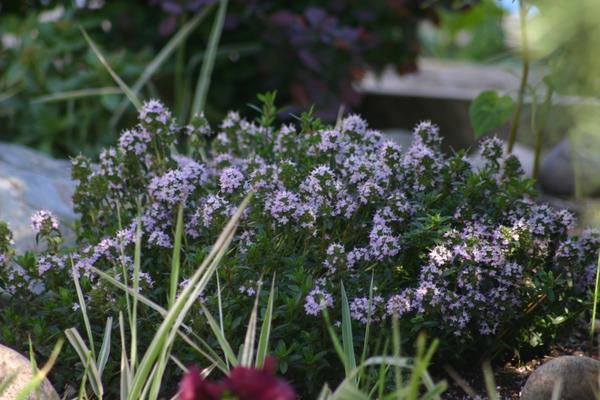
Grass care
Careful consideration of all planting considerations is essential to avoid harming the plant. Specific considerations and recommendations will be provided for the Moscow region.
Landing
Once a landing site has been found, follow these guidelines:
- the entire area where the bush is planned to be placed must be dug up in the spring;
- the root system will feel comfortable only when the soil warms up to 13 degrees;
- seedlings are planted when they reach two months of age;
- The box with seedlings must first be taken outside and left for 2 weeks.
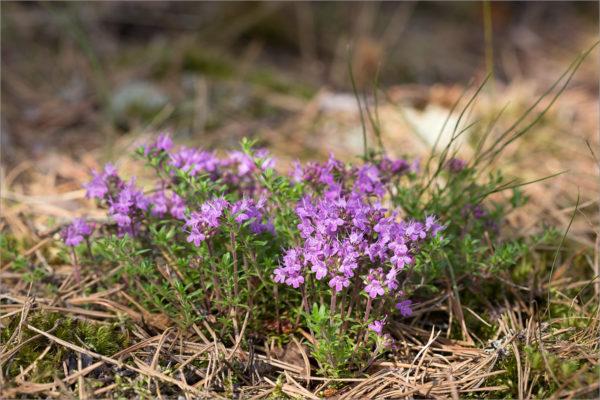
During this time, the seedlings will harden off and thrive in the open ground. Next, they are planted in the ground, digging a hole large enough to accommodate the root system.
Watering
Avoid overwatering the plant; its root system is not susceptible to drought, so watering it as the top layer of soil dries out is sufficient. In hot weather, watering once a week is sufficient, or twice as needed. Otherwise, watering once a week is sufficient, especially if you place a layer of expanded clay or river sand around the plant.
Such actions will help moisture to remain in the soil longer without exposing the roots to harmful effects.
Top dressing
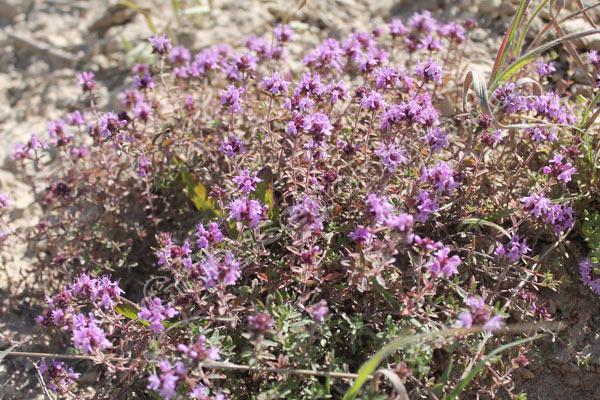
Thyme requires fertilizing to ensure healthy crowns and buds. Provided organic fertilization was applied before planting, fertilizing should be done in the spring, before the shoots emerge. In subsequent years, urea or ash should be applied during pruning.
Fresh manure should not be used, as this type of fertilizer will over-saturate the plant with organic matter and cause it to wither.
Diseases and pests
Thyme contains a large number of various essential oils, so pests are reluctant to feed on it—they dislike the smell. Thyme is also disease-resistant, so powdery mildew and other problems are rare.
If other crops near thyme are grown incorrectly, weevils, aphids, or meadow moths may be encountered on the leaves. Control should be based on traps or insecticide sprays.
If water stagnates in the soil, a fungal disease may develop. To combat this, avoid watering for several days and use an antifungal solution. To prevent the development of fungal diseases, loosen the soil after each watering.
Collection and storage
Thyme grown in the Moscow region is suitable for consumption throughout its growing and flowering period—from spring to fall. It is harvested according to the following purposes:
- shoots are used to make tea and decoctions;
- It is recommended to use young shoots fresh - they can be used to relieve inflammation, using them in the form of compresses, or in dried and crushed form, for cooking;
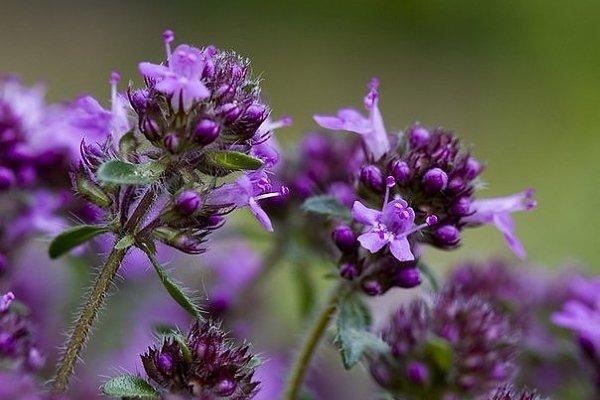
- Flowers are picked to make perfumes.
The collected parts of the bush should be laid out on newspaper and dried. This way, the mixture can be stored for a long time.
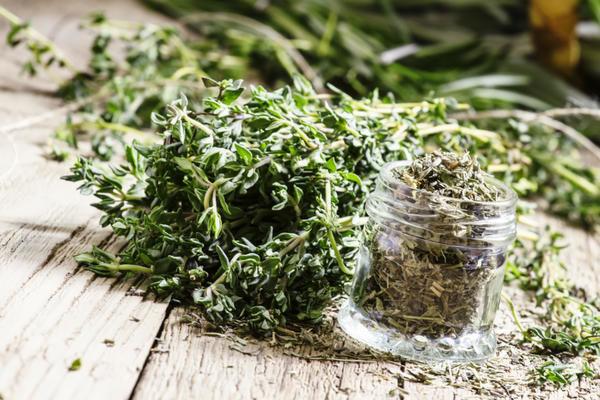
Thyme is a versatile plant, easily grown in the Moscow region. Feel free to plant it by asking your gardener for a cutting—you can plant it outdoors as early as next year.
Related posts:
 The best eggplant varieties for growing in a polycarbonate greenhouse: planting and care
 How to properly plant peas in a greenhouse and open ground
 Growing and caring for hazelnuts in open ground, rules for planting hazelnuts
 How to propagate and grow peas, cultivation technology, and care in open ground
 The best grape varieties for growing in the Urals, planting and care rules in summer
 Description of varieties of sowing peas and cultivation, to which family they belong
 How to grow ginger in the open ground at your dacha, planting and care
 Beginner's Guide to Growing Grapes in Open Ground in Central Russia