
- Can you grow thyme in a pot?
- Suitable varieties
- Choosing a location for indoor thyme
- Lighting
- Air temperature and humidity
- Preparing to plant thyme at home
- Selecting a container for planting
- What kind of soil should be used for planting?
- How to plant thyme at home
- From seeds
- From cuttings
- Caring for thyme on a windowsill
- Harvesting
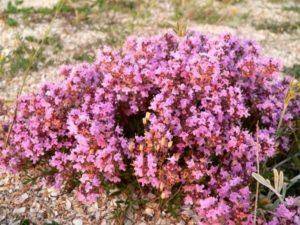
A spicy seasoning and a medicinal herb—all of these things belong to the category of thyme. This beautiful and graceful plant is used for a variety of purposes, including ornamental ones. Small bushes with tiny leaves bloom into delicate inflorescences.
Growing thyme at home in a pot is a tempting idea!
Can you grow thyme in a pot?
Growing this aromatic herb right in your apartment is very easy. Thyme thrives indoors. This small plant requires little care and takes up little space.
Some tips for growing at home:
- Thyme grows indoors year-round. Propagation can be done using either seedlings or direct-seeding methods.
- It is better to take varieties of thyme with erect stems and small in size.
- It is easier and faster to plant a plant vegetatively: take a cutting from an adult bush or divide it.
- During the cold season, when natural light decreases, it is recommended to use additional lighting (phytolamps or fluorescent lamps).
The use of this useful plant is very diverse: in cooking as a seasoning, for medicinal purposes, in cosmetics.

For colds and upper respiratory infections, thyme baths and tea are helpful. It kills germs and relieves inflammation and spasms.
Suitable varieties
When choosing a variety of thyme, determine the purpose:
- for cooking;
- as an ornamental plant.
Breeders have developed over 200 varieties of thyme. There are varieties with various flavors, including mint, orange, and caraway. There are also early and late varieties, depending on the ripening time.
Many varieties are intended for interior decoration and are not edible. Pay attention to this when choosing seeds.
The plant's unpretentiousness allows it to be grown indoors using seeds intended for open ground.

Most commonly planted:
- Honey is a creeping plant, with stems rising 25 cm above the ground. This variety produces a good harvest of this herb. It produces pink flowers.
- Snake thyme—the creeping stems can reach 35 cm in height. The flowers are bright pink-purple, the leaves are small. Thyme quickly produces greenery that can be cut.
- Aibolit is an early variety. It has abundant foliage and blooms with delicate pink flowers with a purple tint.
- Rainbow - very spicy aroma, high content of nutrients, height 20 cm.

Common culinary types of thyme:
- Lemon. It has a pleasant citrus aroma and a slightly tart, bitter taste. Its flowers are almost white with a lilac tint, and the leaves have a slight fuzz on the back.
- Common or French. The bush grows up to 45 cm tall. The flowers are pale pink. The aroma is spicy and distinct. The taste is pungent.

Choosing a location for indoor thyme
This small plant fits compactly on a windowsill or balcony. A well-ventilated area is ideal for growing this herb.
Lighting
Thyme loves the sun. It should receive at least six hours of daylight. Insufficient light can be compensated for with special lamps.
If you keep the plant in the shade, it will wither, stretch out in height, and lose its aromatic qualities.

Air temperature and humidity
The optimal air temperature should be no lower than 10 degrees Celsius, maximum 20-25.
Thyme tolerates drought, but it is better not to allow it to become excessively dry and to moisten the soil and air in a timely manner.
When growing seedlings, until the first shoots appear, the air temperature should not fall below 20 degrees Celsius. Once the first leaves emerge, it's best to lower the temperature to 18 degrees Celsius. This hardens the plant.
During the summer, pots containing the bushes can be placed on the balcony. In the fall and spring, bring them indoors at night.
Preparing to plant thyme at home
First, you need to decide which planting method is most convenient: from seeds or cuttings. This will determine how long the thyme will grow.

Seeds will take more time and effort. You'll need a separate, flat container to plant them in.
The cutting can be planted directly in a pot. The root system is quite strong, so it's best to use a deep pot.
Selecting a container for planting
The plant's extensive root system requires a spacious container. A 4-liter pot with a depth of approximately 15 cm is sufficient.
Before planting, make sure to provide drainage holes at the bottom. Thyme doesn't like excessive moisture, otherwise its root system will rot.
Depending on the planting method (a small bed of seedlings or each plant separately), pots or an oblong container are selected.
What kind of soil should be used for planting?
When choosing soil, it's best to choose cactus soil. All-purpose soil is acceptable, but it will need to be mixed with a third of sand.

General recommendations:
- clay soil is not suitable;
- neutral loose soil is suitable;
- good drainage is needed, the plant is sensitive to excessive moisture and stagnant water, fine gravel is suitable;
- To ensure moisture penetration, the soil is mixed with sand and peat in different proportions. This composition will allow the seeds to germinate quickly and the cuttings to take root;
- The soil must be regularly loosened and weeds removed.
How to plant thyme at home
The best time to plant thyme is spring or fall. In spring, choose a warm, not too humid day. In fall, the plant can be propagated by dividing the mature plant into sections. Green cuttings are best propagated in summer.
You can plant a fragrant bush using seeds or cuttings.
From seeds
Thyme grows easily from seed, so you can choose any variety you like. However, this type of planting requires a lot of time—about a year.
Initially, the seeds should be sown in a flat container filled with soil. Then, water it with a spray bottle. Cover the container with plastic wrap and place it in a sunny spot. Sprouts will appear in 3-4 weeks. They typically grow unevenly. When the first leaves appear, the young sprouts should be transplanted into pots, 2-3 at a time.

From cuttings
You can obtain a mature plant in just a few months by planting cuttings. This method saves time and simplifies the process.
For planting, you'll need a small shoot, approximately 7 cm long. It should be placed in the soil to a depth of 3 cm. Carefully monitor the soil moisture for the first month. Avoid overwatering, otherwise the cutting will rot.
In 2-3 weeks the plant will take root.

Caring for thyme on a windowsill
This fragrant plant thrives indoors. It grows easily in a pot and is easy to care for. Just follow a few simple rules:
- Lighting. Thyme thrives in full sunlight, so it's best to place it on a sunny windowsill. Some shade is also acceptable. Grow lights can compensate for insufficient daylight. For comfortable growth, the plant requires 6 hours of good light.
- Watering. Moistening the soil once, or at most twice, per week is sufficient. It's okay if the soil dries out; thyme is drought-tolerant. However, it's best to ensure timely watering.
- Temperature. Doesn't really matter. Acceptable range: 10-20 degrees Celsius.
- Fertilizing. It is recommended to fertilize once a month. Liquid fertilizer is suitable.
- Repotting should be adjusted according to growth rate. Once or twice per season is sufficient. A sign that it's time to move to a larger pot is the appearance of roots at the bottom. Thyme tolerates repotting well and even produces more foliage.
- Protection from diseases and pests. With proper thyme care It is not susceptible to harmful factors, and the essential oils it contains repel pests. It can be affected by spider mites.
Take a look Also


Harvesting
The beauty of thyme growing on a windowsill is that you can harvest fresh, fragrant sprigs at any time. It's recommended to cut them 5 cm from the ground. Frequent pruning benefits the plant, as it produces more fluffy shoots. Growth slows down in winter.
The plant's life cycle can reach three years or more. Once it reaches this age, it will need to be rejuvenated.
A three-year-old plant is potted, divided into three parts. To do this, remove the dried soil along with the rhizome. Shake off the soil and divide into three, or even four, parts. Each part should contain roots, a stem, and leaves. Then, pot the plant into individual pots.
Related posts:
 The main varieties and types of thyme with a description of how to grow thyme and its benefits
 Medicinal properties and contraindications of thyme for the human body, application
 Growing thyme from seeds and propagating by cuttings, planting and care in open ground
 Growing lemon thyme in pots and soil, planting and care, plant varieties
 How to store fresh thyme and how to dry it at home
 How to grow rosemary at home on a windowsill in a pot from seeds and cuttings
 Growing thyme in the Urals: planting times, care, and pest control
 How to plant walnuts, care for them, and grow them at home