
Macrosporiosis, or Alternaria leaf spot, is one of the most dangerous diseases of tomatoes. The fungus damages the entire plant, and if the infection spreads severely, gardeners can lose their entire tomato crop.
How to identify Alternaria?
The disease is caused by a microscopic mold fungus, Alternaria, which colonizes the entire above-ground part of the plant.
The most favorable conditions for its development are created in a greenhouse:
- high and constant humidity;
- high air temperature;
- lack of movement of air mass.
But even in open ground, tomatoes can be affected by macrosporiosis. This occurs during hot and humid seasons.
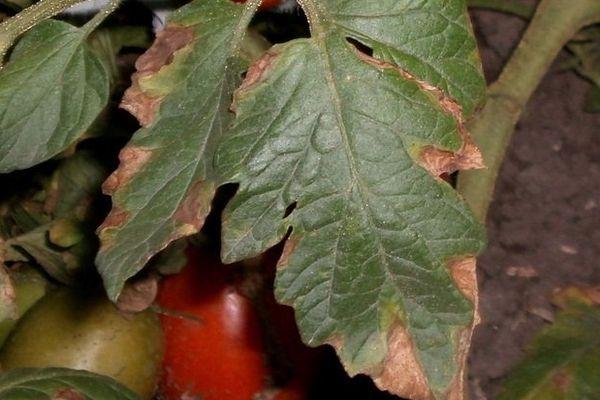
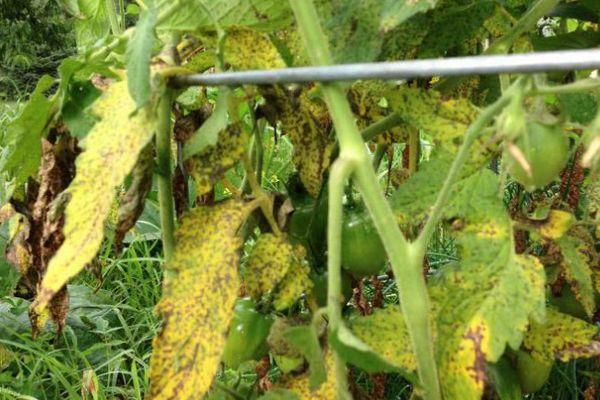
At the very onset of the disease, dried, light-colored spots form on tomato leaves. These spots are approximately 0.5 cm in diameter. Gradually, the spots grow, reaching 1.7 cm in size, merging with each other and giving the leaf blade a naturally dried-out and browned appearance. However, in wet weather, a velvety black coating consisting of the fungal spore-bearing organs (conidia) appears on the surface of the dried spots.
As the disease progresses, the fungus appears on the petioles and stems of tomato plants. The edges of the spots on the stem are always distinct, and at this stage, their surface is already covered with conidia. Gradually, the stem in the affected area dries out, and in severe cases, it becomes brittle.
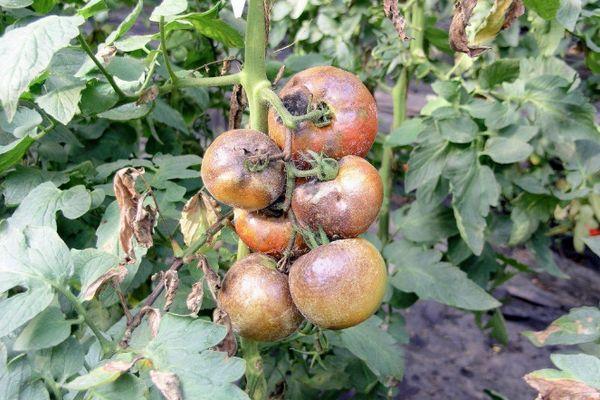
Alternaria also affects tomato fruits:
- a small area with depressed skin appears near the stalk;
- the spot gradually darkens, and the tomato begins to ripen;
- the spot gradually expands and becomes covered with conidia at high humidity;
- affected tomatoes fall from the brushes;
- The fruit is also affected from the inside; the fungal hyphae penetrate the tomato tissue and capture the seed chambers.
Tomatoes infected with fungus, but harvested before signs of the disease appear, often begin to spoil during storage. Dry spots of Alternaria appear near the stem and on the skin of the fruit anywhere there is damage. A yellow or reddish ring appears around the spot where the pathogen has penetrated, but as the tomato ripens, the fungus grows and penetrates deeper into the tissue, causing spoilage.
![Description of the best varieties and rating of tomatoes for greenhouses for [year]](https://harvesthub.decorexpro.com/wp-content/uploads/2019/01/1488884503_grin-kolor-300x181.jpg)
How to cure tomatoes?
The first symptoms of Alternaria leaf spot (spots on leaves) appear soon after planting seedlings in the ground or greenhouse. The pathogen begins to spread en masse when one or two flower clusters are forming.
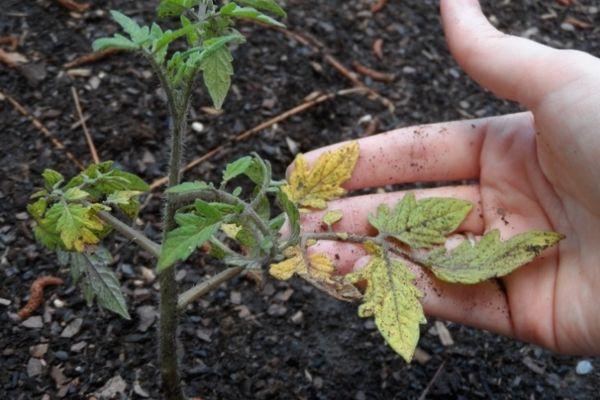 If measures are taken to treat the disease within 3-7 days after the spots appear, the crop will not be affected, and the plants will soon recover and grow new green mass. By the time the fruit sets and ripens, it is advisable to destroy the fungal infection.
Plants are treated with contact fungicides. Commonly used products include Antracol 70 WG and Ditan M-45, which are quite effective. If these are unavailable, systemic fungicides such as Flint, Ridomil Gold MC, Infinity, and others are used.
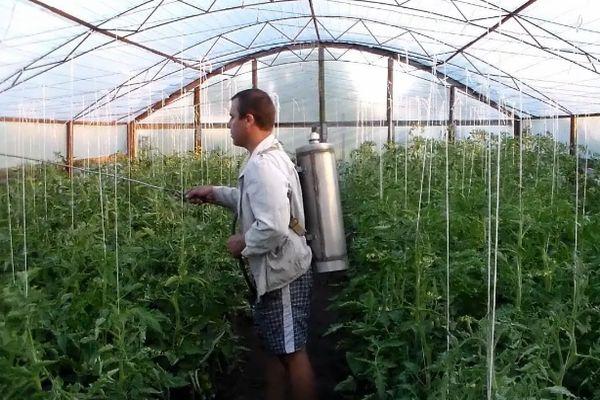
Apply the solution to the entire plant using a spray bottle, making sure to spray the underside of the leaves. During the summer season, gardeners should repeat the spraying process 3-4 times (every 10-14 days), unless otherwise specified in the instructions. The dosage and application rate per unit area should not exceed the manufacturer's recommendations. Stop spraying 20 days before harvest, as the products are toxic.
Disease prevention
To prevent the disease, you need to take a number of preventive measures:
- in the fall, remove and burn tops and plant debris in the garden or greenhouse;
- in closed ground, disinfect or replace the soil in the beds;
- in open ground, observe the planting sequence and do not alternate tomatoes with other nightshade crops;
- purchase varieties resistant to the disease (Sanka, Zolotaya Pulya, Aurora F1 and others);
- enrich the soil with potassium by adding mineral fertilizers or wood ash;
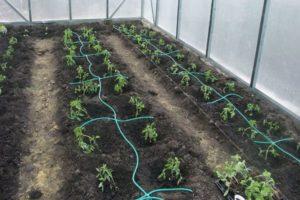
- Avoid watering the leaves (using a hose or sprinkler system), water only at the roots (drip, through grooves or individually).
The best prevention of alternaria is to spray the plantings with Trichodermin or Fitosporin according to the instructions for the preparation.
To prevent Alternaria blight, experienced gardeners remove the lower leaves of tomato plants. This simple measure ensures better ventilation of the lower tier of plants, especially in a greenhouse or with dense plantings. If leaf spots have already appeared, the fungus will not spread further.
Remove leaves as flower clusters form. When the first one unfurls, trim off all the leaves below it. As the next one forms, remove a few leaves between them, continuing until the stem reaches 2/3 of its height.
Related posts:
 Description of tomato diseases and their treatment, how to process them
 What is the best way to feed tomato seedlings to make them plump?
 What fertilizers and when to use for feeding tomatoes in a greenhouse
 Causes and treatment of eggplant pests and diseases, how to combat them at home
 What is the best way to mulch tomatoes in open ground and greenhouses?
 Causes and symptoms of 30 plum diseases, treatment and pest control
 Why tomato seedling leaves may wilt and curl, and what to do about it
 Causes and treatment of cherry diseases, methods of pest control
I also had to deal with this problem, but this is the second year I’ve been treating seedlings and adult plants BioGrow, I noticed that not only do they grow faster, but they are also more resistant to diseases.