
- What is pinching and the purpose of it?
- Stepson and leaf - what are the differences?
- At what stage of the growing season is this necessary?
- How to properly train tomatoes in a greenhouse step by step
- In 1 stem
- In 2 stems
- In 3 stems
- Peculiarities of the formation of different varieties of tomatoes
- Indeterminate
- Semi-determinate
- Determinant
- Common mistakes gardeners make when removing side shoots
A tomato harvest depends on proper care, including watering and timely fertilizing. The chosen pruning scheme is equally important for greenhouse tomatoes. There are three methods for shaping tomatoes. Tomato varieties influence the choice. For tall tomatoes, for example, a 1-2-stem pruning scheme is usually chosen. This simplifies care, and the plants have ample access to light without shading each other.
What is pinching and the purpose of it?
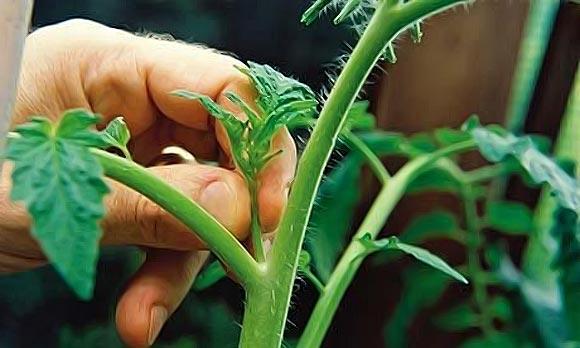
Good care means preserving nutrients and moisture. Side shoots grow from the leaf axils and draw energy from the plant for their development. These shoots are removed periodically. This agricultural practice is called pinching. Its goal is to reap a bountiful harvest.
Stepson and leaf - what are the differences?
If you look at a tomato plant, you'll see leaves growing directly on the stem. A shoot emerges between them—this is the side shoot. Over time, it will develop a separate second-tier stem with leaves and side shoots.
At what stage of the growing season is this necessary?
Tomatoes are planted outdoors at different times, as spring arrives at different times in different regions. The best guide is the appearance of the first shoots two weeks after planting. Or, during flowering, the appearance of the clusters. Inspect the plantings once or twice a week. Under favorable conditions, the plant develops quickly, and so do the shoots.
How to properly train tomatoes in a greenhouse step by step
Tomatoes are grown in carbonate greenhouses or in the open ground. Low- and medium-sized varieties are typically grown in the open ground. Tall varieties are grown in greenhouses. Medium-sized varieties are grown in greenhouses for an early harvest.
Tomatoes, no matter where they're grown, require help—pinching. There are various options for shaping the bush.
In 1 stem
Tall tomato varieties are suitable for this method:
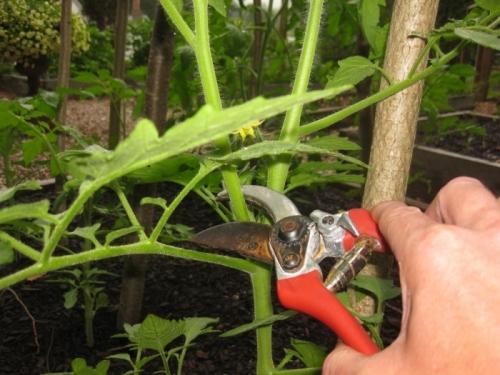
- Prepare pruning shears with sharp ends to reach the stepchildren.
- Disinfect the tool after processing each bush.
- Greens are not left in the greenhouse, but thrown away.
- As soon as the first brush appears, all stepsons are removed.
- Leave a stump of 3 millimeters at the cut site to prevent new shoots.
- The lower leaves are also removed gradually, one at a time every five days. This will allow oxygen to reach the root system.
- After 5-7 days, begin removing side shoots and thinning the bushes again. Don't remove all the leaves at once, as this will cause the plant to become ill. Remove them down to the first cluster.
- If the greenhouse is unheated, pinch the tops of the tomatoes in July and August to prevent the plant from wasting energy on new inflorescences, otherwise the tomatoes will not have time to ripen.
Take a look Also

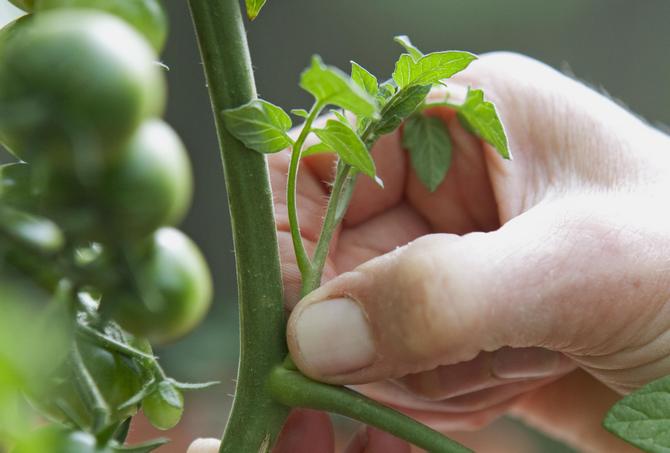
The flowering period before the tomatoes emerge is two months. Two leaves are left above the inflorescence and pinched when the buds have opened. To obtain early harvests, dwarf varieties are trained into a single stem.
In 2 stems
This method also develops a second stem. Some tomato varieties separate after several inflorescences. The key is to leave a side shoot below the inflorescence. Later, side shoots will appear on the secondary stem. These are removed. Once the side shoot produces 2-4 inflorescences, pinch off the top. Leave two leaves above the inflorescence.
In 3 stems
The 3-stem method is the same as the 2-stem method. However, to form secondary stems, you need to leave 2 lateral shoots under the inflorescence.
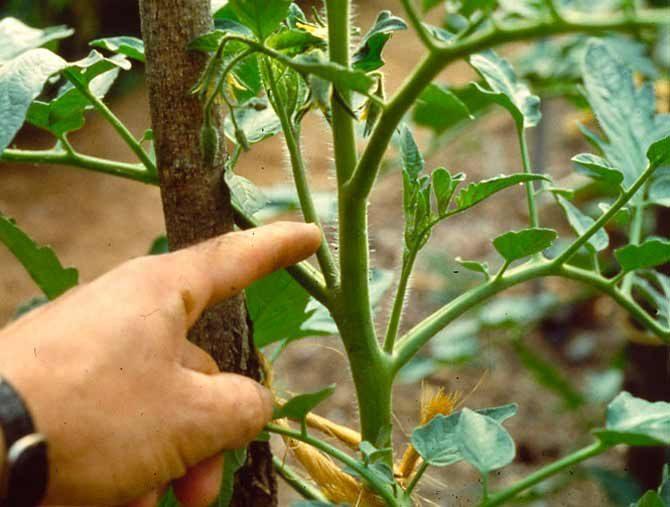
The remaining leaves are removed. As soon as side shoots appear on the secondary stems, they are removed. After 3-5 inflorescences, the tops of the secondary stems are pinched. If the leaves are shading each other, they are pruned.
Peculiarities of the formation of different varieties of tomatoes
Tomato varieties are divided into three groups:
- Indeterminate varieties are tall. If left unpinched, the trunk will grow up to 1.2 meters.
- Semi-determinate varieties are medium-sized, reaching up to 80 centimeters in length. The top of the flower culminates in an inflorescence.
- Determinate – low-growing varieties, stretching to 20-40 centimeters.
When forming a bush, each group has its own characteristics.
Indeterminate
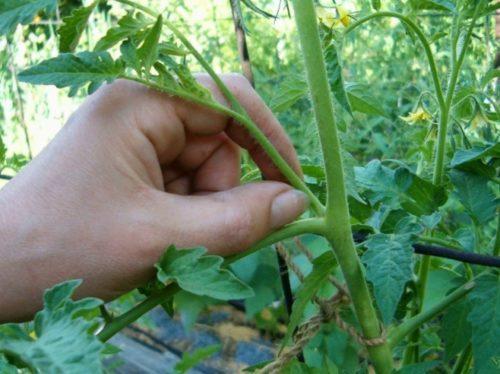
Tomatoes in this group are distinguished not only by their unlimited growth. Indeterminate varieties begin to form clusters above the ninth leaf, sometimes higher. Further emergence occurs after 3-4 leaves, and this continues indefinitely until the top is pinched. These varieties are advantageously grown year-round in heated greenhouses. Tall species are not grown in open ground.
Any shaping scheme can be used. It's important to decide on this in advance, as scheme 1 calls for a distance of 30 centimeters between plants, scheme 2 calls for 40 centimeters, and scheme 3 calls for 60 centimeters. Plants should be staggered. Plants should receive sufficient light and not shade each other.
In unheated greenhouses, the top of the plant should be pinched off early to allow the last inflorescence to ripen. Sometimes the greenhouse height will prevent the plant from growing further. In this case, pinching is also necessary.
Semi-determinate
Medium-sized varieties form 8-12 clusters on the main stem. The first cluster appears above the seventh leaf. The internodes of this variety are shorter—18-20 centimeters, compared to 25-30 centimeters for the previous varieties. Three to five inflorescences are left on the side shoots. One bush can support 14-22 clusters. When the tomatoes turn a milky color and the inflorescences contain unformed fruit, the flowers should be picked off. If they produce fruit, they will be small and will draw nutrients, reducing the size of other fruits.
The lower leaves, right down to the cluster, are removed gradually, one leaf per week. If an inspection of the tomatoes reveals shading, the leaves are trimmed.

Semi-determinate varieties are typically trained using a 2-3 stem pattern. Side shoots are left under the inflorescences. Over time, the shoot develops into a secondary stem. It will have leaves and side shoots. The latter are periodically removed. After 3-5 inflorescences, the tops are pinched. This depends on the variety, weather, and plant development.
Determinant
Dwarf or determinate varieties grow differently:
- Growth is limited by the last cluster and stops. At this point, one or two shoots are left under the cluster for further development and the formation of new clusters.
- 4 leaves appear, then brushes follow.
- Two leaves grow and inflorescences appear again.
- Next - 1 leaf and brushes.
- There is no intermediate leaflet between the last brushes.
The appearance of clusters without interstitial leaves signals that no more inflorescences will occur. At this point, consider additional shoots. For determinate varieties, a 2-3 stem arrangement is often chosen. In exceptional cases, a single stem is left for early ripening.
Take a look Also

Common mistakes gardeners make when removing side shoots
Inexperienced gardeners often wait too long to remove side shoots from tomatoes, when they've grown more than 10 centimeters. In a greenhouse, this should begin two weeks after planting them outdoors. The optimal side shoot size is 5 to 7 centimeters.
The shoots are cut back to the root. After a while, they reappear in the same place. It's best to leave a 3-millimeter stump. Water the tomatoes the same day after pruning. This shouldn't be done; the plants need 24 hours to heal the cuts.
Related posts:
 What is the best way to feed tomato seedlings to make them plump?
 What varieties of tomatoes are best to plant in a polycarbonate greenhouse?
 What fertilizers and when to use for feeding tomatoes in a greenhouse
 Description and characteristics of the best indeterminate tomato varieties for greenhouses
 The best and most productive tomato varieties for greenhouse cultivation in the Urals, with descriptions
 What is the best way to mulch tomatoes in open ground and greenhouses?
 Description and characteristics of the best tomato varieties for outdoor cultivation in the Urals
 Description of the best tomato varieties for open ground and greenhouses in the Krasnodar region