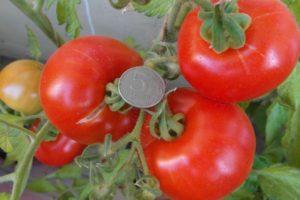
The Esmira f1 tomato belongs to a group of hybrid, pink tomatoes with early ripening periods. The berries of this variety are quite large. Developed by Dutch breeders, Esmira tomatoes are suitable for cultivation in open fields and greenhouses. These tomatoes are used in salads, juices, and tomato paste.
Technical data of the described culture
The characteristics and description of the Esmira variety are as follows:
- From sowing seedlings to receiving a full harvest, it takes from 90 to 100 days.
- Despite the fact that the bushes of this tomato have a height of up to 180 cm, they grow quite compactly.
- Each plant produces 10 to 11 clusters, each of which typically produces 4 to 6 fruits.
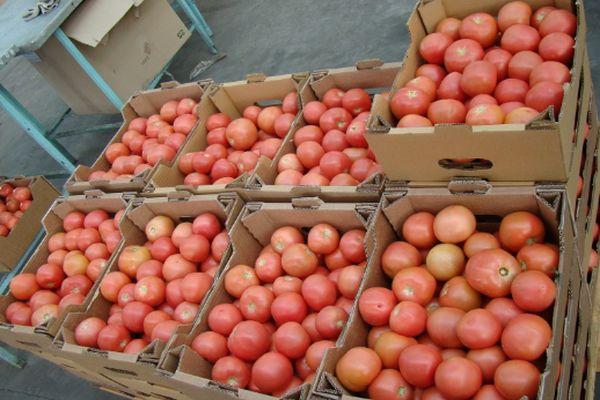
- The berries of this variety are pink in color and ripen almost simultaneously.
- The first harvest can weigh up to 0.3 kg. Subsequent harvests weigh between 0.19 and 0.21 kg. The berries are spherical, slightly flattened on the sides.
- This variety is resistant to diseases such as late blight, gray mold, and verticillium wilt.
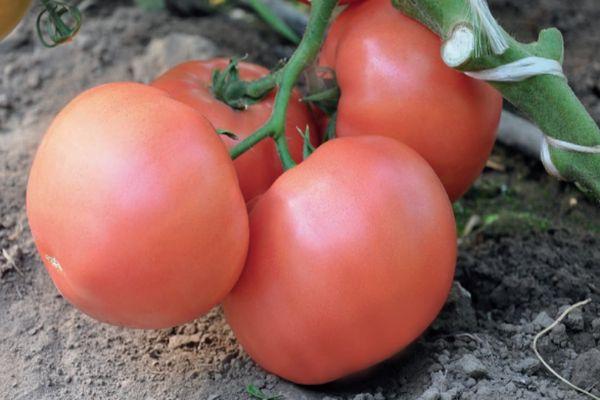
Reviews from farmers growing this variety indicate that Esmira tomatoes are quite drought-resistant and sunburn-resistant. Their thick skin and abundant leaves allow the plant to withstand direct sunlight. The yield of this crop ranges from 10 to 12 kg per plant over the entire growing season.
The berries of this variety do not crack, so they can be transported over fairly long distances. However, transporting and storing the fruit in high humidity conditions can lead to cracking and rotting.
In Russian conditions, Esmira grows well in open ground in the southern regions of the country. In central Russia, this variety is best grown under plastic covers. In the northern regions, these tomatoes are grown in greenhouses.
How to grow this variety in your garden?
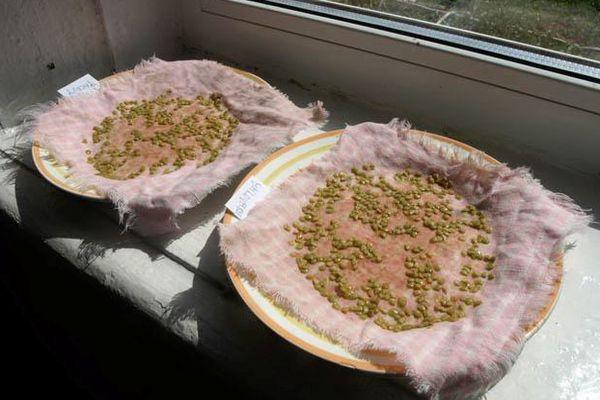
To get an early harvest, sow the seeds for seedlings in the last ten days of February. Since these seeds are already treated with antifungal and antimicrobial agents, there's no need to soak them in a potassium permanganate solution for treatment. Use potassium permanganate or aloe juice only for soaking the seeds. This process lasts 10 to 12 hours.
For planting seeds in boxes, use a ready-made potting mix, available at specialty stores. However, if you can't find one, you can prepare the soil by thoroughly mixing 2 kg each of sand and peat moss with 1 kg of ground ash in a bucket.
The soil must be warmed for 3-5 days in the room where the seeds will be sown in boxes. Seedlings will appear within 3-4 days. They must be watered with a mixture of warm water and a weak solution of potassium permanganate. Use a flower sprayer for this. Water as the soil beneath the seedlings dries out.

The room should maintain a humidity of 64-66% and a temperature of 22-23°C above freezing. Plants are provided with up to 18 hours of daily light using special lamps. Before the seedlings develop leaves, they are sprinkled with a soil mixture. Transplantation is done when 2-4 leaves appear on the seedlings. After this procedure, the seedlings grow indoors for another 25-30 days.
The seedlings are transplanted to permanent soil when they reach a height of 0.2–0.3 m. Seven days before transplanting, the plants are treated with Bordeaux mixture.
It's important to weed the beds regularly, hill up the bushes, and feed the tomatoes with nitrogen and potassium fertilizers. Watering should be done at the same time as fertilizing the bushes.
To protect against garden pests, it is recommended to use chemicals that kill larvae, caterpillars, and adult insects. If chemicals are unavailable, you can eliminate insects using traditional methods, such as treating tomato plant leaves with a soapy solution.
Related posts:
 Description and characteristics of the best seeds of pea varieties and types
 Rules for growing tomatoes in open ground, choosing a variety, planting and care
 Why potatoes aren't growing well in the garden, and what to do to ensure a bountiful harvest
 Description and characteristics of the best indeterminate tomato varieties for greenhouses
 What fertilizers and when to use for feeding tomatoes in a greenhouse
 Description of the Velika grape variety, cultivation and care tips
 The best grape varieties for growing in the Urals, planting and care rules in summer
 Description of the best potato varieties of domestic and foreign selection