
The Kostroma F1 tomato is a variety that can only be grown in greenhouses. This hybrid variety does not thrive in open ground, as research and gardener experience have shown. However, Kostroma tomatoes can be grown anywhere in the country.
What is the Kostroma F1 tomato?
Gardeners who rarely visit their gardens will definitely be pleased with the Kostroma tomato. Caring for this variety doesn't require any special skills or much time. In greenhouse conditions, Kostroma tomato plants grow quite large, reaching up to 2 meters in the best conditions. This size allows for efficient use of greenhouse space, and 1 square meter can yield up to 20 kg of tomatoes. Indeed, high yields are one of the Kostroma variety's positive attributes.
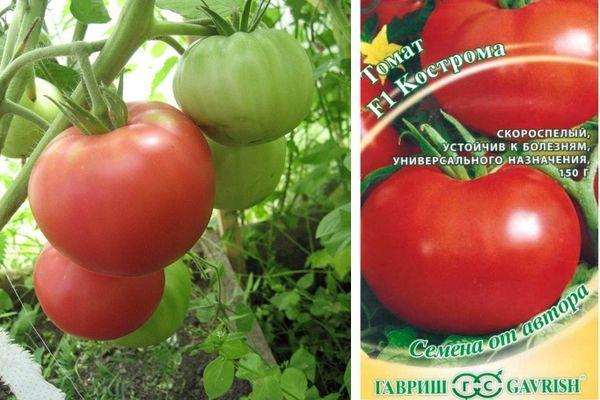
The variety's characteristics and description will help gardeners decide whether to grow the Kostroma variety in their garden. It's important to understand that, with proper care, a single bush can yield up to 5 kg of fresh fruit. It's recommended to remove side shoots and train the plant into a single stem.
This won't take much time; gardeners' reviews indicate that the number of side shoots on the plant is small, and even if you only tend to the tomato on the weekend, nothing irreparable will happen.
Kostroma tomatoes, a description of which would be incomplete without a description of the fruit, form on fairly compact, rationally arranged clusters. A single cluster can produce up to 10 ripe tomatoes. The fruits are medium-sized, weighing a maximum of 150 g, but may be slightly larger or smaller. The first cluster forms after the 9th or 10th leaf. The remaining clusters form after a couple of leaves. The top of the bush can be removed when 10 clusters have formed on the stem.

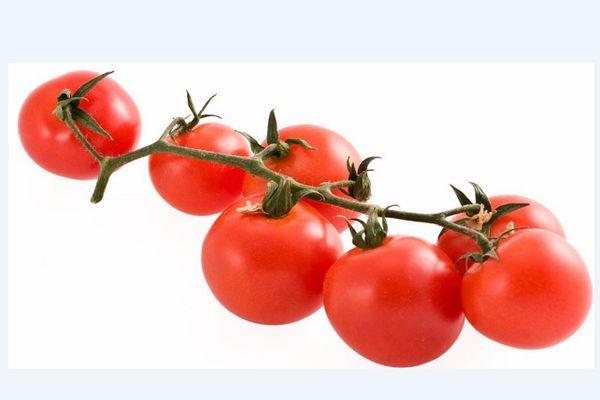
Don't plant the bushes too closely; it's best to leave a distance of 40 cm between them. This will ensure the bushes receive adequate light and will be more resistant to diseases, including fungus, which can attack the plant in late summer.
Ripe Kostroma tomatoes are a rich red color. They retain their marketable appearance for a long time and can be transported over long distances. This is possible thanks to their thick, glossy skin. The tomato flesh is firm and sweet. All this makes them ideal for eating fresh or processed into juice or sauce, as well as for pickling and preserving. Many sing the praises of pickled Kostroma tomatoes.

How to Grow Tomatoes
Kostroma is a mid-early hybrid variety. It takes an average of 110 days from the formation of the first clusters to full ripening of the fruit. Seedlings should be prepared 40 days before they are expected to be planted in the greenhouse. The sooner the seedlings are in the greenhouse, the sooner you'll be able to harvest.
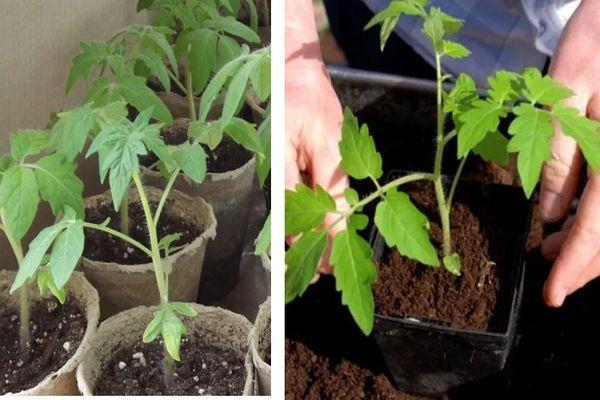
It's recommended to sow seeds in early spring to obtain seedlings of the desired size by the end of April. Once the soil in the greenhouse has warmed to 15ºC, you can begin planting the seedlings. If you grow tomatoes in the northern region, then all planting stages are shifted by a month: seedlings should be sown in April, and the plants should be moved into the greenhouse in May.
When growing seedlings, it is necessary to follow basic agricultural practices that will allow you to obtain the largest possible harvest.
The soil in the containers should be a mixture of soil, peat, and compost. A week before sowing the seeds, water the soil with a weak solution of potassium permanganate. The day before sowing, water the soil with warm water.
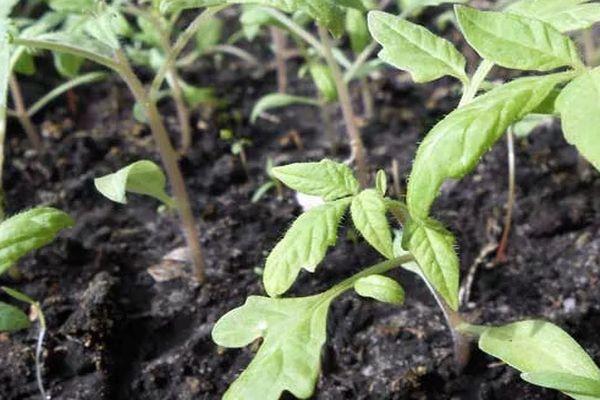
The seeds should be sorted by size, dipped in a potassium permanganate solution for 15 minutes, and dried. Next, they are spread over the surface of previously prepared moist soil, spaced 4 cm apart. After laying them on top, cover them with soil. Plastic wrap is stretched over the boxes, and the seeds are placed in a warm place. As soon as the first sprouts emerge, the wrap should be removed. When a couple of true leaves appear, the seedlings should be transplanted into individual containers.
Related posts:
 What tomato varieties are best for growing in the Vologda Oblast?
 How to properly grow a peach tree from a seed at home, planting and care
 Is it possible to grow an apricot tree from a seed in your garden? How to plant and care for it?
 Description and characteristics of the best tomato varieties for outdoor cultivation in the Urals
 Description of the Solovushka strawberry variety, planting and care instructions
 The best ways and methods for properly covering grapes for the winter
 Carrot care guidelines for outdoor cultivation to ensure a good harvest
 How to propagate grapes in summer using green cuttings at home