
Popular among gardeners, the "Money Tree" tomato has been known in Russia for several years. It is considered a counterpart to the American Moneymaker variety, which is known for its consistent fruiting and high yields in any conditions.
Description of the plant
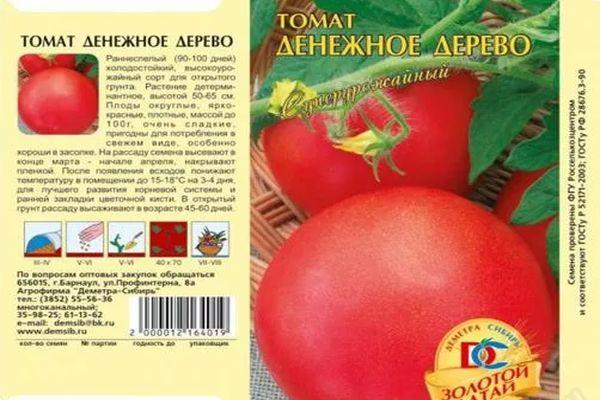
Experienced gardeners in Russia have given only positive reviews of the tomato variety. This variety is recommended for growing in greenhouses or open ground throughout Russia, from the southern regions to Siberia and the Far East. Money Tree tomatoes are resistant to temperature fluctuations, adverse climate conditions, and drought. In any case, the variety yields approximately 10 kg of fruit per bush. To ensure a bountiful harvest, the bushes should be trained into two stems.
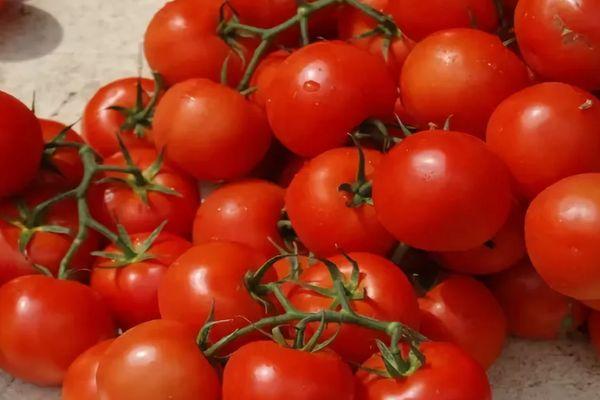
The Money Tree is a tall (indeterminate) tomato variety. The bush grows up to 2 meters tall and requires support. It has a moderate number of leaves, but it's advisable to remove the lower ones, especially during cold, rainy summers. This will allow better ventilation and protect the harvest from late blight and cladosporiosis.
Forming a plant with 1-2 stems requires constant pinching of the bushes. The Money Tree variety produces lateral shoots well in the axils of each new leaf, so it's important to constantly monitor the growth of the side shoots. You cannot break off shoots if they have outgrown and reached a size of more than 10 cm. The tops of such stepchildren need to be pinched, limiting further growth.
The description of the Money Tree variety notes its early maturity. It takes about 90 days from sowing to harvest. However, to obtain early tomatoes, it's best to plant the seedlings in a greenhouse. This way, ripe tomatoes can be harvested as early as early to mid-June. In open ground, the fruits will not ripen until July.
Fruits of the Money Tree
The fruiting of the Money Tree tomato variety can bring true delight to the gardener. The clusters consist of 15-17 ovaries that grow and ripen simultaneously. The first flower cluster forms above the 10th leaf, and new clusters develop throughout the season through 4-5 leaf tiers.
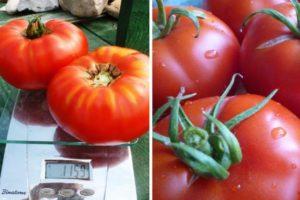
Description of fruits:
- The weight of each tomato is small - only 80-100 g.
- The number of neat, round tomatoes is so great that the overall yield is considered high.
- Long clusters of identical fruits look very impressive and decorate the plant when ripe.
- The fruit is bright red in color; when fully ripe, there are no green areas on the skin.
- The pulp is dense and intensely colored.
- The skin is strong and thick.
- The fruits are not prone to cracking even in wet summers.
- Ripe tomatoes have high shelf life and transportability.
- Fruits picked when unripe ripen well in room conditions.
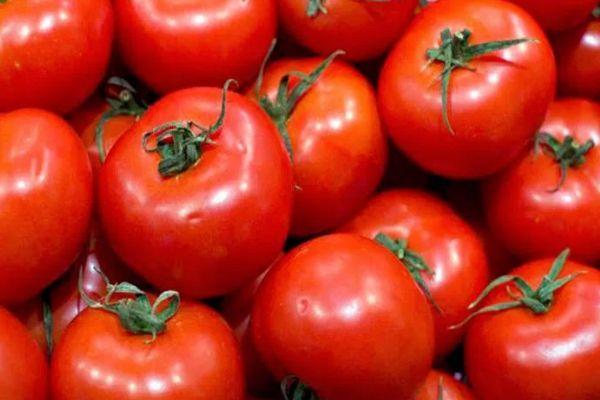
Thanks to its dense skin and flesh, small size, and rounded shape, the Money Tree variety is ideal for pickling and whole-salting. Canned fruits look impressive both in a jar and when served.
Tomatoes can also be used to make juices and purees, but the raw pulp will need to be boiled down slightly, as the fruits contain a large amount of liquid. The seed chambers are large and filled with numerous seeds.
The Money Tree tomato doesn't have a particularly sweet flavor. Some gardeners rate its taste as average: the fruit's sugar content is low, and it's not particularly aromatic. This valuable pickling variety isn't particularly tasty when eaten fresh. As an early vegetable, it's still suitable for summer salads and appetizers.
Features of agricultural technology
Sow seedlings 50-60 days before the expected planting date. Fresh seeds have a good germination rate, and seedlings emerge uniformly within a week. Before sowing, soak the seeds in a pink solution of potassium permanganate for 30 minutes, then let them dry slightly.
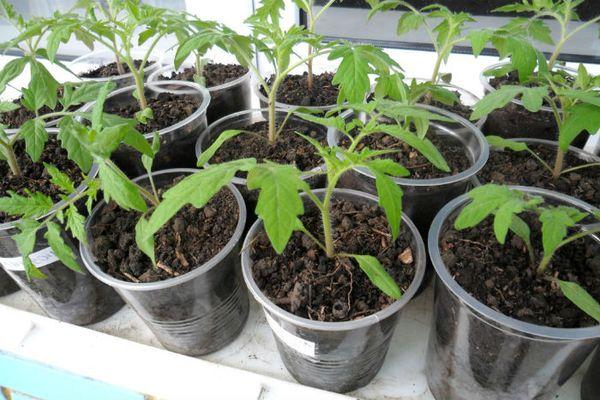
The Money Tree is sown and pricked out according to general principles:
- scatter seeds over the surface of moistened soil;
- cover them with a layer of dry soil (no more than 0.5 cm);
- cover the boxes with glass and wait for the first shoots to appear, then remove the cover;
- dive according to the 10x10 cm pattern after the formation of 2-3 true leaves;
- Provide the seedlings with light and a soil temperature of about +20 °C.
To ensure strong, low-growing plants, keep the air temperature below 20°C to 25°C. Water with room-temperature water, avoiding excessive soil drying.
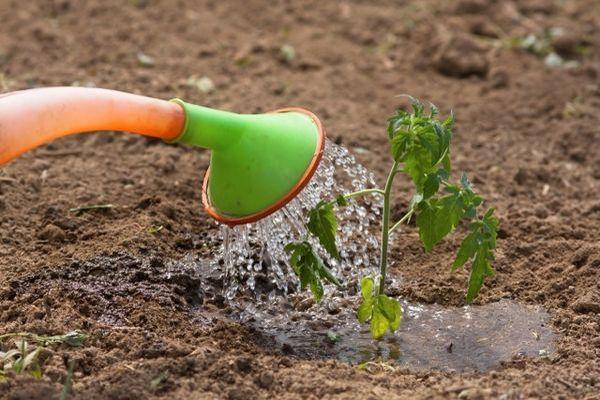
In central Russia, planting should be done in early May (in a greenhouse) or early June (in open ground). To ensure good stem growth, fertilize the plants with nitrogen fertilizers (such as Kemira, Signor Pomidor, and others) one week after transplanting. Repeat fertilizing twice more during the growing season, with a two-week interval between applications. To ensure the last ovaries have time to ripen, pinch off the stem tips approximately 30 days before the end of the season.
Related posts:
 Descriptions of the 20 best cherry varieties for the Moscow region, their planting and care
 Description and cultivation of the 15 best cherry plum varieties for the Moscow region, planting and care rules
 Description and characteristics of the 27 best plum varieties for the Urals, planting and care
 How to plant walnuts, care for them, and grow them at home
 Description of the 30 best plum varieties for the Moscow region, planting and care
 The best grape varieties for growing in the Urals, planting and care rules in summer
 Description and characteristics of the 45 best types of peaches, growing rules
 Description of the Vasilisa cherry variety, cultivation and care