
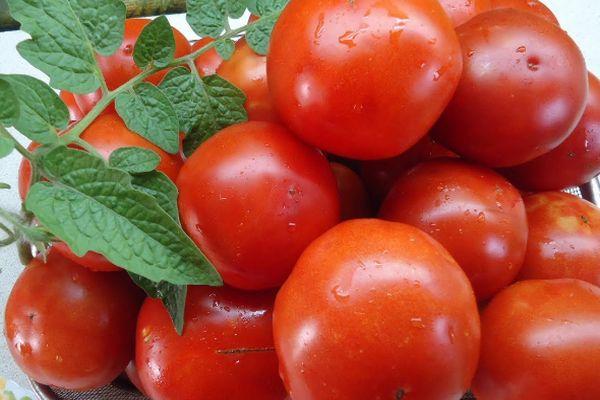
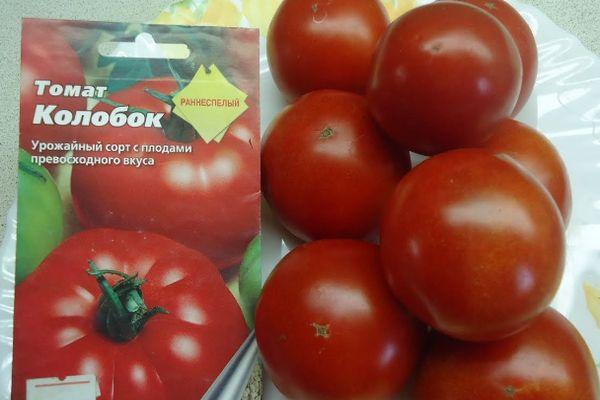
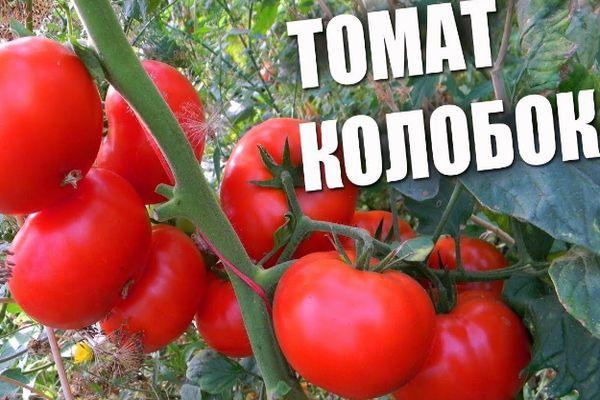
The Kolobok tomato gets its name from its perfectly round shape, reminiscent of a bun. Its bright red color lends the fruit a special charm. Our gardeners love early-ripening tomato varieties, including the Kolobok, because it's ideal for long winters and short summers.
This is a determinate plant, reaching a maximum height of 55 cm. The tomatoes ripen uniformly, producing a fairly high yield. The fruit weighs between 55 and 65 g. They withstand long-distance transportation well, which is important for farmers.
What is the Kolobok tomato?
Let's take a closer look at the characteristics and description of tomatoes: what they like, how to plant them correctly.
Manufacturers always indicate the type of tomato they buy. This should be taken into account when purchasing, as different tomato varieties grow and develop differently.
So, what do you need to know about the determinate variety to which our Kolobok belongs?
This is a variety with limited growth. Once the fruit ovary forms at the top of the bush, the plant stops growing. The type of tomato can also be determined after the first shoots appear: in a determinate variety, the cotyledon length is 1–3 cm.
The first flower cluster forms after the sixth or seventh leaflet (much later in indeterminate varieties). Few leaves, approximately three each, develop between the clusters. Another characteristic of this variety is that the clusters may form from shoots. All this indicates accelerated plant development, which is why it ripens early.
How are tomatoes grown?
As for caring for Kolobok, you need to adhere to the following rules:
- periodically carry out hilling;
- how to pinch off stepsons correctly;
- to improve branching, pinch the stems;
- fertilize in a timely manner (it is best to do this before hilling);
- water only as needed;
- carry out pest and disease control if necessary.
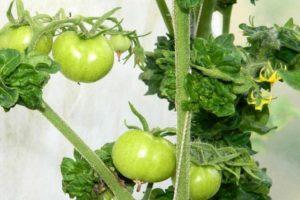
Many people don't tie up determinate tomato varieties, but this isn't entirely correct. When a plant has support, it grows in a single direction: the stem grows upward, and the branches don't droop to the ground. Firstly, these bushes are easier to care for, and secondly, the tomato is less susceptible to disease and insect attacks.
As for disease risk, for example, late blight (a fungal disease) can occur from overwatering of leaves and soil. Therefore, many gardeners use drip irrigation to ensure that water reaches the root system without touching the upper part of the plant.
If you notice that the plant has become infected with a fungal disease, it will need to be treated with the following solutions: Infinito, Ridomil Gold, Aliette, Tattu. The most dangerous insects are the Colorado potato beetle, aphids, and winter moths. They can be controlled with Actofit, Fitoverm, or Confidor.
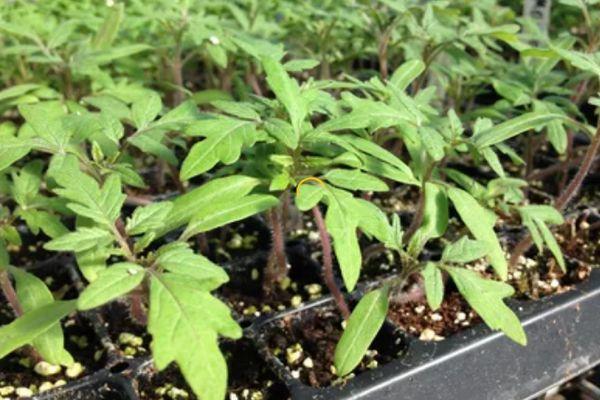
A few words about planting seeds. Seeds for seedlings are sown at the end of the first month of spring. To ensure successful germination, a few simple steps should be taken before early May (when the frosts have passed, it's time to plant in the ground).
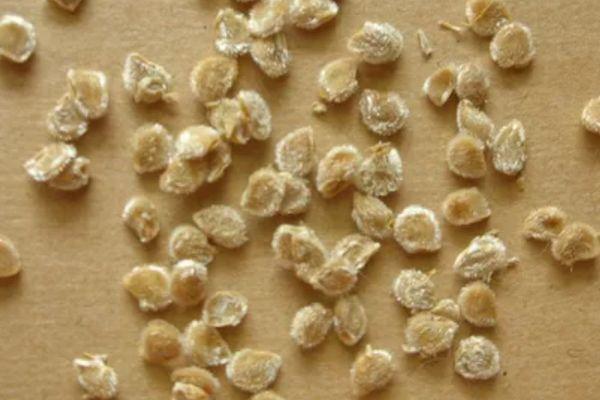
Prepare the seeds for planting by soaking them in a saltwater solution. Seeds that sink to the bottom of the glass will germinate 100%. To prevent disease, soak the seeds in a light solution of potassium permanganate (30 minutes is sufficient).
Planting should be done in a pre-prepared substrate to a depth of 1-2 cm. Be sure to cover the entire area with plastic wrap and store in a warm place.
When planting in the ground, the depth of the holes should correspond to the length of the seedlings' roots. The seedlings should be spaced 50-60 cm apart to prevent them from becoming crowded as they grow.
What do summer residents think about Kolobok?
Gardeners' reviews of this variety are positive.
Olga Chernova, Moscow region:
"This variety grows like a plant-and-forget-it plant. I didn't need to pinch or tie it up. The bushes grew in all directions, and I was able to harvest a bountiful crop."
Valentin Grotov, Voronezh:
"The tomatoes grew directly in the ground; I planted them in open ground. They didn't develop any diseases. I harvested them as they ripened. I planted the seedlings late, but the harvest was a success. All my neighbors who planted this variety were pleased."
Svetlana Rulneva, Kirov:
"I planted this variety for the first time. I was pleased with the Kolobok variety, as it doesn't require any special care, yet produces a large amount of fruit. The harvest was enough for the whole family. We made fresh tomato salads and preserves for the winter. I'll be planting Kolobok again this summer."
Related posts:
 80 Best Eggplant Varieties for Different Regions with Descriptions and Characteristics
 Description of the Velika grape variety, cultivation and care tips
 Description and characteristics of the best varieties and types of irises
 The best grape varieties for growing in the Urals, planting and care rules in summer
 Description of the Raja tomato, characteristics of the fruit, and reviews from gardeners
 Descriptions of the 20 best cherry varieties for the Moscow region, their planting and care
 Description and characteristics of the best seeds of pea varieties and types
 Descriptions and characteristics of chrysanthemum species and varieties, growing rules