
The unusual "Indoor Surprise" tomato lives up to its name. Modern breeding takes into account many aspects of tomato cultivation, so this variety meets the needs of a variety of vegetable growers. Gardeners will appreciate its low-maintenance nature, farmers will appreciate its early maturity and consistent yield, and those without a plot of land will appreciate its compact size and ability to grow even indoors, on a windowsill or balcony.
Details about tomatoes
The characteristics and description of the variety in Russian catalogues allow us to consider the plant superdeterminate tomatoThis group is characterized by:
- low bush;
- low tendency to form stepsons;
- formation of multiple fruit clusters;
- ability to produce crops in dense plantings;
- rapid formation of ovaries.
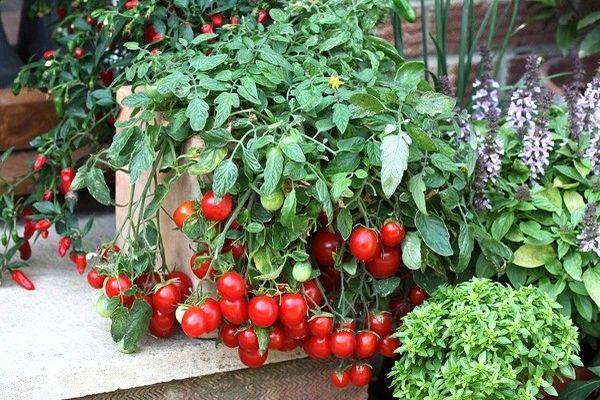
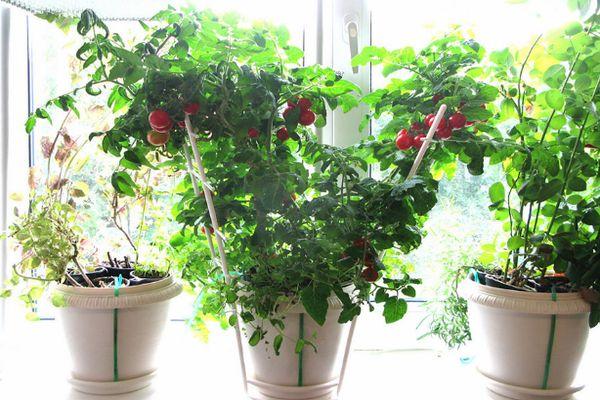
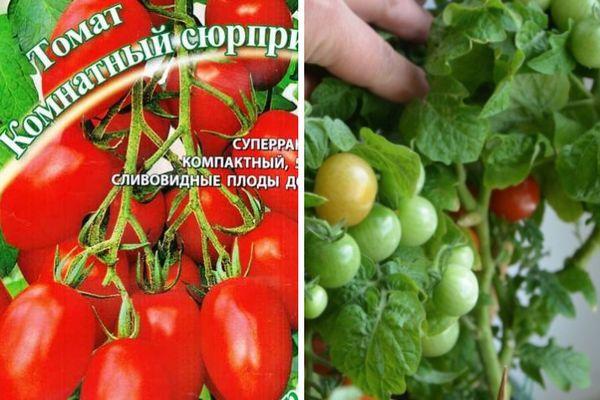
Growing the Indoor Surprise tomato can be done successfully even in winter, under artificial lighting. The compact plant reaches a height of 50 cm, after which it stops growing. All the fruits that set on the plant ripen almost simultaneously.
When growing this variety indoors, do not throw away the bush after fruiting has finished. By this time, 2-3 strong shoots will have formed on the lower part of the stem. These should be left, and the fruiting portion of the bush should be cut off. This method will allow you to harvest tomatoes several times while the shoots are still forming.
This early-ripening variety is also suitable for growing outdoors. For this purpose, the seedling method is used. By the time of planting, the tomatoes should be 60 days old. This way, gardeners can harvest the tomatoes in mid-July, and the plants will have time to form new shoots and produce a second harvest by the end of August.

When growing the "Room Surprise" tomato in a greenhouse or hothouse on a farm (for an early harvest), the rapid fruit production is convenient. The greenhouse is cleared out as early as early June, after which time other crops can be grown in the same space.
The compact size of this bush is ideal for those who don't have time to devote much attention to planting. The indoor "Surprise" is undemanding and doesn't require pinching, staking, or shaping. Seedlings are planted in a sunny spot in a 30x30 cm pattern, after which watering the tomatoes generously, about once a week, is sufficient.
Characteristics of fruits
Reviews of the fruit's taste are extremely favorable. The small tomatoes have a rich aroma and a pleasant sweet-and-sour flavor. The clusters are long, the ovaries are approximately the same size and weight, and are elongated (plum-shaped).
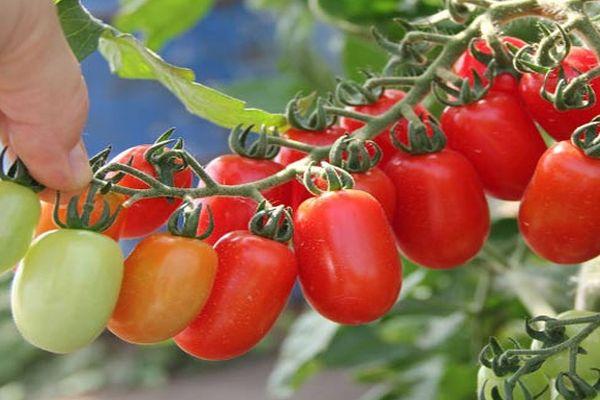
The skin is dense, bright red, and free of green spots near the stem. The flesh is uniformly colored and has a pleasant texture. These tomatoes are a fleshy variety, producing few seeds, and the chambers are small.
The weight of each fruit does not exceed 60 g. The total yield from 1 bush is about 2 kg, but the yield can reach 10-12 kg per unit area if dense planting patterns are used (8-9 bushes per 1 m²).
Tomatoes are ideal for whole-fruit canning, either individually or in vegetable platters. Their pleasant flavor makes Room Surprise tomatoes indispensable for summer salads and fresh eating. Their elegant shape makes them ideal for sophisticated appetizers on special occasions.
Small fruits can be used to make both juice and lecho. The fruits' high sugar content eliminates the need for sugar to enhance the flavor of these products.
Features of agricultural technology
It's best to start growing tomatoes indoors in February. By the time the seedlings emerge, the days will be quite long, and they will continue to grow longer. This will allow the plants to actively grow and form flower clusters. Tomatoes are suitable for propagation and seed production at home: the variety is not hybrid, and the plants inherit their parent's traits.
Early to mid-March is a good time to sow seeds for greenhouse seedlings. However, for outdoor planting, it's best to sow the seeds later—around late March or early April. Before planting, the soil should be generously watered with a potassium permanganate solution.
Seedlings are pricked out when they develop one or two true leaves. Space the plants 7-8 cm apart. After planting, apply one application of a complex mineral fertilizer. To ensure good fruiting, provide infrequent but generous watering during dry weather: pour about 10 liters of water under each plant once a week.
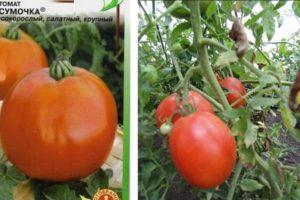
The variety doesn't lose yield in adverse weather conditions, but the fruits ripen very slowly. To preserve all the tomatoes, you can pick the unripe (brown or green) fruits, arrange them in a single layer in boxes, and store them in a cool place.
Related posts:
 80 Best Eggplant Varieties for Different Regions with Descriptions and Characteristics
 The best eggplant varieties for growing in a polycarbonate greenhouse: planting and care
 The best grape varieties for growing in the Urals, planting and care rules in summer
 How to propagate and grow peas, cultivation technology, and care in open ground
 Description of the best varieties of black tomatoes for open ground and greenhouses
 Methods for planting and propagating cherries at home
 Description of the Red Early apple tree variety, agricultural technology and specific care
 Description of varieties of sowing peas and cultivation, to which family they belong