
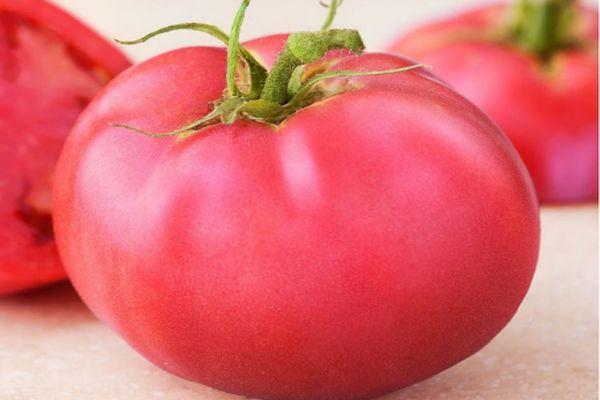
The Tornado tomato is the work of Russian agrobiologists. The hybrid is included in the Register of Breeding Achievements and is recommended for cultivation in open ground and plastic greenhouses. This variety boasts excellent flavor, a rich aroma, abundant yields, and a long fruiting period.
Advantages of a hybrid
The Tornado hybrid is a highlight of any garden thanks to its large clusters of fruit. The variety's positive characteristics make it popular among vegetable growers.
Private farming, which meets personal needs for tomatoes and other produce, is encouraged by the state. The adopted regulation on gardeners and vegetable growers governs the legal relations arising from this.
The Tornado F1 variety is designed for cultivation in plastic greenhouses and open ground. This indeterminate plant develops into a compact, flexible bush reaching 150-200 cm in height during the growing season.
The Tornado F1 tomato is characterized by a mid-early ripening period, with fruiting occurring 90-100 days after germination. At technical maturity, the fruits acquire an intense red color without the characteristic green spot near the stem.
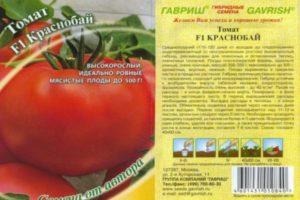
Round tomatoes weigh 110-150 g. When grown properly, the yield per bush can reach 6-8 kg. At a planting rate of 3-4 bushes per square meter, 18-20 kg of fruit can be harvested per unit area.
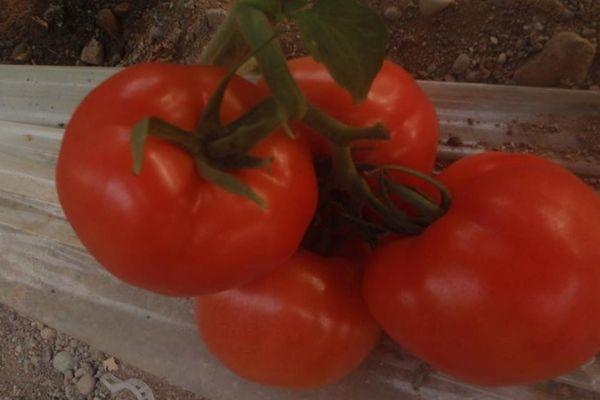
The tomatoes are described as having excellent flavor, rich aroma, and varietal characteristics. The fruits are uniform in size, have a beautiful appearance, and a sweet taste.
Tomatoes are distinguished by a balanced ratio of sugars and minerals in their fleshy, soft pulp. When cut horizontally, four to six chambers containing seeds are visible. The fruit contains 5% dry matter.
The technical characteristics of the variety do not allow for long-term storage or long-distance transportation. The hybrid has excellent disease resistance, being resistant to tobacco mosaic virus, cladosporiosis, fusarium, and verticillium wilt.
This variety does not tolerate temperature fluctuations. In cooking, tomatoes are used fresh, in sauces, and in pastes. Due to their size, the fruits are suitable for canning and barrel pickling.
Agricultural technology for tomato cultivation
The Tornado variety is grown from seedlings. Seeds are sown 55-60 days before planting in a permanent location. It is recommended to treat the seeds with a growth stimulant before planting.
Make 1-cm-deep furrows in the prepared substrate and plant the seeds in the containers. After watering with warm water using a spray bottle, cover the container with plastic wrap and move it to a warmer location.
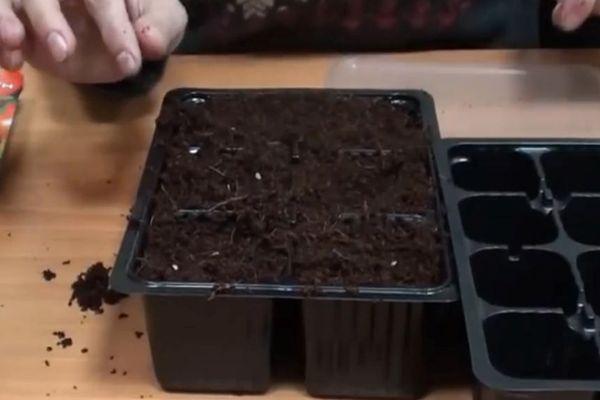
For normal seedling development, maintain a temperature of 23–25°C. Once the seedlings emerge, move the container to a well-lit location. When one or two true leaves have formed, transplant them.
For this purpose, it's recommended to use peat pots, which make it easy to transfer the seedlings into the ground. Their use helps protect the root system from damage.
Compost is added to the prepared holes, and the bushes are planted after the spring frosts have passed. To increase yield, the bushes are trained into 1-2 stems. The trunks need to be tied to a trellis. To prevent damage to the stems from the weight of the fruit, supports are installed.
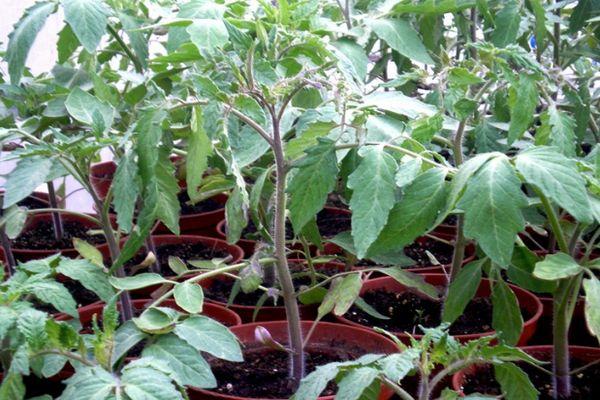
At all stages of plant development, it is recommended to apply complex fertilizers according to the manufacturer's recommendations. During cultivation, it is important to maintain a proper watering schedule. During active growth, the plant reacts to excess moisture.
To prevent diseases, it is recommended to treat the bushes with special protective agents.
For normal plant development, light is essential. To achieve this, remove excess shoots. Successful cultivation of the Tornado variety depends on maintaining a stable temperature.
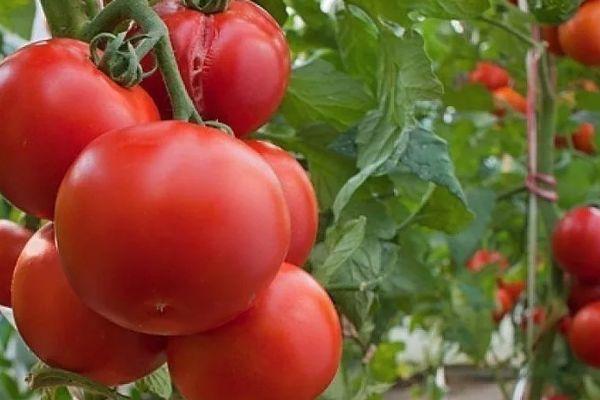
Sudden fluctuations in vegetation during the growing season negatively impact harvest yield. Maintain moist soil to prevent cracking of the fruit. Mulching tomato beds with peat, compost, hay, and sawdust is recommended.
Fiber or film is placed on top of the organic mulch layer. Decomposing organic matter turns into humus, and the film prevents weed growth.
Spider mites are the most common biological pests that can attack plants. To combat this pest, wipe the affected areas of the plant with a soapy solution.
To combat slug infestations, use coarse sand and lime, which are sprinkled on the ground, creating an obstacle for them.
Related posts:
 The best grape varieties for growing in the Urals, planting and care rules in summer
 Tornado 500 instructions for use, dosage, and analogues
 80 Best Eggplant Varieties for Different Regions with Descriptions and Characteristics
 Methods for planting and propagating cherries at home
 Descriptions of the 20 best cherry varieties for the Moscow region, their planting and care
 Description of the 90 best varieties of beans for open ground with names
 Description of 30 varieties and types of Muscat grapes, planting, cultivation and care
 Beginner's Guide to Growing Grapes in Open Ground in Central Russia
Last year I harvested a large crop of Tornado tomatoes—the fruits were all the same size, large, and sweet. They store well. I used BioGrow, so I think that the growth bioactivator played an even greater role.