
Good tomato production can only be achieved by using high-yielding varieties. Therefore, before choosing one, carefully consider their characteristics and growing conditions. One such greenhouse hybrid is the Krasnobay tomato. With proper care, this member of the nightshade family will delight you with its heavy, red fruits.
Description of the variety
This variety is a hybrid from a Russian collection and was registered in 2008. Since then, this vegetable has been highly valued for its excellent varietal characteristics. The seed is sold by the Gavrish company.

This hybrid is characterized by a medium tomato ripening time of 120 days. The bushes grow to over 150 cm tall and are indeterminate, standard-type. The leaves are medium-sized and dark green. The inflorescences are simple, arranged above 9–11 branches.
The variety description states that it is intended for growing indoors. Therefore, to obtain a bountiful harvest, Krasnobay tomatoes should be planted in high greenhouses. This plant has good resistance to fusarium, nematodes, and cladosporiosis.
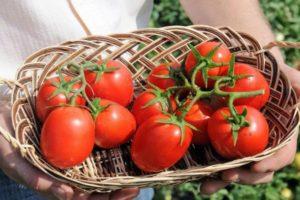
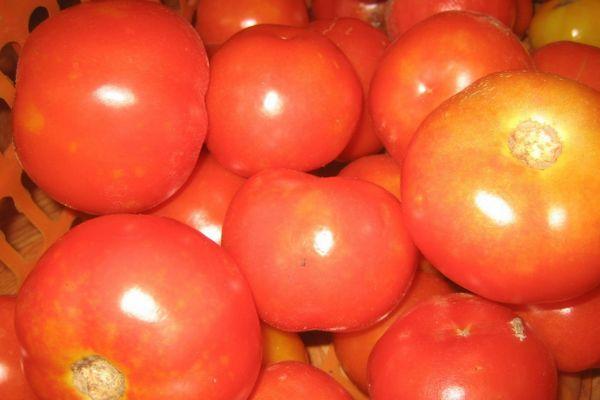
Ripe fruits are a rich red color and slightly flattened. They weigh up to 400 g, with some specimens reaching 500 g. Tomatoes have five chambers, each containing a moderate number of seeds.
The high sugar content of Krasnobay tomatoes makes them very tasty. They are eaten fresh or canned, and they also produce excellent juice. They are also used in salads and pickles. Whole tomatoes are not canned due to their large size.
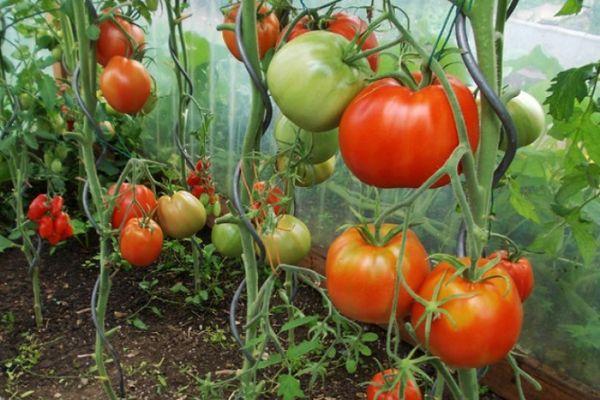
The variety's yield amazes even experienced gardeners, reaching up to 14 kg per plant. Plant tomatoes at a density of three plants per square meter.2, then you can achieve a fruiting yield of about 30 kg. This is a good indicator.
Growing
Growing Krasnobay tomatoes begins with sowing seeds:
- Buy or prepare the substrate.
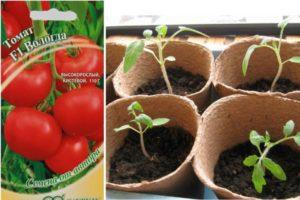
- Soak the seeds. If they are coated with a colored seed coat, sow them immediately, as the coat contains a nutrient complex that stimulates germination and plant development.
- Pour soil into containers and sow seeds to a depth of 1.5 cm in furrows, after which they are covered.
- They moisten the surface of the crops and cover them with either film or glass and wait for the shoots to emerge.
- Provide future tomatoes with a temperature of 20 to 25 °C during the day and 18 at night.
- After a week, the first shoots will appear. After this, gradually remove the plastic or glass cover.
- If young tomato plants do not have enough 12 hours of daylight, then the container with the seedlings is supplemented with light using a phytolamp.
- Water after the top layer of soil has dried out. Make sure there is no excess moisture.
- Hardening off the young plants begins 14 days before transplanting them to their permanent location. This is accomplished by taking them outside for fresh air, increasing their time outdoors each day.

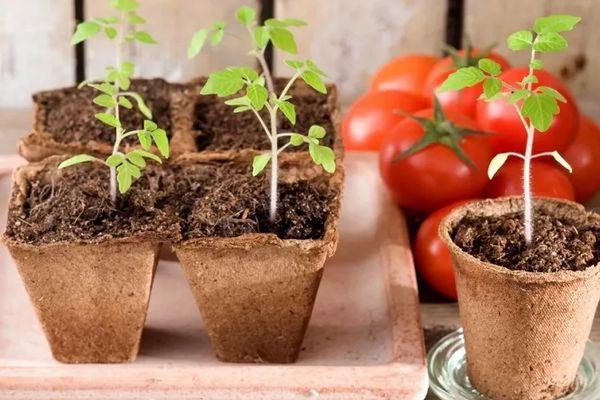
When the temperature conditions allow the seedlings to develop normally, they are planted in greenhouses. By this time, they are usually up to 30 cm tall and have well-developed roots and 5-7 leaves.
Before planting young tomatoes indoors, remove the top layer of soil. It's highly susceptible to harboring harmful insects and pathogens. It's also a good idea to treat the greenhouse with Bordeaux mixture.
Tomatoes are planted in prepared holes already filled with organic fertilizer. They should be spaced 40 cm apart, and at least 60 cm apart between rows. Each plant in the hole is leveled, watered, and covered with soil. The soil is then lightly compacted. The final step involves tying the plants to the support.
During the growing season, the beds of Krasnobay f1 tomatoes are watered, maintained at a favorable temperature, and fertilized around the plants. Weeds are also controlled, the soil is loosened, and lower leaves and unwanted side shoots are removed.
Care Features
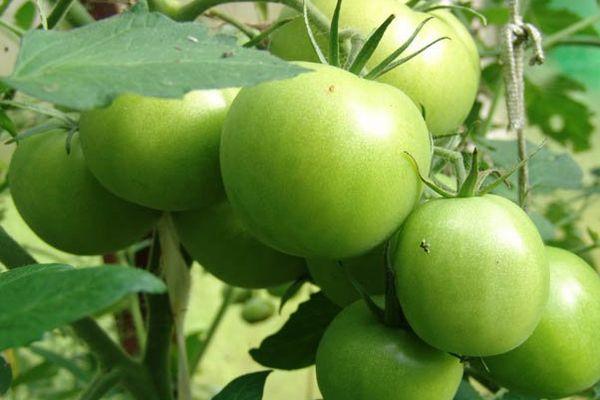
As the bushes grow, be sure to carefully secure the stems. Additional support will prevent branches bearing large, heavy fruits from breaking. This procedure should be repeated up to four times during the tomato plant's growth.
Because the Krasnobay tomato is tall, it is grown as a single stem. At the end of the fruiting season, the top is pinched to prevent the plant from forming new inflorescences and instead use its energy to ripen existing buds.
This hybrid's characteristic is that it can only fully yield in open ground in the south. Therefore, this vegetable is suitable for greenhouse planting. Under such conditions, good fruiting can be achieved even in the northern part of the country.
Advantages and disadvantages
The Krasnobay tomato variety has many advantages:
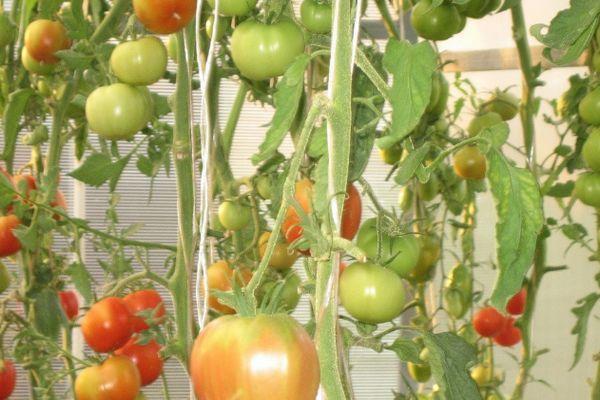
- excellent yield - up to 14 kg from one bush;
- beautiful appearance of the fruit - no cracks in the skin or uneven color spots;
- high taste qualities - contains a lot of sugar;
- good resistance to diseases - the variety is immune to cladosporiosis, nematodes, and fusarium.
Disadvantages include the need to grow it in a greenhouse, otherwise it won't have time to ripen. Another negative is the fact that plants from self-collected seeds will not replicate the parent's characteristics (as with all hybrids).
Pests and diseases
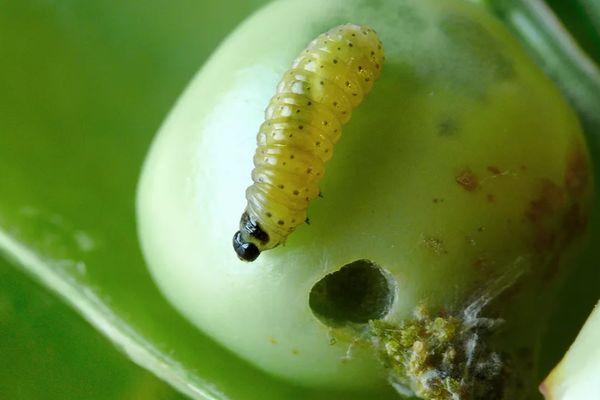
The Krasnobay tomato is most often attacked by insects, including codling moths and sawflies, as well as cabbage whites, gall midges and nightshade leaf miners. There are effective insecticides Lepidocide and Zubr against all these winged pests.
Folk remedies for getting rid of insects include wood ash and tobacco dust. You can also make a spray with baking soda or onion peels.
Phoma blight, or brown rot, often occurs in the temperate zone and further north. To prevent it, reduce the nitrogen concentration in the soil and the amount of water used for irrigation.
Harvesting and storage
If you pick slightly unripe tomatoes, they will tolerate transportation well and will reach their destination without any problems.
When harvested, the tomatoes are sorted by ripeness. The plumpest ones are used for fresh salads, as well as for juices and purees. Fruits with less pronounced coloring (pink and brown) are sent for artificial ripening. For this purpose, tomatoes are selected that are dry, with intact skin, and without damage. Krasnobay tomatoes are turned upside down.
It's best not to stack multiple layers of this vegetable in a single container to reduce the risk of mechanical damage. To speed up the ripening process, some ripe tomatoes are left unpicked, releasing ethylene gas, which positively affects the ripening process of the remaining tomatoes.
Ripe tomatoes can be stored for up to 4 days. For best shelf life, store them in a dry place at room temperature.
Gardeners' reviews
Elena 52 years old, Saratov:
"Every spring, I try to test at least one popular tomato variety at home. I recently purchased the Krasnobay hybrid tomato for this purpose. It had wonderful reviews. After this experiment, I'm committed to growing it in the future: this tomato has produced many large, tasty fruits, and it has never been affected by disease or pests."
Vladimir, 40 years old, Kaliningrad region:
"One day, while talking to a neighbor, I learned about a good tomato variety called Krasnobay. Since it was spring, I wanted to sow some in my greenhouse myself. So I did. The harvest exceeded my expectations. I was starting to worry about how to preserve the branches so they wouldn't break under the weight of the fruit. Staking them with extra staking fixed the problem. I'm glad I planted this variety; I plan to grow it again next year."
Related posts:
 What varieties of tomatoes are best to plant in a polycarbonate greenhouse?
 Description of the best varieties of tall tomatoes, when to plant seedlings and how to grow them
 The best grape varieties for growing in the Urals, planting and care rules in summer
 Description of the Rocket tomato variety, cultivation features and yield
 Description of the Malachite Box tomato variety, cultivation and care features
 Description of rare collectible tomato varieties from Valentina Redko, new for 2025
 Description of the Pink Souvenir tomato variety, cultivation and care features
 How to propagate and grow peas, cultivation technology, and care in open ground