
- Advantages and disadvantages of tall varieties
- Timing of tomato planting depending on variety and region
- When to plant in a greenhouse
- Technology for growing and planting tall tomatoes
- Caring for tall crops
- Picking
- Top dressing
- Watering
- Tying up bushes
- Ripening time and harvest
- The best varieties and their description
- The mystery of nature
- Talker
- Königsberg
- Cossack woman
- Casanova
- De Barao the Giant
- Cio-chio-san
- De Barao
Growing tall tomato varieties allows for more efficient use of soil. However, caring for them has its own unique characteristics. Tall plants require support, training, and fertilizing. Despite these care requirements, tall tomato varieties are popular with gardeners.
Advantages and disadvantages of tall varieties
Growing tall tomato varieties requires less land. Fewer plants are needed to provide a family with the required number of tomatoes. Tall varieties are more productive. Some modern hybrids yield up to 5 kg of fruit per plant.
These varieties have some characteristics that can be considered disadvantages:
- It is necessary to remove stepchildren regularly;
- All summer long, spend shaping the bush, removing leaves, and tying up the stems.
Timing of tomato planting depending on variety and region
Tomatoes are propagated by seedlings. Seedlings can be planted in the garden (greenhouse) at 50-60 days old. Each region has its own climate. Sowing times depend on the weather in April and May. The soil should thaw and warm to 12-15°C.
When grown outdoors, tomato seedlings planted early can be damaged by subsequent frosts. Therefore, sowing seeds of tall tomato varieties for open ground in the southern regions it is possible in early March, in a temperate climate in late March, early April.
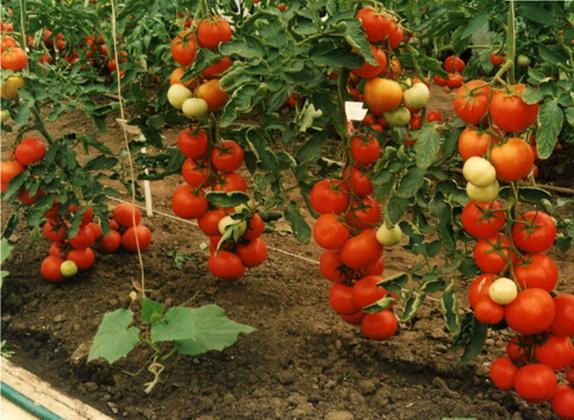
In addition to weather conditions, the time to sow seeds for seedlings is influenced by the ripening period of the fruit. This is one of the main characteristics of a variety (hybrid). The manufacturer is required to indicate this on the seed packet. All varieties are divided into three groups based on ripening time:
- early;
- mid-early;
- late.
Early varieties can be transplanted to a permanent location at the age of 45-55 days, mid-early varieties at the age of 55-60 days, and late varieties at the age of 70 days.
When to plant in a greenhouse
Seedlings of greenhouse varieties are planted in unheated greenhouses almost a month earlier than in open ground, so the sowing dates for seedlings shift. In the south, seedling planting begins in early February, while in the central part of Russia and Siberia, it begins in late February or early March.
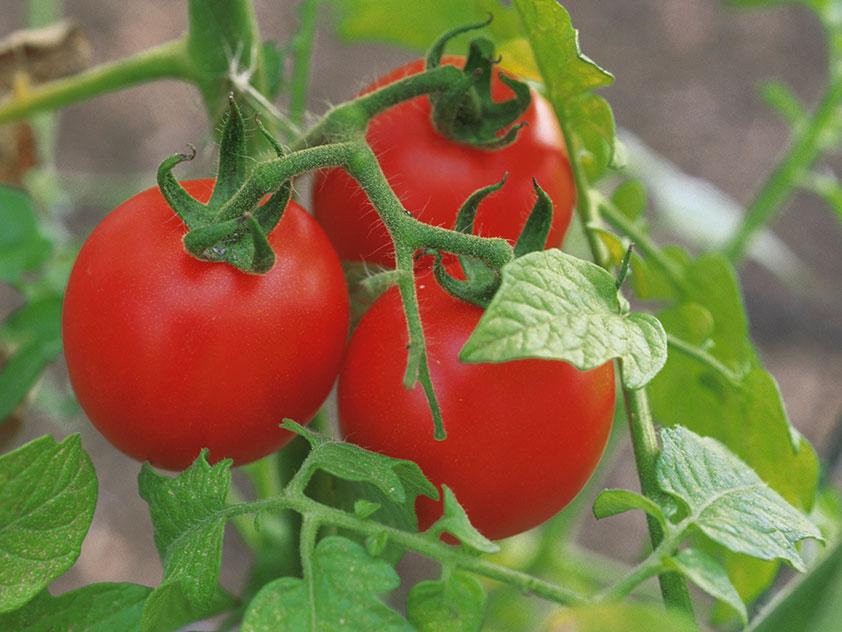 The lunar calendar helps novice gardeners determine the timing of planting (replanting) tomato seedlings. It highlights favorable days for sowing. Tomatoes grow best when planted (transplanted) during the waxing moon in the signs of Cancer, Taurus, Pisces, Virgo, and Gemini.
Technology for growing and planting tall tomatoes
Tomato seedlings are sown in a common container. After the second true leaf appears, they are transplanted into individual cups. Before planting, the seeds are immersed in salted water. Any that float to the surface are empty and should be discarded. The remaining seeds are immersed in a solution of potassium permanganate for 20 minutes.
To speed up germination, the seeds are germinated. Place damp cotton pads in a disposable container. Spread the seeds on them. Close the container tightly with a lid and place it in a warm place (23-25°C). The sprouted seeds are planted at a depth of 1-1.5 cm, spaced 2.5-3 cm apart. To create a greenhouse effect, cover the container with transparent film.
Take a look Also
Caring for tall crops
If the seeds are high-quality, seedlings will appear within about 5 days. Until then, monitor the soil moisture. If necessary, moisten the surface with a spray bottle.
Picking
After two true leaves appear, the tomatoes are transplanted into individual pots. The soil used is the same as in the greenhouse. During cloudy weather, the seedlings are provided with supplemental lighting. The room temperature is maintained at 20-22°C during the day and reduced to 10-15°C at night.
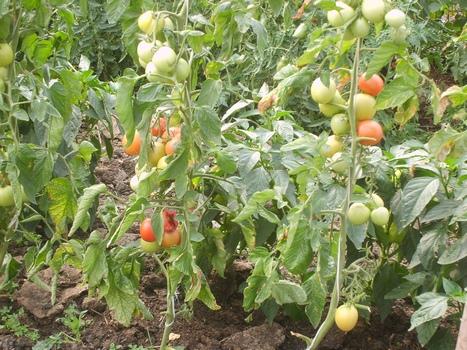
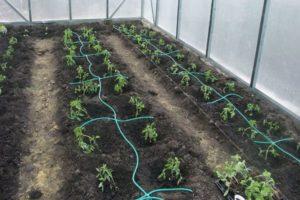
Once the soil in the greenhouse has warmed up, the seedlings are transplanted into the greenhouse. By the time of transplantation, they should have formed 5-6 leaves and be 25-30 cm tall.
When planting, you need to add ash and mineral fertilizers (superphosphate, urea) to the hole.
Tall tomato varieties are planted in a permanent location according to the pattern indicated on the packaging.Typically, the manufacturer recommends planting 3 plants per 1 m². When growing a single-stemmed bush, 4 tall tomatoes can be planted per 1 m².
Top dressing
Indeterminate tomatoes require enhanced nutrition. They grow up to 2 meters in height. They need to be fertilized at least three times during the summer, the first time two weeks after transplanting to their permanent location. There are many recipes for preparing liquid fertilizers. For small greenhouses, it's best to prepare solutions per 10 liters of water. Fertilizer consumption:
- 0.5 l of fresh mullein, 5 g each of boric acid and manganese sulfate, 30 g of nitrophoska.
- Calcium nitrate (30 g) + nitrophoska (30 g).
- Infusion of chicken manure 0.5 l, 15 g potassium sulfate, 30 g superphosphate.
- Infusion of fresh mullein 0.5 l, 30 g nitrophoska.
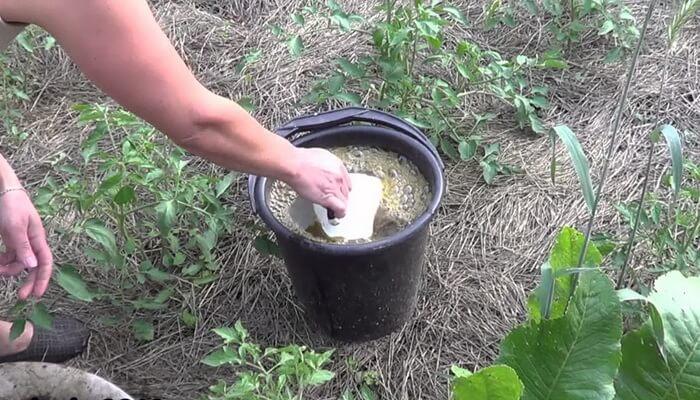
For one young plant, 500 ml of liquid fertilizer prepared according to one of the recipes is sufficient. During the formation of the second flower cluster, feed the bushes with an infusion of ash with added boric acid (10 liters of boiling water, 2 liters of sifted ash, 10 g of boric acid). Pour 1 liter of the infusion per plant.
During active fruit formation, tomatoes need potassium and phosphorus.At this time, the following solution is effective:
- 10 liters of water;
- 20 g nitrophoska;
- 15 ml potassium humate.
Watering
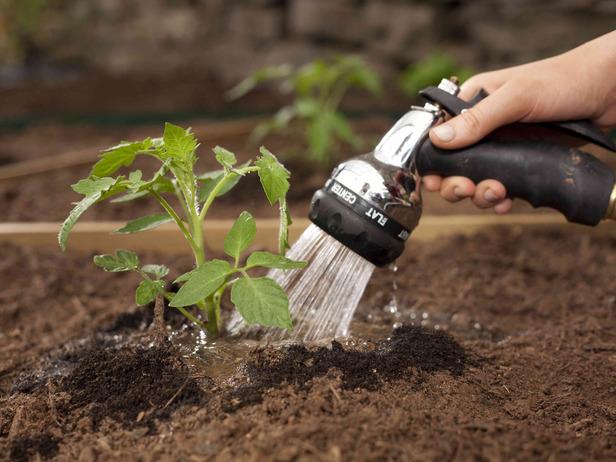
Water according to the weather. More frequently in a greenhouse, as the soil dries out faster in hot weather. Watering should be generous. The soil should be moist to a depth of 30-40 cm. Surface irrigation will weaken the root system. It will develop in the top layer of soil. In hot weather, water tomatoes once every 3 days. In warm weather, water once every 7 days.
Tying up bushes
Staking tomato plants is essential for several reasons. Tying them to a support prevents damage to the stems and prevents the fruit from coming into contact with the ground. All parts of the tomato plant receive adequate light. Air circulates freely in the root zone. This reduces the risk of fungal infection.
A stake is driven into the hole when planting. The bush is tied immediately or after 10 days. In the summer, as the central shoot grows, the bush is tied to the support 2-3 more times. Soft materials are used to avoid damaging the stem.
Ripening time and harvest
Tomatoes ripen within the timeframe stated in the variety description. This can be affected by weather and care. Timely, balanced feeding accelerates ripening, while extreme weather conditions (heat, prolonged rains) slow it down.
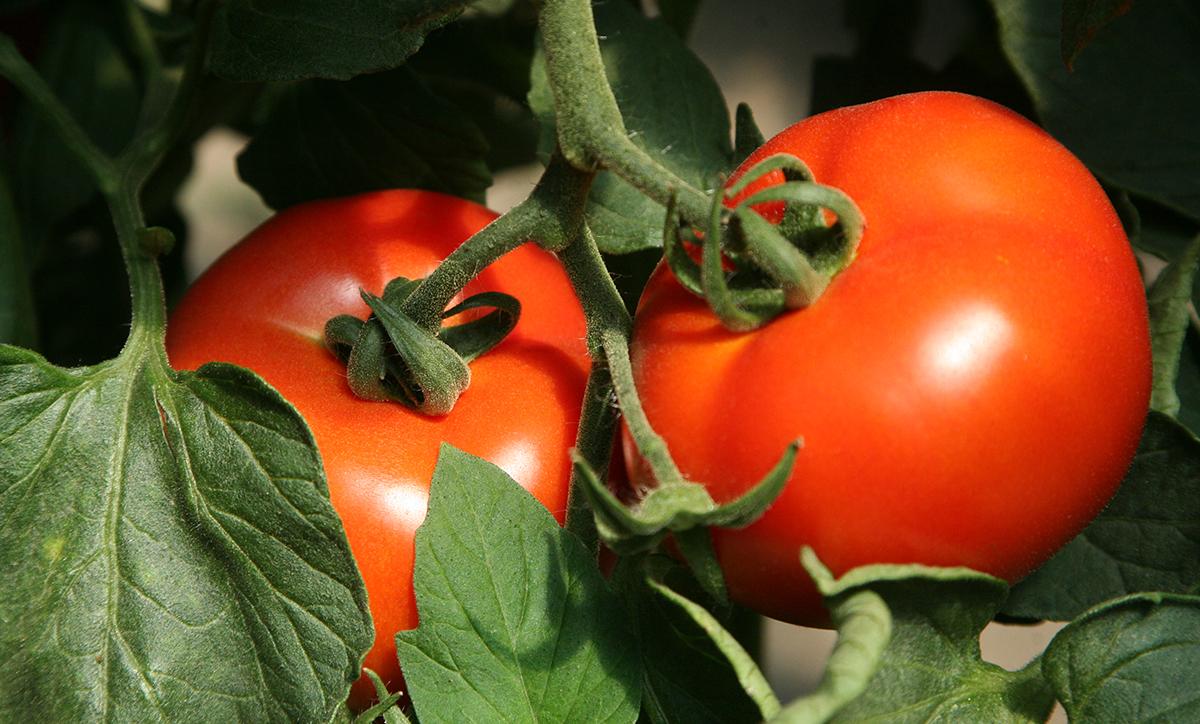
With proper care and planting practices, the yield per bush matches the stated yield. This yield depends on the variety. Productive tomatoes yield up to 5 kg per bush, while less productive ones yield 2.5 kg. Yields per square meter can range from 5 to 20 kg.
The best varieties and their description
A brief description of tall and productive tomato varieties will help you prepare for the new season. This selection includes tomatoes popular with gardeners in various regions. They can be grown in both greenhouses and vegetable gardens.
The mystery of nature
An unusual bicolor tomato. The flesh is pink, and the skin is orange-yellow with a pink cap. This is a cultivar, so the seeds can be used for propagation. Tomato Riddle nature is grown in open and protected ground in any climatic zones.
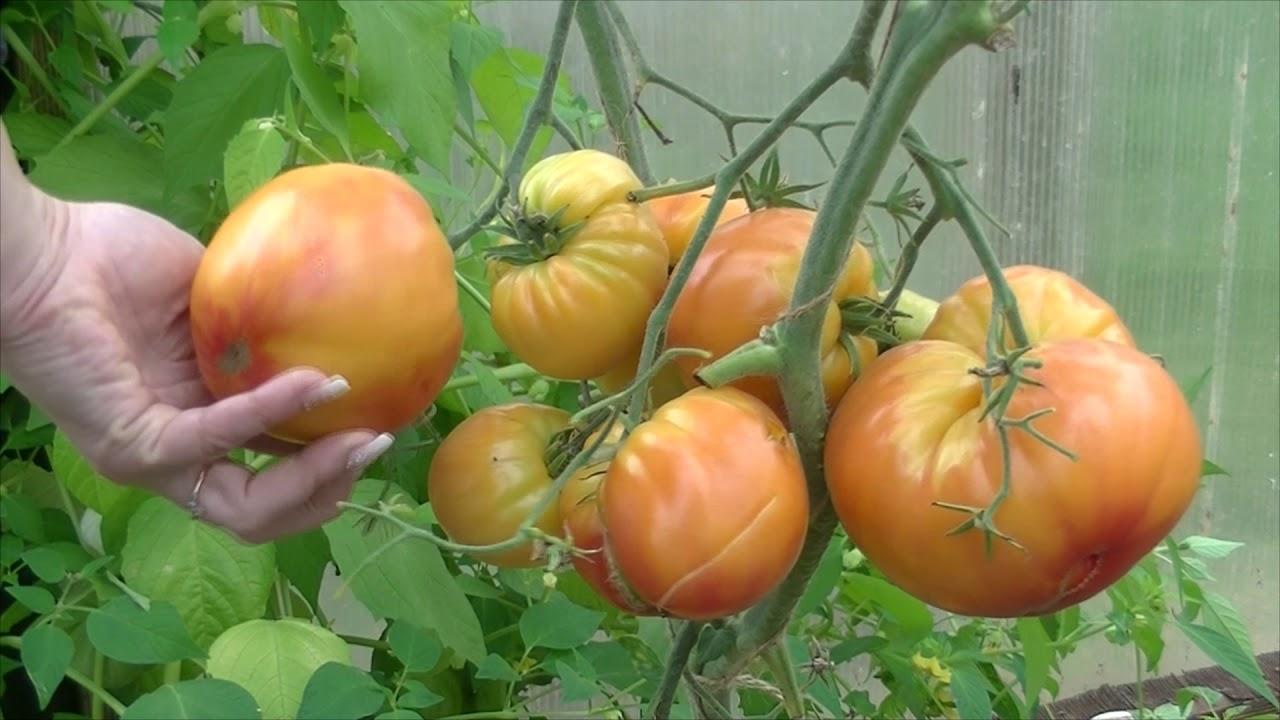
Ripening period: 110 days. Yield: 12 kg/m² in the garden, 15-20 kg/m² in the greenhouse. Productivity depends on agricultural practices; fertilizing is required. The fruit is intended for table use; its characteristics include:
- weight 250-350 g;
- the shape is round-flat with slightly pronounced ribbing;
- medium-density pulp with a high sugar content;
- the skin is thin.
Talker
This large-fruited hybrid, bred in Russia, has undergone variety testing and was added to the State Register (2006). Krasnobay F1 is grown in a greenhouse. The indeterminate bushes (1.5-2 m) require support. The fruits ripen late (120-130 days). The yield is 15 kg/m².
Advantages of a hybrid:
- large, fleshy fruits weighing up to 500 g;
- possibility of ripening;
- shelf life, transportability;
- stable immunity.
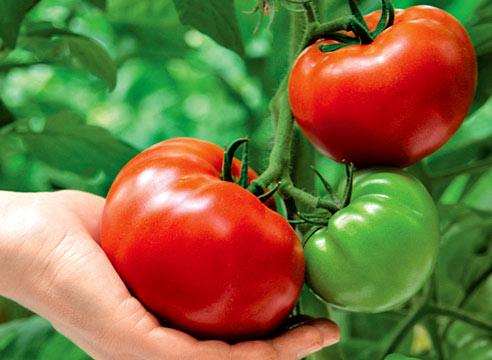
Red mulberry is grown for fresh consumption. The fruits can be used to make juices and sauces.
Königsberg
A successful variety bred in Siberia. Cultivated throughout the world, it adapts well to weather conditions and can be grown in vegetable gardens and greenhouses of any type. The bushes are indeterminate. In the ground, they grow up to 1.5-1.8 m, and in a greenhouse, up to 2 m.
This is a large-fruited variety. A single cluster produces up to six tomatoes. The tomatoes are elongated and heart-shaped. The flesh is aromatic and juicy. The skin is firm. Color, flavor, size, and intended use depend on the variety. Königsberg has three varieties:
- Red. Red skin. Weight up to 300 g. Sweet and sour taste. Yield 5 kg per bush. Ripens in mid-season (115 days). Universal use.
- Golden. Yellow skin. Weight up to 300 g. Sweet flesh, rich in carotene. Yield up to 5 kg per bush. Ripens in mid-season (115 days). Universal use.
- Heart-shaped. The largest specimens weigh 1,000 g, while medium-sized ones weigh 400 g. The fruits are suitable for salads. The skin is pink. The variety ripens mid-early.
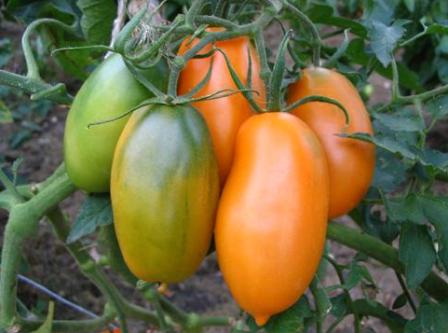
Seeds of all varieties of Königsberg can be used for propagation.
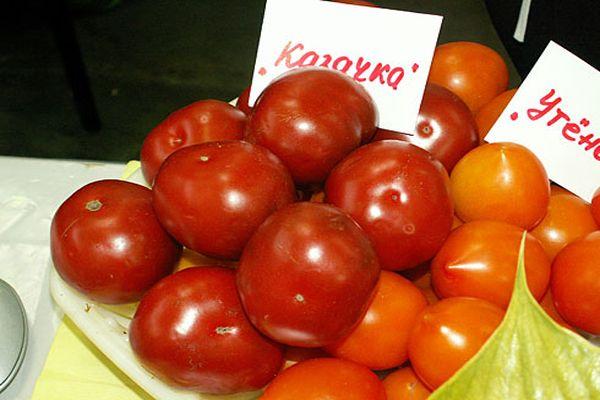
Cossack woman
A cluster-type tomato with small (30-50 g) fruits of a distinctive color (dark red, brownish-red) with a slight purple tint. This variety is used for salads. The skin is thin, and the flesh is juicy and sweet.
Indeterminate tomato bushes are grown in a greenhouse. Up to 10 kg of tomatoes can be harvested per square meter. The crop ripens in 120-130 days. This variety does not have a good shelf life. When the harvest is large, the fruits are used to make juice.
Casanova
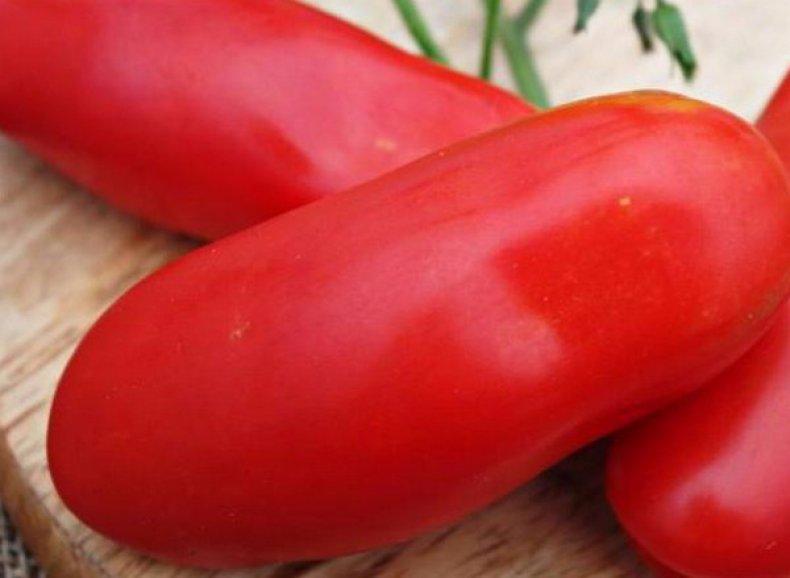
Reviews from gardeners about the fruits vary, but everyone agrees on one thing: they are ideal for canning. The tomatoes are bright red, uniform, long (up to 20 cm), weighing up to 200 g, with thick skin. They ripen in mid-July.
Few seeds. Gardeners rate the flavor as average. The flesh is firm. This variety is best grown indoors. The bushes are tall. Yield is 12 kg/m². Advantages Casanova tomato:
- keeping quality;
- transportability;
- long fruiting period.
De Barao the Giant
In Siberian conditions, De Barao Gigant is best grown in a greenhouse. There, it will bear fruit until the end of September. It also grows well in open ground. It begins bearing fruit late (130 days), and the fruiting period is extended.
Each season, a single bush up to 2 m tall produces 5-6 kg of plum-shaped, bright red fruits weighing 70-180 g. This variety is suitable for canning and table use. The bushes require regular care. This variety has a high shoot-forming capacity. Side shoots should be removed throughout the season.
Cio-chio-san
This pink-fruited, cluster-type hybrid is successfully grown in various climates. The bushes are indeterminate and very decorative during the fruiting season. A single cluster can contain up to 60 small (40 g) plum-shaped fruits.
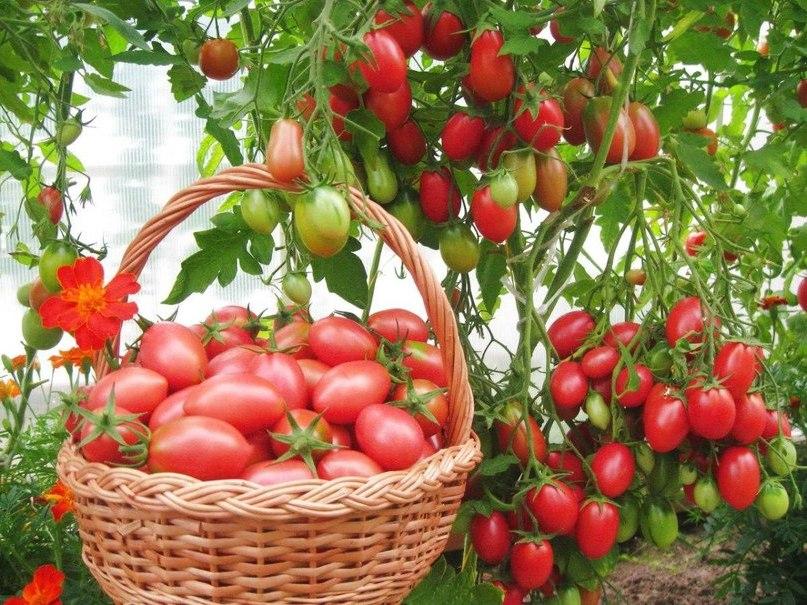
A single bush yields 5 kg, has a long shelf life, and can be easily transported. Ripe fruits are prone to cracking if left on the bush. According to gardeners, it's best not to delay harvesting tomatoes. Chio-chio-san is a commercial variety.
The fruits are in demand on the market. Intended use:
- fresh consumption;
- canning;
- freezing;
- drying.
De Barao
This line of tall tomatoes is popular among Russian gardeners. It has been in demand for 20 years. All varieties are mid-season (115-125 days), suitable for outdoor cultivation in the south and for protected cultivation in northern latitudes.
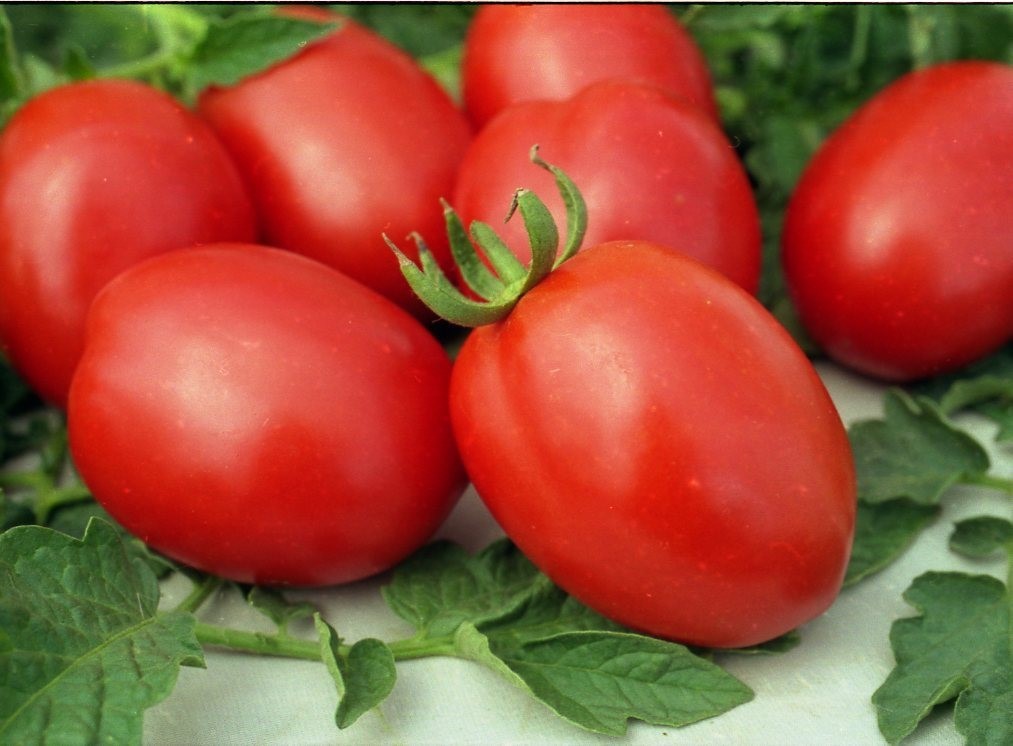
Indeterminate bushes require pinching at the growing point; without this, they can grow to 3 meters or more. A single plant can produce up to 6 kg of fruit per season. Good ripening is one of the variety's advantages. De Barao fruits are uniform, weighing 30-100 g. The weight depends on the level of agricultural practices.
Each cluster contains 8-9 plum-shaped (egg-shaped) tomatoes. The coloring depends on the variety. There are several varieties:
- Gold;
- Orange;
- Pink;
- Black;
- Striped.
All varieties are worthy of attention. If planting and care recommendations are followed, they will yield a good harvest.
Related posts:
 The best eggplant varieties for growing in a polycarbonate greenhouse: planting and care
 Description of the best potato varieties of domestic and foreign selection
 Description and characteristics of the best seeds of pea varieties and types
 How to propagate and grow peas, cultivation technology, and care in open ground
 50 Best Carrot Varieties with Descriptions and Characteristics
 80 Best Eggplant Varieties for Different Regions with Descriptions and Characteristics
 How to properly plant peas in a greenhouse and open ground
 When to plant cucumbers in open ground in Siberia, how to grow them, and the best varieties
In my opinion, it's easiest to tie up tall tomatoes right away. This way, they'll grow properly and be less likely to break. The main thing is to remember to tie them up regularly as they grow. Watering is also crucial, as it's essential for normal growth and fruiting.