
Those who decide to grow the Rio Fuego tomato will find the characteristics and description of the variety interesting. The variety was developed by Dutch breeders, who recommend growing these plants in open ground and under plastic covers. The fruits have excellent flavor. They are used in factories to produce high-quality tomato paste and are used in salads and preserves.
Some information about the variety
Fuego type tomatoes have the following characteristics:
- The vegetation cycle of this plant from the first shoots to ripe fruits lasts 110-115 days.
- The Rio Fuego tomato variety has a strong stem, 30-40% of which is covered with green leaves.
- The height of the bushes of this variety is 0.6-0.7 m. It is recommended to tie them to low supports, otherwise the plant will begin to grow in width.
- The first ovary develops after the appearance of the 4th leaf.
- This variety of tomato can produce up to 8-10 clusters per season, with each cluster producing 4 to 6 fruits of equal size.
The Rio Fuego tomato fruit description is as follows:
- This tomato is shaped like a plum. It is elongated, with an average length of 50 to 70 mm. The fruit is bright red. It feels quite firm and quite sweet.
- Inside the tomato there are 2 or 3 chambers containing a small number of seeds.

Gardeners' reviews indicate that the fruits are easy to pick from the bush, as the stem remains on the plant. Therefore, machine harvesting is possible on larger farms. The average fruit weight of this variety ranges from 0.1 to 0.14 kg. The variety has a fairly high yield, reaching 9-10 kg per square meter. The dense skin maintains the tomato's shape well when used in brine or marinade.
Photos of this plant can be found in catalogs of tomato seed companies. The fruits of this type store well and can be transported over long distances. Therefore, it is grown on an industrial scale for processing into tomato paste, ketchup, and juice.


How to grow Rio Fuego?
This variety is suitable for growing outdoors. It tolerates cold well and is undemanding. Gardeners should be aware that direct sowing of seeds into the ground extends the plant's growing season, so an early harvest cannot be expected.
To sow seeds, farmers must know the last possible frost date in their region. Seeds are sown seven weeks before this date.

Sowing is recommended in warm, well-lit greenhouses. Seedlings will emerge within a week of sowing if the greenhouse or hothouse maintains constant soil moisture (65%) and a temperature of 20–24°C. Water the seedlings every 10 days, but more frequently if needed.
The finished seedlings are planted in the ground using a nesting technique. To prevent the bushes from interfering with each other, they are planted 3-4 per 1 m². If planting in a limited area, the number of bushes can be increased to 5-6 per 1 m². Most gardeners allocate 0.5 x 0.4 m per bush.
The farmer should be aware that planting Rio Fuego in the ground after vegetables such as potatoes, eggplants, and cabbage is not recommended by breeders.
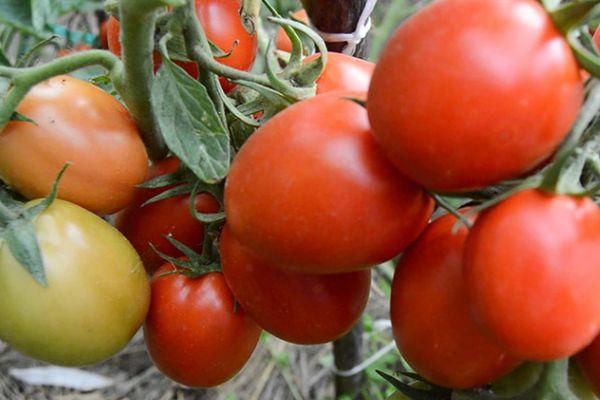
It is necessary to loosen the soil under the bushes and remove weeds in a timely manner.
The Rio Fuego variety is resistant to most diseases. It has good resistance to diseases such as verticillium and fusarium wilt, and tolerates stem canker. This tomato is resistant to nematodes and bacterial spot. For other diseases, preventative measures should be taken, using appropriate solutions and decoctions.
In case of an invasion of garden pests, it is recommended to use generally available chemicals.
Related posts:
 Description of the Rio Grande tomato variety, cultivation and care features
 The best tomato varieties for open ground in Bashkiria with descriptions
 Characteristics of the Trans Rio tomato and cultivation techniques
 Description of the best tomato varieties for pickling and canning
 80 Best Eggplant Varieties for Different Regions with Descriptions and Characteristics
 Description of the best ultra-early tomato varieties for open ground and greenhouses
 Description of the Velika grape variety, cultivation and care tips
 Description and characteristics of the best seeds of pea varieties and types
For a better harvest, I would recommend trying this product. BioGrow, this is a really great thing, which is a bioactivator for plant growth, the effect is noticeable and significant.