
The Trans Rio tomato, whose description stems from its exotic fruit shape and excellent taste, is recommended for outdoor cultivation. This tomato is popular among vegetable growers due to its ease of care and resistance to common nightshade diseases.
Advantages of the variety
The early-ripening Trans Rio tomato variety is suitable for both open and protected cultivation. The plant begins bearing fruit 92-97 days after germination.
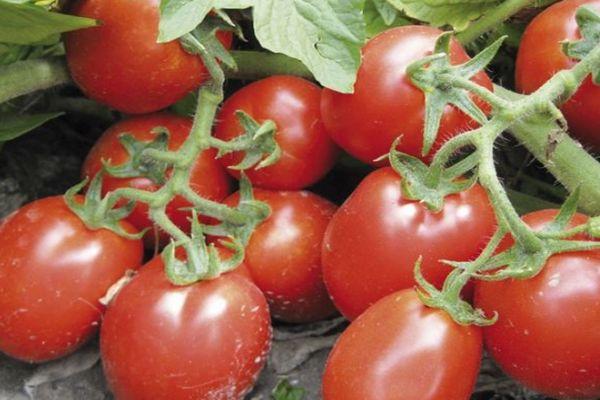
This compact, determinate bush reaches a height of 40-120 cm during the growing season, depending on growing conditions. When planted in open ground, it does not require staking or pruning.
The weight of ripening fruits can cause the stem to become deformed, so experts recommend tying up the plant.
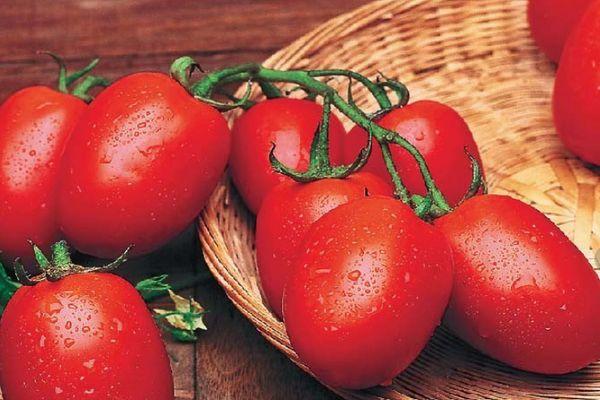
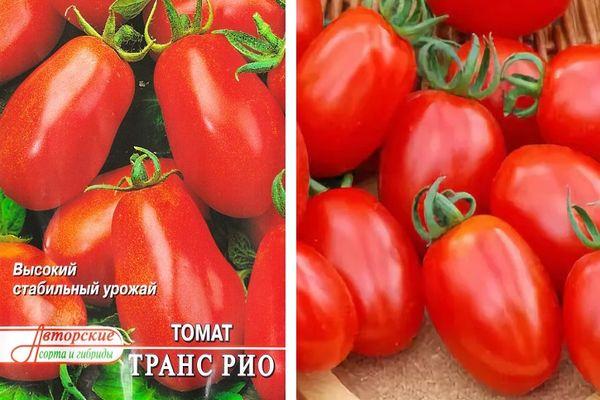
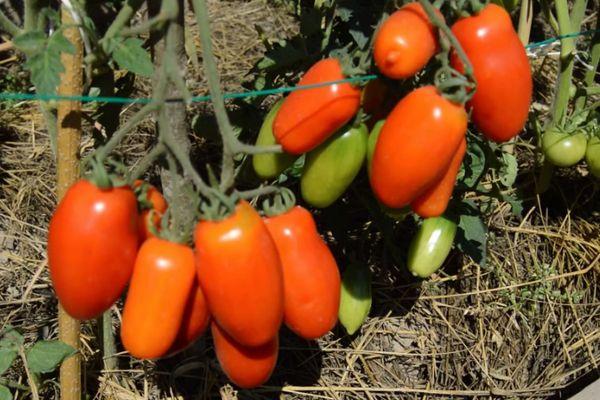
The variety's characteristics are based on the plum-pear-shaped tomatoes. The tomatoes are unblemished near the stem and acquire a deep red color when ripe. The tomatoes have firm flesh, medium juiciness, and a sweet taste with a subtle tartness.
The tomato weight reaches 80-100 g. The Trans Rio variety is characterized by stable yields and uniform ripening. With proper cultivation practices, 15 kg of fruit can be harvested per square meter. The Trans Rio variety is recommended for commercial cultivation.

Vegetable growers' reviews indicate the plant's high resistance to a range of diseases common to nightshade crops. Harvested fruits withstand long-distance transportation well and can be stored for a long time.
In cooking, the fruits are used fresh, to make sauces, ketchup, juice, and paste. Tomatoes retain their shape when cooked.
Agricultural technology for tomato cultivation
When growing indoors, seeds for seedlings are sown in March. To do this, fill special containers with prepared soil mixture or substrate, lightly compact it, and make furrows 1 cm deep.
Before sowing, treat the seeds with an aloe vera water solution and a growth stimulant. This ensures uniform sprouting and the formation of healthy seedlings.
Take a look Also
After planting the seeds, water them with warm water using a spray bottle, and cover the container with glass until the loops appear. When the true leaves begin to form, transplant them.
For this purpose, peat pots with a diameter of 8 cm are used, making it easy to transfer plants to the ground. Their use prevents damage to the root system and helps the plant adapt more easily to its new location.
When growing seedlings, it's important to maintain the correct temperature. It's recommended to harden off the seedlings before planting them in the ground. To do this, place the seedlings outside for 7-10 days, gradually increasing the time spent outside from 30 minutes to several hours.
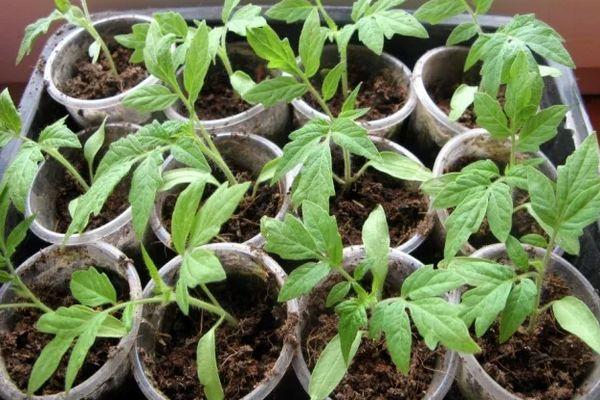
When growing seedlings indoors, you can harden them off by opening a window or placing the containers on the balcony. The seedlings are transplanted into the ground after the spring frosts have passed, when the soil warms to 16°C.
Planting is done with crop rotation in mind. The best predecessors for tomatoes are cucumbers, zucchini, carrots, and parsley. Compost is added to the prepared holes.
Proper plant development requires adequate lighting, so a sunny location is recommended for planting. Tomatoes prefer fertile soil. Plants should be spaced 30 cm apart, with a 70 cm distance between rows. Five to six plants are recommended per square meter.
Care involves regularly removing shoots when 4-6 inflorescences appear. The Trans Rio tomato variety requires moderate watering. To maintain moisture levels, mulching the soil with fiber or organic material is recommended.
When growing this variety in protected soil, drip irrigation is used. Tomato care includes weeding, loosening the soil, and timely harvesting.
Tomatoes respond well to complex fertilizers containing phosphorus, potassium, and nitrogen. These improve crop growth and fruit formation. The composition of the fertilizer depends on the soil type and the plant's developmental stage.

This tomato variety is not a hybrid, so you can harvest the seeds yourself for sowing next season. To do this, leave the first fruits on the vine, from which you can later harvest the seeds.
Related posts:
 Description of the Rio Grande tomato variety, cultivation and care features
 Description of the Rio Fuego tomato: characteristics and cultivation of the variety
 The best eggplant varieties for growing in a polycarbonate greenhouse: planting and care
 Methods for planting and propagating cherries at home
 The best grape varieties for growing in the Urals, planting and care rules in summer
 The best methods for growing grapes from seeds at home
 80 Best Eggplant Varieties for Different Regions with Descriptions and Characteristics
 Description and characteristics of the best seeds of pea varieties and types