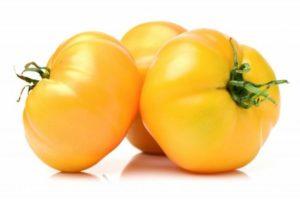
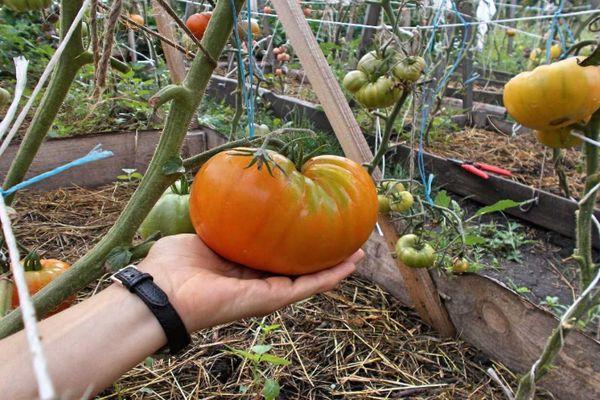
The Hawaiian Pineapple tomato is a tall plant with large, striking golden-orange fruits. This variety produces a large harvest and boasts a unique flavor and fruity aroma.
Main characteristics
It's worth noting that this tomato variety is intended for greenhouse cultivation. It can also be grown outdoors in the right climate, but the yield and flavor may differ from the original.
The plant's height presents certain challenges. On average, the Hawaiian pineapple grows to 2 meters, requiring additional support and occasional staking. When planted in a greenhouse, the plant's height must be controlled, which also doesn't make the growing process any easier.
To obtain a good harvest, tomato bushes should consist of 2-3 stems, therefore, timely side-sonning is required.
The vegetable is resistant to most diseases, but even here, the tomato has a weak spot. It is highly susceptible to late blight. Furthermore, additional protection against pests, specifically whiteflies, is required.
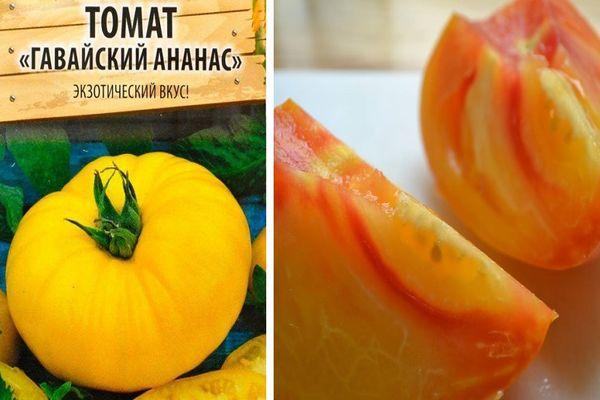
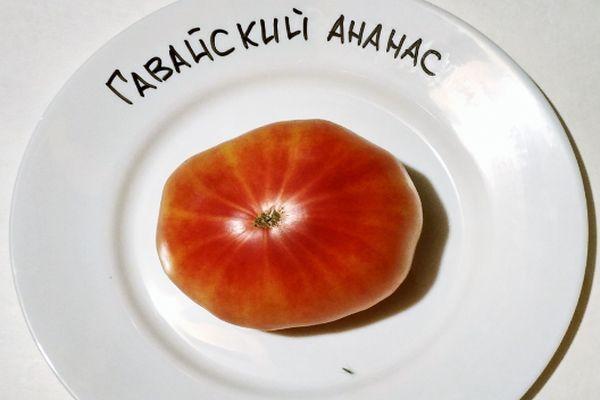
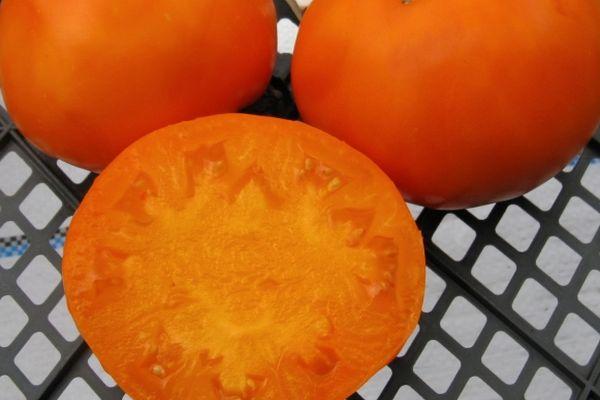
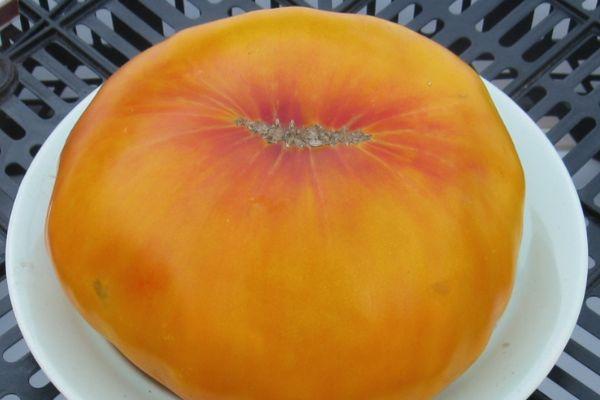
Tomatoes weigh 300-400 g, but can be extremely large—up to 700 g. Ripening takes 105 days from germination. The tomato has a unique pineapple aroma, while the flavor remains typical of this vegetable. The seeds are few and very small. The tomato is round, slightly flattened. Its color is orange; ripe tomatoes have pink streaks on the underside.
The tomato is used in salads and juice. Thanks to its sweet taste, Hawaiian pineapple is also used in children's menus. Unfortunately, the fruits don't keep for long, so they should be consumed within a few days of being picked.
Growing rules
It's best to sow tomato seedlings in March so they can establish themselves sufficiently before planting them in the ground. Typically, seedlings are sown in individual 350 ml containers. Place the seeds at a depth of 1 cm. When sowing, remember to thin them out to leave enough space. To disinfect the soil, use a solution of potassium permanganate. Boil it and pour it hot into the soil, then cover the container with plastic wrap. Sow the seedlings only after the soil has cooled.
When transplanting seedlings into soil, you need to adhere to the following rules:
- the bush should consist of 2-3 stems;
- the lower leaves must be removed;
- the distance between bushes is not less than 0.5 m;
- no more than 3 bushes can be planted per 1 m²;
- soil temperature — +15… +17°С.
It's no wonder this variety is considered a greenhouse variety: for successful growth, it requires not only warm soil but also warm water for irrigation (17 to 20°C). Tomatoes thrive in moisture. Before planting, the soil should be watered generously. After planting, water daily for seven days. The first loosening (to ensure oxygenation) can be done after two weeks.
Standard mineral fertilizers are suitable for fertilizing. Add the fertilizer to the irrigation water 20 days after planting. Fertilize once every 2-3 weeks thereafter. Garlic or soda solutions can be used to combat diseases and pests. The plant can be treated as early as two weeks after planting. Repeat the procedure if necessary, but no more than once every 10 days.
If you monitor the temperature and tie the stems to the support in time, there will be no problems with growing tomatoes. This variety receives only positive reviews from gardeners.
Related posts:
 The best eggplant varieties for growing in a polycarbonate greenhouse: planting and care
 How to properly plant peas in a greenhouse and open ground
 The best grape varieties for growing in the Urals, planting and care rules in summer
 How to propagate and grow peas, cultivation technology, and care in open ground
 When and how to properly transplant tomato seedlings, the best days in 2025
 Methods for planting and propagating cherries at home
 Carrot care guidelines for outdoor cultivation to ensure a good harvest
 Top 40 DIY New Year's Baking Recipes for 2020