
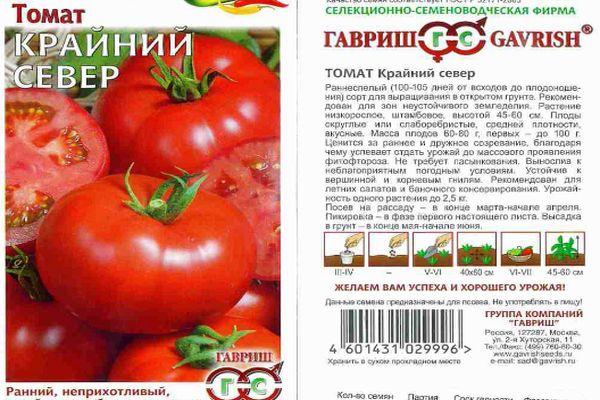
The "Karainiy Sever" tomato, whose characteristics and description indicate its suitability for cultivation in cold conditions, is highly productive. It tolerates low temperatures without adverse effects, and the full harvest is achieved within a short period of time.
Advantages of the variety
The "Karainiy Sever" tomato variety is included in the State Register of Breeding Achievements and is intended for outdoor cultivation. Reviews from vegetable growers indicate that the plant thrives in regions with cool, rainy summers and minimal sunlight.
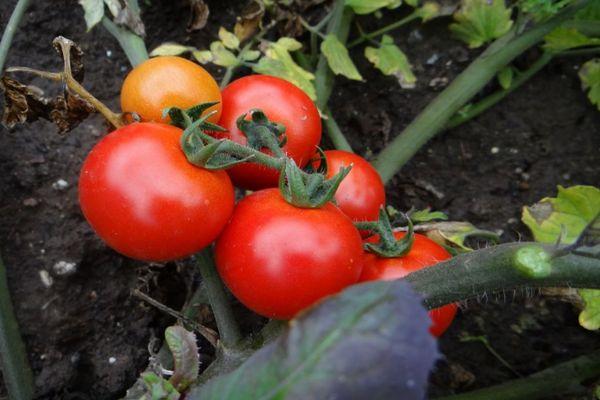
This ultra-early variety begins bearing fruit in July in the Northwest region. Ripe fruits can be harvested 90 days after germination. Full-scale ripening occurs in 93-95 days.
This variety is characterized by resistance to the main diseases of nightshade crops. Thanks to its short ripening period, the tomato is resistant to late blight.
Far North tomatoes don't require side shoots or staking. The compact, standard bush reaches 40-60 cm in height. The plant has a sturdy trunk, medium-sized leaves, and simple inflorescences.
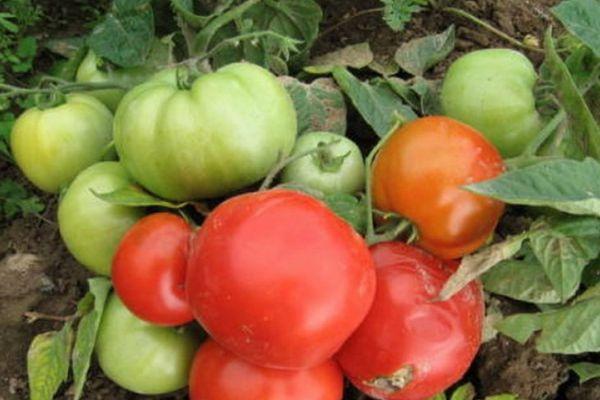
The first buds appear one month after the seeds germinate. The central stem stops growing after six inflorescences have formed. This variety is characterized by good yields.
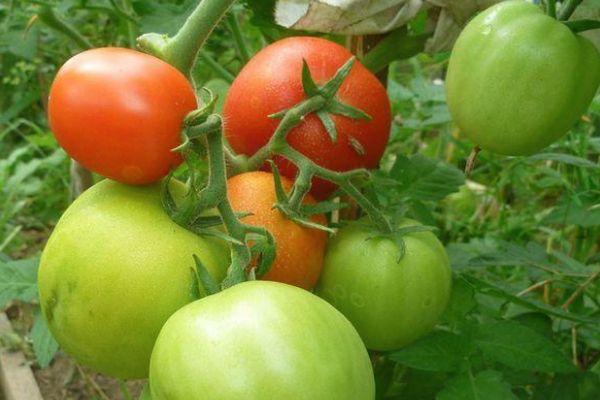
The tomatoes are round, elongated, and have subtle ribbing. The fruits are intensely red, and when cut horizontally, 4-6 chambers containing seeds are visible.
The tomato has a smooth, glossy surface. The flesh is medium-dense and sweet. The average tomato weight is 50-70 g.
In cooking, the fruits are used fresh, in salads, and for canning. Tomatoes are also processed into juice. Due to their dense texture, tomatoes retain their shape when sliced, making them often used in fresh vegetable platters.
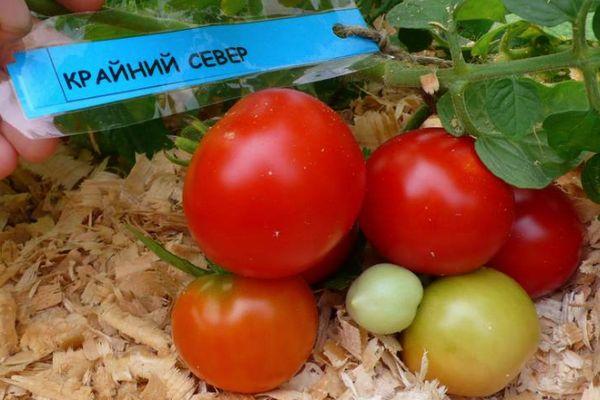
Once fully ripened, the harvested tomatoes withstand long-distance transportation well. They are not prone to deformation or cracking during shipping.
Agricultural technology for growing tomatoes
Tomatoes are grown using seedlings. To do this, first prepare a soil mixture containing:
- turf soil - 2 parts;
- humus - 2 parts;
- washed river sand - 1 part.
For planting seeds, you can use a ready-made substrate purchased from a specialty store. Fill the containers with the soil, compact it lightly, and water with warm water using a spray bottle.
After planting the seeds, add a 1 cm layer of peat at a certain distance from each other. Use a sieve to ensure even distribution. To ensure uniform germination, it's important to maintain a temperature of at least 16°C.
When two true leaves have formed, seedlings are transplanted into individual containers. Peat pots filled with substrate are used for this purpose.
The growing process requires plant feeding. One week before planting in the ground, seedlings are fed with complex fertilizers containing predominantly phosphorus and potassium.
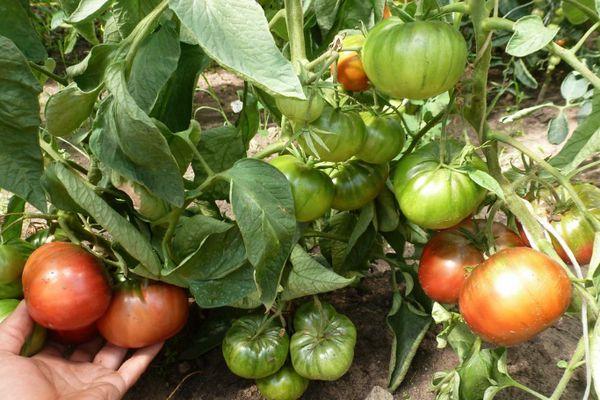
Plant 6-8 bushes per square meter, with a distance of 30-40 cm between plants. To increase yield and mass ripening, plant bushes 50 cm apart.
Caring for the crop involves watering with warm, settled water after sunset as needed. Mulching the soil can reduce the frequency of watering. Fertilize the tomatoes once or twice during the season before flowering and ripening.
Opinions and recommendations of vegetable growers
Gardeners who grow this tomato variety report increased resistance to blossom-end and root rot. Root diseases are a common problem among plants grown in the North.
Due to minimal heat and high humidity, water from the soil doesn't have time to evaporate. The variety's resistance to cold and low temperatures allows for planting in the ground. However, in the first few days after planting, the seedlings should be insulated by covering them with plastic film or high-density white non-woven fabric.
Alexey Fedorov, 62 years old, Voronezh.
I've been growing the "Karainiy Sever" (Far North) tomato for several seasons. This cold-hardy variety tolerates low temperatures very well. Therefore, I can confidently say: "Plant the seeds directly into the soil, using glass jars as cover." This method allows the plant to establish itself in its permanent location and ensures maximum yield per bush.
Related posts:
 How to propagate and grow peas, cultivation technology, and care in open ground
 80 Best Eggplant Varieties for Different Regions with Descriptions and Characteristics
 The best grape varieties for growing in the Urals, planting and care rules in summer
 What varieties of tomatoes are best to plant in a polycarbonate greenhouse?
 Description and characteristics of the best seeds of pea varieties and types
 Description of varieties of sowing peas and cultivation, to which family they belong
 When and how to properly transplant tomato seedlings, the best days in 2025
 Description of the Velika grape variety, cultivation and care tips