
Every gardener wants to get a decent vegetable harvest while minimizing their time. The Bear's Paw tomato variety meets these requirements. As gardening experience has shown, this plant requires little care, produces fairly large fruits, and has good disease resistance. However, to maximize the yield of this variety, it's important to understand several growing conditions, which will be discussed in this article.
Description of the variety
Bear's Paw is a mid-early, large-fruited, high-yielding tomato variety. The growing season to maturity is 110–115 days. This variety is suitable for both open and closed cultivation. Greenhouse cultivation is used in cold climates. Outdoor cultivation is preferred in regions with moderate weather conditions.
Description of the bush:
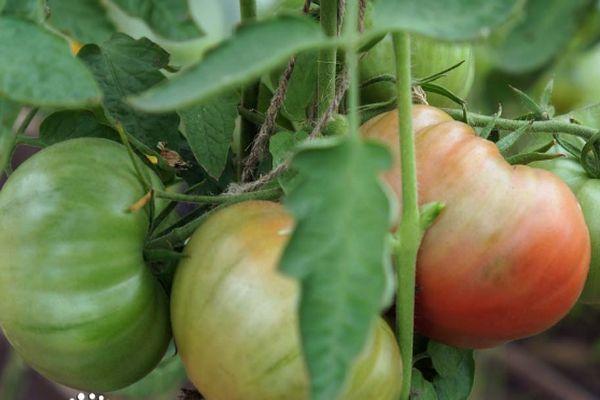
- The Bear's Paw variety is an indeterminate plant. This means the bush has no growth limit. Without pinching, it can reach over 2 meters in height.
- The plant's stems have numerous lateral shoots growing in the leaf axils. The first side shoots typically appear on the 6th to 8th leaf.
- The tomato's foliage is dark green. Its shape resembles a bear's claw, hence the variety's name.
- The plant's flowers are star-shaped, with five petals, and are bright yellow.
A distinctive feature of the Bear's Paw variety is its well-developed root system with numerous branches, which contributes to its vigorous growth.
Yield characteristics
Gardeners' reviews indicate that Bear's Paw is a fairly high-yielding crop. A single bush can yield approximately 30 kg of fruit per season.
Detailed characteristics of tomatoes:
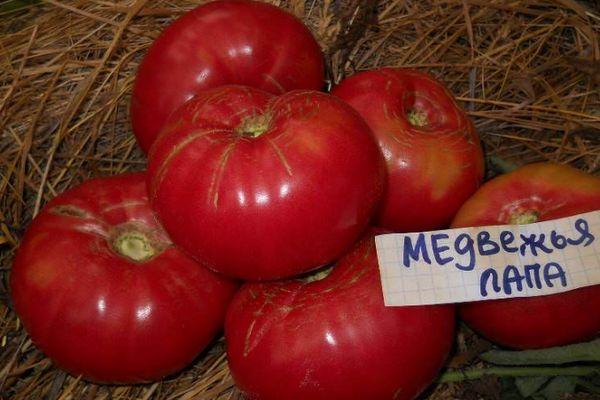
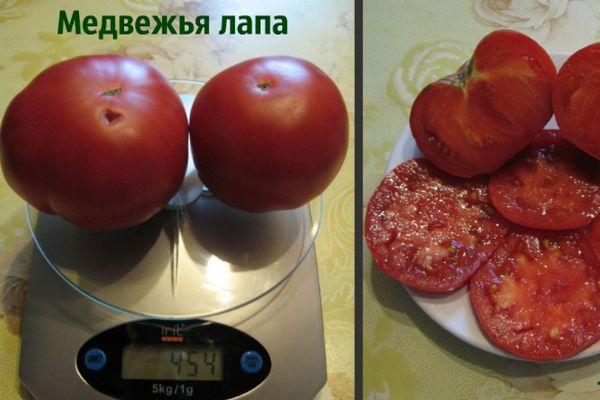
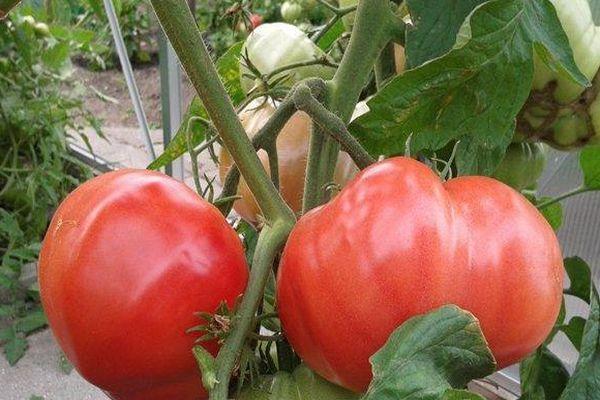
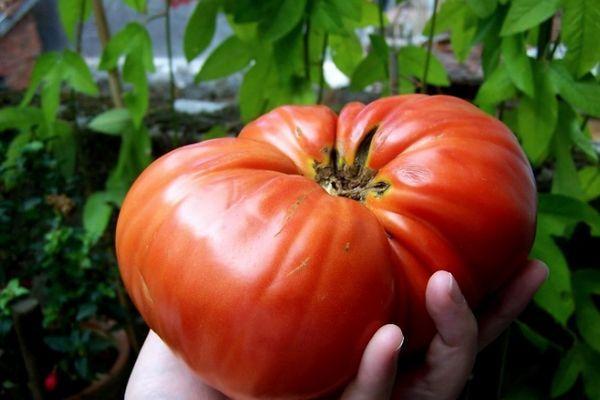
- shape - flat-round, with ribbing at the stalk;
- color - deep red;
- the pulp is fleshy, juicy, aromatic;
- taste - piquant, with a slight sourness;
- weight - 600-800 g.

Bear's Paw tomatoes are considered a versatile variety. They are ideal for fresh consumption, hot dishes, salads, baked goods, and tomato juice. Due to their size, this variety is not suitable for whole-fruit canning; however, they make delicious winter sauces and pastes.

Growing
Bear's Paw tomatoes are grown from seedlings. The seeds are sown in early to mid-March in pre-prepared soil. To do this, mix equal parts garden soil and compost. If the soil is heavy, it is recommended to add peat and river sand.
Features of tomato cultivation:
- The seedling boxes are filled with prepared soil.
- On the soil surface, 1 cm deep depressions are made.
- Seeds are placed in furrows at a distance of 2 cm.
- The seed material is sprinkled with soil and watered with warm water.
- The boxes are covered with glass and transferred to a dark place.

When the sprouts begin to emerge, the glass is removed and the container is moved to the windowsill.
Important! Mature Bear's Paw plants grow quickly and become dense. Therefore, when planting, maintain a distance of 50 cm between plants.
Transplanting seedlings to their permanent growing location occurs in late spring. When grown in a greenhouse, the best time is mid-May. Transplanting into open ground occurs in late May or early June.
Care Features
Unlike its counterpart, Medvezhy Ruchey, the Medvezhya Lapa variety is less demanding in terms of care. However, there are certain cultivation practices that can help increase yields and avoid disease problems.
Care features include:
- Establishing support. Immediately after planting, the seedlings should be tied to a trellis. This technique will help prevent branches from breaking under the weight of the harvest and will make maintenance easier.
- Soil irrigation. The water applied during planting will last the tomato plant for exactly one week. After that, water the soil every three days. Ensure the water is settled and warm.
- Fertilizing. The Mishki variety requires complex fertilizers for development. The first feeding is done 7 days after planting with mineral fertilizers. The second treatment is done with phosphorus during flowering. The final feeding is done during fruiting with nitrophoska or superphosphate.
- Bush formation. The Mishkina Lapa tomato grows rapidly due to its vigorous shoot formation. Therefore, it is recommended to periodically pinch off the side shoots throughout the season. Those who have planted this variety claim that yield increases when the bushes are trained into 1–2 stems.

Pre-treatment of diseases and pests will also contribute to the proper development and growth of tomatoes.
Advantages and disadvantages
The Bear's Paw tomato is loved by vegetable growers for its many advantages.
The advantages of this variety include:
- large mass of fruits;
- high yield;
- spicy plus;
- transportability;
- drought resistance;
- shelf life;
- disease resistance.
It's also worth noting the value of this tomato variety. Bear Paw tomatoes have beneficial properties. When consumed, the functioning of the heart, gastrointestinal tract, and kidneys is normalized. In addition, the vegetable prevents the development of cancerous tumors and neoplasms in the human body.
No significant defects were identified in the variety.
Pests and diseases
The Bear's Paw tomato variety boasts high disease resistance. Its immune system resists bacterial and viral infections. It is resistant to diseases such as blackleg, blossom-end rot, stem necrosis, powdery mildew, mosaic, and others.
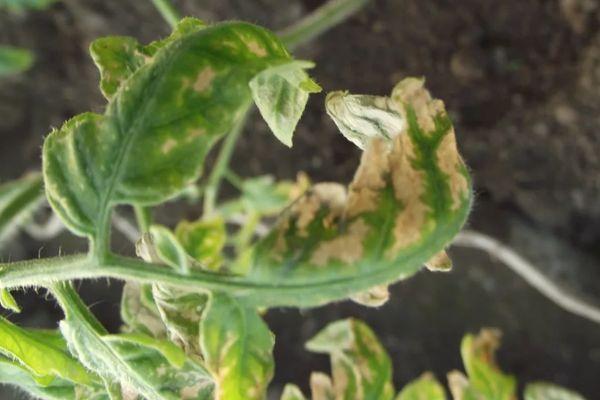
However, the plant should be protected from insects. The most dangerous pests that can harm Bear Paw tomatoes are:
- Colorado beetle;
- slugs;
- spider mite;
- mole cricket;
- aphid.
To prevent these insects from causing harm to the variety, biochemical preparations must be used at the first signs of their appearance.
Harvesting and storage
The Bear's Paw variety is characterized by a long fruiting period. The fruits typically first ripen in mid- to late July. The plant continues to produce new ovaries until autumn. Therefore, harvesting should be done periodically as the tomato matures.
The last produce is harvested before the first frost and sent for processing or storage. At this point, unripe fruits can be removed from the bushes, as they ripen perfectly well indoors.
Tomatoes should be stored in a dark, dry, well-ventilated location. The room temperature should not exceed 23 degrees Celsius, and the humidity should be 70%. If these requirements are met, fresh tomatoes can be enjoyed right up until the New Year.

A close look at the Bear's Paw variety reveals it to be a highly respected vegetable crop. With the right growing methods, this tomato can be grown anywhere in Russia. Regardless of the growing zone, it produces the same yield of tasty, nutritious, and healthy fruits.
Reviews
Natalia, Prokopyevsk: "Bear's Paw is one of my favorite varieties. I've been growing it for years now and am always pleased. The plant itself is easy to care for and is rarely susceptible to disease. The yield is also excellent. The marketable tomatoes sell out quickly. And the piquant flavor adds a unique twist to any dish."
Related posts:
 80 Best Eggplant Varieties for Different Regions with Descriptions and Characteristics
 What varieties of tomatoes are best to plant in a polycarbonate greenhouse?
 The best grape varieties for growing in the Urals, planting and care rules in summer
 Description and characteristics of the 60 best sea buckthorn varieties, how to choose depending on the region
 Description of the 90 best varieties of beans for open ground with names
 Description of 30 varieties and types of Muscat grapes, planting, cultivation and care
 Descriptions of the 20 best cherry varieties for the Moscow region, their planting and care
 Description of the Velika grape variety, cultivation and care tips