
Nightshade crops come in not only red but also yellow and orange varieties. The Monastic Trapeza tomato is a representative of the orange variety. It has excellent flavor and is suitable for fresh consumption and for use in salads, sauces, and lecho.
Orange tomatoes are more often recommended for dietary nutrition than others, this is due to the fact that they contain more sugar and dry substances, which are more easily absorbed by the vulnerable digestive system.
The Monastyrskaya Trapeza variety is a hybrid. It was developed by Siberian breeders and is included in the state register. When purchasing seeds, it's important to first read all the growing instructions. The packaging typically includes characteristics and a description of the variety. This will help gardeners avoid many problems and mistakes when caring for the plant.
Features of the variety
The Monastic Trapeza tomato is a determinate variety. A mature bush reaches about 1 m in height. Plants grown in greenhouses can reach up to 1.5 m in height.
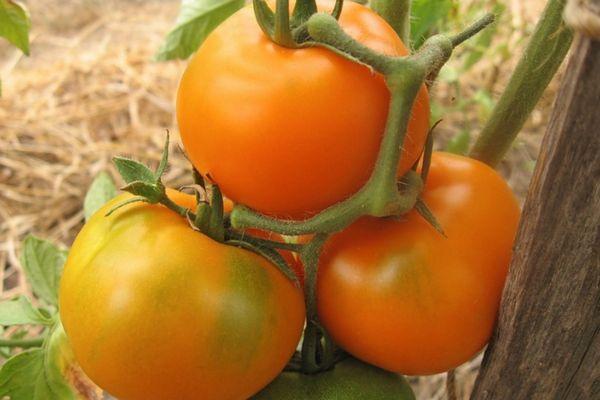
The bush has a sturdy trunk, densely filled with foliage. The leaves are regular in shape and dark green in color. The plant requires staking and pinching. It's best to train the bush into a single stem, which will prevent the plant from wasting energy on unnecessary stems. The Monastic Trapeza variety is mid-season. The first harvest can be collected within 110-125 days from the emergence of the first shoots.
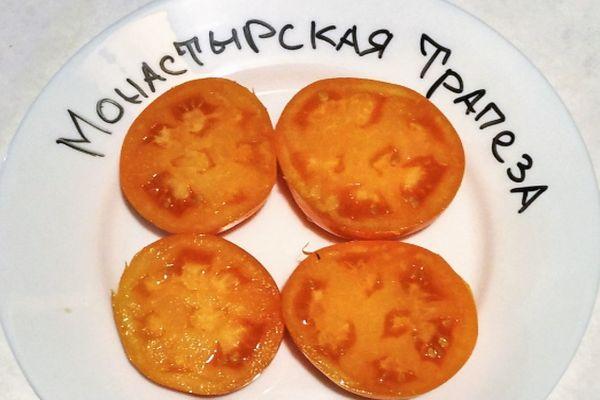
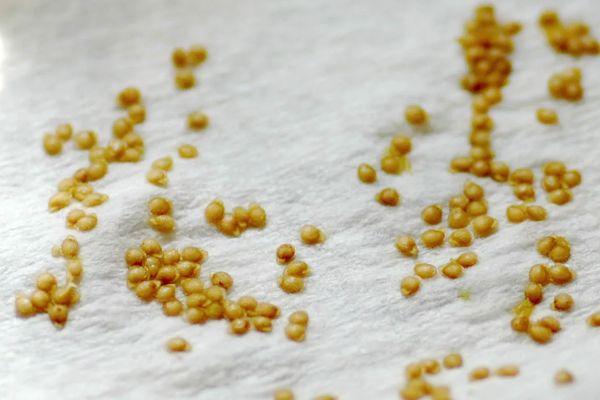
Nightshade fruits ripen evenly and uniformly. When ripe, they are a rich orange color. Their flavor is spicy, sweet, and not acidic. The flesh is firm and contains few seeds.
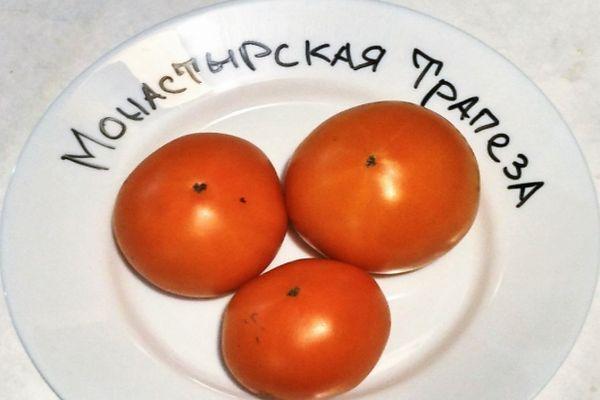
Monastery Trapeza tomatoes grow large, round, and smooth-skinned. Each fruit averages 150–250 g. With proper cultivation and ideal conditions, fruits can reach weights of up to 400 g.
A single bush can produce 6 to 9 tomato clusters. The Monastic Trapeza variety is highly productive. An average bush can yield approximately 10 kg of tomatoes.
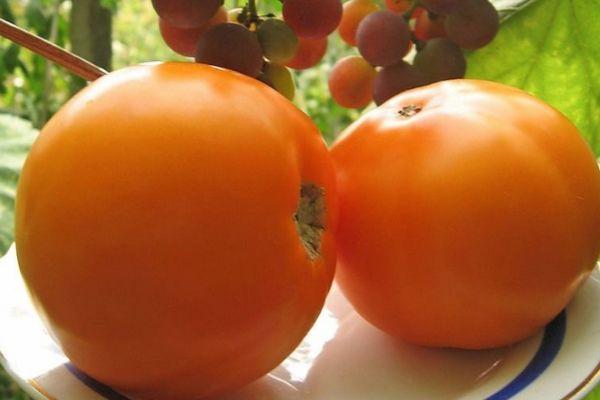
Experienced gardeners advise against overwatering, as this tomato variety is prone to cracking. The harvest has a short shelf life of 10-15 days, stored in a cool, well-ventilated area. It transports well over short distances.
The following advantages of this variety can be highlighted:
- Ideal for dietary nutrition. Recommended for people suffering from gastrointestinal diseases.
- It has a high yield throughout the season.
- The fruits are large, juicy and have excellent taste.
- Suitable for collecting seeds from parent bushes.
- It doesn't require much light or heat and tolerates minor temperature fluctuations well.
The following can be named as disadvantages:
- The plant has a weak immune system and is susceptible to fungi and pests, so it requires special care.
- The fruits are prone to cracking.
- The harvest does not last long.
- The plant needs to be shaped and tied up.
For lovers of the Monastic Meal tomato variety, these characteristics will not be an obstacle to harvesting an excellent crop.
Growing the Monastic Meal tomato
Before planting, seeds must be prepared. To do this, they are first soaked in a weak solution of potassium permanganate, then in a growth stimulant. Sowing occurs two months before planting in open ground. Seedlings are grown in a special container with pre-prepared soil.
To do this, mix one part soil with peat and river sand. After sowing, water the seedlings with settled, room-temperature water. Watering is best done with a spray bottle to prevent the seeds from being washed out of the soil. Store the seedling tray in a warm, well-lit area.
As soon as the sprouts develop two green leaves, you can begin transplanting. You can transplant the plants directly into peat pots, which will simplify the process of planting them outdoors.
The variety description indicates that the plant doesn't require much light, so a slightly shaded area of the garden can be chosen for planting. Plant the seedlings at a rate of no more than 4-5 plants per square meter.
Further care consists of regular watering, loosening, and periodic fertilization. It is important to regularly and promptly carry out preventive measures to prevent diseases and pests.

This variety has received good reviews and is generally not difficult to care for or grow.
Related posts:
 The best grape varieties for growing in the Urals, planting and care rules in summer
 80 Best Eggplant Varieties for Different Regions with Descriptions and Characteristics
 Top 40 DIY New Year's Baking Recipes for 2020
 Description and characteristics of the best seeds of pea varieties and types
 Descriptions of the 20 best cherry varieties for the Moscow region, their planting and care
 Description of the best ultra-early tomato varieties for open ground and greenhouses
 Description of the best potato varieties of domestic and foreign selection
 How to propagate and grow peas, cultivation technology, and care in open ground