
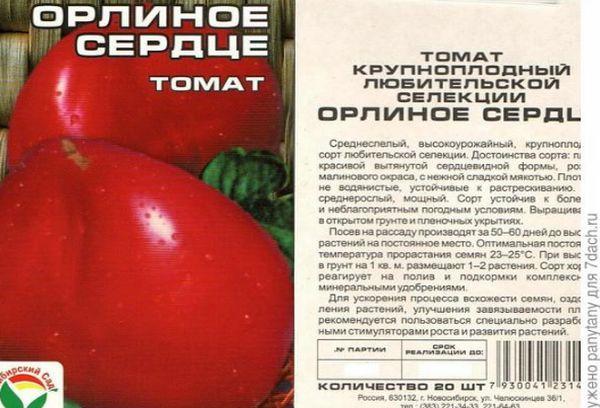
The Eagle's Heart tomato is a striking example of pink-fruited tomatoes. This plant produces large, juicy tomatoes that are perfect for eating fresh or canned, and are ideal for making juices and pastes. If you'd like to try your hand at growing this tomato variety, we recommend familiarizing yourself with the basic rules for growing and caring for the plant.
Description of the variety
The tomato is classified as an indeterminate variety with a mid-season ripening period. The plant's characteristic feature is its ability to grow indefinitely, with bushes reaching an average height of 1.8 meters. This garden crop can be grown in greenhouses and outdoors; when grown outdoors, the shoots are slightly shorter.
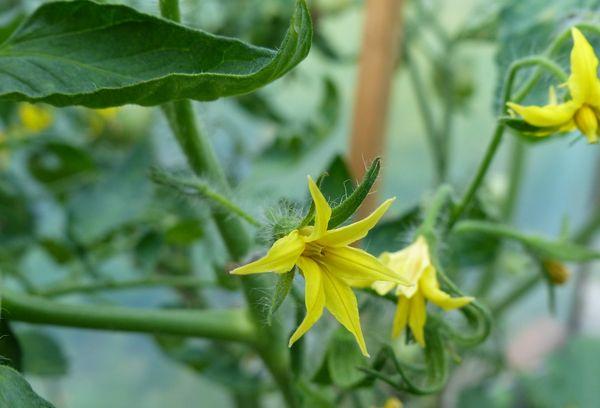
The Eagle's Heart variety has a thick, robust stem with numerous offshoots bearing medium-sized, light-green leaves. The plant produces flower stalks with pale yellow inflorescences. The first cluster typically consists of seven flowers and appears above the seventh leaf. Subsequent clusters form every two nodes. A unique feature of this variety is that not all of the flowers eventually develop into tomatoes.
On average, one bunch contains 3 to 4 fruits. The exception is the first few shoots, which tend to have more fruits.
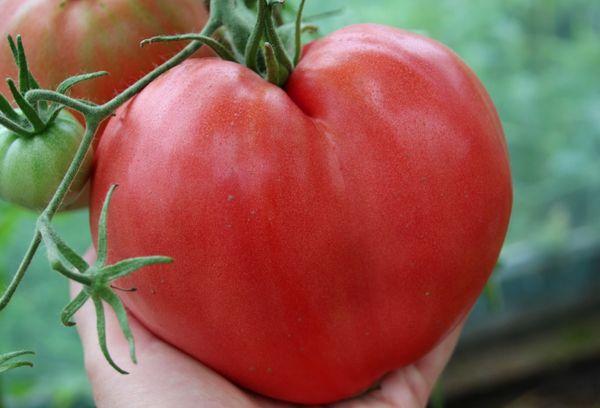
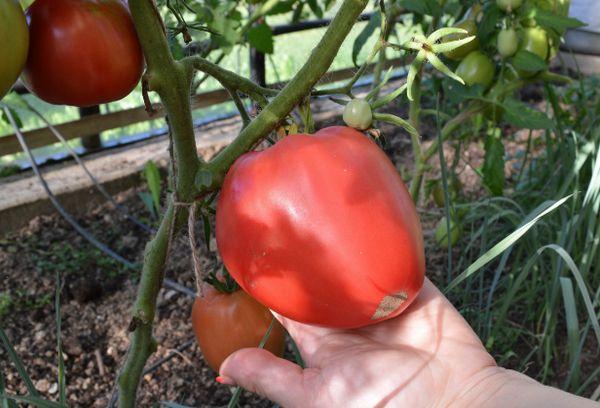
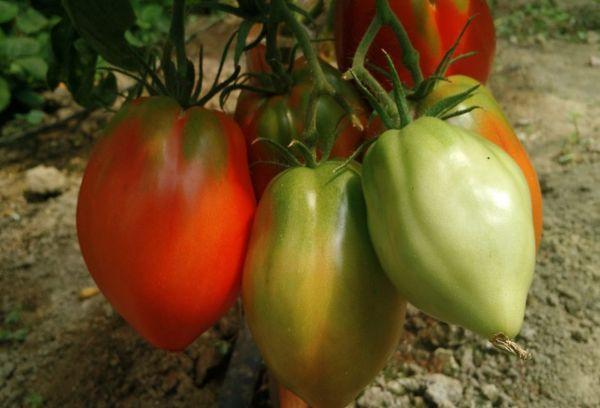
The plant produces large fruits, the weight of which varies from 800 to 1000 grams. Yield per 1 m2 The average tomato yield is 8 to 13 kg. The tomatoes' heart-shaped appearance gives the variety its name. Gardener reviews confirm the juiciness and fleshiness of the fruit, with a distinctively sweet tomato flavor. The tomatoes contain a small amount of seeds. Despite their thick skin, they are not prone to cracking.
Growing
The plant is grown using the standard seedling method. The seedlings are planted 60 days before transplanting to their permanent location. In most cases, this process begins in late March and continues until the first week of April.
Fertile, loose soil is prepared for sowing. When preparing the soil yourself, mix equal parts of soil, humus, and peat moss, adding a small amount of wood ash. To disinfect the soil, pour boiling water over it and then water it with a weak solution of potassium permanganate.
Before sowing, check the seeds for germination. To do this, prepare a 5% saline solution and soak the seedlings in it. Any defective seeds will float to the surface and should be discarded. Rinse the remaining seeds in clean water. It is recommended to treat them with a pink solution of potassium permanganate. To do this, soak the seeds in the pink solution for 12 hours.
When planting in containers, leave at least 3 cm between holes. Seeds should be planted no more than 1 cm deep into the soil. Once finished, cover the containers with plastic wrap and store them in a bright location. A temperature of +25°C is considered optimal for growing. C. When seedlings emerge, remove the film. After 2 or 3 leaves appear, transplant the seedlings. This should be done no later than 18 days after germination.
Transplantation to a permanent growing site is carried out at the end of May or in early June, depending on the climate of a particular region. Per 1 m2 No more than 2 bushes are planted, otherwise the plant will experience a lack of space and the yield will decrease.
Care Features
The plant requires regular watering, weed removal, and fertilization. It is recommended to train the bushes into 1 or 2 stems. After planting, tie the bushes to provide support.
Tomatoes are fertilized with complex fertilizers, mullein infusions, and chicken manure. Good nutrition is ensured by treating the plants with a settled solution of mown grass.
Avoid overfeeding the bushes, as this will result in too many shoots and a small number of fruits, meaning the plant will spend all its energy on forming green mass.
Tomatoes should be watered with warm water, otherwise the plant will slow down its growth and may drop its ovaries.

Advantages and disadvantages
This mid-season variety with an extended fruiting period is ideal for harvesting raw materials for various winter preserves. Description of the variety's advantages:
- decent yield indicators;
- no tendency to crack;
- ability to be stored for a long time without losing taste;
- resistance to many tomato diseases;
- good ability to withstand temperature changes and stressful situations.
The variety's drawbacks include its demanding soil conditions. This crop produces a large amount of foliage, which requires time and effort to remove. Growing this variety requires experience with nightshades, so it can be quite challenging for novice gardeners.
Pests and diseases
This tomato variety is resistant to many diseases of the nightshade family. It is resistant to late blight, gray and brown rot, mosaic, and early blight. However, basic care and preventative measures should be followed. Before planting, the soil is treated with a solution of potassium permanganate and a small amount of ash is added.
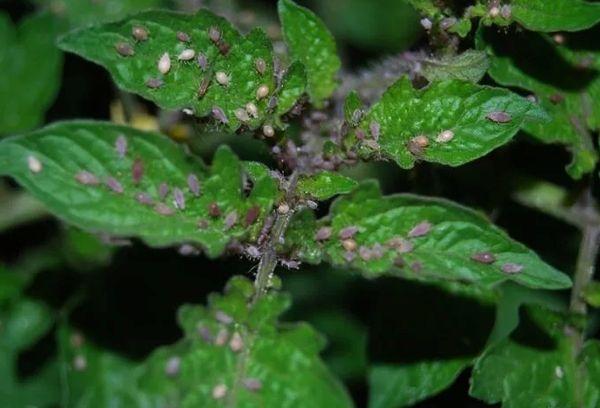
During the growing season, spraying with Fitosporin is recommended. Potassium permanganate, iodine, or copper-based solutions can be used as disease prevention solutions.
Harvesting and storage
Tomatoes are harvested as they ripen. Eagle's Heart tomatoes can be eaten fresh, used in first and second courses, and in sauces. Their large size allows for quick preparation of winter preserves such as lecho, pastes, and juices. Thanks to their excellent shelf life, they can be enjoyed long after the gardening season ends.
You can harvest not only fully ripe tomatoes, but also brown tomatoes. These tomatoes ripen easily when placed in a cool, dark place. To do this, place the tomatoes in small boxes, stacking them in no more than two layers. The tomatoes should be placed close together, and to speed up ripening, it's recommended to place one or more red tomatoes among the green ones.
Gardeners' reviews
Anastasia, 47 years old:
"We've been growing Eagle's Heart for three years, and we have no plans to give up on this variety. The distinctive qualities of the fruits are their large size, lack of defects, and the fleshiness of the tomatoes. The lower clusters produce tomatoes weighing up to 800 kg, sometimes more. I'm also pleased with the absence of diseases and the consistent yield."
Alexander, 34 years old:
"I planted and tried growing this variety for the first time. I chose it because I have a penchant for large tomatoes, but the Orliny variety exceeded all expectations. Each cluster produced an average of 4 to 5 large tomatoes. The flavor is excellent, the flesh is juicy and not sour. Due to the large number of shoots, I recommend training the bushes into a single stem; the plant requires staking."
Related posts:
 The best eggplant varieties for growing in a polycarbonate greenhouse: planting and care
 The best grape varieties for growing in the Urals, planting and care rules in summer
 How to propagate and grow peas, cultivation technology, and care in open ground
 Description of 30 varieties and types of Muscat grapes, planting, cultivation and care
 Description of the Velika grape variety, cultivation and care tips
 Descriptions of the 20 best cherry varieties for the Moscow region, their planting and care
 Description and characteristics of the best seeds of pea varieties and types
 How to properly plant peas in a greenhouse and open ground