
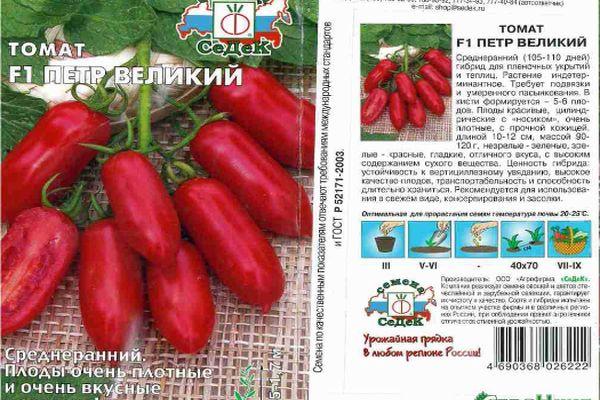
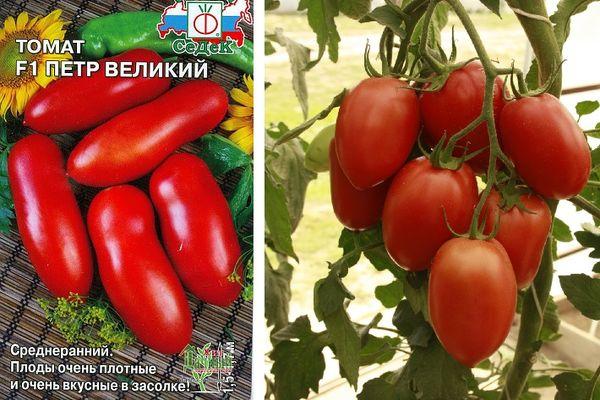
Tomato Peter Velikiy F1 is intended for cultivation in closed-field conditions (tunnels, greenhouses) throughout Russia. The State Register of Vegetable Crops registered the hybrid in 2015. The berries of this tomato are consumed fresh, in salads, canned, dried, and used to make sauces, juices, and tomato paste. The variety withstands long-distance transportation well.
Technical data of the plant and fruit
The characteristics and description of the Peter the Great variety are as follows:
- This hybrid belongs to a group of plants with a medium ripening period. It takes 100-110 days from the emergence of seedlings to the first fruits.
- Vigorous bushes reach a height of 180-200 cm. Tomatoes require pinching at the growing points and crown. If this is not done, the bushes will continue to grow until the end of the growing season.
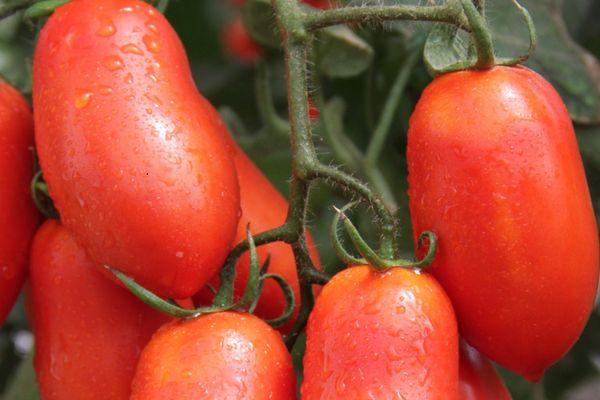
- Tomatoes of this variety are elongated, up to 120 mm long, with a "nose" at the end. Ripe fruits are vibrant shades of red. The flesh is dense, with a high dry matter content.
- The berries weigh between 0.1 and 0.12 kg. The skin protects the fruit from cracking.
Reviews from gardeners who have grown and planted this hybrid indicate that the average tomato yield is 8-9 kg of berries per square meter of garden bed. However, farmers note that the bushes require sturdy support, such as wooden stakes or plastic equivalents.
The hybrid has increased resistance to viral and fungal infections. However, experts recommend disease prevention by treating the bushes with special preparations, such as Fitosporin.
How to grow hybrid seedlings?
After purchasing the seeds and disinfecting them in hydrogen peroxide, a weak solution of potassium permanganate, or aloe vera juice, plant the seeds in boxes. Fill the boxes with a general-purpose tomato soil. You can also use homemade soil consisting of equal parts peat, soil, and sand.
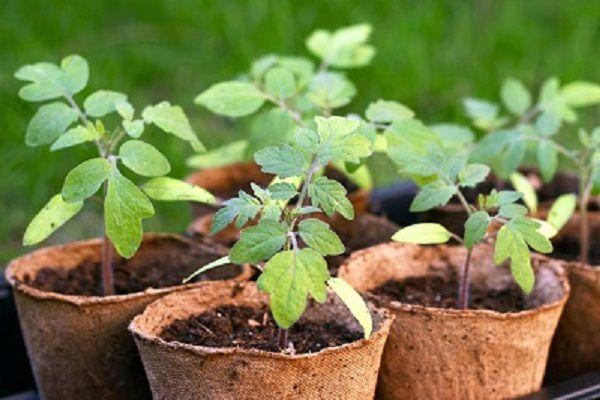
Before planting the seeds (during the first ten days of March), it is recommended to treat the soil in the boxes with a weak solution of potassium permanganate. Each seed is buried 10-20 mm deep, after adding organic fertilizer (manure, humus). Then, water the soil generously with warm water.
After the seedlings sprout, they are moved to a well-lit location. The young bushes are fed with nitrogen fertilizer. When one or two leaves appear on each shoot, they are pricked out.
The bushes are transplanted into the greenhouse, into permanent soil, when they are 60 days old. This usually occurs in mid-May. The soil in the greenhouse complex or tunnel is prepared in the fall. To do this, remove 45-50 mm of topsoil and bring it to the garden. The beds are filled with soil from the areas where carrots previously grew. Well-rotted manure is added to the soil (1 bucket per square meter of the bed). Then superphosphate is added (1 tablespoon per square meter). The bed is dug over, without breaking up clods of soil.
There are 2 ways to form a tomato of the described type:
- 3 bushes are placed per m², and then they are formed into 2 stems;
- In the specified area, plant 4 bushes densely, forming them into 1 stem.
To obtain a good harvest, it is recommended to remove side shoots and pinch off the tops of the bushes.
Caring for tomato bushes
After planting the seedlings, the beds are loosened and nitrogen and organic fertilizers are added to the soil. This is done for the first time 10 days after planting the bushes in permanent soil. For this, a mullein infusion is prepared. The resulting solution is then diluted with water at a ratio of 1:10. According to farmers, one bucket of the solution is sufficient for 10-15 bushes. One tablespoon of superphosphate can be added to the mixture.
Subsequent fertilizing is carried out during flowering and fruiting. For this purpose, complex mineral fertilizers containing nitrogen, phosphorus, and potassium are used. In mid-August, breeders recommend spraying the bushes with boric acid. The solution is prepared by diluting 2-3 grams of the substance in a bucket of water.
Loosen the soil under the bushes 1-2 times a week. This helps oxygen reach the plant roots. Loosening also kills some parasitic insects and their larvae that settle on the hybrid's root system.
Weeding prevents the development of late blight and some other diseases.
It's recommended to water the plants with warm water that's been left in the sun, before sunrise or after sunset. This procedure is recommended twice a week, after the soil beneath the bushes has completely dried out. Excessive moisture can ruin the hybrid, so it's important to ventilate the greenhouse regularly.
If garden pests appear on the hybrid's leaves, spray the bushes with chemicals that kill insects, their larvae, and various caterpillars. Instead of industrial pesticides, some gardeners use folk remedies, such as watering the bushes with a copper sulfate solution.
Related posts:
 The best grape varieties for growing in the Urals, planting and care rules in summer
 Technical data for the Sharada tomato and how to grow it yourself
 How to propagate and grow peas, cultivation technology, and care in open ground
 The best eggplant varieties for growing in a polycarbonate greenhouse: planting and care
 When and how to properly transplant tomato seedlings, the best days in 2025
 Description and characteristics of the best seeds of pea varieties and types
 Description of the Talalikhin 186 tomato, technical data and growing instructions
 Description and characteristics of the Chocolate tomato variety, cultivation technology