
In addition to the usual fungal diseases, tomatoes are also affected by microorganisms called mycoplasmas. These cause tomato stolbur, which can be controlled by protecting the beds from insect pests. Insects are the vectors of the pathogen, which attacks all nightshade crops.
What is tomato stolbur?
Stolbur, or phytoplasmosis, is an infectious disease that is dangerous at any stage of plant development. Phytoplasmosis affects the growth of young tomatoes, causing sterility in blossoms and can leave gardeners without a tomato crop by damaging the ovaries. Tomato varieties have no genetic protection against stolbur, so preventing its occurrence on plantations is crucial.
The causative agent of stolbur, mycoplasma, overwinters in the rhizomes of perennial herbaceous plants (bindweed, plantain, sow thistle), some of which can be considered garden weeds, but some are considered useful plants.
It is impossible to destroy thickets of wild perennials, so the disease affects vegetable gardens quite often, and during periods of peak leafhopper reproduction (once every few years), most vegetable growers living in the risk zone suffer from it.
Stolbur is primarily found in the southern regions of Russia: Krasnodar Krai and Rostov Oblast. However, due to warm winters, disease vectors (leafhoppers and some species of bugs) can also spread to further north (as far north as Samara Oblast). Some of these vectors are quite capable of migrating with early fruit and vegetable produce, causing occasional outbreaks in other regions.
The pest season begins in late May. At this time, cicadas actively feed on wild plants, as gardens are not yet being planted. Mycoplasmas from infected weeds enter the insect's digestive tract and survive without causing harm to the host. Mass reproduction of the insects occurs in early July.
As the garden beds fill with young crops, cicadas move on to attractive tomatoes, peppers, or potatoes. As the insects attempt to suck the sap from these crops, the microbes are able to penetrate the cells of the garden plants. The first signs of the disease can be seen within 3-4 weeks of infestation.
Phytoplasmosis does not persist in tomato seeds, even from diseased plants. When purchasing seeds from stores or distributors of rare varieties, there's no need to worry about stolbur appearing in your garden. If there are no infected weeds in the area, and the insects that carry the disease aren't common, the disease won't harm your tomato or pepper crops.
How to identify signs of the disease?
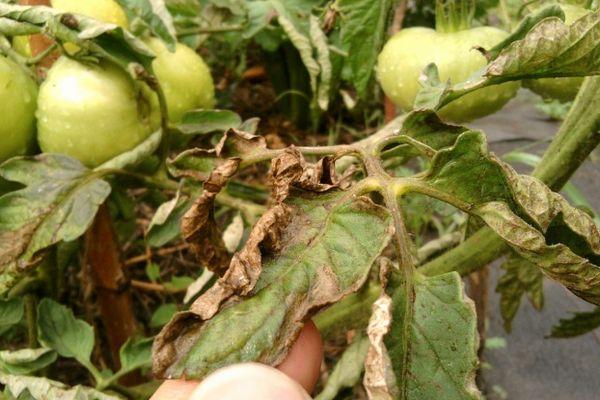
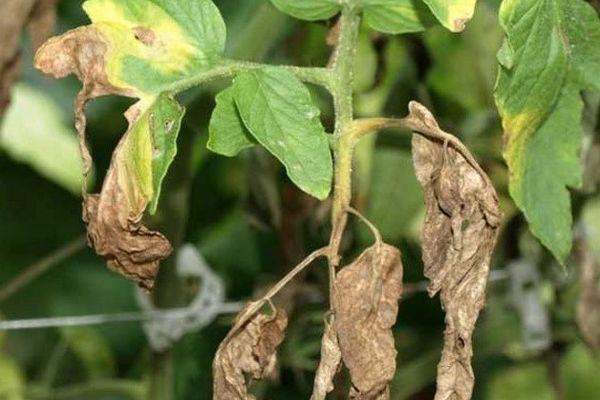
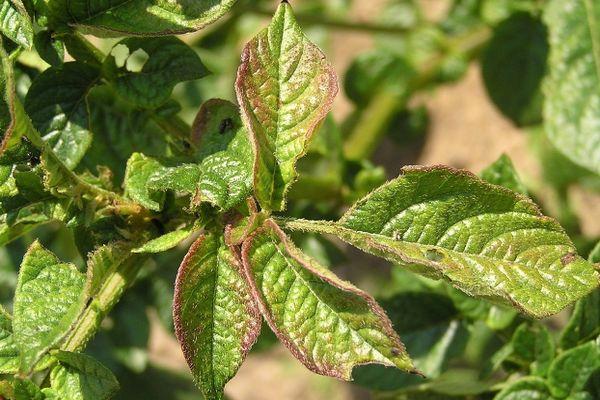
Tomatoes affected by stolbur have a distinctive appearance: the leaves lose their green color, turn yellow, and, as the disease progresses, become deformed. The edges of the leaf blades can be mistaken for dried out ones, as they take on a pinkish or purple tint and tighten the leaflet into a boat-like shape or curl.
The next leaves on this plant grow small and just as deformed, and the distance between them decreases.
The affected plant's root system appears cracked and covered with a brownish crust. When cut, the root appears woody.
When tomato stolbur spreads to flower clusters, it also attacks the flowers. Petals may become fused, deformed, or appear stunted. They are discolored or have a green tint, with dark purple stripes appearing along their edges. The sepals become longer than the petals, the stamens shorten, and the pistil becomes virtually invisible. These flowers remain sterile, and ovaries fail to form on the diseased cluster.
If stolbur appears after the formation of fruits on several lower brushes, the tomatoes on them grow and ripen normally, but the next brushes either do not form ovaries at all (if they only had flowers), or the tomatoes grow sickly (if the ovaries were small).
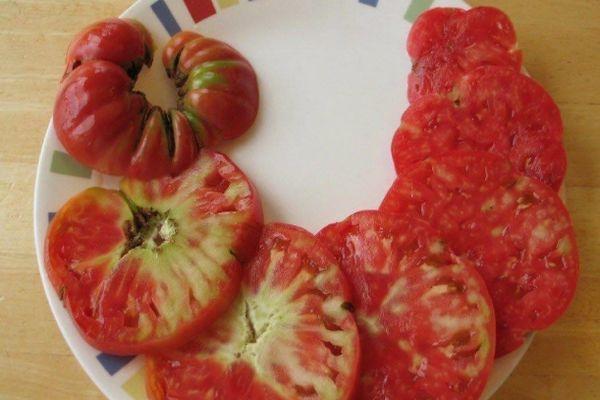
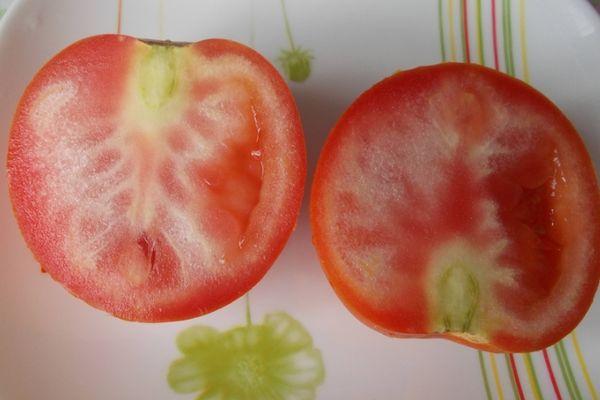
A fruit affected by stolbur will never have the color typical of a ripe tomato, depending on the variety. These tomatoes appear unripe, with pale spots and stripes. When cut, pale and overgrown vascular tissue is visible in the tomato walls, and the flesh becomes tough and tasteless. The tomato completely loses its nutritional value and becomes unfit for consumption.
Take a look Also
 Diseased tomatoes can no longer be saved. Bushes infected with stolbur must be immediately removed from the garden bed and burned to prevent them from spreading the disease to neighboring plants. Bushes that are still healthy should be sprayed with Fitoplasmin according to the manufacturer's instructions. The treatment should be repeated after 7-12 days. To restore the beneficial microflora (soil bacteria) destroyed along with the pests, a special preparation called Extrasol is added to the soil 4 days after treatment with Fitoplasmin.
Preventive measures
The main requirement is to keep the area clean. Particular attention should be paid to eliminating perennial weeds, in whose roots mycoplasmas can overwinter. To get rid of them, you can use products like Roundup, spraying emerging weeds before planting garden crops. However, this measure will not completely protect the garden from pests flying in from the surrounding meadows.
If the plot is located in a high-risk area for disease vectors, the garden can be planted around the perimeter with curtain plants. These plants are typically sunflowers or corn. Tall crops will prevent insects from entering the plot during the migration season.
The primary protection measure is spraying seedlings and young plants to protect them from attack by sucking pests that can carry mycoplasma. Treatment is carried out according to the following schedule:
- seedlings aged 25-30 days are sprayed with preparations Confidor, Mospilan, Aktara, etc., intended to combat sucking pests;
- the same treatment is repeated before planting the seedlings in a permanent location;
- in a greenhouse and in open ground, 1 week after transplanting young plants, spray the beds again with Fufanon, Actellic, Decis, Citcor or similar preparations;
- in years of strong reproduction of leafhoppers, in dry warm weather, spraying is repeated every 7-10 days;
- Before the first fruits ripen, stop using pesticides; tomatoes should be sprayed with Farmayod and the treatment repeated after 7-10 days.
When treating tomato plantings, it's advisable to also spray nearby perennials (for example, in flower beds). Some of these plants also harbor phytoplasma vectors, causing aster yellows and similar infections. Tomato safety can only be ensured through a comprehensive approach, eliminating the root cause of the disease: the presence of plants and insects that serve as the breeding and transmission sites for pathogens.
Related posts:
 What is the best way to feed tomato seedlings to make them plump?
 What fertilizers and when to use for feeding tomatoes in a greenhouse
 What is the best way to mulch tomatoes in open ground and greenhouses?
 How to prepare tomato seeds for planting seedlings
 The best and most productive tomato varieties for greenhouse cultivation in the Urals, with descriptions
 Description and characteristics of the best indeterminate tomato varieties for greenhouses
 How to prepare soil for tomato seedlings yourself
 What varieties of tomatoes are best to plant in a polycarbonate greenhouse?
I saw stolbur in open ground. It looks like phosphorus deficiency.