
The Babushkino tomato, whose variety description indicates a mid-season ripening period, is distinguished by its long and abundant fruiting, as well as its unique flavor. The plant easily adapts to temperature fluctuations and is immune to nightshade diseases.
Benefits of Tomatoes
The Babushkino tomato variety is a hobby selection and is not included in the State Register. This tomato has a medium ripening period, beginning to bear fruit 100-120 days after germination.
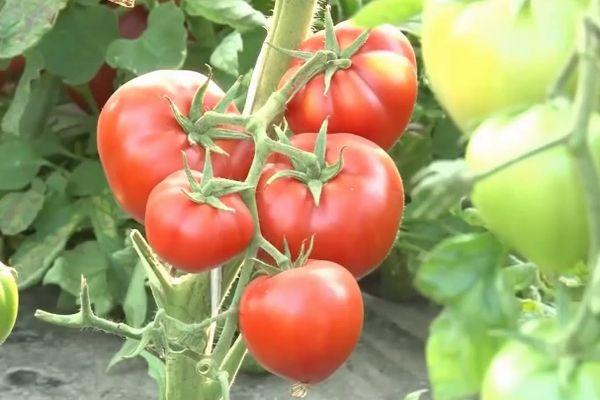
Indeterminate bushes reach a height of 220 cm during the growing season. The plant has branched stems, simple flowers, and leaves. It is suitable for growing outdoors in warm climates and in greenhouses.
Vegetable growers' reviews indicate that the Babushkino tomato variety produces fruit for a long period. To increase yield, it is recommended to plant the plants in 2-3 stems, removing excess shoots and tying them to a support.
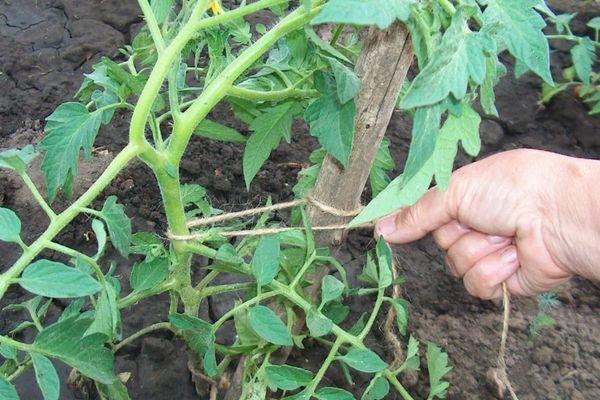
The variety's characteristics and description indicate the plant's ease of cultivation. The crop is resistant to diseases and low temperatures.
The crop's yield depends on the degree of fruit set. Tomatoes are not hybrid varieties that can grow without pollinators, so tomato plants must be pollinated by hand.
Dutch tomato growing technology Indoor pollination involves pollination within the greenhouse using insects. They are specifically released into the room where they perform pollination work.
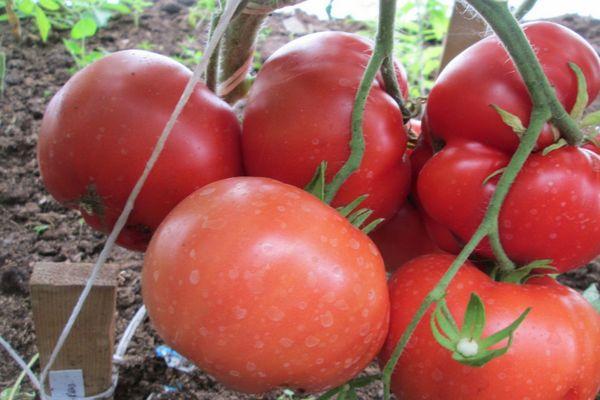
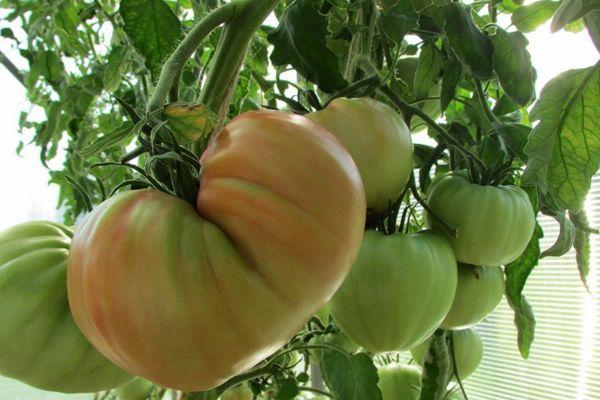
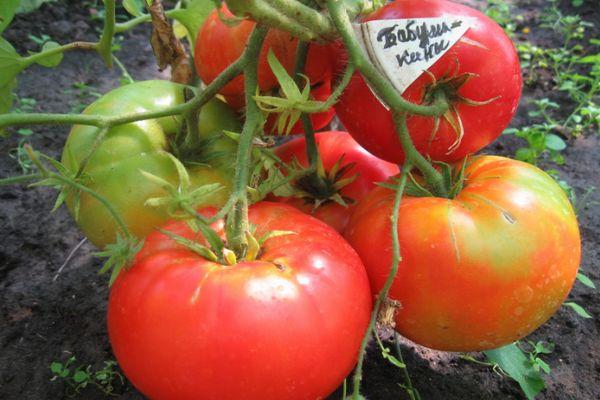
Babushkino tomatoes produce numerous ovaries; up to 12 fruits ripen in clusters, each weighing 300-800 g. The tomatoes are round, slightly flat, with a glossy surface, sometimes with slight ribbing near the stem. At technical maturity, the tomatoes acquire a red color with a pink tint.
The Babushkino tomato, whose description is based on the characteristics of the fruit, is distinguished by the small number of seeds or the absence of any in the first ripe tomatoes. The tomato has firm, fleshy flesh, a bright red color, and a sweet, slightly tart flavor.
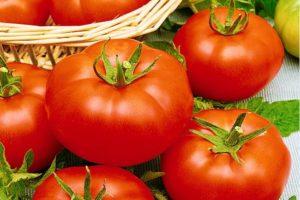
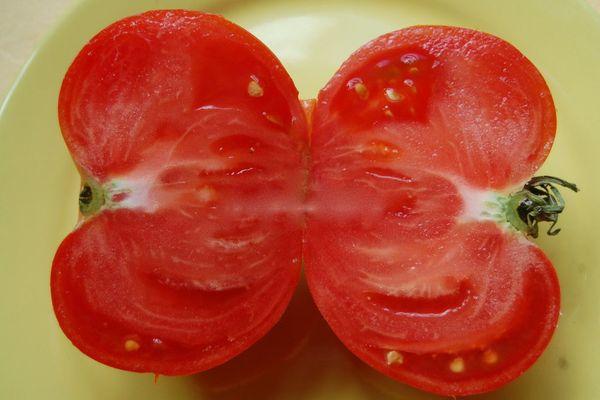
In cooking, tomatoes are used to make fresh salads and sauces. Reviews from food connoisseurs attest to the exquisite flavor of tomato juice made from this variety's fruits.
Thanks to their high dry matter content, tomatoes can be stored for a long time. Harvested tomatoes withstand long-distance transportation well.
Agricultural technology for tomato cultivation
The Babushkino tomato variety is grown from seedlings. Seeds are sown for seedlings 45-60 days before the expected planting date. The seedlings are transplanted into protected ground in mid-May and into the garden in early June.
Before planting, treat the seeds with an aloe vera water solution and a growth stimulant. Sow the seeds in warm, prepared soil. For proper seedling development, select soil with a loose structure, well-fertilized with organic matter, and moisture-retaining properties.
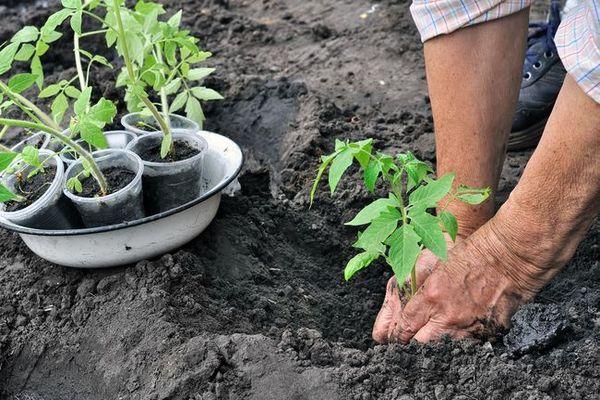
The seeds are placed in containers at a depth of 1 cm. After watering with warm water, the container is covered with glass until the sprouts emerge. Water the plants as the top layer of soil dries.
Tomato seedlings respond well to mineral fertilizers. During the seedling formation period, it is recommended to apply complex preparations 2-3 times.
When two true leaves have formed, the seedlings are pricked out into individual pots. Before planting the tomatoes in their permanent location, harden them off. This procedure is used for seedlings with six to eight true leaves.
When choosing a site for tomatoes, consider crop rotation. The best predecessors are cucumbers, carrots, and zucchini. Organic fertilizer is added to the prepared holes. When planting in a permanent location, it is recommended to space the plants 50-60 cm apart.
The first couple of weeks after planting, the plants adapt to the new conditions. Once the bushes have established themselves and new leaves appear, they can be fertilized and watered.
Sometimes, during the growing process, vegetable growers encounter yellow "shoulders" on the fruit. This is a sign of a nutritional deficiency. In this case, it's necessary to apply a fertilizer containing potassium and magnesium to ensure uniform ripening of subsequent fruits.
High yields are achieved with adequate nutrition. Tomatoes are prone to cracking if exposed to excess moisture. Tomatoes are difficult to propagate due to their small seed production.
Care for this plant involves periodic loosening of the soil, hilling of the bushes, and weed removal. This variety is virtually immune to fungal diseases. For preventative purposes, the bushes are treated with copper-containing preparations.
Related posts:
 Description of the Babushkino Lukoshko tomato and characteristics of the variety
 The best and most productive tomato varieties for greenhouse cultivation in the Urals, with descriptions
 The best eggplant varieties for growing in a polycarbonate greenhouse: planting and care
 The best grape varieties for growing in the Urals, planting and care rules in summer
 Description and characteristics of the sweetest tomato varieties for greenhouses and open ground
 When and how to properly transplant tomato seedlings, the best days in 2025
 Beginner's Guide to Growing Grapes in Open Ground in Central Russia
 Description and characteristics of the best seeds of pea varieties and types
The variety is excellent, I really like it, it doesn’t require any special care, it’s undemanding to conditions, but last year I noticed that after I fertilized it BioGrow, the harvest became much better.