
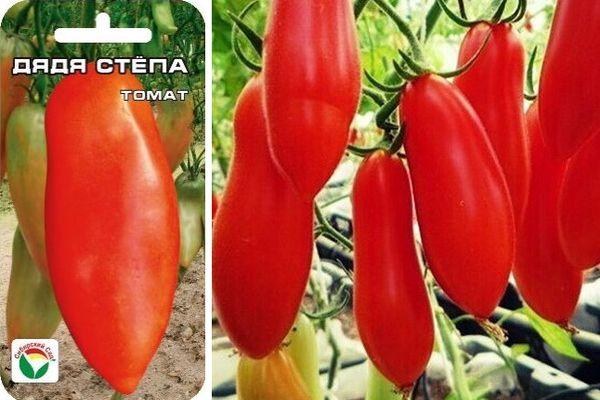
The cluster tomato "Uncle Styopa" was bred by Siberian agrobiologists. Its elongated, red fruits are distinguished by their excellent flavor and are suitable for canning and fresh consumption.
Advantages of the variety
The "Uncle Styopa" tomato is included in the Register of Breeding Achievements. This tomato with universal characteristics was developed by Russian breeders in 2008.

Tomatoes of this variety contain unique compounds (acids, antioxidants, starch), vitamins PP, K, and provitamin A. Tomatoes are rich in trace elements of potassium, iron, phosphorus, magnesium, and sodium.
Vegetable growers' reviews indicate good results in the southern regions of the country. Its easy adaptation to weather conditions has made it possible to cultivate the variety in the northern regions.
The characteristics and description of the Uncle Styopa variety indicate that it can be grown both indoors and outdoors. This indeterminate bush can reach a height of 180-250 cm during the growing season.

Plants with medium-sized, intensely green foliage. This mid-early variety begins bearing fruit 115 days after germination.
The plant forms simple inflorescences, with 3-5 tomatoes forming and ripening in a single cluster. The average yield per bush reaches 8 kg of fruit, with the maximum berry weight reaching 300 g.
The fruit's description focuses on its taste and appearance. The tomatoes are elongated, cylindrical, slightly curved, and slightly flattened like bananas, reaching 20 cm in length. When cut horizontally, three to five chambers containing seeds are visible.
Tomatoes have thin skin, firm flesh, and a starchy core. They are not considered juicy due to their low water content.
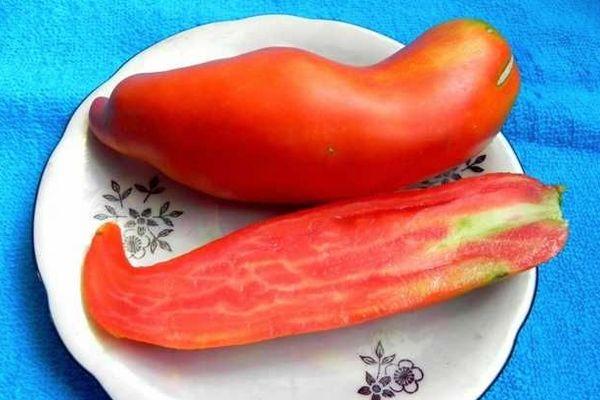
At technical maturity, the fruits acquire an intense red color. The tomatoes have a bright aroma and a sweet taste.
This variety is resistant to most nightshade diseases. The tomatoes withstand long-distance transportation well and retain their flavor during long-term storage. They are not prone to cracking during growth.

In cooking, tomatoes are used fresh, for making purees, pastes, sauces, and juices. This variety is suitable for canning and pickling. The fruits have proven themselves excellent in quick freezing for the winter.

Agricultural technology for tomato cultivation
The plant prefers to be grown from seedlings. Sow the seeds 60-65 days before the expected time of planting in a permanent location. To obtain strong seedlings, plant the seeds at a depth of 1-1.5 cm.
To ensure uniform germination, treat the seeds with an aloe vera water solution and a growth stimulant. It is recommended to prepare a separate peat pot with substrate or potting mix for each plant. After sowing, water with warm water using a spray bottle.
For normal seedling development, a temperature of 22 to 24°C and optimal lighting are required. After germination, the plants are moved to a light source. Fluorescent lamps are used to extend daylight hours.
Water the seedlings as the top layer of soil dries out. Excess moisture can trigger abnormal growth. Experienced vegetable growers plant the seedlings after the first flower stalk has formed.
Hardening off seedlings before planting is recommended. To do this, place the plants outdoors for 30 minutes a day, gradually increasing the time over 7-10 days to several hours.
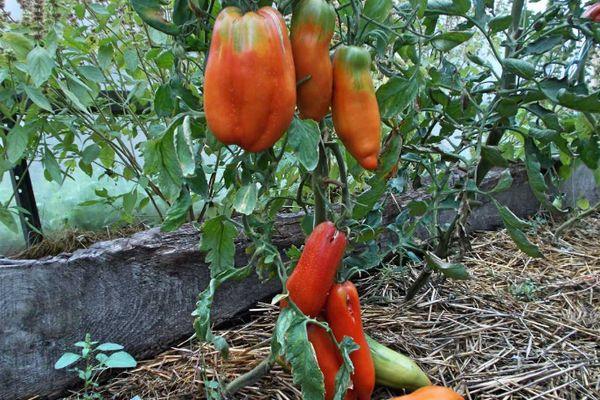 It is recommended to place no more than 3 bushes per 1 m². Tall tomatoes require regular care. To increase yield, it's recommended to grow the plant with 1-2 stems. The plant requires tying to a support or trellis, and removing excess shoots.
Growing the Uncle Styopa variety requires adherence to a system of agricultural practices. Regular hilling and loosening of the soil are performed to stimulate root development.
The crop is watered at the roots as needed. To minimize the time spent weeding, mulching the soil is recommended. Straw and non-woven fiber are used as mulch.
The Uncle Stepa variety requires fertilizing with complex fertilizers at least once every 10 days.
Related posts:
 The best grape varieties for growing in the Urals, planting and care rules in summer
 Methods for planting and propagating cherries at home
 The best methods for growing grapes from seeds at home
 80 Best Eggplant Varieties for Different Regions with Descriptions and Characteristics
 Description and characteristics of the best seeds of pea varieties and types
 Description of the Velika grape variety, cultivation and care tips
 Descriptions of the 20 best cherry varieties for the Moscow region, their planting and care
 Description of the best potato varieties of domestic and foreign selection