
The Kupets tomato, whose characteristics and description indicate it can be grown in greenhouses and open ground, is highly productive. It is resistant to viral and fungal diseases.
Advantages of a hybrid
The Kupets F1 tomato is included in the State Register of Breeding Achievements as a variety recommended for cultivation in extended crop rotations. The hybrid is grown in both open and protected soil.

A mid-early variety, the tomato begins to bear fruit 82-127 days after sprouting.
A semi-determinate bush with a medium number of branches. The leaves are green, with a glossy, slightly corrugated surface. The first inflorescence forms at the 9th leaflet, with subsequent flower stalks spaced at intervals of 1-2 leaves.
The fruits are flat, round, smooth, and have firm flesh. Unripe tomatoes are light green; at biological maturity, they turn red. A horizontal cut reveals four or more chambers containing seeds.
Fruit weight is 114-150 g. The variety yields 11.1-14.2 kg per 1 m². When grown in glass greenhouses, the yield is 40-45 kg per 1 m².
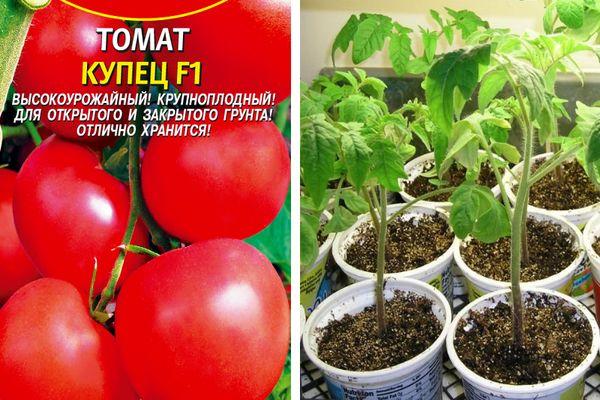
Reviews from vegetable growers indicate the excellent taste of the tomatoes and the hybrid's resistance to viral and fungal diseases of nightshade crops.
The variety's value lies in its high productivity and the ability to transport tomatoes over long distances. At room temperature, the fruits retain their flavor for up to three months.
Characteristics of varieties with similar names
The Kupets-Molodets tomato belongs to the beefsteak group. This early-ripening variety begins bearing fruit 105-110 days after germination. The determinate bush reaches a height of 90-100 cm during the growing season.
Ripe tomatoes lack the characteristic spot near the stem. Fruits weigh up to 400 g. They have fleshy flesh and a high dry matter content. When cut horizontally, chambers containing a small number of seeds are visible.


The variety yields 8.5-12 kg per square meter. In cooking, tomatoes are used fresh. Care involves moderate watering and weeding. It is recommended to loosen the soil to create a balance of moisture and air around the root system.
Plants are grown in 1-2 stems, and excess shoots and old lower leaves are removed. To increase immunity to late blight, preventative treatments of bushes are carried out.
The early-ripening Kupechesky tomato ripens 101-110 days after germination. This low-growing variety forms a 60 cm tall bush during the growing season. It is intended for outdoor cultivation and requires staking.
The clusters produce 6-8 ripening tomatoes, weighing 120-140 g. The tomatoes are deep red, round, and glossy. This variety is resistant to late blight, a distinct advantage of the Kupechesky tomato.
The fruits are used for fresh consumption, processing into sauces and juice. When canned, the tomatoes retain their shape.
Cultivation techniques
Before planting, it is recommended to treat the seeds with an aloe vera water solution and a growth stimulant. At temperatures between 25 and 27°C, sprouts emerge in 7-10 days. Hybrid seeds have a thick seed coat, which reduces germination energy, and at lower temperatures, germination rates decrease.
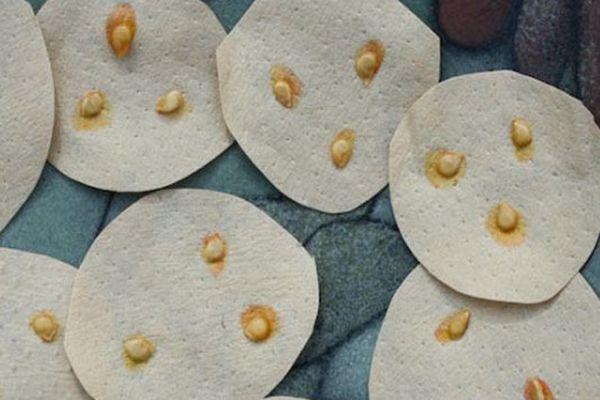
The soil mixture is prepared in advance and includes:
- peat;
- wood sawdust;
- sand;
- crushed charcoal;
- lime.
The prepared soil is poured into containers, lightly compacted, and watered with warm water. Furrows 1 cm deep are made on the surface and the seeds are planted 1-1.5 cm apart.
After sowing, add a 0.5 cm layer of nutrient mixture on top, and cover the container with plastic wrap until seedlings emerge. At certain stages of seedling development, it is recommended to reduce the temperature to stimulate inflorescence formation.
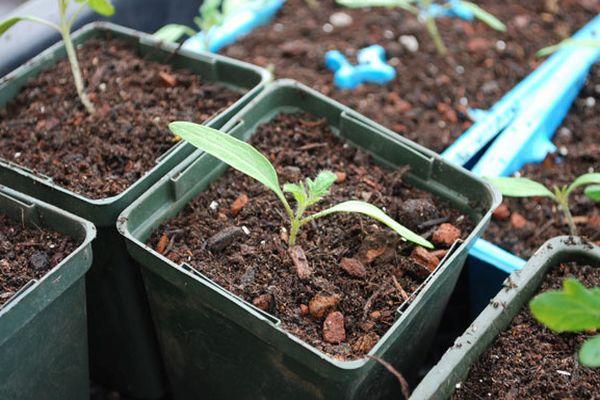
Three days before transplanting, feed the plants with a potassium nitrate solution. When two true leaves have formed, transplant the seedlings into individual peat pots. The mature bushes are then planted in these pots in their permanent location.
Care for this plant involves timely watering, hilling the bushes, and loosening the soil. A characteristic feature of this semi-determinate hybrid is that the plant ends its growth with an inflorescence. Therefore, when shaping the bush, it is necessary to carefully remove excess shoots.
Related posts:
 The best eggplant varieties for growing in a polycarbonate greenhouse: planting and care
 The best grape varieties for growing in the Urals, planting and care rules in summer
 Descriptions of the 20 best cherry varieties for the Moscow region, their planting and care
 80 Best Eggplant Varieties for Different Regions with Descriptions and Characteristics
 How to propagate and grow peas, cultivation technology, and care in open ground
 Description and characteristics of the best seeds of pea varieties and types
 Description of the best potato varieties of domestic and foreign selection
 Description of 30 varieties and types of Muscat grapes, planting, cultivation and care