Mashenka tomatoes, according to their characteristics and description, are considered high-yielding and large-fruited. This indeterminate tomato variety has no growth restrictions, so it's typically grown in greenhouses, as the bushes can reach a height of 2 meters, making it easy to tie them to the roof. However, some gardeners also plant these tomatoes in open ground, using long poles or trellises to support the bushes. Overall, this variety thrives both indoors and outdoors.
Description of the variety
Mashenka tomatoes are known for their high yields. Experienced gardeners note that optimal yields are achieved when growing the plants in two stems.
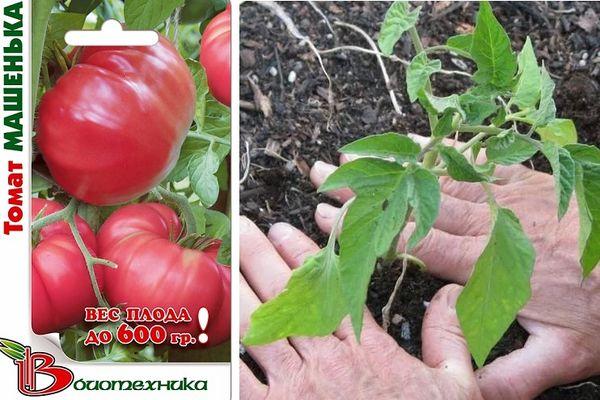
Mashenka is a mid-season variety: the fruits ripen 110-115 days after germination. The tomatoes grow to a smooth, round shape, red, with dense, glossy skin, weighing 210-260 g. Some fruits can reach 600 g. The core is fleshy and dense, and there are quite a lot of seeds—up to 6 seed chambers in a single tomato. These tomatoes have a sweet and sour taste.
Reviews unanimously indicate that Mashenka tomatoes are very large and have a pleasant taste, so many eat them fresh, but these tomatoes are also good for making juices and sauces.
Advantages and disadvantages
Mashenka tomatoes have a number of positive qualities, such as:
- excellent yield (from 5.5 to 12 kg can be collected from one bush, and up to 28 kg from 1 m2 of plantings);
- a large number of large fruits;
- the fruits set well and ripen at approximately the same time (you can pick a lot at once);
- large mass of fruits;
- excellent taste;
- Tomatoes of this variety also have such features as resistance to adverse weather conditions and to many diseases and pests.

Based on the listed qualities, it's clear that Mashenka tomatoes have many advantages over other varieties. Disadvantages include:
- Care requirements: Because the bushes grow very tall, they require staking and pruning.
- The fruits do not have a long shelf life - only 2-3 weeks.
- A high yield can only be achieved if the variety is grown in a greenhouse.
Proper cultivation
To grow a tomato variety like Mashenka, it is enough to follow general agricultural practices; other than tying, there are no special care instructions.
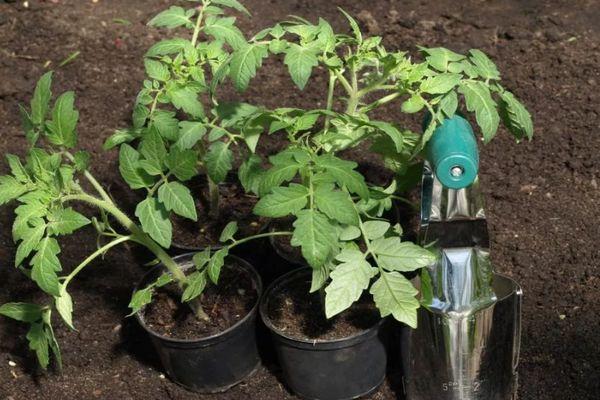
Sow the seeds 60-65 days before the expected date of planting the tomatoes in their permanent location. To grow the seedlings, use either individual cups for each plant or a large tray large enough to accommodate several plants. Use general-purpose tomato soil. Before planting, soak the seeds in a potassium permanganate solution.
The room where the seedlings will grow should be maintained at a temperature of +20…+22°C during the day and +18…+20°C. Watering should be moderate, and fertilizing should be done as needed.
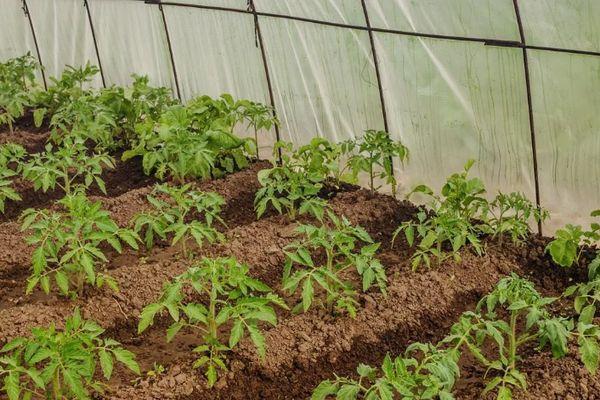
Transplant the seedlings to the garden beds in late May or early June. Plant the seedlings in rows, 45 cm apart, with 65 cm between rows.
Fertilize tomatoes 2-3 times per season. To increase fruit yield, pinch the top of the plant when it has formed 4 to 6 clusters.
The Mashenka tomato is resistant to a number of diseases, but if signs of caterpillars or aphids appear on the bushes, the plants should be treated with insecticides.
How to tie up bushes
In a greenhouse, tying up tall bushes is easy—usually strings are strung from above, and the plants then climb up them. However, in open ground, special tying devices are often required.
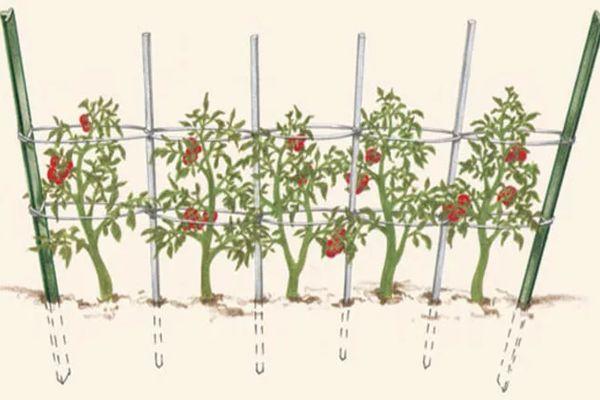
The bushes can also be tied to stakes, but in this case, you'll need very long poles—about 2 meters each. The key is to have plenty of them—one stake for each bush. They should be tied with soft rope or by tearing an old sheet into narrow strips. It's best to boil the fabric first to ensure it's sterile.

Using a trellis is easier and more effective for shoring up tall tomatoes. Stakes approximately 2 meters high should be driven in at intervals of 4 meters. Wire is stretched between them, connecting the highest points. Long fabric ropes are tied to the wire, along which the tomatoes will climb. Avoid pulling the rope too tightly, as this could pinch the stems and damage the bush.
There's another option for tying the plants to a trellis. The stakes, as in the previous example, are installed at a distance of 4 meters from each other. Several rows of wire are stretched between them, spaced approximately 70 cm apart. Fabric ropes are stretched across the trellis at more frequent intervals (about 30 cm). This creates a mesh around which the bushes will later climb.

What gardeners say
Many who planted the Mashenka variety were pleased with the harvest. Here are some reviews of these tomatoes.
Lidiya, 45, Torzhok: "I planted the Mashenka variety last year. I'm thrilled with these tomatoes—they're very large and sweet. This year, I'll be planting more than half my plot with Mashenka."
Sergey, 63, Kaluga: "I was very pleased with the Mashenka variety. It's easy to grow and very productive."
Related posts:
 Description and characteristics of the Mashenka strawberry variety, planting and care instructions
 Description of the best varieties of black tomatoes for open ground and greenhouses
 The best ways to properly tie up tomatoes in open ground and greenhouses
 What varieties of tomatoes are best to plant in a polycarbonate greenhouse?
 Description and characteristics of the best seeds of pea varieties and types
 TOP 17 recipes for pickled sweet tomatoes for the winter
 Description and characteristics of the best tomato varieties for outdoor cultivation in the Urals
 Description of blight-resistant tomato varieties for open ground and greenhouses