
- The history of Mashenka strawberry breeding
- Advantages and disadvantages
- Description and characteristics of the Mashenka variety
- Bush and shoots
- Flowering and fruiting
- Taste qualities and further marketing of Mashenka berries
- Disease and frost resistance of the Mashenka variety
- Methods of propagation and planting
- Seeds
- With a mustache
- By dividing the bush
- Preparing a site for crops
- Timing and rules for planting operations
- Caring for Mashenka
- Watering and fertilizing
- Mulching and loosening
- Trimming
- Protection against parasites and diseases
- Preparing for winter
- Harvesting
- Gardeners' reviews of the Mashenka variety
The Mashenka strawberry variety is a domestic variety widely grown in the CIS countries. It is also known as "Moscow Jubilee." The harvest ripens in early summer, producing large berries with incredible flavor. This plant is easy to care for and easily adapts to new locations. To successfully grow the plant and reap a bountiful harvest, it's important to familiarize yourself with all the necessary agricultural practices.
The history of Mashenka strawberry breeding
The garden strawberry Mashenka was developed in 1953 by Soviet breeder N. Smolyaninova. The variety was a cross between the Komsomolka variety and the hybrid seedling Krasavitsa Zagorya. This variety is zoned for continental climates and is typically grown for personal consumption.
Advantages and disadvantages
The Mashenka strawberry has many advantages, but there are also a number of disadvantages.
| Pros | Cons |
| Large, juicy berries | The berries don't store well. |
| High yield | The bushes have average frost resistance. |
| Unrivaled taste | |
| Compact size of bushes | |
| Resistance to diseases and bugs | |
| Resistance to frost and drought | |
| Possibility of obtaining 2 harvests per season | |
| Easy propagation by tendrils |
Description and characteristics of the Mashenka variety
When grown in the South or in a greenhouse, the Mashenka strawberry produces two harvests per season. The bushes are small and produce numerous tendrils. This variety is widely grown on small and medium-sized farms.
Bush and shoots
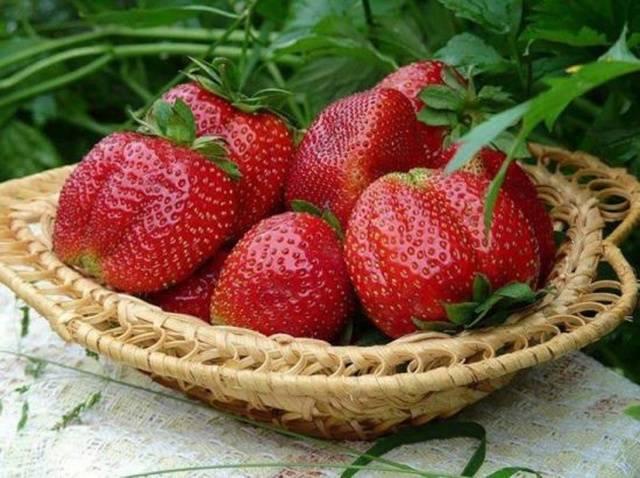
Mashenka bushes are large, yet neat and compact, growing up to 45 cm tall. They have a medium spread, with large, rich green leaves. As the season progresses, they darken, eventually turning brown. The peduncles are numerous, strong, thick, and grow at leaf level. They fall to the ground under the weight of the berries.
In young bushes, shoot formation activity is high; 3 years after planting, fewer tendrils are formed.
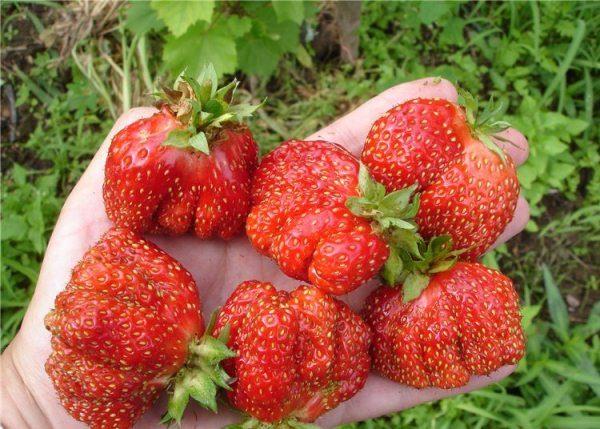
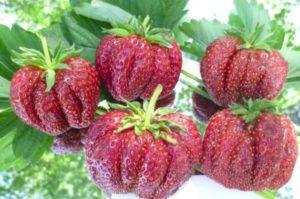
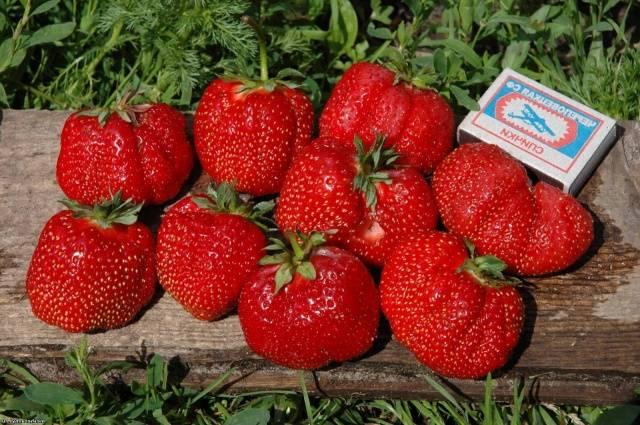
The Mashenka variety is distinguished by a nuance: it is a single fusion of several first-order inflorescences, leading to the unification of ovaries into berries of an unusual shape and very large sizes.
Flowering and fruiting
Flowering occurs in mid-May, with whitish, medium-sized inflorescences. The harvest ripens uniformly by the first ten days of June. A single bush can yield up to 0.5 kg of berries, and in the best-case scenario, 1.5 kg.
Taste qualities and further marketing of Mashenka berries
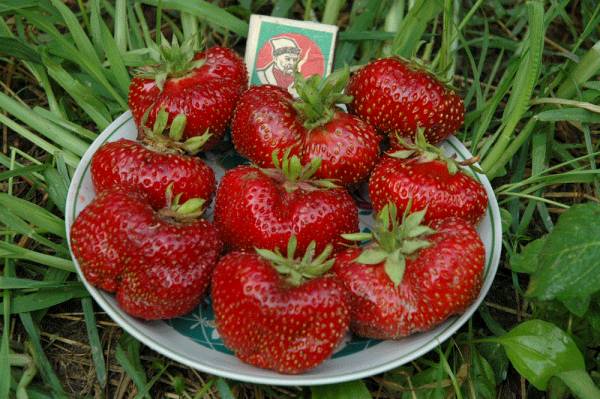
The first berries to ripen are ridged and folded, and of impressive size, weighing up to 120 grams per specimen. The average fruit weighs 40 grams, but by the end of fruiting, they become slightly smaller. The skin becomes burgundy and glossy. Ripening begins at the base, with the tips remaining greenish for a long time. The seeds are yellow, slightly embedded in the flesh. The flesh is dense, fleshy, and juicy, with a wild strawberry flavor and a slight tartness. It received a 4.5 star rating from tasters.
Mashenka berries are suitable for fresh consumption and can also be used for processing, but are not suitable for drying or freezing.
This is because strawberries contain a lot of moisture, and after defrosting, they "spread out" to the consistency of mush. The fruits have poor transportability, marketability, and shelf life, so the Mashenka variety is not considered a commercial variety. This variety is perfect for gardening, producing a consistent harvest.

Disease and frost resistance of the Mashenka variety
Strawberry bushes are rarely susceptible to common strawberry diseases and beetles, provided they are properly cared for. Weather also plays a role, as damp, cool summers increase the risk of disease or pest attacks. The plant can withstand temperatures as low as -20°C. In northern or temperate regions, it's best to cover the bushes for the winter.
Methods of propagation and planting
Mashenka strawberries are propagated by two methods: seeds and runners. Both techniques are widely used by gardeners to increase the number of plants in the garden and renew the beds. It's best to purchase seedlings from nurseries or reputable vendors at the market.
Seeds
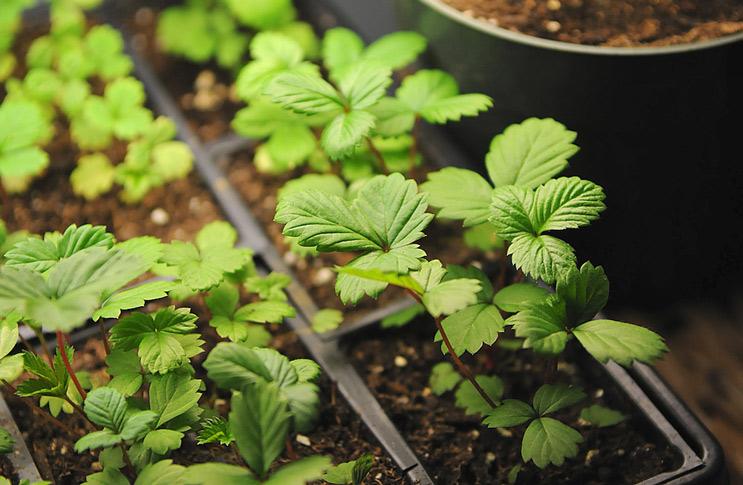
Growing Mashenka strawberries from seed is more difficult; the process is quite lengthy. Seedlings are germinated in the same way as tomatoes or bell peppers. First, the seeds are sown under plastic, then pricked out when they have two true leaves. Once they have matured, they are transplanted into the garden.
With a mustache
To propagate the crop using tendrils, select the strongest, healthiest bushes with good productivity. The number of berries on them should not exceed the number of tendrils. On each developed specimen, find the first rosette and twist it to stimulate rooting. The remaining tendrils are trimmed back, and after two weeks, seedlings suitable for planting will be produced.
By dividing the bush
Take two mature plants, 3-4 years old. Dig up the bush in spring or fall and divide it into 2-3 clumps. Plant each clump in soil.
Preparing a site for crops
Mashenka strawberries should be planted on the west or southwest side of the garden, in light, well-drained soil. Prepare the plot in the fall. The following steps are taken.
- The land is plowed to the depth of a shovel blade, weeds and fallen leaves are removed.
- Compost and humus are added.
- The area is planted with mustard, rye, phacelia, and oats.

The next stage of preparatory work is carried out in the spring, 2-3 days before planting.
- They dig up the area with sprouted green manure.
- Add sand and humus to the soil. The ingredients, mixed at a 1:2 ratio, are evenly distributed over the soil at a ratio of 15 kg of the mixture per square meter.
- Treat the soil with Aktara. It is diluted in 2 liters of water at a concentration of 4 mg. This treatment kills beetle larvae living in the soil.
- Dig holes 30 cm deep and 35 cm wide. Water the soil and compact it lightly with your hands.
After completing the work, the area is completely ready for planting Mashenka strawberries.
Timing and rules for planting operations
Planting should be carried out in the spring, when the threat of frost has passed and the air temperature has stabilized at +10°C. For the South, the optimal time is mid-March or early April.
Strawberry seedlings are planted in late April or early May in the Moscow region and temperate latitudes. Residents of the Urals and Siberia are advised to plant from May 15th to early June.
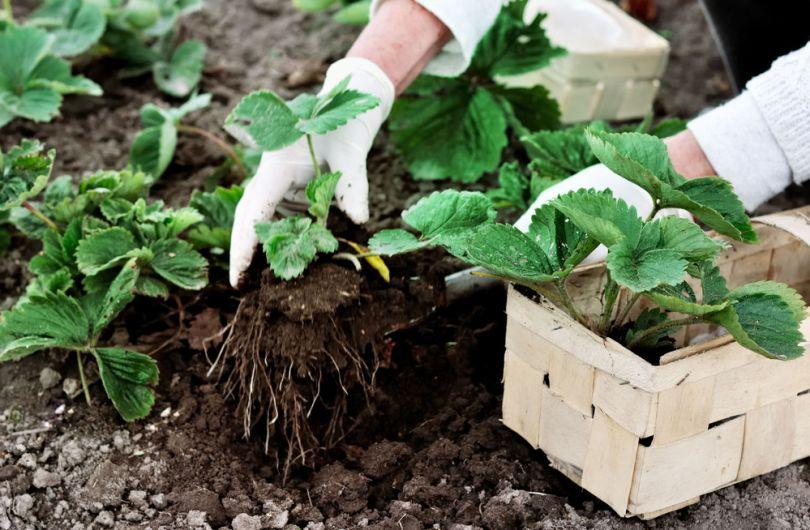
Plant in rows, maintaining a distance of 30 cm between plants and 50 cm between beds. This arrangement will promote successful development of the mother plants and the production of healthy tendrils. The seedlings are planted in prepared holes and watered. The root system is straightened beforehand. The rosette should be positioned at ground level, lightly covered with soil, and compacted by hand. Water the plants with 0.5 buckets of settled water. Then, mulch the plants with sawdust, pine needles, and peat. At the same time, you can plant garlic between the beds; it repels insects.
Caring for Mashenka
There are a number of agronomic nuances that will help you successfully grow strawberries.
- Water the bushes in the morning, only with settled water.
- Cover the exposed rhizomes with soil and trim off the tendrils.
- Loosen the soil periodically.
- Shade plantings in strong sunlight.
If you take proper care of the crop, it will bear fruit consistently.
Watering and fertilizing
Mashenka strawberries need regular watering, especially during dry, hot summers. Drip irrigation is preferred, but if this isn't possible, you can water the plants at the roots or through canals.
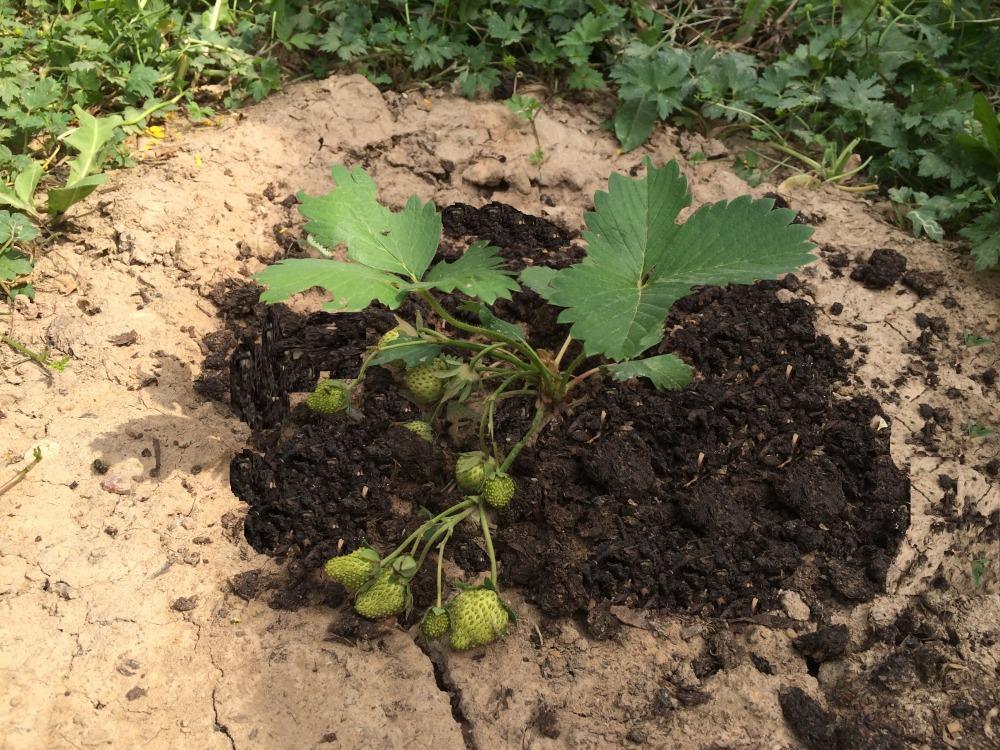
Fertilizers are added according to the schedule.
- The fertilizer applied at planting will last until new foliage begins to emerge on the bushes. Then, add a nitroammophoska solution, prepared at a ratio of 25 g per 10 liters of water, and water the nutrient mixture under the rhizomes.
- After fruit set, Mashenka strawberries require fertilization with a solution of ammonium nitrate and potassium sulfate. Use equal parts of each solution per 10 liters of water. Pour 500 ml of the solution under each plant.
- After fruiting, Mashenka strawberries are fertilized with potassium. Use 20 grams of potassium nitrate per 10 liters of water, or 100 grams of wood ash per bucket of liquid.
To ensure that plantings successfully survive the winter, superphosphate, potassium sulfate, potassium monophosphate and autumn Kemira are added.
Mulching and loosening
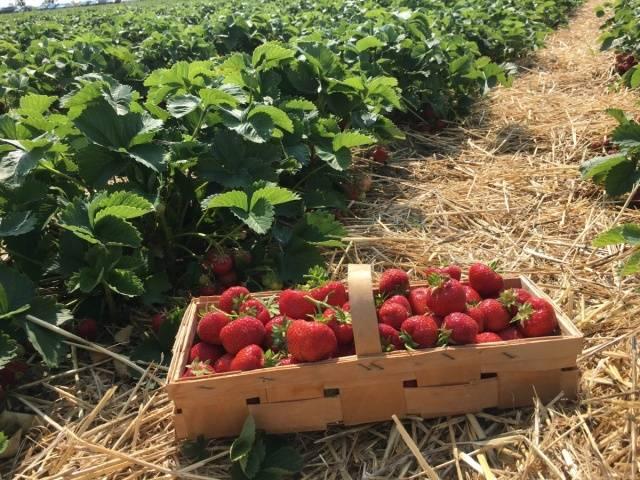
The soil around Mashenka strawberry beds is mulched to retain moisture and prevent beetle and disease attacks. Berries often lie on the ground, where they rot, and a layer of mulch prevents unwanted interactions between the fruit and the soil. Mulch materials include pine sawdust, dry grass, straw, compost, and peat.
After each watering, loosen the soil with a hoe. It's important not to damage the rhizomes. Weeding oxygenates the soil and removes weeds.
Trimming
The Mashenka strawberry plant produces numerous tendrils, which draw nutrients from the soil. To increase the berry yield and prevent diseases due to dense plantings, trim the tendrils with disinfected pruning shears.
Protection against parasites and diseases
The Mashenka strawberry is renowned for its high resistance to diseases and beetles, but preventative treatments are recommended.
- It's important to practice crop rotation and avoid planting crops where members of the nightshade family or cucumbers were previously grown. Optimal predecessors include carrots, garlic, greens, peas, lupines, oats, and rye.
- Every 4 years, transplant strawberries to a new location.
- After the berry growing season, clear the area of leaves and weeds. These carry bacteria and pests.
- Avoid excess moisture, strawberries do not tolerate this.
- Before flowering and after harvesting the fruits, spray the bushes with Topaz in the amount of 15 g per 15 liters of water, adding 30 g of laundry soap and copper sulfate.
- To combat pests, spray the bushes with Karbofos - 3 tablespoons per 10 liters of warm water.
Take a look Also

Repeat the above preventive measures every season.
Preparing for winter
At the end of October, trim the Mashenka strawberry leaves, earth up the bushes, and cover them with peat, spruce branches, and sawdust. Cover the beds with agronomic fiber. After the first snowfall, mound each plant with a snowdrift, creating a 5-6 cm thick layer. In the Moscow region and northern regions, the bushes can be transplanted indoors or indoors.
Harvesting
Mashenka strawberries ripen by the second half of June in warm climates. In temperate climates, such as the Moscow region, the Urals, and Siberia, the fruiting period shifts to early July. The berries ripen evenly, and the harvesting process isn't protracted. They should be picked three days after they're fully ripe.
 To ensure a second harvest of Mashenka strawberries, mow the green foliage down to the roots after harvesting, and do not water for 30 days. A month later, water the seedlings with two buckets of water per square meter. Repeat this process every day. Afterward, Mashenka strawberries will bloom again.
Gardeners' reviews of the Mashenka variety
Feedback from gardeners will help you learn more about the Mashenka strawberry.
Roman Ivanov, 54 years old, Pavlograd
Hello! Mashenka strawberries are my favorite variety; I've been growing them at my dacha for about 20 years. The bushes are easy to care for; I fertilize them according to a schedule. Sometimes I get two harvests in one summer.
Oksana, 49 years old, Volnyansk.
Hi everyone! I planted a strawberry tree called Mashenka at my dacha in 1995. Since then, I've been propagating it with tendrils, yielding two harvests per season. I make jam and pies with the fruit, and I also eat them fresh.
Nina Andropova, 52 years old, Kerch
Hello! I fell in love with the Mashenka strawberry plant thanks to its large, fragrant, and delicious fruits, which ripen by mid-June. The strawberry plant has been plagued by aphids several times, but I managed to control them with insecticides. I haven't had any further problems.
Related posts:
 Characteristics of the Mashenka tomato and rules for growing a good harvest
 Timing of strawberry planting in the middle zone in autumn, description of 25 best varieties
 Description of the Cardinal strawberry variety, planting and cultivation
 Description of the Zenit strawberry variety, planting and care instructions
 The best varieties and cultivation of everbearing strawberries, fertilizing and propagation
 Description and characteristics of the Vikoda strawberry variety, planting and care
 Description of the Tuscany strawberry variety, planting and care features
 Description of the Monterey strawberry variety, planting and care instructions