
- The history and subspecies of Tuscany strawberries
- Cultivation regions
- What's good about this variety?
- Are there any downsides?
- Varietal characteristics
- Bush size and appearance of the leaf blade
- Flowering and pollination
- Ripening time and yield
- Taste qualities of the fruit and its further sale
- Winter hardiness and drought resistance
- Immunity to diseases and pests
- Features of planting operations
- Required soil composition
- Site selection and preparation
- How to choose seedlings
- Timing and technology of planting seedlings
- Caring for Tuscany
- Warmth and light
- Watering mode
- Top dressing
- Weeding and loosening the soil
- Mulching
- Shelter for the winter
- Preventive treatments against diseases and pests
- Secrets of reproduction
- Seeds
- By dividing the bush
- Sockets
- Gardeners' reviews of the variety
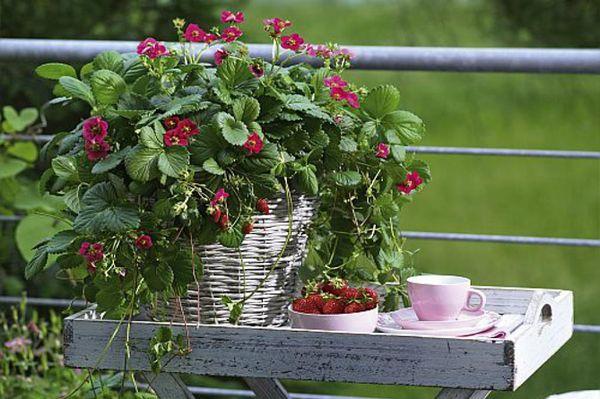
The Tuscany strawberry variety stands out from other varieties. Its flowers are a rich pink, and its shoots are twining. This unique variety thrives not only in outdoor garden beds but also in pots on windowsills and balconies. Its low maintenance requirements allow for a bountiful harvest of delicious berries, even indoors, practically year-round.
The history and subspecies of Tuscany strawberries
The variety is a hybrid. The Tuscany strawberry was bred in 2011 in Italy by ABZ seeds and quickly gained popularity among gardeners worldwide.
There are two subspecies of everbearing strawberries: those with flower buds that are set during long daylight hours, and those capable of setting flower buds during neutral daylight hours.
The first type of plant can produce fruit several times a year, but the bushes quickly become depleted and often die. The second type produces fruit twice a year, but the plants live longer.
Cultivation regions
The Tuscany strawberry is suitable for cultivation in warm or moderate climates—in the south and central regions of Russia. This variety is not suitable for northern regions.

What's good about this variety?
The advantages of Tuscany strawberries include:
- decorative appearance of the plant;
- remontancy;
- the possibility of growing both in open ground and in apartment conditions;
- resistance to fungus and other diseases;
- drought resistance;
- unpretentiousness;
- high productivity;
- good taste and commercial qualities of berries.
Are there any downsides?
The disadvantages of the variety include:
- space requirements;
- danger of cross-pollination and loss of valuable properties;
- average frost resistance;
- the need for regular trimming of the mustache.
Varietal characteristics
The Tuscany strawberry has a number of characteristics that make this variety unique among other strawberry varieties.
Bush size and appearance of the leaf blade
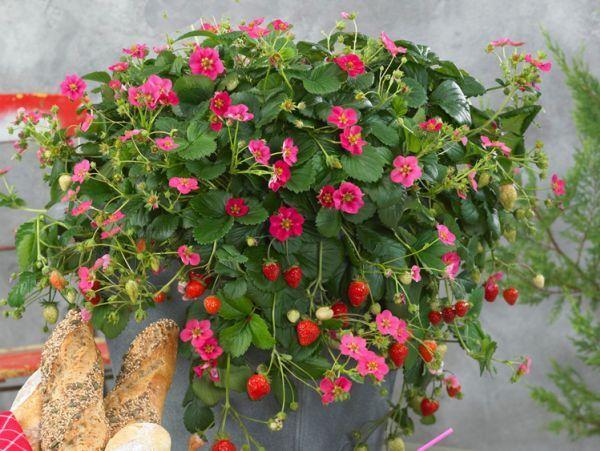
The bush is low-growing, reaching 15-20 cm in height and is fairly compact. It grows 30-45 cm in width. The shoots are numerous, with each shoot reaching 1 m in length. The leaves are large, dense, leathery, glossy, and dark green.
Flowering and pollination
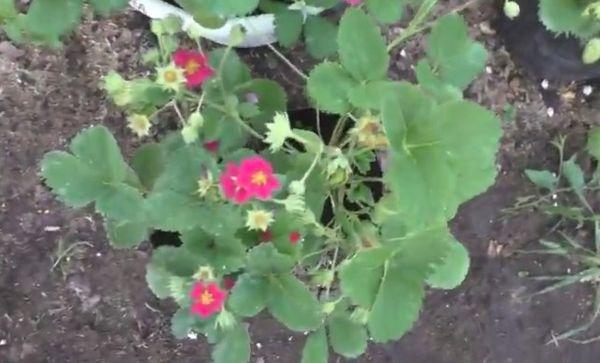
Strawberries bloom profusely. The flowers are bisexual, large, and bright pink, gathered in rosettes. The peduncles are long, multi-flowered, and recumbent.

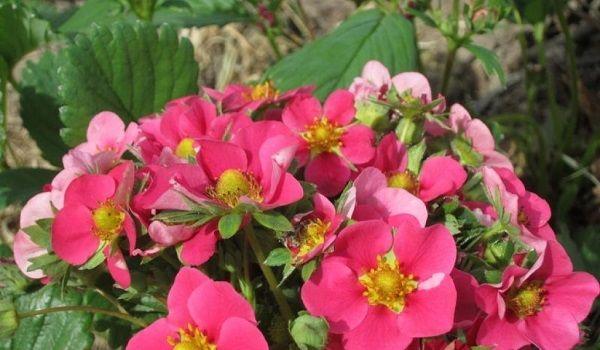
At home, flowers must be pollinated manually using a brush.
When grown outdoors, it is important to prevent cross-pollination of Tuscany with other strawberry varieties during flowering, so as not to lose the variety's characteristic properties.
Ripening time and yield
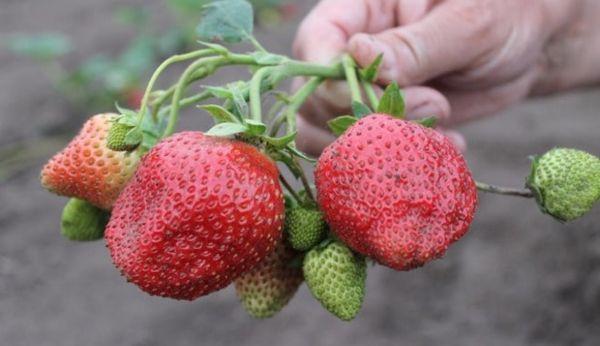
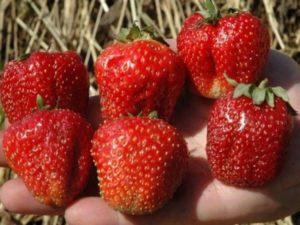
Strawberry fruiting continues from June to October. Each berry weighs 30-40 g. This is a remontant variety. Up to 1 kg of berries can be harvested from a single bush per season.
Taste qualities of the fruit and its further sale
The berries are a deep red color. The flavor is sweet, with a slight tartness. The aroma is distinct, reminiscent of wild strawberries.
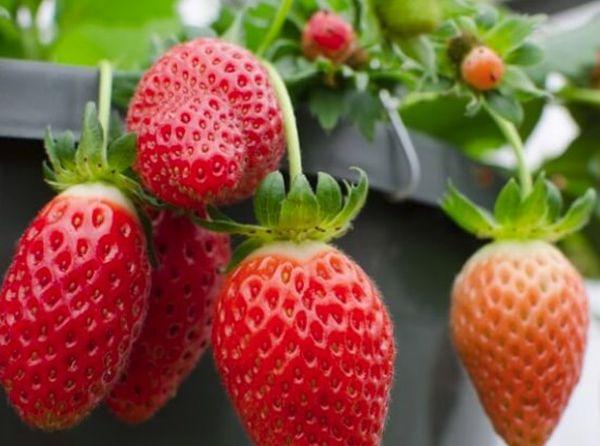
This variety is versatile. The berries can be eaten fresh or used in desserts and preserves. Thanks to their firm flesh, they withstand short-term transportation without losing their marketable appearance.
Winter hardiness and drought resistance
The Tuscany strawberry is fairly drought-resistant. Its frost resistance is average, withstanding temperatures as low as -10°C.
Immunity to diseases and pests
Tuscany strawberries have good immunity to most diseases and pests. They are particularly resistant to root rot and late blight.
Features of planting operations
To ensure a good strawberry harvest, it is necessary to follow existing agricultural recommendations for planting.
Required soil composition
The soil should be fertile, light, and loose to ensure good root aeration. This variety is undemanding regarding soil type.
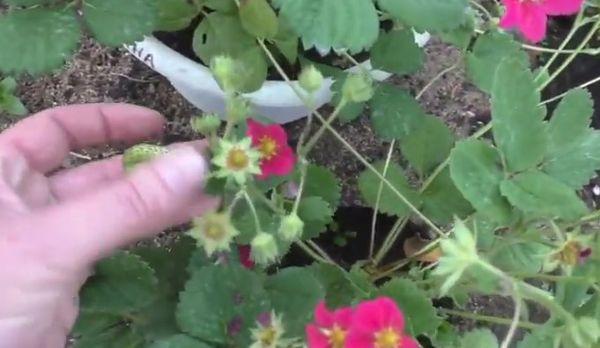
An artificial potting soil mixture is prepared from 6 parts peat, 3 parts turf, 3 parts humus or compost, and 1 part sand or vermiculite. One plant requires 3 liters of this soil.
Site selection and preparation
It's important to ensure the strawberry planting area is well-lit. Avoid planting in areas that are too wet or waterlogged to prevent root rot. It's not recommended to plant different strawberry varieties close together. Cross-pollination will cause them to lose their distinctive characteristics.
How to choose seedlings
Seedlings should have a strong root system, sturdy leaves, and shoots free from damage and signs of disease. Diseased, weak, or wilted plants are unsuitable for planting. Remove any dried or rotted parts before planting.
Timing and technology of planting seedlings
Seedlings purchased or grown from seed are best planted outdoors in April–May. Seedlings obtained by dividing the bush and propagating rosettes are planted in August–September. If planted in spring, the plant may bear fruit as early as the following summer.
It's recommended to remove the first flower stalks to prevent them from weakening the bush. This variety requires a large area for shoot growth. Plant bushes at least 0.8-1.5 m apart. Planting too densely will result in smaller berries.
Dig holes in the soil at the selected site. Fill them with humus, peat, and ash. Place the seedling so that the root collar is 2-3 cm above the soil level. After filling the hole, water the plant thoroughly at the root.

Caring for Tuscany
Caring for Tuscany strawberries is not difficult. If you take all the necessary steps into account, the plants will consistently produce a high yield.
Warmth and light
Tuscany strawberries are light- and heat-loving plants. During the growing season, temperatures should be maintained between 7 and 10°C during the day and at least 5°C at night. During fruiting, temperatures should be raised to 25°C and 18°C at night. Daylight hours should be 12-14 hours.
When grown indoors, the bushes should be slightly shaded from the hot sun, and in winter, additionally illuminated with fluorescent lamps.
Watering mode
Before flowering, strawberries should be watered generously, and moderately (1-2 times a week) during ripening. In hot weather, water twice a day: morning and evening. To prevent rot, water the bushes at the roots. Use only settled, soft, and warm water. You can't water strawberries with cold water.
Top dressing
Strawberries are fed once every 2-3 weeks. Complex fertilizers containing chelated micronutrients are added to the soil. The nitrogen to phosphorus and potassium ratio should be 1:3:6. In spring and fall, the soil is additionally fertilized with organic matter, such as rotted manure or compost.
Weeding and loosening the soil
It's important to loosen the soil and remove weeds regularly. This is best done after watering.
Mulching
Mulch the soil with sawdust, pine needles, or humus in the fall before the cold weather sets in. This helps protect the root system from frost.
Shelter for the winter
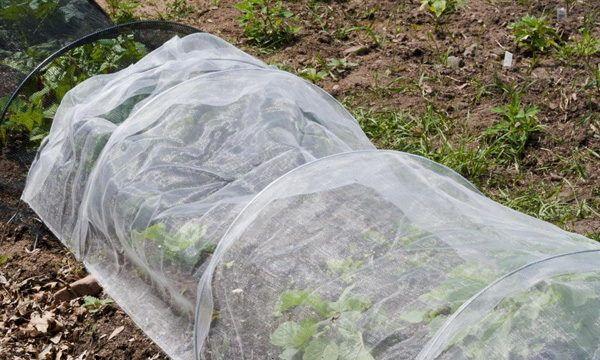
For the winter, strawberries should be covered with agrofibre or film. Plants grown in containers are moved to a basement and stored until spring at temperatures ranging from -2 to +2°C. When growing strawberries in warm climates, where winter temperatures do not drop below -10°C, no covering is required.
Preventive treatments against diseases and pests
To prevent diseases and insect attacks, bushes are treated in the spring before flowering with copper sulfate, Bordeaux mixture, or fungicide solutions. Garlic and onion infusions, as well as solutions containing soap and tobacco, can also be used.
Secrets of reproduction
Tuscany strawberries can be propagated by seeds, rosettes, and division. Rosette propagation is most commonly used, as it is the least harmful to the mother plant.
Seeds collected from the bushes themselves are unsuitable for propagation. They lack the characteristic features of a hybrid plant.
Seeds for seedlings must be purchased in stores.
Seeds
Seeds for seedlings are sown in late winter. They are placed on the soil surface in a box, lightly covered with soil, and moistened with a spray bottle. The box is covered with glass or plastic and placed in a warm place. The seeds are removed and opened daily to ventilate and moisten.
Once the sprouts emerge, remove the cover and place the box on a windowsill. Water the seedlings regularly and monitor their temperature. When two leaves appear, transplant and replant.
By dividing the bush
To propagate strawberries this way, dig up a strong bush and divide it, leaving a bud or growing point. The cut area is treated with an antiseptic solution and sprinkled with ash.
Sockets
The Tuscany strawberry is characterized by its increased runner formation. The runners root quickly. After rooting, the rosette is separated and replanted.
No more than 2 rosettes should be left on the bushes for propagation, and the remaining runners should be trimmed regularly so that they do not weaken the mother plant.
Gardeners' reviews of the variety
Alina, 32, Voronezh: "My Toscana strawberry plant bears fruit all summer long. The bushes are disease-free and look beautiful in the garden beds. It's a low-maintenance variety, but it does require frequent watering and regular runner trimming."
Anna, 30, Moscow: "I planted two Tuscany strawberry bushes on my balcony. They bloomed all summer, with large, vibrant flowers. The berries are small, but delicious and have a pleasant aroma."
Lyudmila, 40, Smolensk: "I bought Tuscany strawberry seedlings in the spring and planted them in baskets. The bushes look very neat and attractive, bloom all season, and are disease-free even without treatment. They also began bearing fruit that summer. The berries are sweet and aromatic."
Maria, 29, Lipetsk: "I've been growing Tuscany strawberries in my apartment for three years now. During the warmer months, they grow well on the balcony, but in the winter, I move them indoors and keep them under a grow light. The bushes bear fruit almost year-round. From spring to fall, I feed them with a complete fertilizer every two weeks and water them regularly."
Ksenia, 38, Tver: "My Tuscany strawberry plant bloomed almost immediately after planting the seedlings. I picked off the first flower stalks to increase the harvest. The bushes bore fruit until the end of September. The berries are small but tasty, good for jam and fresh eating."
Related posts:
 How to grow strawberries at home
 The best varieties and cultivation of everbearing strawberries, fertilizing and propagation
 Description and characteristics of the Vima Zanta strawberry variety, planting and care scheme
 Description of the everbearing strawberry variety Selva and cultivation technology
 Description of the Florence strawberry variety, planting and care features
 Description of the Cardinal strawberry variety, planting and cultivation
 Description and how to plant the Garland strawberry variety
 Timing of strawberry planting in the middle zone in autumn, description of 25 best varieties