
- Characteristics of Monterey strawberries
- Selection and growing conditions
- Botanical description of the bush and shoots
- Flowering and fruiting
- The value of berries and their subsequent sale
- Immunity to diseases
- Frost resistance
- All the pros and cons: is it worth planting?
- Specifics of planting and propagation of the variety
- Seeds
- By dividing the bush
- With antennae
- Growing Monterey
- The best neighbors and predecessors
- Preparing the site and seedlings
- The landing process
- Further care of the crop
- Weed control and soil mulching
- Top dressing
- Watering
- Preventive treatments
- Wintering
- Gardeners' reviews of the variety
Everbearing strawberry varieties have long been a staple in gardens and homesteads. Their advantage is that they form and develop regardless of the time of day. Many gardeners love these crops for their continuous fruiting throughout the season. One such productive variety is the Monterey strawberry.
Characteristics of Monterey strawberries
The variety is mid-early and has the following characteristics:
- a strong, powerful bush;
- large leaves;
- long fruiting period;
- large-fruited;
- a large amount of harvest.
Flowering begins in early May until autumn frosts.
Selection and growing conditions
Monterey is considered a remontant strawberry variety. This variety was bred by researchers at the University of California, USA, in 2001. The Albion variety was used as the parent variety. Over the following years, the plant was tested and monitored, and by 2009, it was patented and registered in Watsonville.
The growing area is territories with mild climatic conditions such as Europe, Belarus, Russia, and Ukraine.
The berry has inherited the best flavor qualities of its parent variety. Monterey yields significantly more than Albion. Breeders recommend growing the plant in open and protected soil.
Botanical description of the bush and shoots
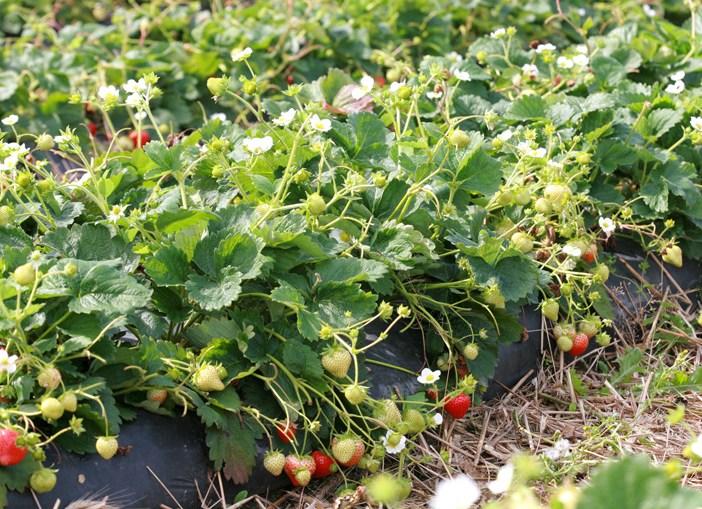
The bush is distinguished by its vigor and moderate number of leaves and tendrils. The leaves are large, light green, glossy, and regularly shaped. Due to the large leaf size, the berries are planted farther apart. The rhizomes are developed and strong, and the berries widen toward the stalk and taper toward the base.
Flowering and fruiting
The plant has strong, tall flower stalks that bend toward the ground when the fruit ripens. There are many flower stalks—up to 15—allowing for numerous fruit sets. The strawberry plant blooms from early May to late October.
Fruiting occurs in waves; in total, strawberries bear fruit 4 times per season.
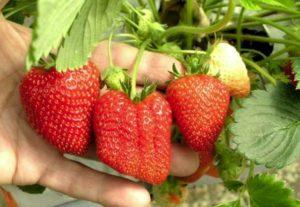
When planted in spring, a harvest can be expected as early as August. By the second year, the yield will increase. Berries weigh between 25 and 40 g. A single bush yields 0.5 to 2 kg of strawberries per season.
The value of berries and their subsequent sale
The strawberry has an excellent, harmonious flavor with a sweet and tart aftertaste. The flesh of the Monterey variety is softer than that of its parent, the Albion. Due to its dense structure, the berries are not damaged during freezing. For this reason, they are excellent for long-distance transport.
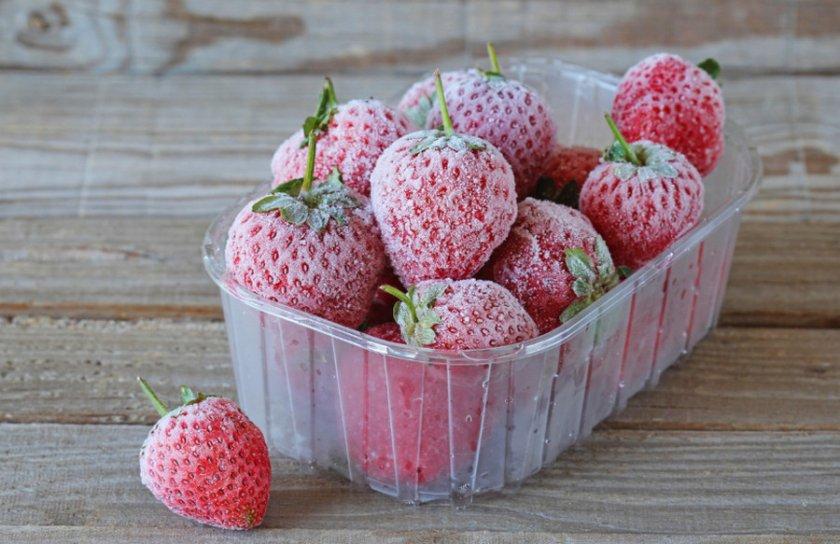
The fruits are multifunctional – they can be eaten fresh, frozen, or used to make preserves, juices, jellies, marmalades, and alcoholic liqueurs. Growing strawberries commercially is quite successful. A bountiful harvest will bring in a good profit.
Immunity to diseases
The variety has good immunity to all fungal diseases and infections, including powdery mildew. It's important to remember that timely, high-quality preventative treatments can prevent the occurrence of diseases and pests.
Frost resistance
Monterey strawberries have average winter hardiness and frost resistance. Many gardeners, to be on the safe side, cover the plant in winter and spring. Strawberries tolerate hot weather well, producing berries that are especially lush on sunny days. Their drought tolerance is average; lack of moisture won't kill the plant, but the quality and quantity of the harvest will deteriorate.
All the pros and cons: is it worth planting?
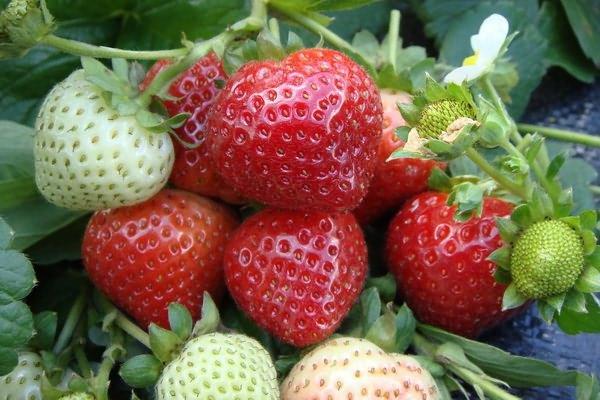
Before purchasing seedlings and planting, consider the pros and cons of the variety. Monterey strawberries have advantages such as:
- sweetness of berries;
- good transportability;
- elasticity and juiciness after freezing;
- good yield;
- good tolerance to adverse climatic conditions;
- the absence of abundant tendrils makes it convenient for harvesting and better fruit formation.
The berry is grown by amateur gardeners for their own use and for sale.
The culture also has its disadvantages, such as:
- the need for a free area when planting - if the area becomes too dense, the berries may disappear;
- rapid reddening of fruits in hot weather without gaining weight and juiciness;
- average winter hardiness, requiring constant covering and insulation.
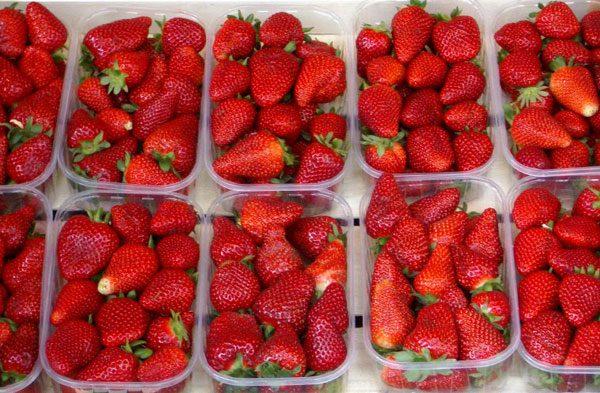
Gardeners often dislike having to pluck shoots too often. Monterey doesn't need this due to its small number of runners.
Specifics of planting and propagation of the variety
Strawberries only reach their full potential when all necessary conditions are met. Planting occurs in late May, July-August, and September. Fruiting is expected in the second year. Selecting and preparing the planting material is crucial. Everbearing varieties are propagated in three ways.
Seeds
When growing from seed, you should not expect a harvest in the first year after planting.
By dividing the bush
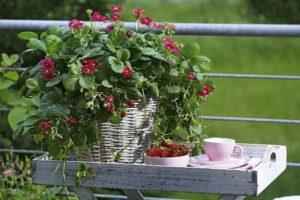
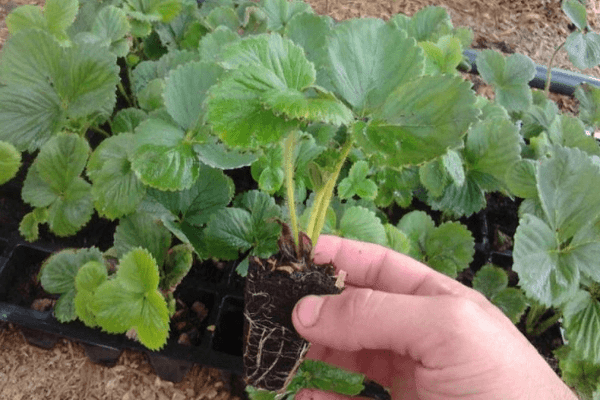
Thanks to their closed root system, strawberries are 100% guaranteed to survive when divided. Fruiting begins the year they are planted.
With antennae
The berries have minimal tendrils; the plant expends all its energy on fruit formation. The rosettes root in plastic containers or pots.
Growing Monterey
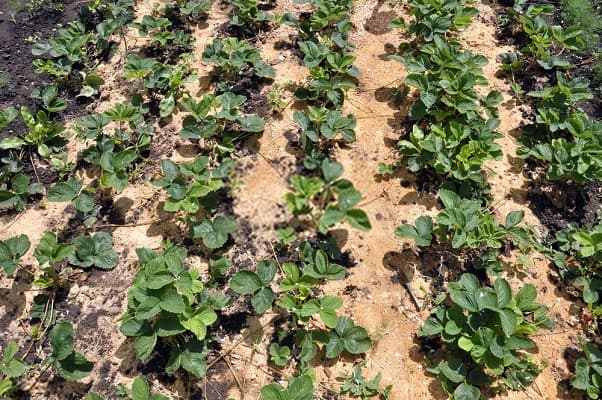
The site should be sunny and warm. When planting strawberries, maintain a distance of 40x50 cm; dense plantings reduce yield. Water and Kornevin fertilizer should be added to the holes beforehand.
When creating regular beds, the soil is first mulched.
The subsequent care regimen is standard: watering, fertilizing, and loosening the soil. Everbearing plants require frequent fertilizing. Because the plant loves heat, it is best to cover it in winter and spring. Spubond or mulch is usually used for covering.
The best neighbors and predecessors
The best predecessors to berries are plants such as radishes, parsley, spinach, and mustard. Strawberry plantings can be established in the same location as hyacinths, tulips, and daffodils.
You can plant strawberries next to root parsley – it is an excellent neighbor.
Planting it nearby will protect the berries from slugs and snails. Good neighbors include carrots, onions, garlic, radishes, or turnips. Ideally, these plants should bear fruit at the same time as the strawberries.
Preparing the site and seedlings
The planting site should be open, level, with loose, fertile soil. Planting in rocky, clayey, marshy, or acidic soil will not produce results. Strawberry seedlings should be healthy, large, with intact rhizomes, and free of signs of infection or damage.
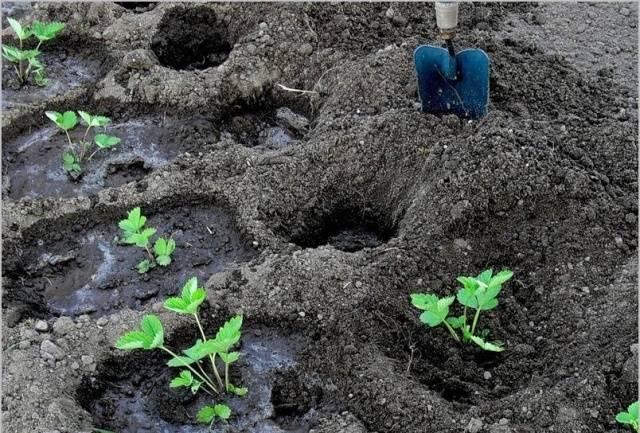
It's best to plant seedlings with exposed rhizomes immediately. If this isn't possible, the berries can be stored for another 2-3 days. To prevent wilting, cover the roots with moist peat. Root growth stimulants and antifungal agents are used to treat the root system before planting.
The landing process
The strawberry planting site is prepared 2-3 weeks in advance. The soil must be dug, weeded, and fertilized with mineral and organic fertilizers such as humus, superphosphate, and potassium complexes.
Landing is carried out in the following sequence:
- dig a hole, the distance between holes should be at least 35-40 cm. For row spacing, the distance is 50 cm;
- the rhizomes are shortened by a third;
- Place the strawberries in the hole and cover with soil. Make sure to create a slight elevation so the berries are above ground level.
- mulch the plantings using sawdust or straw.
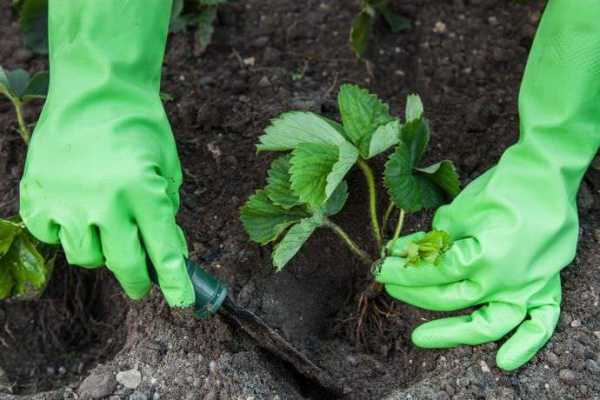
Experts recommend planting on a cloudy day or in the evening, after sunset.
Further care of the crop
When strawberries bloom in the year of planting, it's best to remove the flower stalks. This helps the plant establish better. Moisture levels and weed infestations should be checked periodically.
Weed control and soil mulching
The soil needs to be loosened periodically. This is done to activate biological processes and improve drainage, which will improve the growth and nutrition of the rhizomes.
It is important to weed and remove weeds regularly, otherwise the plant will grow slowly and the taste of the fruit will deteriorate.
Weed growth can be prevented by mulching. The soil is mulched with wheat or rye straw, pine needles, or wood shavings. Mulch has moisture-retaining properties. properties and prevent strawberries from drying out.

Top dressing
Four additional feedings are required per season. In early spring, the soil requires nitrogen fertilizer to enhance berry growth and development. After the plant has finished flowering, organic matter is added, followed by a fertilizer complex. Before the onset of cold weather, the bed is mulched with humus.
Watering
Monterey strawberries require frequent and thorough watering, especially in summer. Drip irrigation is an effective solution. It's important not to turn the bed into a swamp, otherwise powdery mildew will develop.
Preventive treatments
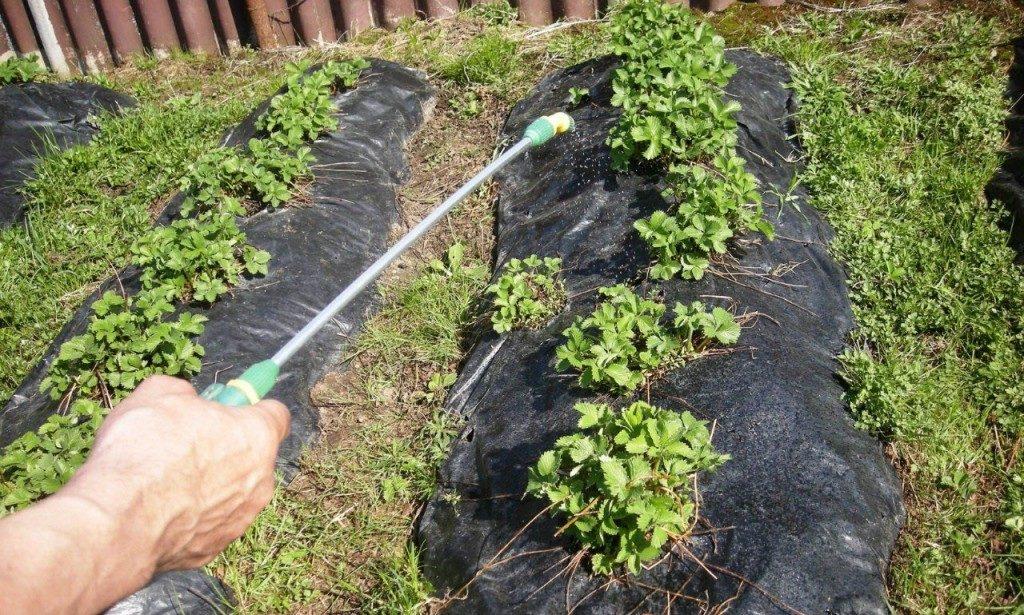
In the spring, the bushes are cleared of debris and old mulch, dried leaves are removed, and protruding rhizomes are sprinkled with soil.
Wintering
Cover the berries with straw, sawdust, or pine needles. Agrofibre, stretched over a sturdy metal frame, is a good covering.
Gardeners' reviews of the variety
Dmitry, 58 years old, Moscow region
The strawberries are usually tasty and sweet, but due to constant rainfall, they've become slightly sour. Growing Monterey is almost the same as other everbearing varieties.
Kristina, 40 years old, Lipetsk
I love this crop for its bountiful harvest. We have a large family, and the strawberries never go to waste—we eat them ourselves and preserve them for the winter. I'm very happy with this variety.
Oksana, 64 years old, Mytishchi
I used to have no problems with my Monterey plant, but now I've started noticing powdery mildew. It's probably my fault; I've been skipping preventative treatments, which is why the plant has been neglected.
Related posts:
 The best varieties and cultivation of everbearing strawberries, fertilizing and propagation
 How to grow strawberries at home
 Timing of strawberry planting in the middle zone in autumn, description of 25 best varieties
 Description of the Florence strawberry variety, planting and care features
 Description and characteristics of the Vima Zanta strawberry variety, planting and care scheme
 Description of the Cardinal strawberry variety, planting and cultivation
 Description of the everbearing strawberry variety Selva and cultivation technology
 Description and how to plant the Garland strawberry variety