
The "Ocharovanie" tomato was included in the Russian State Register back in 1999 (No. 9800840). Since then, the variety has become a staple in the gardens of tomato growers as a consistently productive, tasty, and healthy crop. Its unusual coloring makes it a treasured addition to any private plant collection.
General characteristics of the plant
The bush is indeterminate, with the main stem growing throughout the summer. In the greenhouse, Ocharovanie tomatoes grow to 1.9–2 m, forming fruit clusters throughout the season. The harvest is spread out, but the fruits on each cluster ripen almost simultaneously.
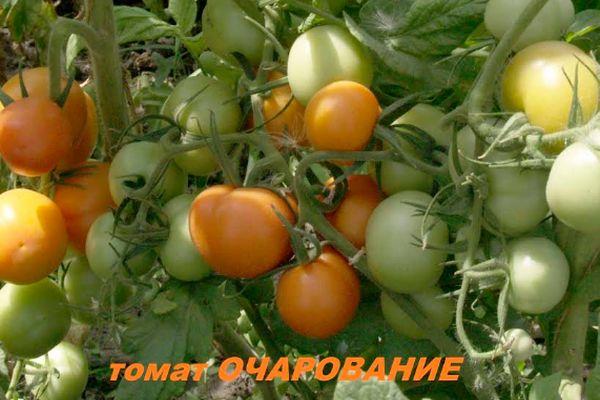
This variety has a high yield. With the recommended greenhouse training of single stems, each plant can yield 3.5-4.5 kg of tomatoes. With dense planting (4-5 plants per square meter), the grower's efforts will be rewarded with a bountiful harvest.
Fruit characteristics:
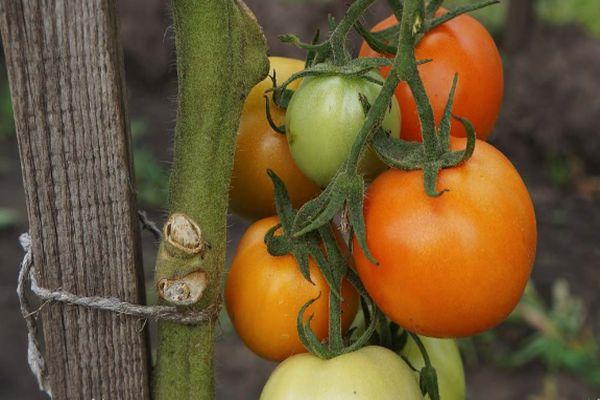
- The fruits are collected in simple long clusters, arranged in a cascade on the plant.
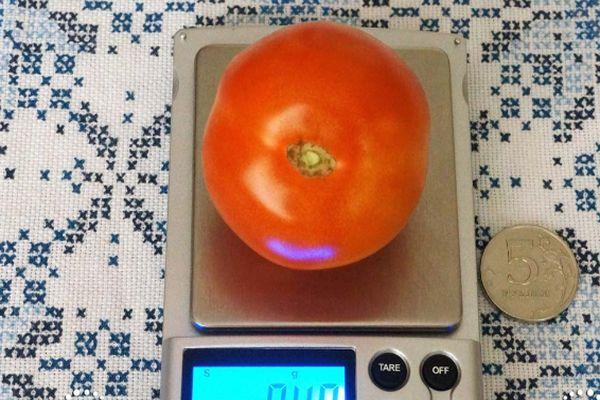
- The average tomato weighs 100 g, and the bunch contains round, smooth fruits of approximately the same size.
- The unusual hue of the Charm tomato adds a decorative touch to the bush when ripe; the fruits are bright, almost orange. This coloring of the skin and flesh is due to the high carotene content. This gives orange tomatoes a higher nutritional value.

The plant is vigorous, prone to branching, and requires pinching and staking. Charm tomatoes are resistant to tobacco mosaic, immune to bacterial blight, and resistant to fungal diseases. Resistance to late blight is moderate; to prevent the disease, remove the lower leaves after the plant's flower clusters have formed.
The Ocharovanie variety can be grown both outdoors and in greenhouses. Reviews from vegetable growers indicate that these tomatoes are resilient to adverse environmental conditions. The variety's yield is relatively consistent throughout the summer season and is not affected by cultivation methods.

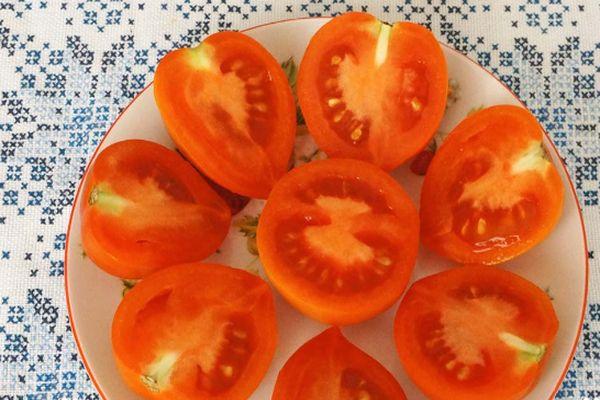
Fruits of the Ocharovanie variety
Small, calibrated tomatoes are not only beautiful but also healthy and delicious. The Ocharovanie variety can be harvested approximately 1.5 months after planting. This variety is considered mid-season (110-120 days from sowing to harvest). Mature seedlings (80-90 days) are suitable for planting.
The skin of the Ocharovaniye tomato is dense and smooth, with a rounded, unribbed shape. The color is orange at the biological ripeness stage, and light green at the technical ripeness stage, with no spot near the stem. When ripening outdoors, the variety description notes the appearance of a yellow blush long before the flesh turns color.
The fruit has a fairly firm, juicy texture. It contains 2-3 seed chambers with small seeds. Each tomato contains approximately 3 mg of beta-carotene. The high dry matter content makes the fruit sweet and aromatic.
The Ocharovanie variety is versatile. Its orange slices can brighten up any salad or platter. Tomato slices look great on sandwiches, pairing beautifully with cheese or meats.
Small, uniform-sized tomatoes are convenient for whole-fruit canning. Marinades will turn out bright and colorful, especially when combining different tomato varieties or making vegetable platters. For juice production, it's best to use very ripe tomatoes: they have a particularly juicy texture, and the juice will be a richer orange hue. Boiling the pulp completely preserves the beta-carotene, making the juice and sauce from orange tomatoes more nutritious than those from red varieties.
How to grow at home?
Seeds can be sown in mid- to late March. To disinfect the soil, you can warm it in the oven or microwave, or water it thoroughly with a potassium permanganate solution. This will kill fungal pathogens that can attack young plants.
Before sowing, the soil in the box should be well moistened to avoid the need for watering until the seedlings emerge. Cover the box with glass or plastic. In a warm place (25°C), the tomatoes will sprout in a few days. After this, remove the glass.

After 1-3 leaves appear, transplant the seedlings into pots or a shared planting box, using a 10x10 cm pattern. Further care consists of timely watering. The water used for this purpose should be no colder than the soil in the box. To prevent black leg, tomato stems and soil should be dusted with wood ash.
Plant in the ground after hardening off for 1-2 weeks. To prevent frost damage, plant young plants after frost has passed, in early June. Seedlings can be transplanted into the greenhouse as early as mid-May. Deepen the mature plants into the soil, leaving only 4-5 leaves above the surface. If they already have a flower cluster, bury them almost to the surface.
Related posts:
 The best eggplant varieties for growing in a polycarbonate greenhouse: planting and care
 Description and characteristics of the best seeds of pea varieties and types
 80 Best Eggplant Varieties for Different Regions with Descriptions and Characteristics
 The best grape varieties for growing in the Urals, planting and care rules in summer
 Methods for planting and propagating cherries at home
 Descriptions of the 20 best cherry varieties for the Moscow region, their planting and care
 Description of the Velika grape variety, cultivation and care tips
 Description of the best, most productive and new varieties of cucumbers for 2025