
The Gift tomato is an ideal variety for growing in regions with any weather conditions. It adapts perfectly to any climate, not wilting in either hot sun or cold temperatures.
Characteristics of the variety
This tomato variety does not have any F1 hybrids of the same name. It is a varietal, not a hybrid. The Podarochny variety has a number of positive qualities, namely:
- increased immunity to diseases;
- easily tolerates long-distance transportation;
- does not crack when ripening;
- adapts to any climate changes;
- does not require special care;
- can be stored for a long time.
The absence of serious defects made the tomato particularly popular.
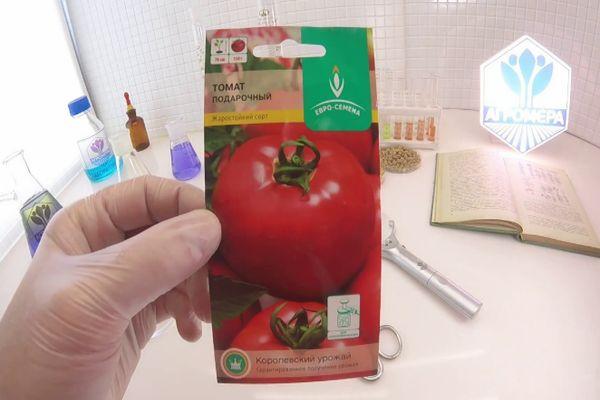
Characteristics and description of the variety:
- the height of the bushes is average, not higher than 70 cm;
- leaves are medium-sized, not spreading;
- mid-season, full ripening occurs 110-115 days after the first shoots appear;
- Suitable for growing in open ground, but also shows good results in greenhouses;
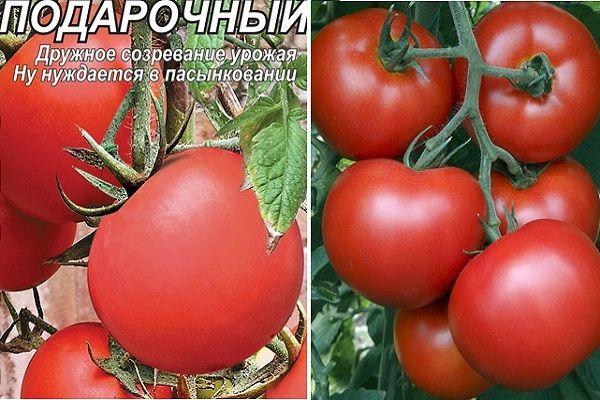
- The fruits are round and red in colour; the average weight is 115-120 g, but there are specimens weighing 150 g.
- The yield is up to 5.2 kg per 1 m².
- The taste of the fruit is sweet and sour; when grown in a greenhouse, it becomes rich and sweet.
Tomatoes are eaten fresh and used to make juices and tomato paste. They are not well suited for canning.
Planting and care
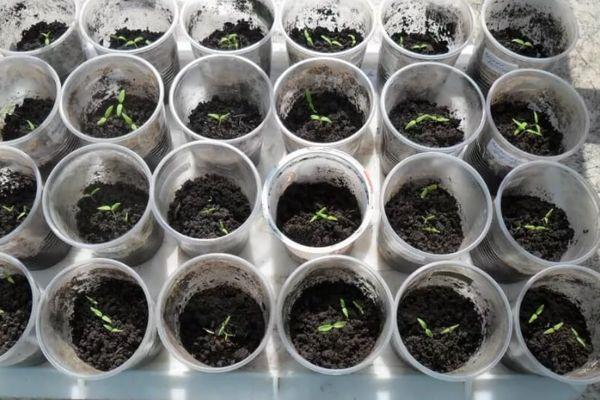
The "Gift" tomato is grown from seedlings. At the end of March (between the 20th and 30th), the seeds are planted in specially prepared containers filled with fertile soil. For better germination, it is recommended to cover the containers with plastic film. Once the first shoots appear, the film can be removed and the containers placed in a sunny location. Under these conditions, the vegetable grows until the first two leaves appear.
After the leaves emerge, the tomatoes are transplanted into pots. It is recommended to plant the seedlings in the ground between May 10th and 20th. The Podarochny tomato variety prefers light, loamy, porous soil. Humus and mineral fertilizers are added to the soil before planting. The soil should also be lightly moistened before planting.
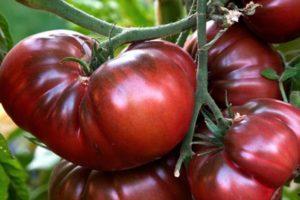
When choosing a location, it's recommended to choose a separate section of the garden, protected from drafts. At the same time, it should be well-lit. Sunlight should reach not only the top of the bush, but also the side shoots. The distance between bushes should be at least 70 cm, and between rows, at least 40 cm.
Care includes:
- Removing excess leaves. Two months after planting the seedlings in open ground, begin removing the lower leaves. This is done to prevent air stagnation. This procedure is performed once a week, removing no more than three leaves at a time. The tomatoes should be watered 24 hours after this procedure.
- Watering. This should be done in the evenings. The water should be settled and at room temperature. Care should be taken to avoid water coming into contact with the fruit and leaves, as this can cause burns. Watering should be done at least once a week, but be careful not to let the soil become too wet.
- Loosening the soil. Every week after watering, loosen the soil to prevent diseases caused by waterlogging.
- Fertilizers. Fertilizers are usually applied during the period of inflorescence formation and fruit set. Complex mineral fertilizers, as well as cow manure or poultry manure, are used.
The harvest begins on July 15 and lasts until August 20. It is recommended to collect fruits without stalks.
Potential problems and feedback
The Podarochny variety is disease-resistant, but occasionally suffers from pest attacks. In this case, treating the plants with insecticides is recommended. A lack of fertilizer can lead to wilting and reduced yield.

Signs of micronutrient deficiency:
- Iron deficiency causes tomatoes to stop growing; in severe cases, the leaves become covered with a white coating;
- Calcium deficiency is manifested by yellow spots on the leaves;
- Potassium deficiency causes curling of young leaves and burns on older leaves;
- If the vegetable lacks nitrogen, the leaves and fruits begin to change: the leaves become yellowish, and the tomatoes become small and hard;
- When there is a lack of phosphorus, the leaves curl inward.
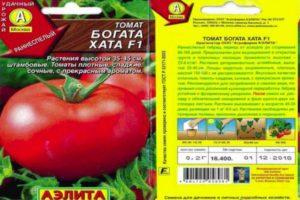
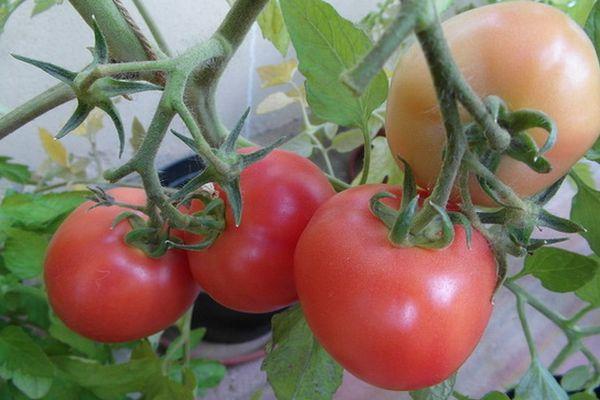
Reviews of the "Gift" tomato are positive. It is noted that the tomato fully lives up to its name, as its appetizing fruits serve as unique gifts for gardeners. The vegetable is easy to grow, adapts easily to any weather, especially heat, and produces a good harvest. The tomato's flavor is rich and sweet.
The plant is resistant to diseases and is rarely attacked by pests.
The only drawback is its particular need for fertilizer. However, even the slightest deficiency of any micronutrients immediately shows up on the leaves and fruits, allowing for quick correction.
Related posts:
 The best eggplant varieties for growing in a polycarbonate greenhouse: planting and care
 The best grape varieties for growing in the Urals, planting and care rules in summer
 80 Best Eggplant Varieties for Different Regions with Descriptions and Characteristics
 Descriptions of the 20 best cherry varieties for the Moscow region, their planting and care
 The health benefits and harms of cherries, rules of consumption, and their effects on the body
 Description and characteristics of the 27 best plum varieties for the Urals, planting and care
 Methods for planting and propagating cherries at home
 Description of the 30 best plum varieties for the Moscow region, planting and care