
The Santa Claus tomato was added to the Russian state register in 2014. It is recommended for growing in private gardens and homesteads, either in greenhouses or in open ground. It is also possible to grow this tomato for seed, then germinate seedlings from your own harvest the following year.
Briefly about the plant and its fruits
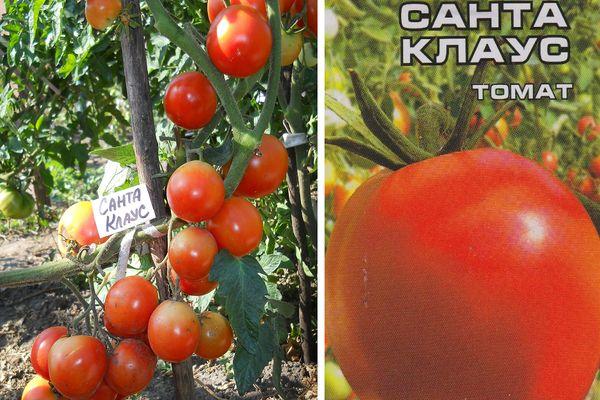
The characteristics and description of the Santa Claus variety are as follows:
- The harvest begins 100 days after planting seeds for seedlings. If a gardener uses already grown seedlings, the harvest can be achieved in as little as 30-35 days.
- Bushes of this variety grow up to 90-100 cm in height in open ground, and 180-200 cm when grown in a greenhouse.
- The bushes have an average number of leaves, colored in dark shades of green.
- A single bush typically produces 10 to 12 clusters, each producing 5-6 berries. Gardeners' reviews indicate that removing side shoots from the stems is essential for a good harvest. Due to the bush's height, it needs to be tied to trellises or supports. Failure to do so can cause the branches to droop or break under the weight of the berries.
- The ripe fruit weighs between 100 and 150 grams. The berries are bright shades of red. If the weather conditions were unfavorable during ripening, a pale spot may appear on some fruits near the stalk.
- The berries are smooth spheres with no ribbing. The fruit's pulp contains 2 to 4 seed chambers.
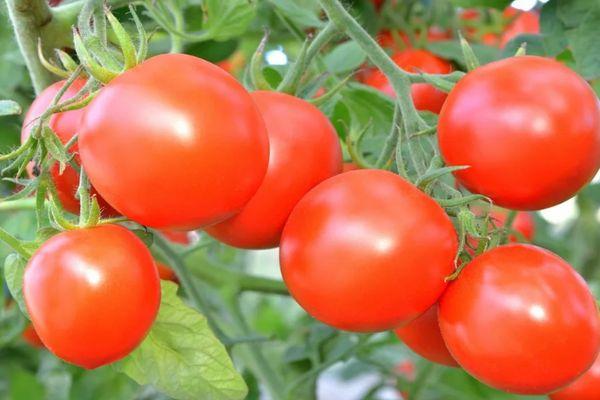
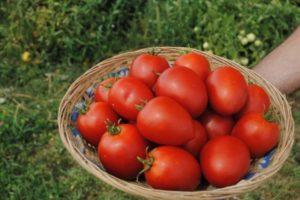
Farmers who grow this tomato report a fairly high yield, with a single bush yielding between 6 and 10 kg of fruit. These tomatoes are eaten fresh, used to make juices and tomato paste, and are pickled for winter. In Russia, Santa grows well outdoors in the southern regions. When growing this tomato in the central part of the country and in the Siberian expanses, it is recommended to use plastic greenhouses and greenhouse blocks.
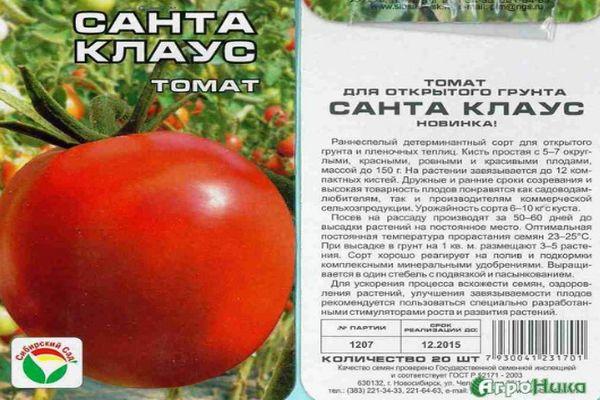
How to grow the Santa Claus variety yourself?
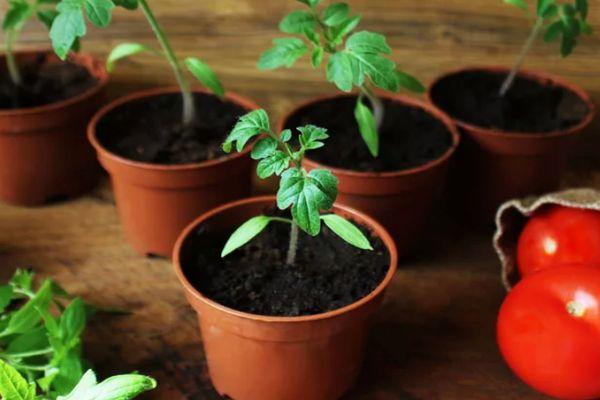
It is recommended to pre-treat the seeds with a weak solution of potassium permanganate for 15-20 minutes. After this, they are placed in boxes containing a special tomato soil mixed with sand and peat. The seeds are planted 15-20 mm deep and watered with warm water. After the sprouts have sprouted, a week later, it is recommended to add a small amount of organic fertilizer to the soil. If necessary, growth stimulants can be used to germinate the seeds.
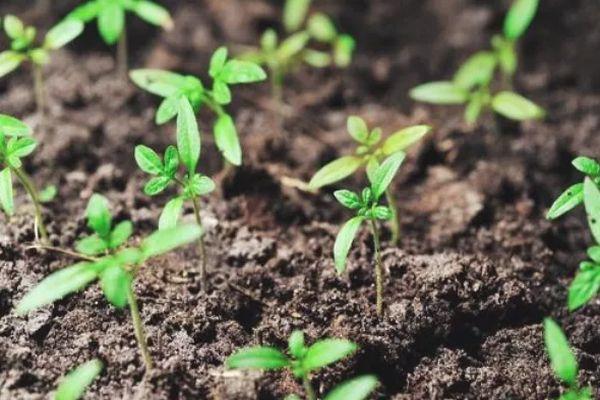
The seedlings are pricked out after they have developed 1-2 leaves. The plant containers should be placed in a well-lit area. Young tomatoes should receive 16 to 18 hours of daylight per day.
When the seedlings are 60 days old, they are transplanted into pre-loosened soil in a greenhouse. Nitrogen fertilizer is added to the soil beforehand. The seedlings should be planted in well-drained beds. Three to five seedlings are planted per square meter.
If the planting site is chosen correctly, free of drafts (if grown in a greenhouse) or wind (in open ground), the fruits will ripen almost simultaneously. It is recommended to loosen and hill the beds promptly, otherwise you could lose half the harvest. Water the bushes early in the morning 1-2 times a week.
To maximize the harvest, it is recommended to remove all side shoots. Fertilize tomatoes with mineral fertilizers three times per season. Gardeners should inspect the plants daily to spot any signs of rot, fungal infestation, or drying out.
To prevent disease, water the soil with a potassium permanganate solution and add ash before planting seedlings. It is recommended to immediately destroy (burn) any bushes infected with late blight. Various chemicals can be used to combat the disease.
If insects that can destroy the crop, such as the Colorado potato beetle or aphids, appear on the bushes, they must be eliminated using chemicals.
Related posts:
 Methods for planting and propagating cherries at home
 The best grape varieties for growing in the Urals, planting and care rules in summer
 Growing and caring for hazelnuts in open ground, rules for planting hazelnuts
 The best methods for growing grapes from seeds at home
 How to properly plant peas in a greenhouse and open ground
 Rules for planting and caring for pears in open ground, how to grow them correctly
 Carrot care guidelines for outdoor cultivation to ensure a good harvest
 Rules for planting and caring for clematis in the open ground in the Urals
