
Siberian Giant is a tomato variety known for its high productivity and large fruits, making it popular among gardeners. This variety is recommended for greenhouse cultivation. Its tolerance to temperature fluctuations makes it suitable for outdoor cultivation.
Advantages of the variety
The characteristics and description of the Siberian Giant tomato variety highlight its high productivity and medium ripening time. Fruiting occurs 115-120 days after germination.

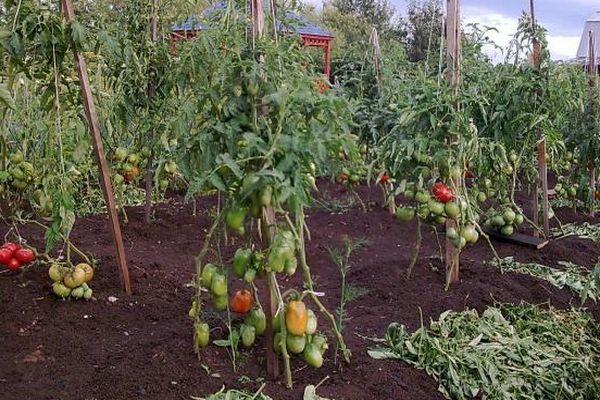
During the growing season, bushes 1.5–1.7 m high are formed. When grown indoors, the plant reaches a height of 2–2.2 m.
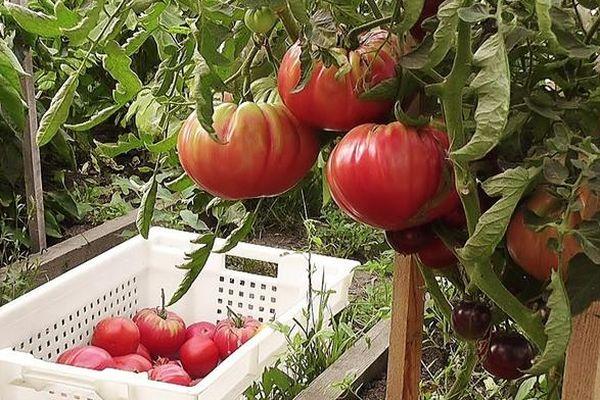
When the bush is formed into 1-2 stems, large fruits reach 300-500 g in weight, with individual giant tomatoes weighing up to 1.2 kg. The yield per square meter is 4-7 kg.
Description of fruits:
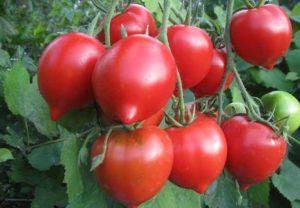
- The tomatoes are round, flat in shape, ribbed on the sides, intensely red in color (the Siberian Giant variety has intensely pink fruits), without a green spot near the stalk.
- When cut horizontally, seed chambers containing a small number of seeds are observed.
- The fleshy and sweet-tasting fruits are used fresh and for processing into puree and paste.
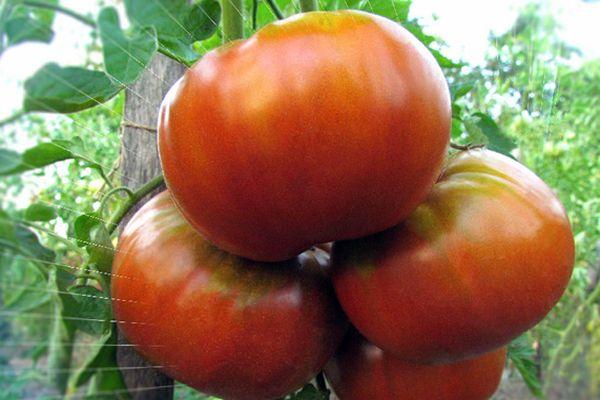
Tall bushes require additional support and tying. This variety is prized for its disease resistance, large fruits, and excellent taste.
Cultivation techniques
The Siberian Giant tomato is recommended for growing from seedlings. Before planting, the seeds are treated with an aqueous solution of potassium permanganate and a growth stimulant. Sowing occurs 60-65 days before the expected planting date. They are placed in containers with prepared soil to a depth of 1.5 cm.
The soil is moistened with warm water using a spray bottle. The containers are covered with plastic wrap until the seedlings emerge. When the seedlings have developed two true leaves, they are transplanted into individual pots. To avoid damaging the root system during transplanting, it is recommended to use peat containers.

When planting in a permanent location, maintain a distance between the bushes to ensure their roots and stems don't interfere with growth. Tomatoes thrive in fertile soil, so add organic fertilizer when planting and periodically feed the crop with complex fertilizers.
Among fertilizers, preference is given to manure, peat, chicken manure and mineral fertilizers containing phosphorus and potassium.
When transplanting bushes to a permanent location, plant holes 40-60 cm apart. The bushes must be tied to a support, and side shoots and lower leaves must be removed. At the end of the growing season, pinch off the growing tip of the plant.
This variety, developed in Siberia specifically for cultivation in cool regions, is recommended for growing primarily in greenhouses.
Siberian Giant tomatoes can be planted outdoors; they adapt well to sudden temperature changes and are resistant to many diseases. But to protect from rain, wind, and dew, it is better to cover the bushes with a special film.
Opinions and recommendations from gardeners
The crop's yield depends on proper agricultural practices, including timely watering, fertilizing, and maintaining temperature and light conditions. Timely soil loosening and hilling of the bushes promotes plant growth and increases fruit yield per bush.
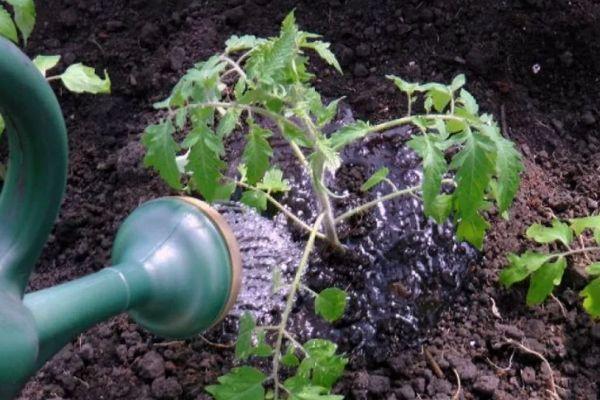
Plants are watered with warm water, and fertilizer is recommended at various stages of the growing season. Periodic preventative pest control promotes healthy crop development.
Reviews from vegetable growers who grow this variety point to the tomato's advantages, taste, resistance to weather conditions and diseases.
Marina Yakovleva, 53 years old, Novokuznetsk:
"I planted the Siberian Giant tomato in a greenhouse. I chose these tomatoes for their large fruit, flavor, and resistance to temperature fluctuations. I grew them from seedlings, which I transplanted into holes fertilized with compost, wood ash, and a small amount of mineral fertilizer containing potassium and phosphorus. The fruits truly grew large, juicy, and sweet. Due to their large size (the smallest tomato weighed 360 g), I had to preserve them in wedges."
Evgeny Gorshkov, 61 years old, Domodedovo:
"I've been growing the Siberian Giant variety for several seasons. I've noticed the large size of the tomatoes and their tolerance to cold temperatures. The most important factors for the plant are fertile soil, timely watering, and weed control. The bushes are easy to care for, but they do require side shoots to be removed and tied to a support. The juicy tomatoes have a sweet flavor, and they're a joy to pick from the vine."
Related posts:
 The best eggplant varieties for growing in a polycarbonate greenhouse: planting and care
 Characteristics and description of the Siberian early-ripening tomato variety, yield and cultivation
 The best grape varieties for growing in the Urals, planting and care rules in summer
 80 Best Eggplant Varieties for Different Regions with Descriptions and Characteristics
 Descriptions of the 20 best cherry varieties for the Moscow region, their planting and care
 What varieties of tomatoes are best to plant in a polycarbonate greenhouse?
 Description of the Siberian Malachite tomato, cultivation nuances, and reviews
 Description of the best varieties of cluster tomatoes and growing rules