
- Description and characteristics of the hybrid
- Description of fruits
- Country of origin, year of registration
- Growing regions
- Resistance to diseases and pests
- Productivity
- Advantages and disadvantages of the Budenovka tomato
- Varieties of the variety
- Budyonovets F1
- Golden Budenovka
- nobleman
- How to grow tomatoes?
- Planting dates
- Selection of seed material
- Step-by-step process of planting seeds for seedlings
- Transplanting
- Methods for increasing crop yields
- Care technology
- Watering and fertilizing
- Pest and disease control
- Harvesting
- Storage and use of tomatoes
- Feedback from those who planted
The Budenovka tomato has stood the test of time. Gardeners choose this variety and its varieties for its extensive list of positive characteristics. It's best grown from seedlings. The finished seedlings are planted in open and protected beds. To achieve good results, it's important to adhere to the planting timing, properly prepare the planting material, and ensure proper care.
Description and characteristics of the hybrid
The Budenovka variety belongs to the indeterminate group of plants. The stem is not limited in growth, and without a defined growing point, the bush can reach a height of 4 meters. Because the stem is thin and tall, it is necessary to provide support for tying. The root branches do not penetrate deeply into the soil, but spread outward. They reach a length of 55 cm, allowing for the absorption of nutrients.
The dark green leaves are medium-sized, wrinkled, and slightly pubescent. They are few in number on the plant, allowing light and air to reach all parts of the plant. The skin of the fruit turns pink when ripe.
The Babushkina Budenovka variety is ideal for gardening novices. It requires little attention and is easy to grow. The harvest will delight you with its quantity and quality.
Description of fruits
Tomatoes begin ripening early. At this time, the fruits turn a vibrant red-pink color. Gardeners begin harvesting after 108 days.
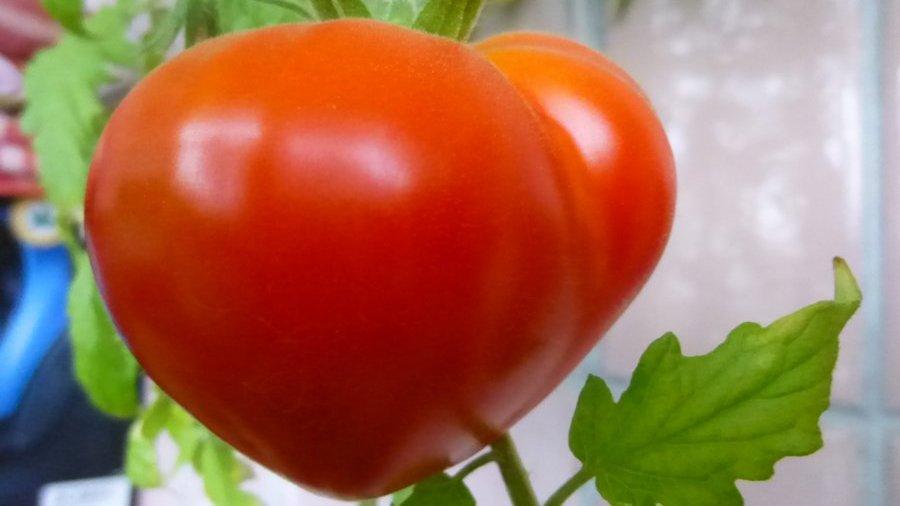
The description of the Budenovka variety indicates the following characteristic features of the fruits:
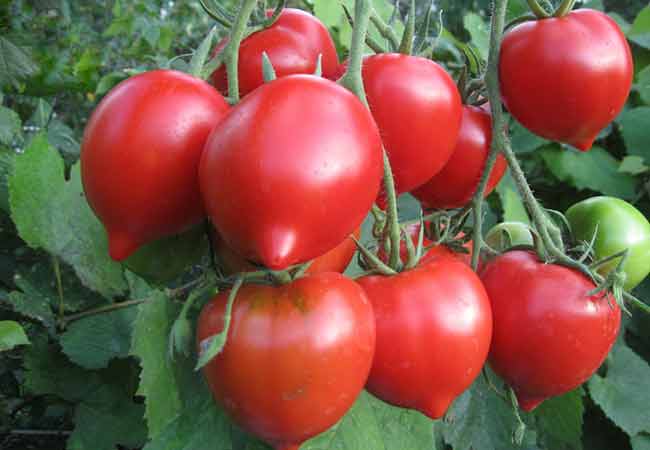
- round-oblong shape;
- the presence of a characteristic spout at the base;
- the fruits are large, reaching 16 cm in diameter;
- The average weight of each fruit is 330 g.
The thin yet dense skin prevents the flesh from cracking. The shape and color are maintained even during long-distance transportation. The fruits are stored for a long time without rotting or losing their juiciness.
Country of origin, year of registration
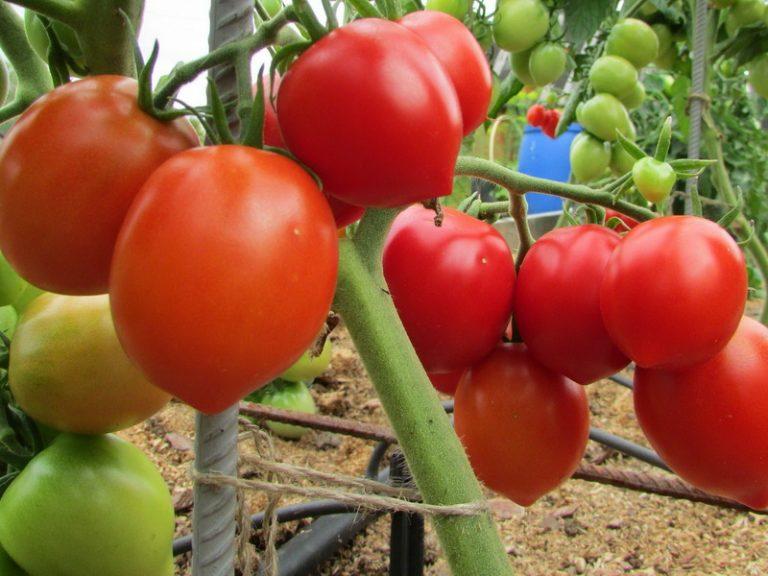
The Budenovka tomato variety is the result of the work of Siberian breeders. The variety's name derives from the headdress worn by Red Army soldiers, which the tomatoes resemble. This variety was added to the state register of the Russian Federation in 2002 and is intended for cultivation in both open and sheltered beds.
Growing regions
The Budenovka tomato variety can be grown in any region of the Russian Federation, after first planting the seeds for seedlings.
Resistance to diseases and pests
The variety is resistant to many pests and common tomato diseases, including late blight and powdery mildew.
Productivity
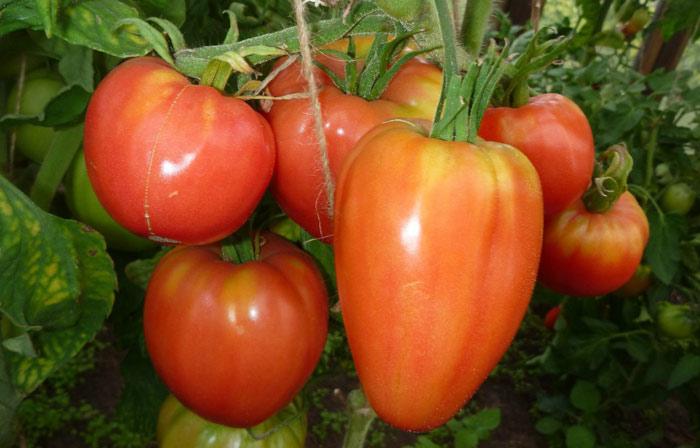
The Budenovka variety is known for its high yields. With proper care and proper farming practices, a single tomato plant can yield up to 7.5 kg of tomatoes.
Advantages and disadvantages of the Budenovka tomato
The main advantages of the Budenovka variety are:
- early onset of fruit maturity;
- high resistance to many tomato infections;
- high yields are achieved even under the influence of unfavorable factors;
- abundant harvest of large tomatoes.
The disadvantages include the stem being too tall and thin, which, if tied incorrectly, can break under the weight of the fruit.
Varieties of the variety
There are several varieties of the Budenovka variety, which are also characterized by positive qualities.
Budyonovets F1
An early-ripening hybrid with a determinate growth habit. The bush reaches 120 cm in height. Harvesting of the abundant crop begins after 95 days. The fruits are heart-shaped and bright red. Each fruit weighs 110 g.
Golden Budenovka
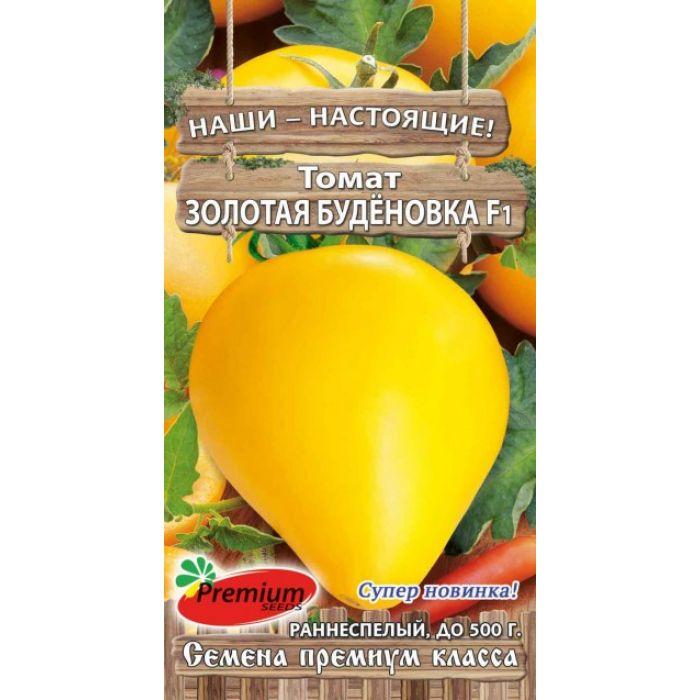
An early-ripening variety, ripening in 95 days. The bush is indeterminate. The fruits are dark yellow, large (up to 360 g), and heart-shaped. The fleshy pulp has a sweet and juicy flavor.
nobleman
This variety has a medium ripening period and is classified as a determinate plant. The stem reaches 80 cm in height. The fruits are large, heart-shaped, and slightly ribbed near the stalk. The fruit color at maturity is raspberry.
How to grow tomatoes?
Good results depend on proper tomato cultivation. It's important to time planting correctly, prepare the seeds, seedlings, and plot of land.
Planting dates
Budenovka tomato seeds are sown for seedlings in late March. The finished seedlings are transplanted to their permanent location around May 20th.
Selection of seed material
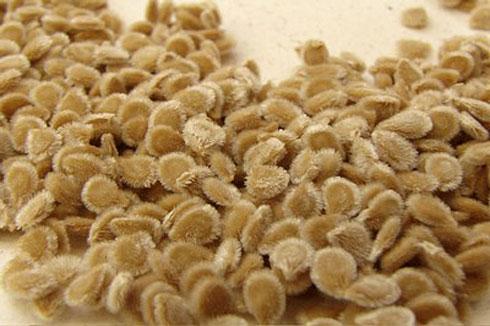
Before planting seeds in the soil, they are calibrated, disinfected and soaked:
- Only large, dense specimens are selected for planting. A salt solution, in which the seeds are immersed for just 10 minutes, will help with this selection. Hollow, damaged seeds will float to the surface and should be discarded.
- The seeds that fall to the bottom of the solution are washed and disinfected. To do this, add potassium permanganate crystals to the water. The solution should turn a deep purple color. Soak the seeds in it for 20 minutes.
- At the next stage, the material is washed again and laid out on a wet cloth surface, covered with another layer of damp cloth on top and left for three days.
Only after these procedures can you safely begin planting in pre-prepared soil.
Step-by-step process of planting seeds for seedlings
Fill the prepared containers with fertile, disinfected soil. The bottom of the container must have drainage holes.
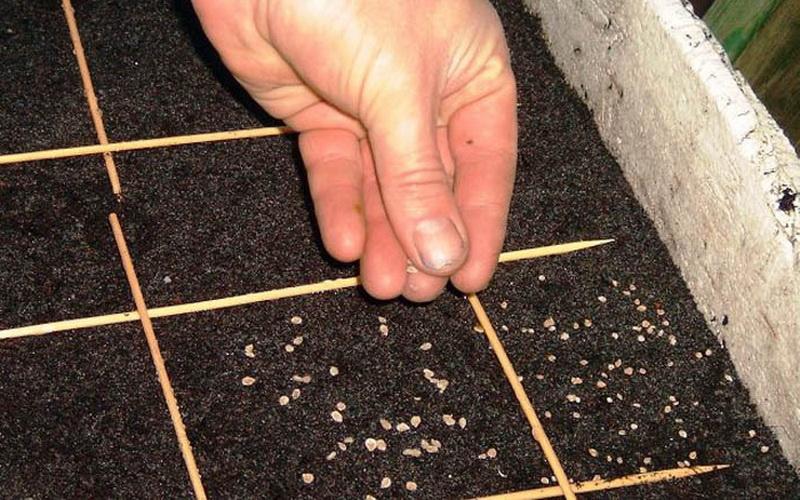
- Tomato seeds are planted into the soil to a depth of 6 mm (the distance between holes is 3 cm) and covered with soil.
- Cover the container with film and put it in a warm place.
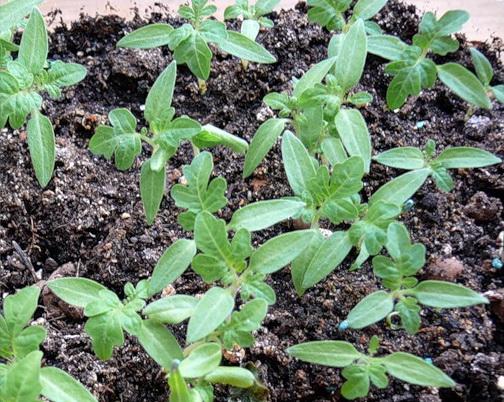
- After the first sprouts appear, the film is removed and the seedlings are moved to the brightest windowsill.
- At first, seedlings need additional lighting.
- As soon as the first three leaves unfold on the seedlings, they are transplanted into separate containers.
Seedlings are planted 60 days before transplanting to permanent beds. By this time, the bushes reach 19-21 cm in length. Hardening off the seedlings begins 12 days before transplanting.
Transplanting
Important points to consider when transplanting seedlings to a permanent location:
- The southern or southwestern part of the plot is suitable for planting seedlings.
- The soil should be fertile, loose, well-aerated and low acidity.
- It is best to plant in a bed where zucchini, greens, and carrots were previously grown.
- The classic planting pattern is two staggered rows. Holes are spaced 32 cm apart, with a 50 cm gap between rows.
It is important that the soil warms up to +10 degrees and the air temperature is warm at the time of planting.
Methods for increasing crop yields
There are several ways to increase the yield of the Budenovka tomato variety:
- Timely removal of lateral branches emerging from the leaf axils. These side shoots take up many of the nutrients needed for fruit set.
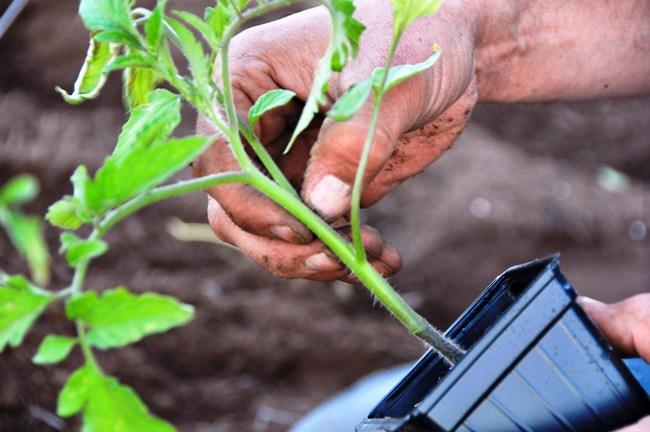
- When transplanting seedlings, shorten the central root to encourage the growth of lateral root shoots. These will provide the plant with sufficient nutrients.
- Pruning lateral roots strengthens the entire root system and improves the growth of the above-ground part of the plant.
- Pinching the central stem of the plant promotes the development of lateral branches, on which fruits are formed.
- It is recommended to remove excess leaves that shade the plantings and take away a lot of nutrients.
- To speed up and improve the pollination process during flowering, tap the stem periodically.
- By the end of the season, remove flowers that haven't had time to set fruit. They only hinder fruit development.
These simple secrets will help you increase your harvest.
Care technology
Growing the Budenovka variety doesn't require much effort from gardeners. The most time-consuming part is shaping the bush and tying it.
Watering and fertilizing
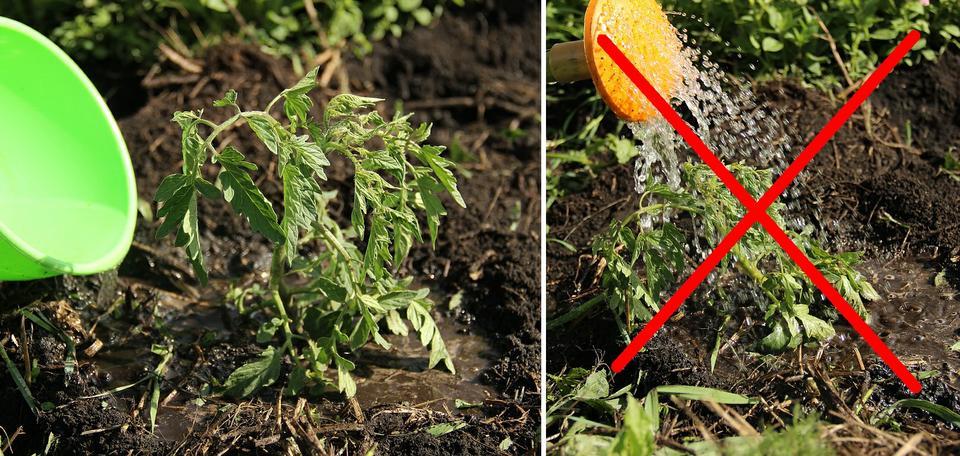
Until fruit set, watering twice a week is recommended, then less frequently. Use warm, settled water. After watering, loosening the soil is recommended. This will allow nutrients and air to more quickly reach the plant roots. The first feeding should be done during flowering, then during fruit set, and the final application should be during the period of active fruiting.
The plant requires potassium and phosphorus in the soil, so superphosphate is an essential fertilizer. Other suitable fertilizers include chicken manure, wood ash, yeast, onion peels, and herbal infusions.
Pest and disease control
The Budenovka variety rarely suffers from diseases, as the fruits ripen before infections begin to spread. Dry rot is the most common cause of infection. As a preventative measure, tomatoes are sprayed with solutions based on products such as Fitosporin, Hom, Pentafag, and Quadris.
Whitefly, aphid, and spider mite infestations can be prevented with Fitoverm, Actellic, Confidor, Iskra, Aktofit, and Komandor. Dry spraying with tobacco dust or wood ash also helps.
Harvesting
Harvesting begins when the tomatoes turn brown. Because tomatoes ripen unevenly, harvesting takes place over two months.
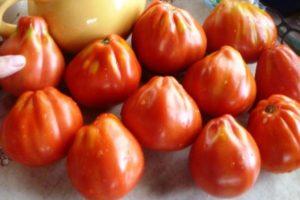
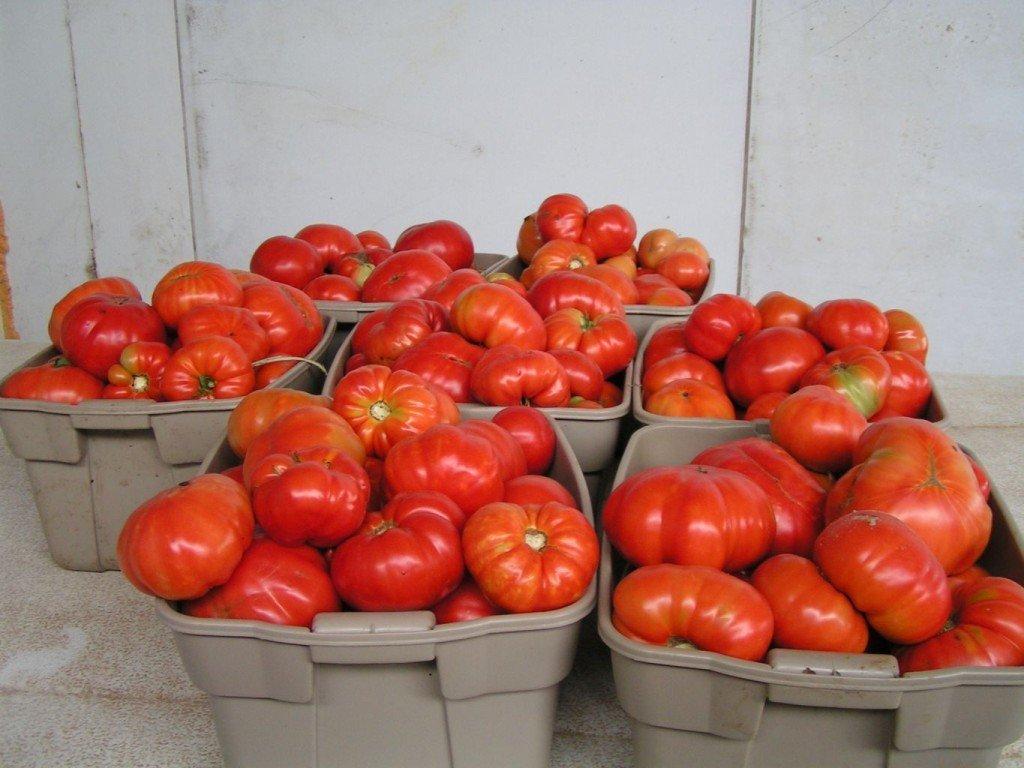
The procedure is carried out early in the morning on a dry, clear day. Unripe tomatoes are laid out in a single layer on a flat surface in a warm, bright room. After three days, the ripe tomatoes are stored in a cool, well-ventilated area for long-term storage.
Storage and use of tomatoes
It's best to store the harvested crop in wooden boxes in two or three layers, with each layer separated by paper or straw. The storage area should be cool (2 degrees Celsius) and well-ventilated. Humidity should not exceed 85%.
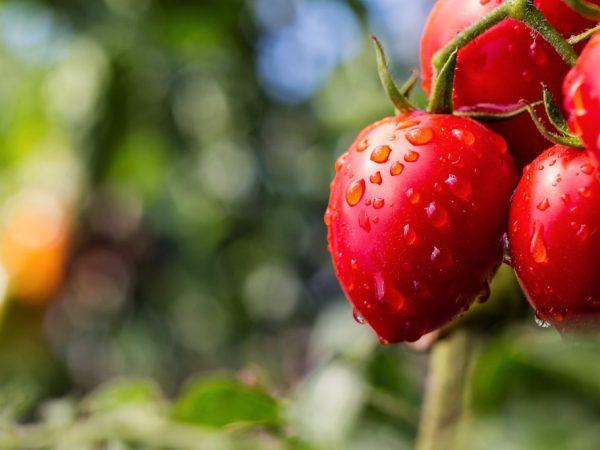
Budenovka tomatoes are versatile. The fruits are used fresh in salads and also for winter preserves.
Feedback from those who planted
Reviews from gardeners who have planted the Budenovka tomato variety repeatedly mostly highlight its positive aspects. Many gardeners consider the stems to be too fragile a drawback, so staking them regularly is essential.
Svetlana, 40, Volgograd: "I was delighted with the large tomatoes with juicy flesh. A single bunch fills a plate. The tomatoes keep better than other tomato varieties."
Tatyana, 58, Podolsk: "I've been growing Budenovka for several years now, harvesting the seeds myself. The bush grows up to 105 cm, and most importantly, it doesn't require much care. I harvest a large number of delicious fruits from each cluster."
Kristina, 51, from Bryansk: "I like large tomatoes. The yield has never been disappointing; it's always excellent. I've planted them both from seedlings and from seeds, and there's been no difference. My family loves dishes made with this variety of tomatoes."
Related posts:
 What varieties of tomatoes are best to plant in a polycarbonate greenhouse?
 80 Best Eggplant Varieties for Different Regions with Descriptions and Characteristics
 Description and characteristics of the best indeterminate tomato varieties for greenhouses
 Description of the best tomato varieties for pickling and canning
 What is the best way to feed tomato seedlings to make them plump?
 The best grape varieties for growing in the Urals, planting and care rules in summer
 The best and most productive tomato varieties for greenhouse cultivation in the Urals, with descriptions
 Description and characteristics of the best tomato varieties for outdoor cultivation in the Urals