
Various cherry tomato varieties are very popular among vegetable growers. The Verige F1 tomato has received positive reviews. The description and height of the plant, its characteristics, and care instructions are listed on the seed packaging.
The manufacturer claims that this nightshade hybrid is an easy-to-grow and hardy variety, with good disease resistance. Even a novice gardener can grow these delicious miniature tomatoes. However, before you begin growing them, it's worth familiarizing yourself with the characteristics of the Verige variety and the recommendations for its cultivation.
Main characteristics
The Verige F1 tomato variety is a determinate variety. The plant has a small, compact habit, reaching no more than 1 m in height. Its strong, sturdy trunk requires no additional support, and its branches are not spreading, but rather slightly upward. The foliage is regular in shape and dark green, sparsely filling the entire plant.
The Verige variety is an early-ripening variety. The first fruits can be harvested 85-90 days after the seedlings emerge. This tomato is suitable for growing outdoors and in greenhouses.
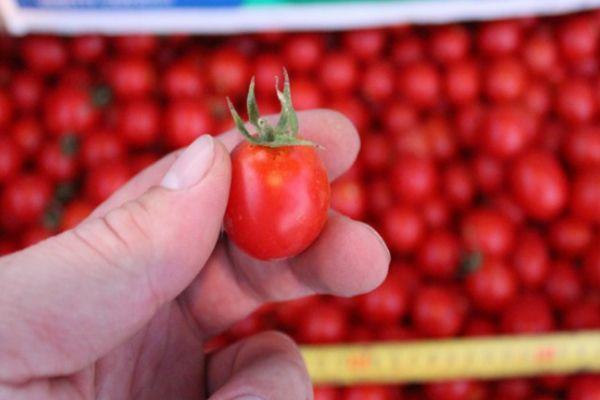
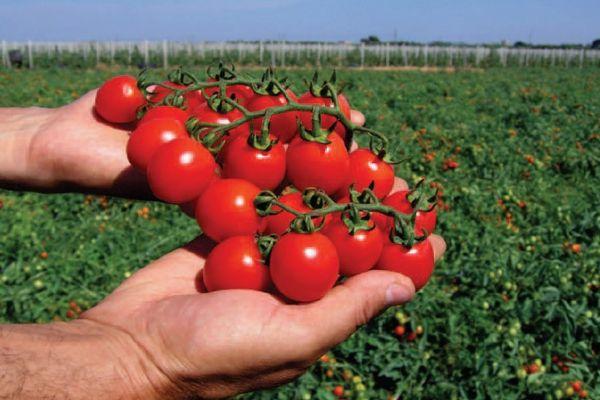
The first ovary of a cluster is formed after the sixth or seventh leaf. Each cluster contains an average of 8 to 12 tomatoes. The small fruits are round and slightly elongated, bright red, and two-chambered. Each tomato weighs approximately 20–25 g on average. The skin is dense, smooth, and shiny. This protects the fruit from cracking.
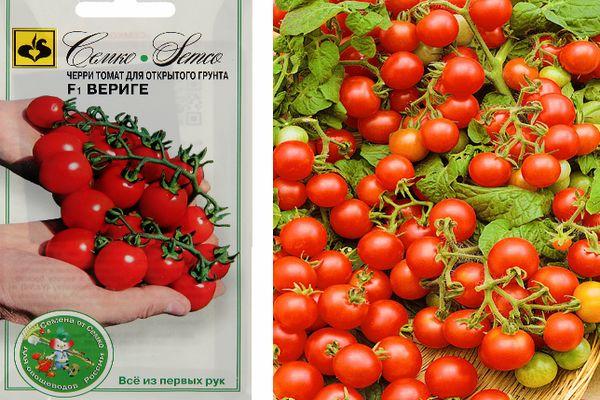
Tomatoes ripen on the trusses at the same time, which significantly simplifies the harvesting process. Sometimes gardeners prefer to harvest the entire truss at once. Verige tomatoes can be stored this way for a long time. The harvest has a fairly long shelf life: from 2 to 4 weeks. The Verige variety has a high yield, with 5 to 7 kg per square meter. The firm, dense fruits of this cherry tomato can withstand long transportation.
These tomatoes have excellent flavor. They have juicy, firm flesh and a distinct tomato flavor with a hint of tartness. Verige tomatoes have a sweet, fruity flavor. The fruits are suitable for all-purpose use. They can be used in fresh salads, juice, paste, and canned whole.
The Verige tomato variety tolerates drought and heat well. Its thick skin reliably protects the fruit from sunlight, and its powerful root system provides ample nourishment.
Growing seedlings
Seeds are sown for seedlings in the second half of March. First, prepare the seeds for planting. To do this, follow these steps:
- Soak the planting material in a weak solution of potassium permanganate for 30 minutes, then lay the seeds on a clean sheet of paper and leave them on the windowsill until completely dry. Manganese helps protect the seeds from fungi and certain diseases.
- To speed up tomato germination, soak the seeds in a growth stimulant solution for half an hour. Then, let them dry naturally.

Sow the seeds in a special container filled with soil. You can buy ready-made soil at the store or prepare it yourself. To do this, mix equal parts of turf, peat, and sand. Moisten and loosen the soil thoroughly. Place the seeds 1-1.5 cm deep into the soil and cover with soil.
Water as needed, avoiding stagnant moisture and dampness in the container. Cover the greenhouse with plastic film and place it in a warm, well-lit area. Remove the film from the container daily to allow the soil to air out and allow excess moisture to evaporate.
As soon as the first two leaves appear on the sprouts, begin transplanting. You can transplant the seedlings into larger containers or use plastic or peat cups.

Gardeners recommend hardening off seedlings before planting them outdoors. To do this, take the box containing the young shoots outside for 1-1.5 hours daily. This can be done if the outside temperature is above zero.
Planting tomatoes
Planting material is planted in open ground when the risk of night frosts is excluded and the temperature does not drop below 10°C.
Before planting, the beds are dug up and fertilized. The seedlings are planted at a 70 x 40 cm (28 x 128 ft) spacing, with 6-7 plants per square meter.
After planting, the holes should be mulched with sawdust and watered thoroughly with settled water. After a while, fertilize with a complex fertilizer.
The characteristics of this variety indicate good germination, rapid growth, and a good return in the form of a rich harvest.
Related posts:
 80 Best Eggplant Varieties for Different Regions with Descriptions and Characteristics
 The best grape varieties for growing in the Urals, planting and care rules in summer
 Descriptions of the 20 best cherry varieties for the Moscow region, their planting and care
 What varieties of tomatoes are best to plant in a polycarbonate greenhouse?
 The best eggplant varieties for growing in a polycarbonate greenhouse: planting and care
 Description of the 30 best plum varieties for the Moscow region, planting and care
 Descriptions and names of varieties and the best types of radish, planting and care
 Description and cultivation of the 15 best cherry plum varieties for the Moscow region, planting and care rules